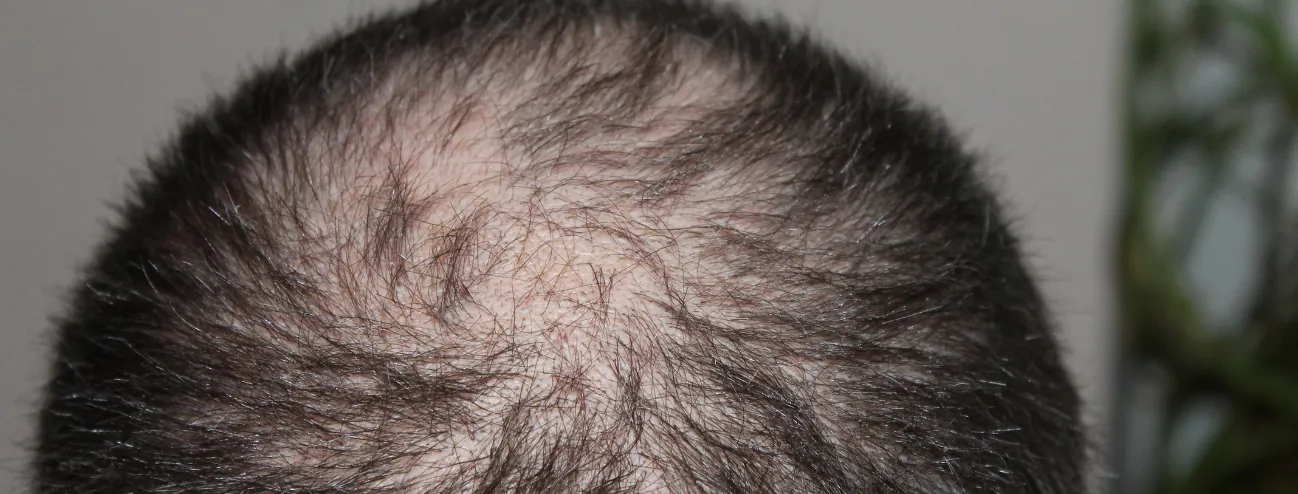
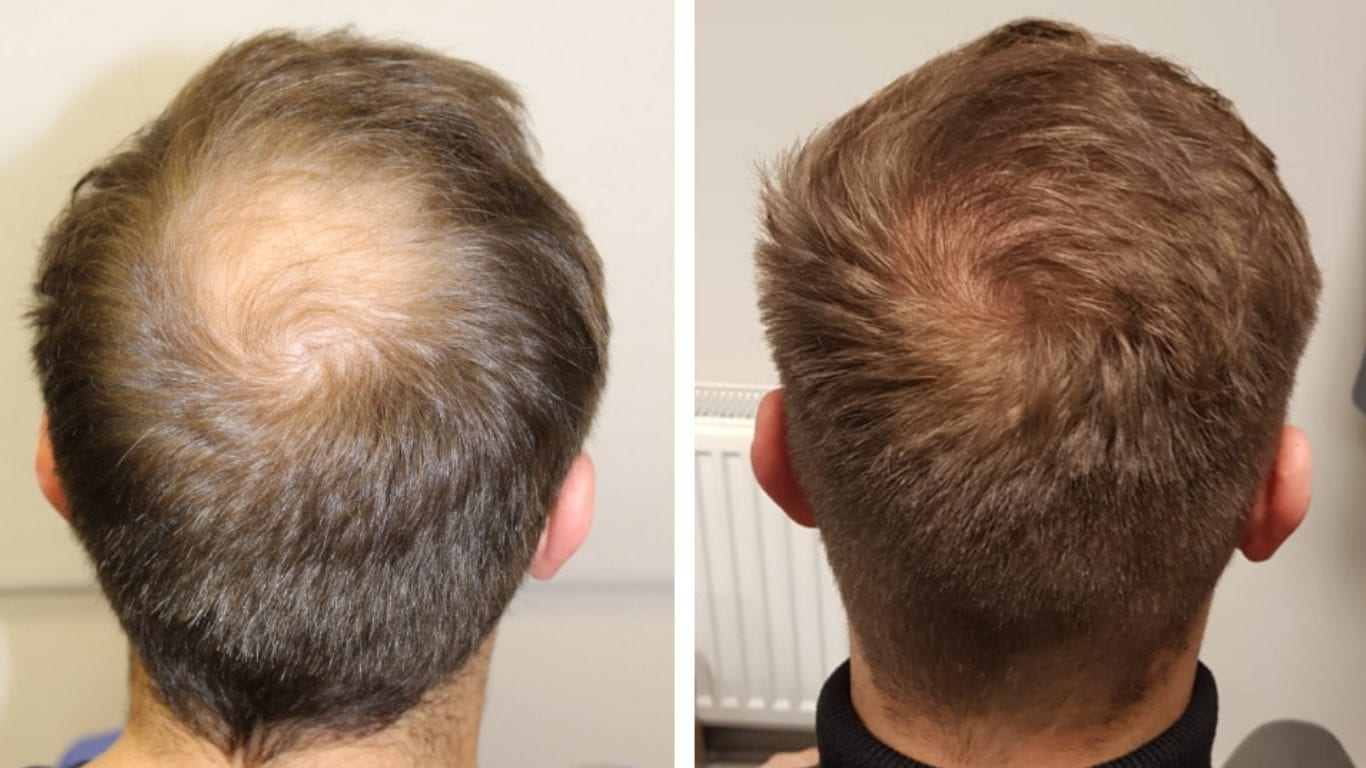
Can the crown be transplanted, and will it look as good as when the hairline is rebuilt? Yes. The crown, also called the vertex, is treated with the same follicular unit techniques as the rest of the head, and a well-planned crown can look completely natural. The planning, however, is quite different. Hair on the crown grows in a spiral out from a whorl in the middle and points in many directions. It doesn't lie neatly the same way. That's why the crown usually needs more grafts than the hairline to look equally dense.
Here we go through what makes the crown special. Why the whorl eats up grafts. Why many surgeons start with the hairline, and how that ties in with your donor hair. What risk you take if you have the crown operated on while you're young and the loss is still spreading. When medication is the best first step. Roughly how the graft requirement grows with the size of the area, what is different about the procedure and healing at the back, and why the crown is often the last place to look finished. The basic requirements, a stable pattern of loss and enough donor hair, apply to the crown as much as anywhere else, and they are set out in the candidate guide.
- The crown can be transplanted with good results. Because the hair there swirls and grows in several directions, it usually takes more grafts to achieve the same visible coverage as in the hairline.
- Donor hair is limited. Many plans therefore do the hairline and the front third of the head first, then spread out or scale down the crown work according to what the donor reserve can bear.
- If you have a crown that is still getting bigger operated on while you're young, you risk a free-standing 'island' of grafts. That is one reason the rule of thumb about being around 25 with stable loss carries extra weight here.
- Early thinning on the crown, with no loss elsewhere, is often best treated with medication first. Surgery can come too early while the loss is still moving.
- The crown follows the same timeline as the rest of the head, but tends to finish last.
Does a crown transplant give as good a result as the hairline?
Yes. The crown (vertex) is treated with the same techniques as the hairline, and with a good plan the result looks completely natural. But the whorl means the crown usually needs more grafts for the same visible coverage, and it competes for the same limited donor hair as the rest of the head. Whether it can be done, and whether the grafts are used as efficiently, are therefore two different questions, and the surgeon should answer both.
At the consultation, the question is rarely whether the crown can be transplanted. The question is whether it can be done efficiently, without the crown quietly eating up an unreasonably large share of your donor hair. The technical answer is simple. The nuances are in the planning.
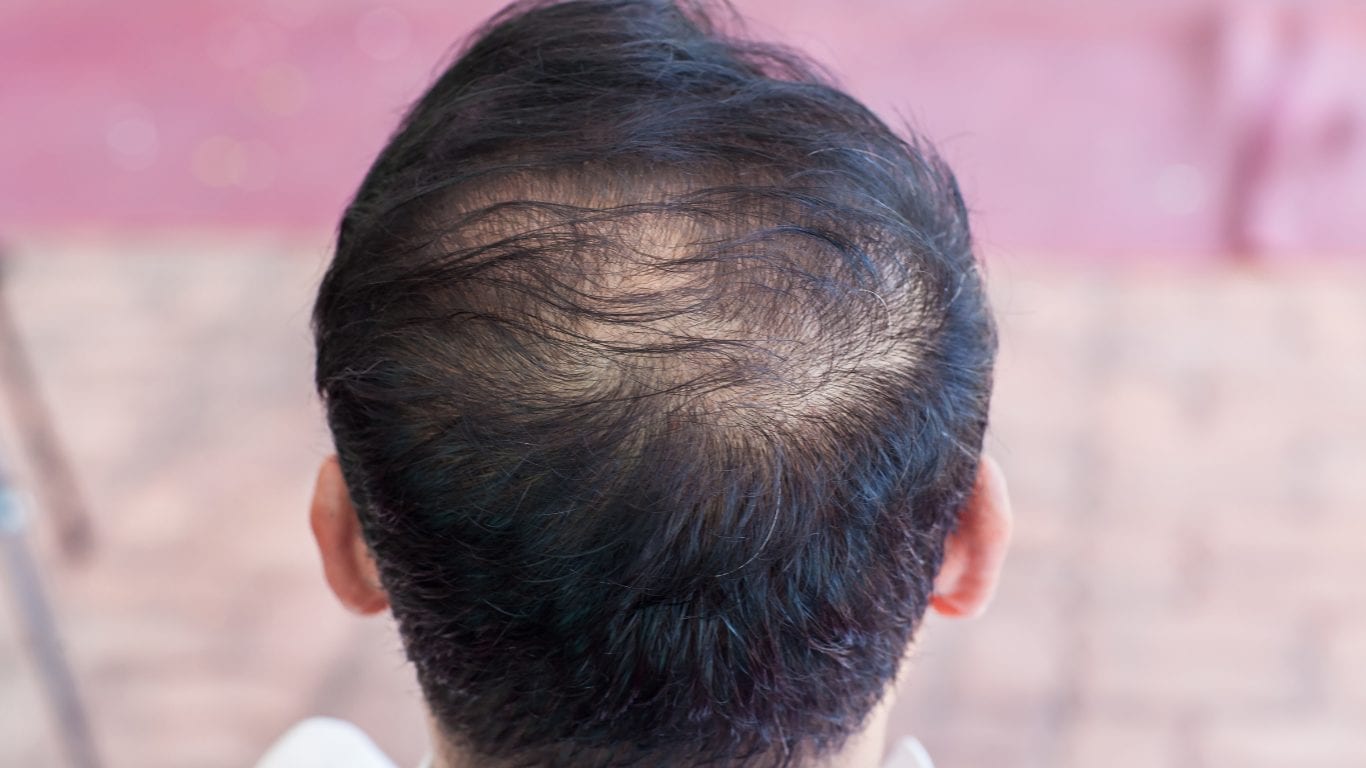
Where exactly is the crown?
The crown is the top of the back of the head, roughly where a skullcap would sit. It is a separate area, distinct from the hairline and the mid-scalp, both anatomically and in how loss often appears there. Many men first notice a thin patch, or that the whorl there is getting bigger, sometimes years before the hairline recedes, sometimes at the same time or afterwards. Patterns on the Norwood scale that involve the crown, from stage III vertex upwards, are everyday work for hair surgeons. They are not borderline cases.
Do the same principles apply to the crown?
Yes. A crown transplant relies on the same principle of donor dominance as everywhere else. Follicles moved from the genetically resistant hair at the back and sides of the head keep growing in their new location. Nothing about the skin on the crown makes a graft survive less well there than in the hairline. Extraction, handling and implantation follow the same follicular unit technique throughout.
Why is the crown considered difficult?
Results don't fail more often there. It is harder to plan well. The spiral of the whorl, the round shape the loss tends to take and how visible the area is together make it more demanding, and more costly in grafts, to cover the crown convincingly than an equally large area at the front. Surgeons are also extra cautious about the crown in young patients, and we come to the reason further down. The answer to whether it can be done is a simple yes. The answer to whether the grafts are used as well as in the hairline is not, and that is the most useful question to take into the consultation.
What should you ask about a crown transplant?
If you're considering a crown transplant, the real questions are about the whorl, your donor reserve and how stable your loss is. The crown is not off the table. The rest of this page covers each of those questions.
Why does the crown need so many grafts?
Mainly because hair on the crown grows in a spiral out from a central whorl and points in many directions, while hair in the hairline mostly lies the same way. Together with the round shape the loss usually takes, this means an area on the crown has to be filled more densely and with more precise angles to look as full as an equally large area at the front. The challenge is as much about geometry as about hair loss.
Many people wonder why the crown almost always needs more grafts than the hairline, even when the visible area is roughly the same size. The answer lies as much in geometry as in biology. Two features of the crown work against you.
How does the whorl affect the work?
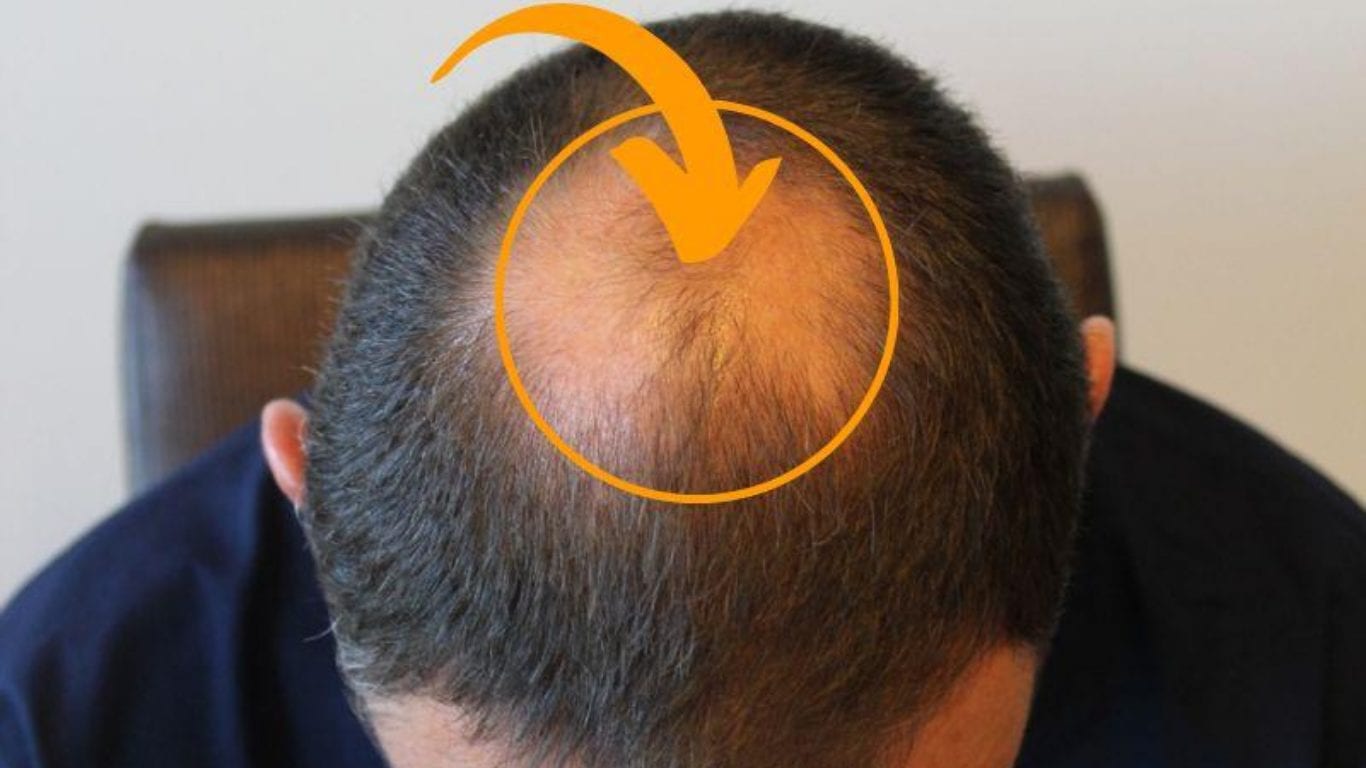
Almost everyone has a whorl on the crown, sometimes called a cowlick, where hair grows out from a point in the middle and spirals clockwise or anticlockwise. In the hairline, hair mostly lies in one direction. On the crown, the surgeon has to angle each graft to follow the spiral exactly where it is placed, not in one fixed direction. That is more demanding, and each graft takes noticeably longer than along a straight edge at the front.
Why does each graft cover less on the crown?
Hair hides the most skin when it lies flat and in the same direction. When hair radiates in several directions at once, more gaps of visible scalp open up between the strands, unless the grafts are placed more densely. The same number of grafts that looks quite full along a hairline can therefore look thinner around a whorl. The pattern itself simply covers less well.
What difference does the round shape make?
Most crown thinning starts and spreads as a circle or an oval. The area of a circle grows with the square of its radius. When the thin patch becomes twice as wide, its area becomes roughly four times as large, and the graft requirement rises accordingly, not just twofold. That is one reason it pays to act early, ideally with medication, which we come to further down. It matters more on the crown than in many other places.
Should you skip the crown, then?
No. It doesn't make the crown a bad place to transplant. It makes it a different budgeting task, which a good surgeon calculates openly, rather than pricing or planning it as if it were an equally large area in the hairline. The surgeon who explains this to you is giving you a realistic plan. The one who keeps quiet about it is selling you something.
Should the hairline or the crown be done first?
Many surgeons start with the hairline and the front third of the head, because that is where hair frames the face and does most for the overall impression, while the crown can use an unreasonably large share of the donor hair. It is about allocating a limited reserve, not about the crown mattering less. How the reserve is calculated is explained on the page do I have enough donor hair? If you have plenty of donor hair, both areas can often be planned at the same time.
It's a common question, and a sensible one. If both areas need help, why does the consultation so often come back with 'hairline first'? The answer has less to do with what matters most to you and more to do with how a limited donor area is best used.
Why does the hairline usually come first?
The front third of the head, with the hairline, the temples and the stretch leading back to the crown, decides most of how full your hair looks at first glance, because it frames the face. Add to that the fact that the crown costs more grafts per visible result, as we saw above. Many plans therefore do the hairline and the front in the first session and the crown afterwards. If there is plenty of donor hair, that can happen in the same session. Otherwise the crown comes in a later round.
What are the numbers behind it?
A good donor area can realistically supply around 5,000 to 8,000 grafts in total over a whole lifetime, and one session usually moves 2,000 to 4,000. Every graft, whether it ends up in the hairline or on the crown, comes out of the same total. A hair transplant doesn't create new hair. If many grafts go to the crown early on, there may be too few left for the hairline, for loss that comes later, or for another session a few years down the line. A responsible surgeon thinks about that imbalance from the very first conversation. A normal donor area has about 65 to 85 follicular units per cm², and at around 40 or below the reserve is thin. How the density and thickness of your hair determine the size of the reserve is explained on the page do I have enough donor hair?
Does that mean the crown matters less?
No. Doing the hairline first is a question of order. It is about how much visible effect each graft gives, and about keeping enough donor hair in reserve. If you have a naturally dense and wide donor area, both areas can often be planned together from the start. If your donor hair is more limited, you are more often advised to do them one after the other.
When is it right to start with the crown?
The order isn't a fixed rule. If the hairline is stable and only the crown is thinning, or if it's the crown that bothers you and made you seek help, it makes sense to start there. What matters is that the order is a deliberate choice that takes the reserve into account, not something that just happens.
It depends on your donor area, your hair type and where the loss is. Send three photos and the medical team at the clinic at the top of our ranking will suggest a method and number of grafts.
Goes to the clinic at the top of our ranking.
Is it too risky to transplant the crown in your twenties?
It can be, if the pattern is still growing. If the crown is filled while the loss is still spreading, you can end up with a dense patch of transplanted hair in the middle of a ring of your own hair that gets thinner year by year. Then you get an island instead of a result that blends in. That is why the rule of thumb about waiting until you're around 25 and the loss has settled is especially important for the crown. Read the full reasoning on the page about age and hair transplants.
Few mistakes in hair surgery have bigger consequences than this one, and it is easy to understand. You're 23, you see a small, obvious patch at the back of your head and want to get rid of it before it grows. The question is how the result will look when you're 30, if the loss around it has continued in the meantime.
What is an island result?
Picture a dense, healthy patch of transplanted hair in the middle of the crown. Around it, your own hair keeps receding, year after year. That is what a classic island result looks like, and the risk is well known when grafts are placed in a pattern that hasn't yet shown how big it will become. Since crown loss tends to spread as a circle, the island there is especially conspicuous. You get a defined patch with an equally defined, and ever wider, bald ring around it. In the hairline a similar mismatch is usually softer, because the loss only moves in one direction.
Why does it happen?
The grafts are taken from the donor area at the back and sides of the head. That hair is largely resistant to DHT, the hormone behind most hereditary hair loss, and it takes that resistance with it to its new location. That's why it keeps growing. No hair follicle is completely protected against DHT, so the result is durable but not guaranteed forever. Your own hair around a young crown that hasn't stabilised doesn't have the same resistance. If it is still miniaturising, it will keep thinning at its own pace, whatever was implanted next to it.
Why is there a rule about being around 25 with stable loss?
That's why most specialists recommend waiting with a hair transplant until you're about 25 and the loss has stabilised. It is a guideline, not an absolute limit. The point isn't age in itself. The point is to give the pattern time to show how large it will really become before permanent grafts are placed around it. A crown that hasn't changed for a long time, usually documented with photos taken over 12 to 24 months, is something quite different from one that is visibly growing month by month. The full reasoning, including what counts as signs of stability at different ages, is on the page what is the right age for a hair transplant?
What do surgeons do instead?
They rarely just say no. When a young man's crown is still spreading, the usual approach is to stabilise first, most often with medication, which you can read about in the next section, and then reassess based on photos before any plan is made. A great many men who are told to 'wait' in their twenties have their crown operated on a few years later, with a better plan, because by then everyone knows how big the whorl actually became.
Should you try medication before a crown transplant?
Often, yes. Early thinning on the crown, with no loss elsewhere and before the pattern has settled, is often better treated with medication first than with surgery straight away. The best-documented options are finasteride and minoxidil, and minoxidil has a particularly good reputation on the crown. All the options are covered in the guide to slowing hair loss without surgery.
Not every thinning crown needs surgery, or a final decision, straight away. In one common situation, early crown thinning that is still changing, medication is often the most sensible place to start. It isn't a consolation prize while you wait for the 'real' treatment.
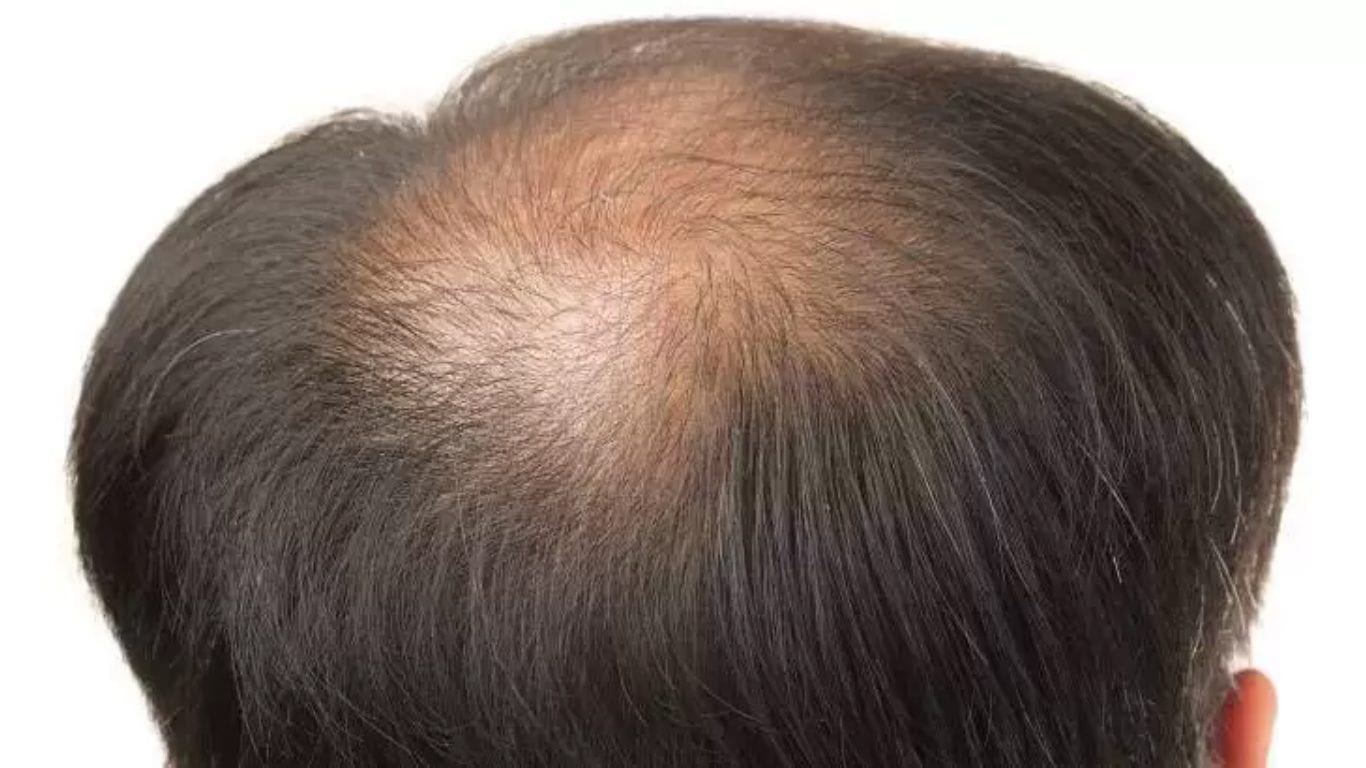
Why does medication suit the crown so well?
Early thinning on the crown only, before the hairline is noticeably affected, is one of the clearest cases where medication should be tried before anyone talks about surgery. Minoxidil has a particularly good reputation on the crown and often works more evenly there than at the temples. Finasteride can slow the shrinking of the follicles (miniaturisation) that drives the thinning. Used together, and for long enough, they can change much of what a possible transplant would later have to do.
When is it too early to operate?
It is too early when the crown pattern is still visibly changing from month to month. It is also too early when the medication hasn't had long enough to work, often several months before anything can be said about its effect. And it is too early when a young patient wants to fill the patch as it is today, even though it may grow larger around the grafts. None of these is a permanent no. It's about doing the treatment in the right order.
What does medication do to the numbers later?
If medication slows, or partly reverses, the early miniaturisation on the crown, a later transplant may be smaller, use less of the donor hair and be planned around a pattern that has actually settled. Then the surgeon doesn't have to guess. This is the usual order and doesn't mean surgery is ruled out. You'll find all the documented non-surgical options in the guide to slowing hair loss. Talk to a doctor before you start, since both medicines have side effects you should know about.
When is medication alone not enough?
Medication doesn't solve everything. If the crown thinning is already extensive, if you have tried medication without the pattern holding, or if you simply don't want to stay on treatment for many years, a transplant is still a reasonable choice. The condition is that the loss has settled enough for the surgeon to make a safe plan.
How many grafts does the crown need?
There's no single number. A small, early patch on the crown needs few grafts. A wide, advanced whorl, on the other hand, can become one of the largest areas in the whole plan, sometimes as large as the hairline or larger. The number depends on how wide the thinning is, the density and thickness of your hair and how much donor hair the rest of the plan needs. You'll find a first estimate for each Norwood stage in the graft calculator.
Sooner or later you'll want a number, whether you're comparing quotes or preparing for a consultation. To be honest, the crown figure depends far more on how wide the whorl has become than on which Norwood stage you are listed at.
Why is there no single number for the crown?
The graft requirement in the hairline is fairly easy to estimate. On the crown, the requirement grows with the diameter of the whorl, and the Norwood stage alone says little about that. A figure you are given without anyone having seen your thinning is therefore almost worthless. An early patch the size of a ten-krone coin and a whorl many centimetres wide can both be called 'crown loss'. The planning is still completely different.
How does the requirement increase?
Roughly speaking, a small, early and clearly defined patch needs a modest and manageable number of grafts. As the whorl grows, the number rises faster than the width, for the geometric reasons we explained above. A wide and advanced crown pattern can end up as one of the heaviest items in the whole plan, in some cases as large as the hairline or larger. That is also why the crown often waits until the second round. The requirement can be large, and the plan has to weigh it against the reserve, not just against the visible area.
How do you get your own number?
Your number depends on how large the thinning is today, the density and thickness of your hair, and how much of the donor hair the rest of the plan already uses, whether that's the hairline, the mid-scalp or the temples. The graft calculator gives an indicative range for each stage and each area, as a starting point. It isn't a prescription. You only get the real number when someone measures your donor area during an assessment.
The graft calculator's per-zone figures still give some rough guides. If the crown is treated on its own at Norwood 3 vertex, the requirement is typically around 1,500 to 2,000 grafts. If the crown is one part of a Norwood 4 plan, it is usually allocated 1,000 to 1,500. Once the pattern has reached Norwood 5 to 6, the crown alone can need 1,800 to 2,500 grafts or more.
Why should a low number raise suspicion when the crown is wide?
Because coverage on the crown gives less per graft than in the hairline. If a clinic offers to fill a wide, advanced whorl with strikingly few grafts, and at a strikingly low price, that is one of the clearest warning signs for this particular area. A number that ignores the geometry of the whorl is not a plan for your crown.
What is different about the procedure and healing for the crown?
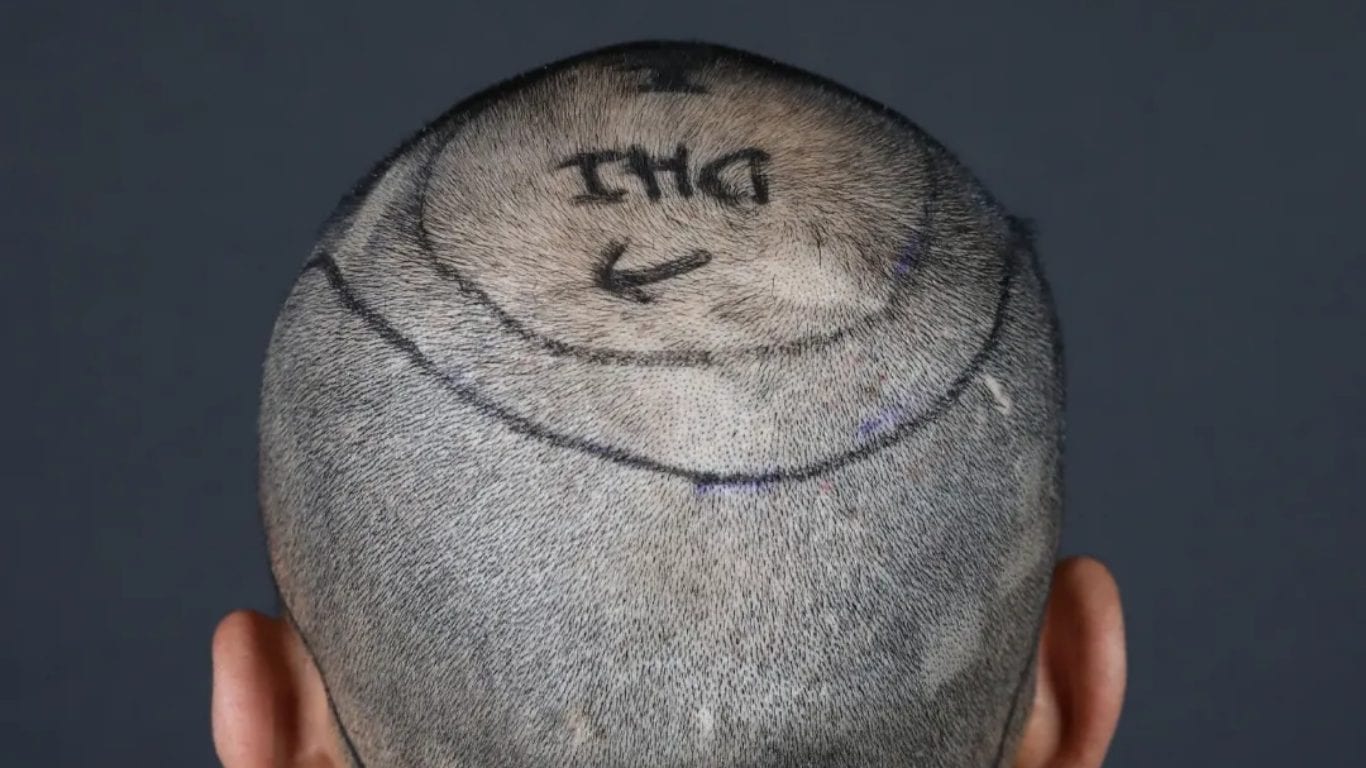
The technique is the same as elsewhere, but the plan has to follow the changing angles of the whorl, and healing needs extra care because the crown is what rests against the pillow or headrest. Shedding after the procedure can also be more visible on the crown, because the area was thin to begin with. Sleep with your head raised, and don't let the back of your head rest against anything for the first seven days or so.
Both the procedure and the healing rest on the same principles as elsewhere on the head. But the position and growth pattern of the crown mean two things matter more in practice.
Is the technique different on the crown?
The tools are the same. Extraction and implantation on the crown are done with FUE or FUT, as everywhere else. The difference is that the surgeon constantly has to adjust the angle of the grafts to the spiral of the whorl and can't just repeat the same direction. That is more demanding and takes longer per graft than work along a straight hairline. A good question for the consultation: how does the team plan for the changing angles in the whorl? The graft count alone tells you little.
Why can shedding be more visible on the crown?
Two things happen in the weeks after the procedure. The hairs in the new grafts fall out, which is normal and expected. Sometimes some of your own surrounding hair also falls out for a while, known as shock loss. Both happen wherever grafts are placed. On the crown, though, it can look worse, because the area was often thin to begin with and there is less hair around to hide the temporary sparseness. It isn't a complication. It recovers at the same pace as elsewhere on the head once the new growth arrives.
Why does sleeping position matter more for the crown?
Because the crown is literally what rests against the pillow, the aeroplane seat or the car headrest. The usual post-procedure advice, sleeping with your head raised and avoiding pressure and rubbing at first, therefore matters more here than for grafts in the hairline, which rarely touch anything when you sit or lie down. Care in the first few days matters everywhere, but at the back of the head it is much easier to disturb a fresh graft by accident. A neck pillow, like the ones many people use on planes, can help you keep the crown free at night.
Why should you ask about crown experience specifically?
Planning around the whorl and distributing grafts on the crown is a skill of its own, and something different from designing a hairline. It's entirely reasonable to ask how many crowns the team has operated on and to ask to see results from exactly this area, not just a general gallery. In our ranking you can see how experience and technique feature among several objective criteria.
How long does it take before the crown looks finished?
The timeline is the same everywhere: the hairs shed after two to three weeks, new growth comes from the third or fourth month, and the result is usually assessed from around twelve months. Within that frame, the crown is often the last area to finish. At twelve months it can look slightly less dense than the hairline, then catch up in the months that follow.
Patience is the standard advice after any hair transplant. It applies a little more to the crown, and it's good to know in advance so you aren't disappointed in month ten.
Does the timeline change for the crown?
No. The crown follows the same biology as every other area that receives grafts. The transplanted hairs shed after two to three weeks, new hairs start growing from the third or fourth month, and the result is usually assessed from around twelve months, not before. The sequence is the same.
Why does the crown often look finished last?
Patients and clinics consistently report that the crown is the last area to settle. At twelve months the hairline often looks almost finished, while the crown on the same person can still seem a little softer and less filled in. It usually keeps getting denser in the months after, rather than stalling.
Why does the crown lag behind?
Probably the same geometry we described earlier on the page. Hair growing in several directions takes longer to blend into an even impression than hair lying the same way, even though each graft grows completely normally. It doesn't mean anything is wrong. If you know this in advance, month ten or eleven feels like a result that is still maturing, not a disappointment.
When can you judge the result on the crown?
Follow the standard advice and wait until twelve months have passed before judging the result. For the crown, you can happily give it a little longer before comparing it with how the hairline has settled. Take photos in the same light and from the same angle every month, and you'll see the progress better than in the mirror. You can read how a result, including on the crown, tends to hold up in the years afterwards in the guide to long-term results.
Frequently asked questions
Is a crown transplant as successful as one in the hairline?
Yes, it uses the same technique and the same principle of donor dominance as every other area. The planning is different, though. The whorl means the crown usually needs more grafts for the same visible coverage. So the difference lies in planning and graft use, not in whether the crown can be treated.
Why does the crown take more grafts than the hairline?
Because hair on the crown grows in a spiral out from a whorl and doesn't lie the same way, so each graft hides less skin. The thinning also usually spreads as a circle, so the area to be covered grows faster than the width as the patch gets bigger.
Should I do the hairline or the crown first?
Many surgeons start with the hairline and the front third, because that area frames the face and gives the most visible effect, while the crown uses relatively many grafts. The order is therefore a question of allocating donor hair. If you have plenty of donor hair, or the crown bothers you most, both can be planned at the same time or the crown done first. There is no order that suits everyone, but it should be chosen deliberately.
I'm in my early twenties and my crown is thinning. Should I wait?
Often, yes, as long as you can see the patch is still changing. If you fill the crown before the loss has stopped, you can end up with an island of grafts surrounded by your own hair that keeps getting thinner. The advice to wait until you're around 25 and the loss has settled therefore applies especially to the crown. Many surgeons recommend medication and photos over time first, followed by a new assessment.
Can minoxidil or finasteride replace surgery on the crown?
Often, at least for a while. Minoxidil has a particularly good reputation on the crown. Finasteride slows the process behind the loss. With early thinning on the crown only, medication is therefore often the best place to start. If you still want a transplant later, it will often be smaller and use less donor hair once the pattern has stabilised with medication.
How many grafts does it take to fill the crown?
It depends much more on how wide the thinning is than on the Norwood stage. An early patch can do with relatively few, while a wide, advanced whorl can take a large part of the whole plan. The graft calculator gives you an indicative range, but the final number requires someone to look at your head.
Is a crown transplant more expensive than a hairline transplant?
Your whorl, your donor reserve and how stable your loss is are things an article can only describe. It can't measure them. Request a free hair analysis and get an honest assessment of your own crown from the clinic ranked number 1 in our ranking: whether medication, surgery or both is the way to go, and what result is realistic. No commitment of any kind.
This page provides general information and does not replace medical advice. How far your crown can go must be assessed by a qualified surgeon after seeing you in person.
Goes to the clinic at the top of our ranking.
Updated: October 2026 · How our editorial team works