Why is my hair falling out? The causes of hair loss explained
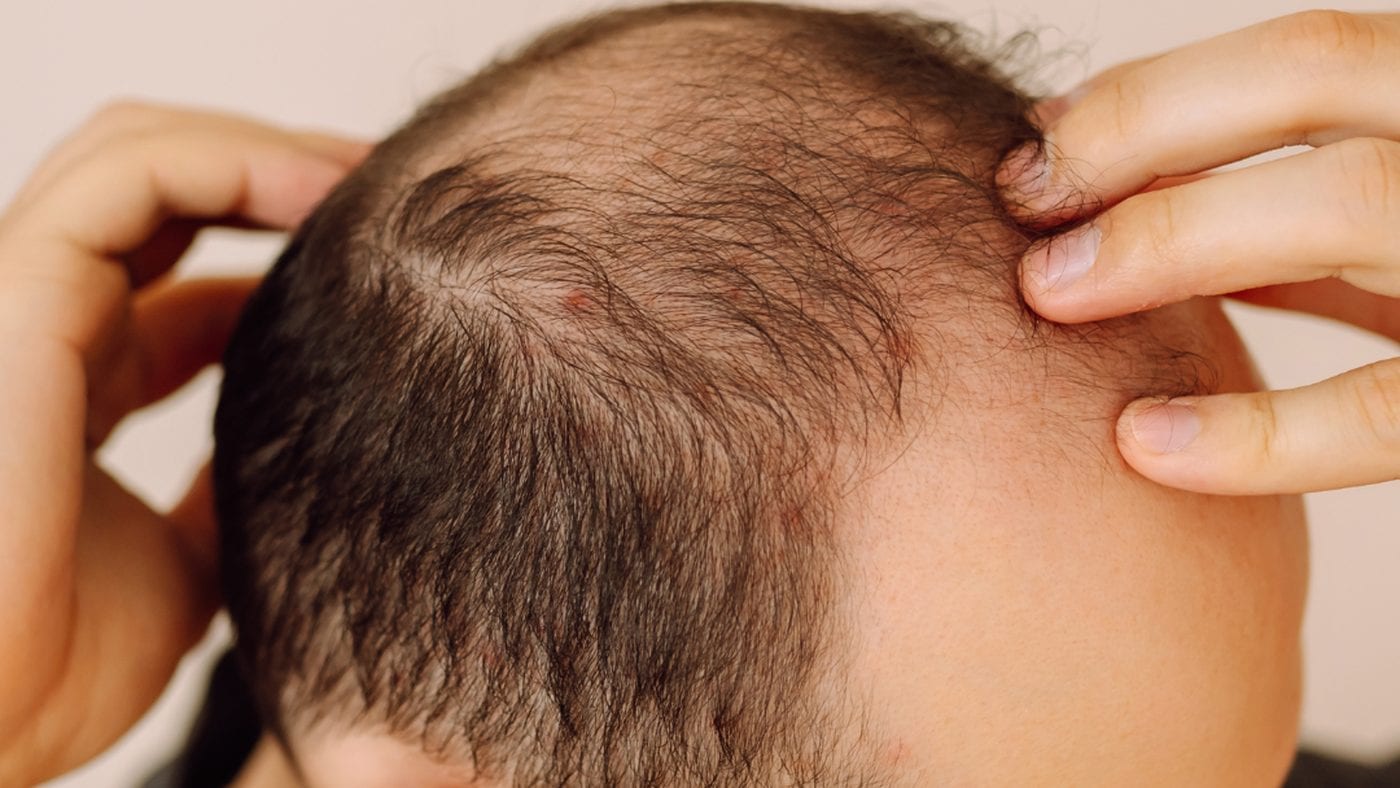
Why is hair loss a symptom and not a diagnosis?
Because many different conditions produce the same view in the mirror, from an inherited sensitivity to DHT to iron deficiency, stress, giving birth or an autoimmune disease. Treatment follows the cause, so you need to know why your hair is falling out before you decide what to do about it.
Thinner hair tells you that something is happening, not what. A 28-year-old man with receding temples and a woman losing hair in clumps three months after giving birth have two completely different conditions, even though both can see more scalp than before. The first usually needs long-term treatment. The second mostly needs patience. Mix them up and you waste money. At worst, you let time pass while follicles that could have been saved give up for good.
Below we go through the most common causes in men and women: what they look like, what happens inside the follicle, and when it's time to let a doctor take a look instead of trying things on your own. The text is based on established dermatological knowledge. It cannot diagnose you.
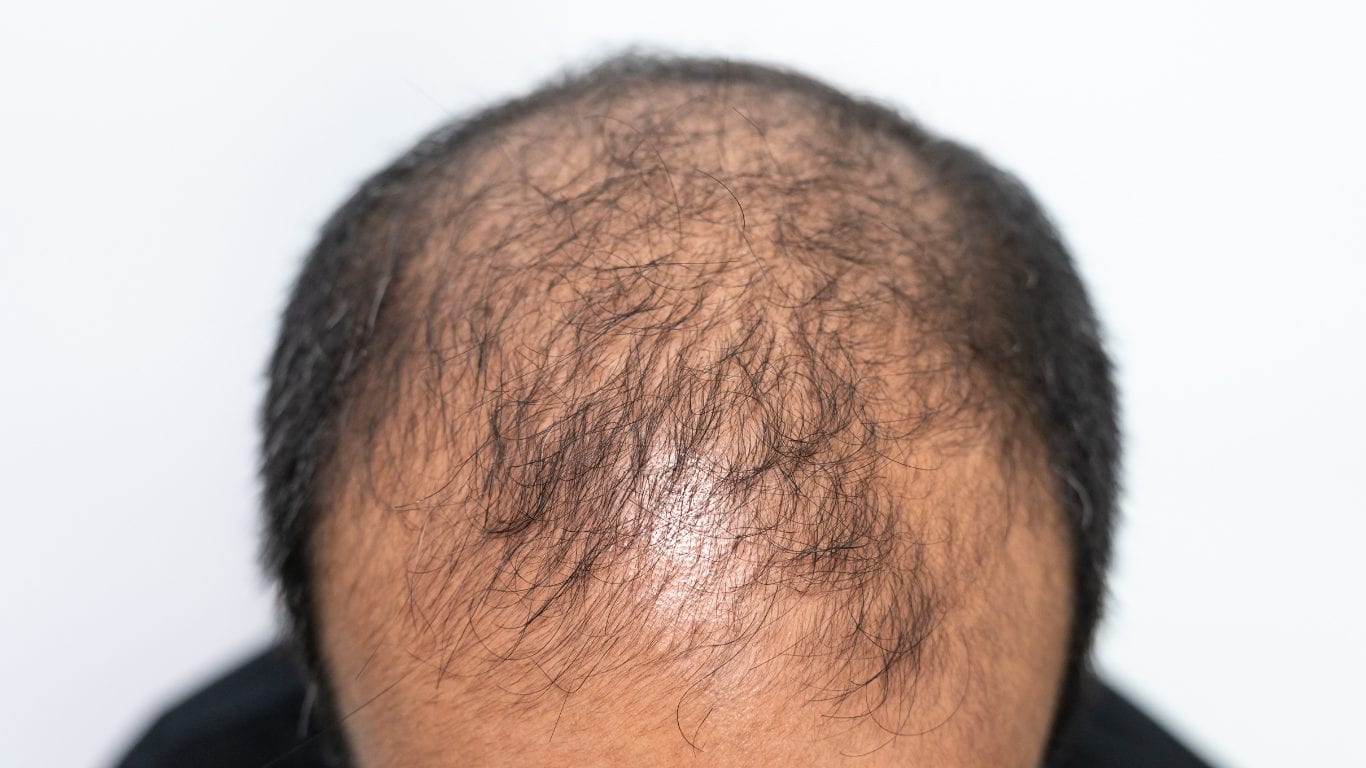
How does hair grow, and where in the cycle does it go wrong?
Every hair goes through three phases, growth (anagen), transition (catagen) and rest (telogen), before it falls out and a new one takes over. Almost all hair loss comes from this rhythm being disrupted: either many hairs enter the resting phase at once, or the follicles shrink a little with every cycle.
Your hair doesn't grow at a steady, uniform pace. Each follicle runs its own cycle, regardless of its neighbours, which is why you never lose everything at once.
- Anagen, the growth phase: The root actively produces hair, usually for 2 to 7 years. The length of this phase decides how long your hair can grow. At any given time, 85 to 90 percent of the hairs on your head are here.
- Catagen, the transition: For 2 to 3 weeks growth stops and the follicle contracts. Only around 1 percent of hairs are in this phase at the same time.
- Telogen, the rest: For about 3 months the hair sits loosely in the follicle until it is released and pushed out by a new growing hair. Normally this applies to 10 to 15 percent of hairs.
Finding 50 to 100 hairs a day in your brush and the drain is therefore completely normal. That's the resting phase coming to an end. Trouble starts when the balance tips. Either many hairs are pushed into rest at the same time and you suddenly shed (telogen effluvium). Or the follicles get smaller with every cycle and make ever thinner, shorter hairs until they finally stop altogether (androgenetic alopecia). Sudden shedding or slow shrinking: learn that distinction and you'll understand most of the rest.
What is androgenetic alopecia, and why does it affect so many people?

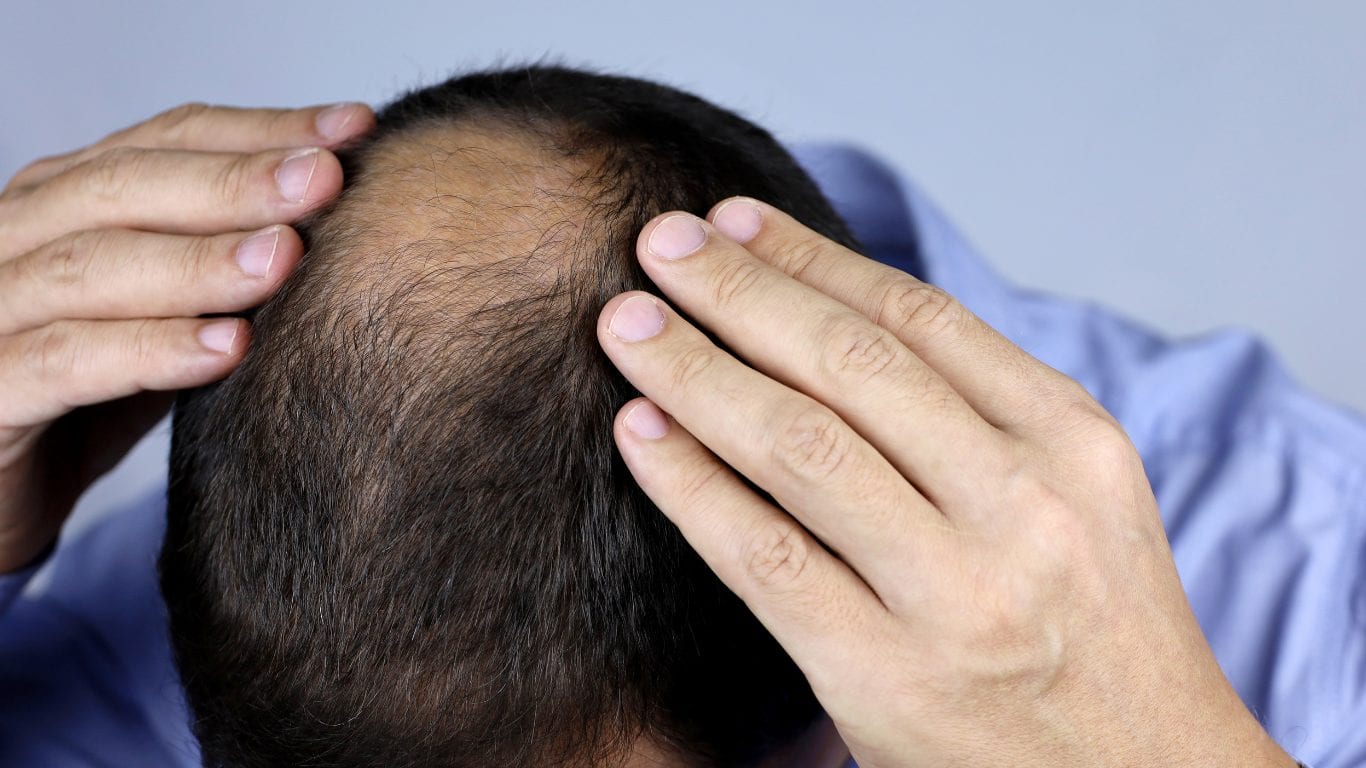
Androgenetic alopecia is hereditary hair loss, and it is by far the most common form of permanent hair loss. Up to 50 percent of men notice it before they turn 50, and many women get it, especially after the menopause. It happens because follicles with an inherited sensitivity react to the hormone DHT.
You may have heard it called male or female pattern baldness. The name is a little misleading, because genes alone don't do the job. It's the combination of an inherited vulnerability in certain follicles and the hormone dihydrotestosterone, DHT, that sets the process in motion.
What does DHT do to the hair follicle?
The body makes DHT from testosterone with the help of the enzyme 5-alpha reductase. In people who have inherited the vulnerability, the follicles at the front, at the temples and on the crown respond to DHT with a growth phase that gets shorter every cycle. Each new hair is a little thinner, a little shorter and a little lighter than the one before. Eventually the follicle makes only a fine vellus hair, or nothing at all. This is called miniaturisation, and it's why hair often thins for years before it disappears.
The follicles at the back of the head and above the ears have inherited the opposite trait. They tolerate DHT. That is the whole basis of hair transplantation: when hair is moved from here to a thin area, it takes its resistance with it and usually stays. These follicles aren't completely immune, but they're close enough for the principle to hold. Specialists call this donor dominance.
What does the pattern look like in men and in women?
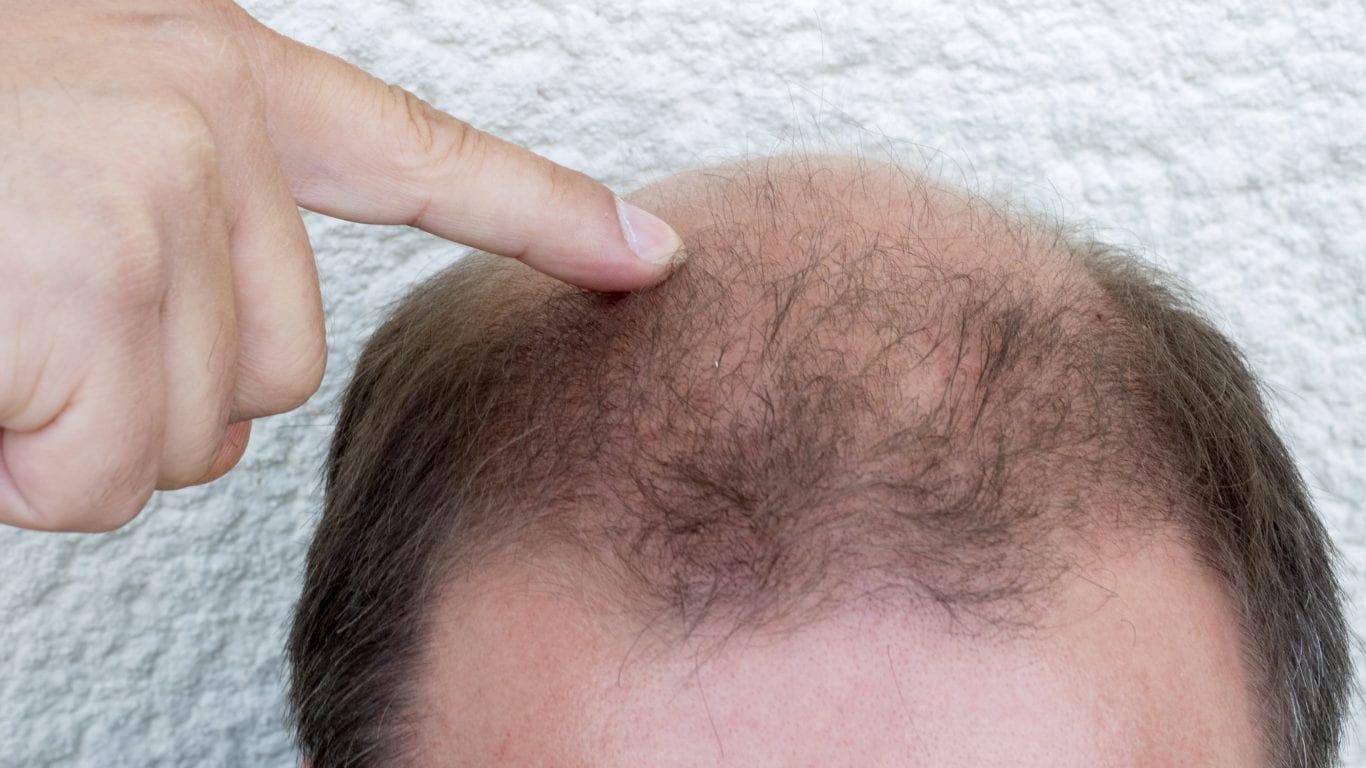
Men most often lose hair first at the temples, giving the hairline an M shape, or on the crown, or in both places. Women rarely get receding temples like that. Instead their hair becomes evenly sparse along the centre parting, while the front hairline holds. The difference matters both for how the doctor makes the diagnosis and for which treatment is relevant.
If your hair loss has only just started, a procedure may not be the right step yet. The medical team at the clinic at the top of our ranking can look at your photos and tell you honestly whether to wait, start with treatment or consider more.
Goes to the clinic at the top of our ranking.
How is the extent of hair loss measured?
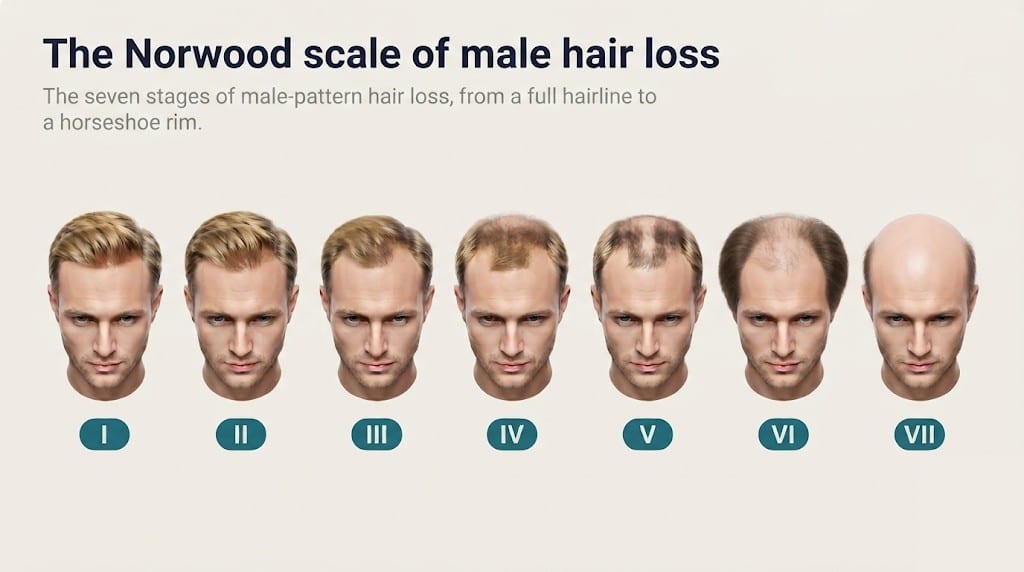
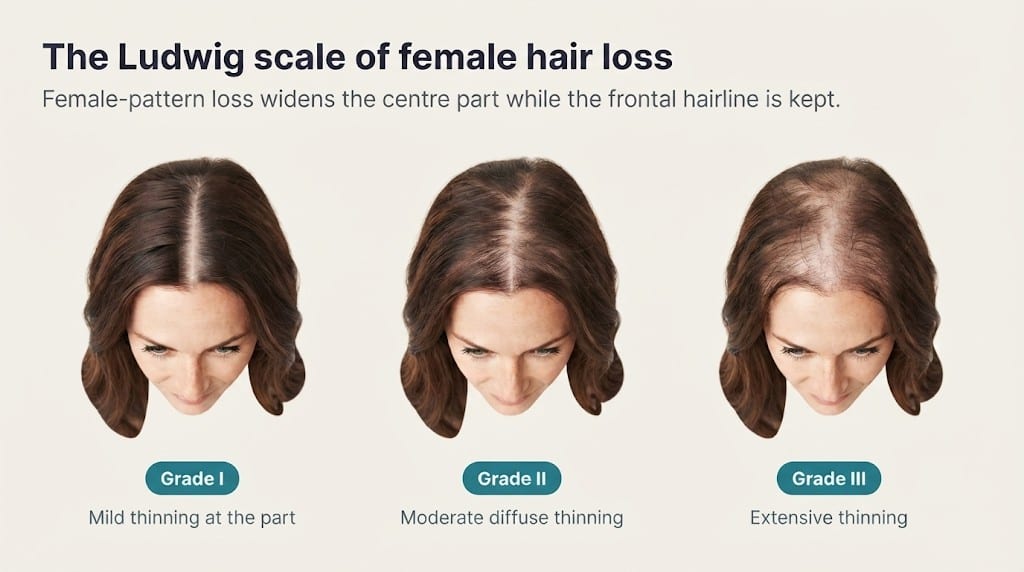
In men, the Norwood scale is used, with seven stages from an almost untouched hairline (I) to just a horseshoe left at the back and sides (VII). In women, the Ludwig scale is used, with three grades of thinning on top. The stage says a lot about how many grafts a possible transplant would need.
The scales mean that you, your doctor and any clinic are talking about the same thing. They also let you track changes over time, and they give a first rough idea of what can be achieved.
The Norwood scale for men
The scale is also called Norwood-Hamilton and has seven stages:
| Stage | What it looks like |
|---|---|
| I | The hairline is practically untouched. |
| II | The temples have started to recede slightly, evenly on both sides. |
| III | The recession is clear. The variant III vertex means the crown has also started to thin. |
| IV | More loss at the front and a clearly sparse area on the crown, but still with a bridge of hair between them. |
| V | The bridge between the front and the crown thins and shrinks. |
| VI | The bridge is gone, and the front and crown have become one continuous area. |
| VII | The final stage. All that remains is a horseshoe-shaped band along the back and sides. |
The Ludwig scale for women
For women, doctors usually use three Ludwig grades: I is mild, II is moderate and III is severe thinning. All three describe a top area that gradually becomes sparse while the front edge stays. The grade is more than a label. How many grafts are needed, and what a realistic goal is, are closely linked to it.
What is telogen effluvium, and does it go away on its own?
Telogen effluvium is sudden, diffuse shedding over the whole head that starts 2 to 3 months after a stressor, such as giving birth, a high fever or major weight loss. It is almost always temporary, and the hair usually grows back within 6 to 12 months once the trigger has gone.
Hereditary hair loss creeps forward slowly in a fixed pattern. Telogen effluvium, often shortened to TE, does the opposite. It comes on suddenly and spreads across the whole scalp. The body gets a shock and pushes a large share of follicles from growth into rest at the same time. Around 2 to 3 months later, all those hairs let go together. Many people get genuinely frightened by the amount on the pillow and in the drain.
What can trigger it?
- Giving birth, or other major hormonal shifts.
- A high fever or a serious infection, for example after a viral illness.
- Major surgery under general anaesthetic.
- A period of heavy physical or psychological strain.
- Sudden weight loss, crash diets or too little protein.
- Low iron, low vitamin D or a thyroid out of balance.
- Starting, or stopping, certain medicines.
Fortunately, TE is almost always temporary. Once the trigger is gone, the follicles get back to work, and within 6 to 12 months the hair is usually back. What you need is to find and remove the cause and then wait. Aggressive treatment achieves little. A hair transplant is the wrong answer to pure TE: the follicles haven't gone anywhere.
What is alopecia areata, and why doesn't surgery help?
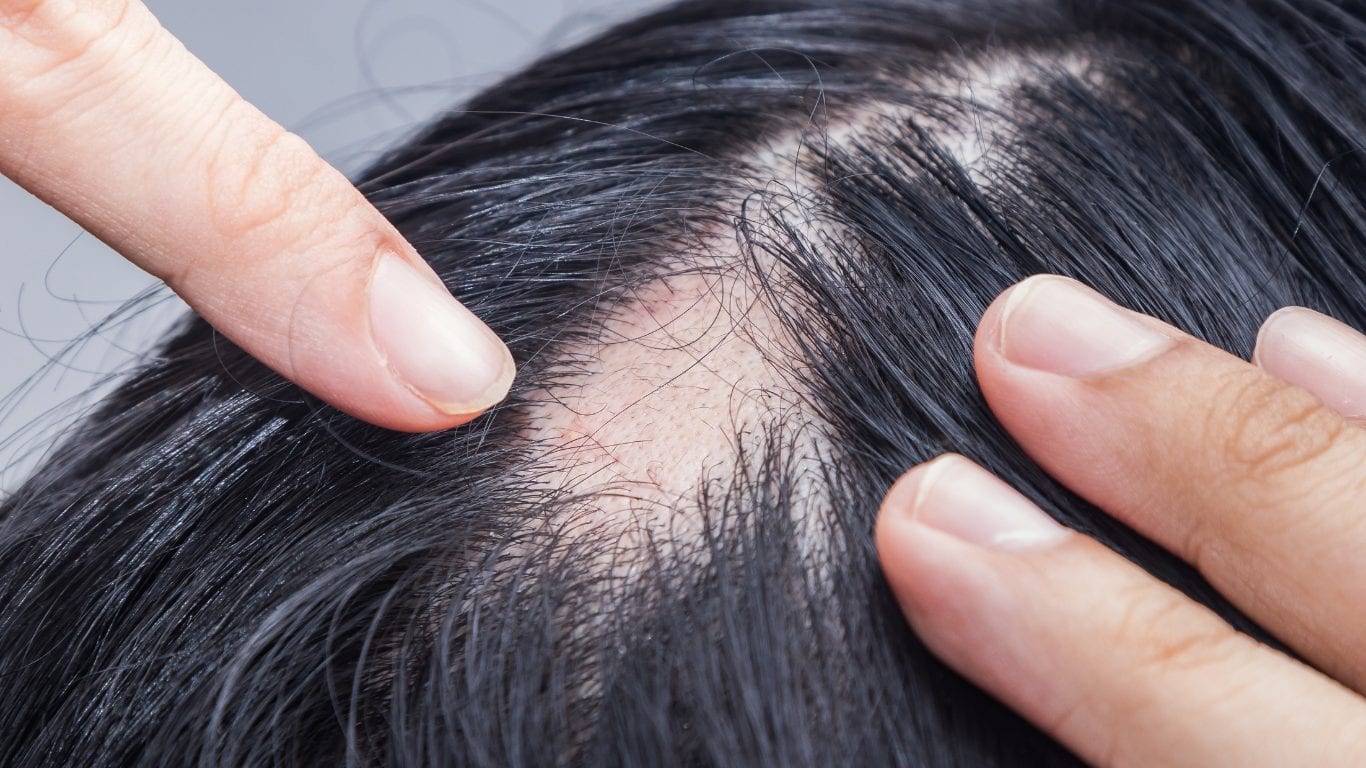
In alopecia areata, the body's own immune system attacks the hair follicles, and the result is typically round, sharply defined bald patches. The follicles are rarely destroyed for good, so treatment is medical. Hair transplanted into an area with active disease will most likely be attacked in the same way.
In alopecia areata, the immune system makes a mistake and goes after the body's own hair follicles, which then stop producing hair. The classic picture is a round, smooth patch, roughly the size of a ten-krone coin, that appears almost overnight. It looks nothing like the slow pattern of hereditary loss or the even shedding of TE.
Nobody can say for sure how it will go. Many people get their hair back on their own within a year, but patches can return and spread. Some lose all the hair on their head (alopecia totalis), and a small minority lose hair all over the body (alopecia universalis). Because the follicles are usually not destroyed, the condition is treated with medicines, for example corticosteroids as a cream or injections, or the newer JAK inhibitors taken as tablets. Surgery is not the answer. The immune attack doesn't distinguish between old and new hairs.
Can diet, deficiencies and lifestyle cause hair loss?
Yes. Hair follicles are among the fastest-growing tissues in the body, and when something is lacking, they're among the first things the body deprioritises. Iron deficiency, low vitamin D and too little protein are common triggers, while smoking, stress and poor sleep can worsen loss that's already under way.
Most of these factors work through the same mechanism as telogen effluvium. The body saves resources, and the hair goes into rest.
- Iron: Probably the most common diet-related cause. Women with heavy periods are particularly at risk. Low iron stores, measured as ferritin, are closely linked to diffuse thinning.
- Vitamin D: Many people in the Nordic countries don't get enough, because the sun is absent for much of the year. Low levels are linked to several types of hair loss.
- Protein: A hair is made almost entirely of keratin, which is a protein. If you eat too little protein, typically on a strict diet, production suffers.
- Zinc, biotin and B12: A confirmed deficiency can play a part. Supplements only help when the deficiency is real, and large doses without a reason do your hair no good. Some can even cause harm.
- Smoking: Weakens the blood supply to the follicles and is linked to earlier and more extensive loss.
- Stress and sleep: Long-term stress and too little sleep disrupt your hormones and can keep a period of shedding going longer than necessary.
No hair treatment from the pharmacy stops hereditary hair loss. Even so, correcting a deficiency you actually have removes an extra burden, and the follicles you have left get better conditions.
Which diseases, hormones and medicines cause hair loss?
Both an underactive and an overactive thyroid, PCOS, hormonal shifts such as the menopause or a new contraceptive pill, and a long list of medicines can cause hair loss. Here the hair is often a sign of something else going on in the body, so a medical examination should come first.
When the cause lies elsewhere in the body, it's especially important to be examined properly. Your hair may be the first visible sign of something that needs treating regardless.
The thyroid
An underactive thyroid (hypothyroidism) and an overactive thyroid (hyperthyroidism) can both cause diffuse hair loss. That's why a thyroid blood test is a standard part of the assessment when no other explanation has been found.
Hormones
In polycystic ovary syndrome (PCOS), androgen levels are higher than normal. This can cause female pattern hair loss along with more body hair and irregular periods. Switching contraceptive pills, or the drop in oestrogen during the menopause, can also trigger shedding.
Medicines
Many medicines list hair loss as a side effect. These include some blood thinners, beta blockers, retinoids, epilepsy medicines, chemotherapy and, less often, hormone preparations. If you suspect a medicine, talk to the doctor who prescribed it. Never stop on your own.
Why is hair loss in women so often overlooked?

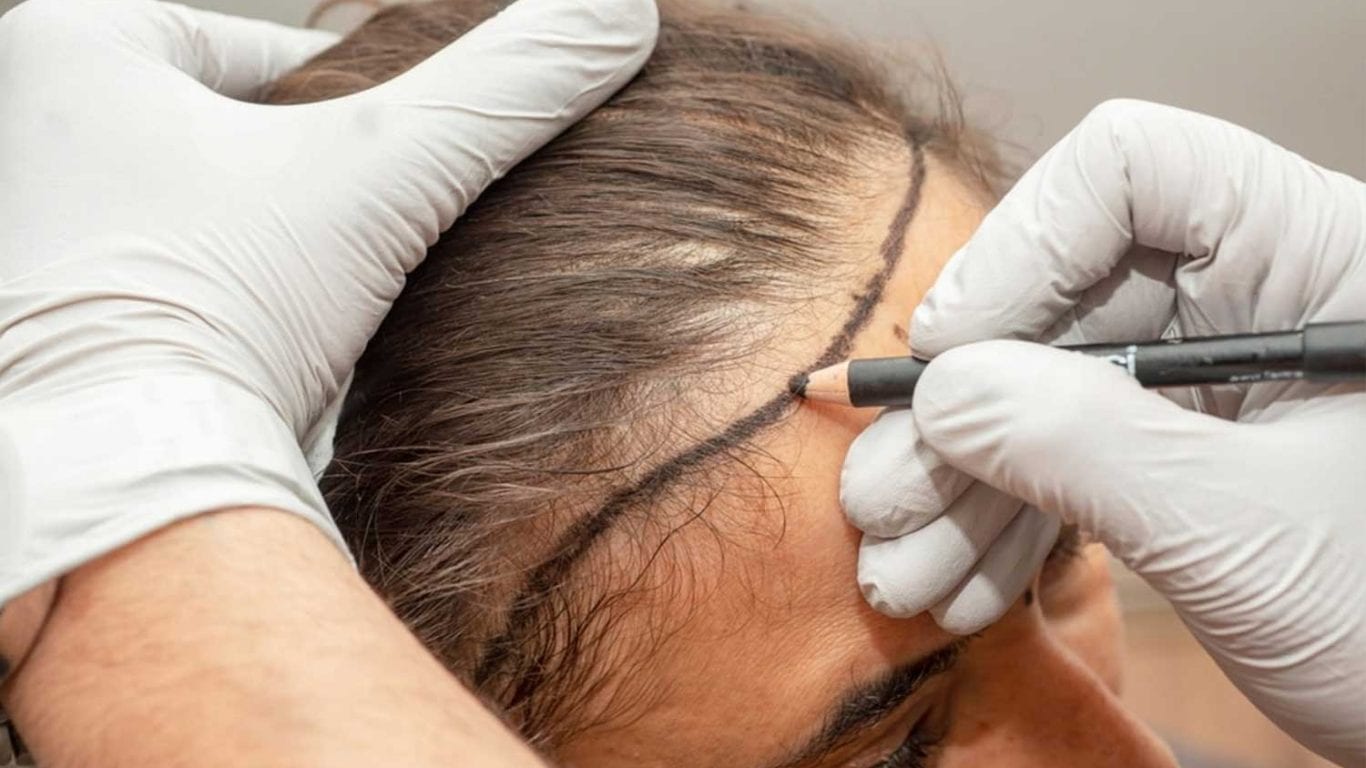
Because women rarely get receding temples. Instead the loss shows up as a wider parting, a thinner ponytail and more visible scalp in daylight, and since the front hairline usually holds, a lot can be gone before anyone else notices.
Many women first notice it in their ponytail, which simply feels thinner in the hand. Others see it in photos taken from above, or in the mirror under harsh overhead lighting. Because the front edge holds, the people around them see nothing for a long time. That's why many wait too long to get it checked.
In women there are more often several causes stacked on top of each other, for example hereditary thinning together with low iron or a thyroid out of balance. Blood tests should therefore be done before anyone draws conclusions.
Read the full guide to hair loss in women →
What causes sudden hair loss in women?
Usually telogen effluvium: many follicles enter the resting phase at the same time after a stressor, and 2 to 3 months later the hair falls out evenly over the whole head, with no bald patches. Common triggers are giving birth, a high fever, major weight loss, iron deficiency and thyroid problems, and the hair most often comes back within 6 to 9 months.
Sudden here means that one day you notice far more hair in your brush and in the drain than you're used to, and that it carries on week after week. Behind it there is almost always something your body went through a couple of months earlier, with the hair only reacting now. That delay is why many people never connect the shedding to its cause.
In women, giving birth is the classic trigger. After pregnancy, hormone levels fall, and many shed heavily a few months later. Other common explanations are a high fever or an infection, a hard period physically or mentally, major weight loss, low iron stores and a thyroid that isn't working as it should. Some medicines can also contribute. Most often the loss is temporary. Once the cause has gone, the hair grows back, usually within 6 to 9 months.
See a doctor if the shedding lasts longer than 6 months, if hair disappears in defined patches, or if you're also unusually tired or have gained or lost weight without knowing why. That can point to iron deficiency or thyroid problems, and both can be detected with a blood test. The treatment options are covered in the guide to hair loss in women.
Can hairstyles and hair habits damage the follicles?

Yes. Tight ponytails, braids, extensions and buns that pull on the hair over a long time can cause traction alopecia, most often along the hairline and above the ears. Caught early, the hair comes back, but constant pulling can scar the follicle and cause permanent loss.
Not all hair loss has an internal cause. In traction alopecia, it's the constant pulling that damages the follicles over time. Change your hairstyle while the damage is fresh and it recovers. If the pulling continues for years, the follicles can die and be replaced by scar tissue that never produces hair again.
Lots of heat, harsh chemical treatments such as bleaching, perming and straightening, and rough brushing can make the hairs break. It looks like hair loss, but the follicles are intact. It's the hair shaft itself that is damaged. What helps here is treating your hair more gently, and medicine has no role. Knowing the difference saves you paying for treatment you don't need.
When should you see a doctor about hair loss, and what happens there?
Book an appointment if your hair falls out suddenly or in large amounts, if you get bald patches, if your scalp itches, burns, is red or flaky, or if you're also tired, have had a change in weight or get irregular periods. The doctor goes through your medical history, examines your scalp and takes blood tests for things like iron, thyroid function and vitamin D.
Don't wait if any of this applies to you. Some of the causes have a window in which treatment works best, and that window closes.
What happens in an assessment?
- The conversation: When did it start, does anyone in your family have the same, which medicines do you take, how do you eat, and what happened in your life 2 to 3 months before the shedding began?
- The examination: The doctor looks at the pattern and for signs of miniaturisation, gently pulls on a small bunch of hair (pull test) and often uses trichoscopy, a magnified examination of the scalp.
- The blood tests: Iron stores (ferritin), TSH for the thyroid and vitamin D. Hormones are included when your history suggests it.
The choice of treatment comes after the cause has been found. That may be medicine, see the guide on how to slow hair loss without surgery, or an operation, which is described under hair transplant methods.
What should you do first if you're losing hair?
Get the right diagnosis before you buy anything. Most permanent hair loss is hereditary, but a large share of cases are caused by something that passes or can be treated, and then surgery doesn't help.
Most permanent hair loss is androgenetic alopecia. DHT shrinks follicles with an inherited vulnerability, while the resistant hairs at the back of the head make it possible to move hair with a lasting result. Even so, many people losing hair have something temporary or treatable: telogen effluvium, a deficiency, a thyroid out of balance or alopecia areata. For them, an operation is the wrong way to go.
Start with a photo of your hairline and crown in the same light every month, and an appointment with your GP. The diagnosis decides the rest, whether that means waiting, correcting a deficiency, starting medicine or considering surgery. If you don't know where to begin, we have a short guide to the first steps when hair loss begins.
Frequently asked questions
How many hairs is it normal to lose in a day?
Losing 50 to 100 hairs a day is normal. These are hairs that have finished the resting phase and are released naturally. You only have reason to react when the amount is clearly larger over time, or when you see sparse areas or bald patches.
How can I tell hereditary hair loss from temporary shedding?
The pattern tells you most. Hereditary loss comes gradually and concentrates at the hairline, the temples or the crown, where the hairs get thinner with every cycle (miniaturisation). Temporary shedding, telogen effluvium, comes suddenly and spreads over the whole head. If you're unsure, a dermatologist can tell the difference using trichoscopy.
Is hair loss after giving birth permanent?
Almost never. Shedding after giving birth (postpartum telogen effluvium) happens because hormone levels fall after pregnancy. The hair is usually back within 6 to 12 months, without treatment.
Can stress alone cause hair loss?
Yes. Severe physical or psychological strain can send many follicles into rest at the same time, and 2 to 3 months later the hair falls out. Once the strain passes, the hair usually starts growing again.
Do vitamins and supplements help with hair loss?
Only if you're lacking something. Correcting low iron, low vitamin D or too little protein can help. Supplements don't stop hereditary hair loss, and high doses without a confirmed deficiency don't give you more hair and can in some cases cause harm.
Can a blood test tell me why I'm losing hair?
It can reveal important contributing factors, such as too little iron, low vitamin D or a thyroid out of balance. It can't detect hereditary hair loss on its own. That takes your medical history and an examination of your scalp.
When should I book an appointment with a doctor?
If you have sudden or heavy shedding, bald patches, or hair loss together with itching, burning, flaking, tiredness or a change in weight. Go early rather than late, since some causes can only be treated well within a certain time.
If your hair loss has only just started, a procedure may not be the right step yet. The medical team at the clinic at the top of our ranking can look at your photos and tell you honestly whether to wait, start with treatment or consider more.
Goes to the clinic at the top of our ranking.