FUE, DHI, FUT and sapphire: hair transplant methods explained

What is a hair transplant, and what do the method names mean?
A hair transplant moves hair follicles from the back and sides of the head, where they resist DHT, to areas that have become thin or bald. The names FUE, DHI, FUT and sapphire only describe how the follicles are removed and placed, not four different operations.
The basic idea is simple. Hair at the back of the neck and above the ears is genetically resistant to DHT, the hormone behind hereditary hair loss. The surgeon takes follicles from there and plants them where the hair has given up. The follicles keep that resistance after the move, which is why transplanted hair usually stays for many years, often for life.
Most of the confusion about methods disappears once you see that they all come down to two questions: how the follicles are taken out, and how they are put in. FUE, DHI, FUT and sapphire each answer one of those two. Below we explain each one in plain language, with drawings and honest pros and cons, so you can judge for yourself what a clinic is really offering. Take one thing with you from the start: the surgeon's skill and care matter more than the name of the method.
What are the two steps in every hair transplant?
First comes extraction, where follicles are harvested from the donor area, either one by one (FUE) or as a strip of skin (FUT). Then comes placement, where the follicles go into the recipient area, either into channels opened beforehand or with a pen that opens and plants in the same movement (DHI).
Every method name you see in an advert belongs to one of these two steps. Sapphire FUE is about the blade that opens the channels, so it concerns placement. DHI is also about placement. FUE and FUT are about extraction. Once you know that, it becomes much easier to see through the marketing.
What decides the result is how well each step is carried out. An acronym on a clinic's website says little about how many grafts survive, or whether the hairline will look natural.
How does FUE work, step by step?
In FUE (Follicular Unit Extraction) the surgeon frees each follicular unit with a cylindrical micro-punch under a millimetre wide and draws it out with forceps. There is no linear scar, only small dots that heal, and FUE is now the most common method.
A follicular unit is 1 to 4 hairs growing in the same small group, and with FUE each one is harvested separately. No strip of skin is cut out.
Here's how it goes. The donor area is usually shaved so the surgeon can see the direction of each hair. The area is then numbed. The surgeon or a trained team places the micro-punch around each unit at the same angle the hair grows, and frees it from the surrounding tissue without damaging it. The graft is then lifted free with fine forceps. It goes into a cold, nutrient-rich solution that keeps it alive until it is planted.
The punch can be guided by hand, driven by a motor or steered with help from a robot. Whatever the tool, the size and angle have to be right and the hand has to be experienced. If extraction is too rough or too imprecise, follicles are damaged, fewer survive, and the donor area can end up looking sparse. FUE is as much craft as technology.
The pros: No linear scar, just scattered dots that barely show with short hair. Faster healing and less tenderness in the donor area than with the strip method. A good fit if you want to be able to wear your hair short. The cons: It takes longer and usually costs more per graft. The donor area often has to be shaved. Very large extractions over time can leave the donor area sparse if they aren't well planned.
It depends on your donor area, your hair type and where the loss is. Send three photos and the medical team at the clinic at the top of our ranking will suggest a method and number of grafts.
Goes to the clinic at the top of our ranking.
How does FUT work, and when is the strip method right?
In FUT (Follicular Unit Transplantation) the surgeon removes a thin strip of skin from the back of the head and stitches the wound closed, and a team divides the strip into individual grafts under a microscope. The method yields many grafts in one session but leaves a linear scar at the back of the head.
FUT, or the strip method, is older than FUE. It is still used, and in some situations for good reasons. The strip is taken from the back of the head, where hair is densest and most stable, and the surgeon closes the wound carefully afterwards.
Under a microscope a specialised team divides the strip into individual units, often several thousand, which are then planted exactly as in FUE. Because the hairs come from one dense band rather than scattered points across the whole back of the head, FUT can yield a very large number of grafts in one session, and the overall density of the donor area often copes with it better than with an FUE extraction of the same size. Read more in the guide to FUT.
The price for this is the scar. It is usually hidden by your hair once you have a bit of length, but a very short cut at the back becomes difficult. It heals a little more slowly than after FUE, and the wound can feel tight for the first few days. FUT is the best fit for extensive loss, where as many grafts as possible are needed, and for people who don't want the back cut short anyway.
What is DHI, and what does the Choi pen do?
DHI (Direct Hair Implantation) is a way of planting, not a way of harvesting. The follicles are usually removed with FUE and loaded one at a time into a Choi pen, which opens the channel and inserts the hair in a single stroke.
In practice the pen is a hollow needle with a sharp tip. The surgeon loads the graft, places the tip against the skin and pushes the graft down in one move. Channel and placement thus become one step instead of two.
The surgeon controls the angle, the direction and how deep each hair is set. That control matters most at the front hairline, where hairs have to lie low and point the right way to look natural. The graft also spends less time outside the body, which in theory can mean more grafts survive. There's more on the method in the guide to DHI.
The pros: You can get a very precise hairline and dense planting, and sometimes you avoid shaving your whole head. The cons: It takes longer and the team has to be well drilled, so the price is often higher. The pen is never better than the hand holding it. That is why the question "FUE or DHI?" is a little off. The real choice is between planting into pre-made channels and planting with a pen, and in both cases it is usually FUE that harvests the hairs.
What is sapphire FUE, and is it a separate method?
No. Sapphire FUE is standard FUE where the channels in the recipient area are opened with a synthetic sapphire blade instead of steel. The sharp, smooth edge can create smaller, more precise channels, but the benefit is small compared with how skilled the surgeon is.
You'll also see it written as Sapphire. The blade is used when channels are opened before planting, in other words when the clinic is not using a DHI pen. Smaller channels can mean less tissue damage, fewer scabs and better scope for dense placement and natural angles.
Extraction is the same as in standard FUE. The only difference is the blade. Don't let the word sapphire alone decide which clinic you choose. Find out who makes the channels, and ask to see documented results. The guide to sapphire FUE looks more closely at the evidence.
Does it matter whether extraction is manual, motorised or robotic?
Less than the marketing suggests. A manual punch gives the most feel and control, a motorised punch is faster in large sessions, and a robot such as ARTAS locates grafts with a camera. None of them is automatically best, because the result depends on the team's experience.
Manual: the surgeon twists a small punch between the fingers and feels how the tissue gives way around each unit. Motorised: a motor spins or vibrates the punch, and large extractions go faster. Robotic: systems such as ARTAS let a camera and a computer pick out the grafts and guide the extraction.
Each approach has its cost. By hand it is slower. With a motor it is fast, but without experience follicles are easily damaged. A robot can be accurate, but it is expensive and still needs people around it. What you are really paying for is a high share of surviving grafts and a natural look, and only an experienced team can deliver that.
Which hair transplant method should you choose?
No method is best for everyone. FUE suits you if you want short hair, FUT if you need a very large number of grafts and wear your hair longer, DHI if the hairline needs to be extra precise, and sapphire FUE if the channels should be small and dense. The choice belongs with an experienced surgeon who has examined you.
| Method | How | Scarring | Best when |
|---|---|---|---|
| FUE | One unit at a time | Small, scattered dots | You want short hair and the area is small or medium |
| FUT | Strip of skin | Linear scar at the back of the head | A very large number of grafts is needed and you wear your hair longer |
| DHI | Placement with a pen | As with FUE | The hairline needs to be precise and dense |
| Sapphire FUE | FUE with a sapphire blade | As with FUE | The channels need to be small and dense |
The choice depends on how extensive your loss is, how much donor hair you have, what your hair is like, how short you want to go, and what you can afford. A good surgeon fits the method to your head and your goal. What gives the clinic the best margin should play no part. Be wary when a clinic only talks about one method, whatever you ask.
Some of what is marketed as hair loss treatment doesn't move a single hair. SMP tints the scalp but adds no hair. LLLP and SVP try, without surgery, to keep the remaining hair alive. All three have their own page.
How many grafts do you need, and how much can the donor area take?
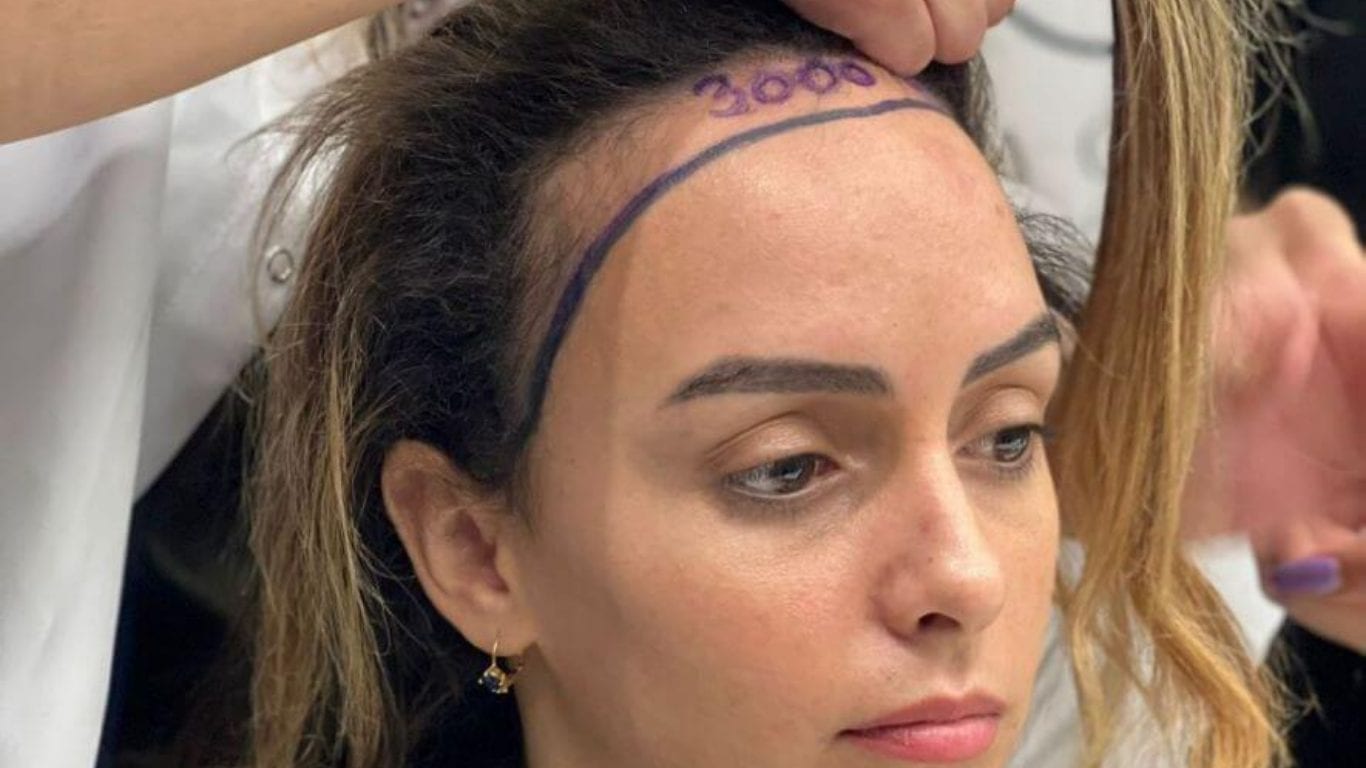
As a rough guide, the hairline and front take 2,000 to 3,000 grafts, while the front and crown with advanced loss can need 4,000 or more, sometimes split over two sessions. The donor area is limited, so the plan has to allow for loss you haven't had yet.
How far along the Norwood scale you are, and how large the area is, decide what you need. The graft calculator gives you a first estimate: work out how many grafts you need.
Donor hair is a supply you only get once, whatever the method. A responsible surgeon plans both today's procedure and the hair loss you are likely to have later, so the back of the head isn't emptied too early. Grafts and hairs aren't the same thing either. A graft usually holds between 1 and 4 hairs. So 3,000 grafts often equals 6,000 hairs or more. If someone promises you a very large number of grafts at a very low price, that is a warning sign, whatever the method. See also do I have enough donor hair?
What is surgery day like, and how does it heal afterwards?
You are under local anaesthetic and awake throughout, without pain, and most sessions last 6 to 8 hours. Afterwards your forehead may swell, and scabs form that come away after 1 to 2 weeks. You see the final result after 10 to 18 months.
Whatever the method, you are awake all day. The length depends on how many grafts are being moved, and you get breaks along the way for food and the toilet. Most people find the day far calmer than they had imagined.
When the anaesthetic wears off, your scalp can feel tender, your forehead may be swollen for a couple of days, and scabs form over the grafts. In the weeks that follow, most of the transplanted hairs fall out. This is called shock loss and is expected. The follicles rest for a while and then start producing new, lasting hair from the third or fourth month. Aftercare has a big effect on how many grafts survive, whatever the method. The full timeline is in the guide to aftercare.
How safe is a hair transplant, and what are the risks of each method?
Like all surgery, a hair transplant carries a risk of infection, bleeding and temporary numbness, and poor work can give an artificial-looking result and visible scars. The risk is driven mostly by the clinic: sterile practice, an experienced team and a low number of patients per day matter more than the choice of method.
The problems that come up most often are rarely caused by the technique itself. They come from poor planning, taking too much hair from the donor area, and rushing at clinics that take on many patients at once.
The most important safety question is therefore who performs the critical parts of the procedure, and how many patients the clinic takes on the same day. At accredited clinics where a surgeon leads the work, graft survival of 91 to 96 percent and complications below 1 percent are reported. Figures like these are worth asking for, and worth asking for documentation of. No method can make up for a lack of experience or a production-line operation. Here's how to assess a clinic: choose the right clinic. What happens after surgery is covered in the guide to aftercare.
What should you remember when comparing methods?
Remember that it all comes down to two steps: extraction with FUE or FUT, and planting into channels, with a sapphire blade or with a pen. Every variant has real strengths, but the surgeon's skill and the plan for your donor hair weigh more than the name of the technique.
FUE leaves no linear scar, FUT yields the most grafts, DHI gives a precise hairline, and sapphire makes small, dense channels easier. That's it. Use this knowledge to ask good questions at the consultation: Who opens the channels? How many grafts, and why exactly that number? How do you account for the hair loss I may have later?
Then let an experienced team with documented results choose the technique that suits you. You'll be in a much stronger position than someone hunting for a particular acronym.
Go deeper into this chapter
Frequently asked questions
Which hair transplant method is best?
None is best for everyone. FUE leaves no linear scar, FUT harvests the most grafts in one session, DHI gives a very precise hairline, and sapphire FUE creates small, gentle channels. What suits you depends on how much hair has been lost, how much donor hair you have and what you want, and an experienced surgeon should assess that.
Is DHI better than FUE?
The question is a little off, because DHI usually uses FUE to harvest the hairs. The difference lies in the planting: with DHI the hairs are inserted directly with a pen, while standard FUE opens the channels first. DHI makes it easier to plant densely and at the right angle, but it takes longer and the team needs to know its craft.
Will I have scars after a hair transplant?
After FUE and DHI there are only small, scattered dots that barely show, even with short hair. FUT leaves a linear scar at the back of the head, so you need some length in your hair to hide it.
How many grafts do I need?
It depends on how far your hair loss has progressed and how large the area is. For the hairline and front, 2,000 to 3,000 grafts is common. Covering both the front and the crown can take 4,000 grafts or more, sometimes split into two rounds. The surgeon assesses this based on your donor area and the loss you may have later.
Does a hair transplant hurt?
The scalp is numbed with local anaesthetic. You are fully conscious, but the procedure itself doesn't hurt. When the anaesthetic wears off it becomes tender, your forehead may swell a little, and the skin forms scabs. After 1 to 2 weeks most of it is over.
Is transplanted hair permanent?
Usually, yes. The hairs are taken from the back of the head and above the ears, where the follicles are genetically resistant to DHT (donor dominance), and they keep that trait after the move. Your own surrounding hair can still thin, which is why medication alongside is often recommended.
Can the methods be combined?
Yes, and it's common. For example, hairs can be harvested with FUE and planted with a DHI pen at the hairline, while other areas get channels opened with a sapphire blade. A skilled surgeon puts the combination together based on your hair and your goal.
It depends on your donor area, your hair type and where the loss is. Send three photos and the medical team at the clinic at the top of our ranking will suggest a method and number of grafts.
Goes to the clinic at the top of our ranking.