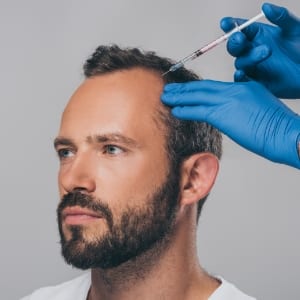
Exosomes are small sacs, or vesicles, that cells release to send messages to other cells. Those messages can include growth factors. In exosome treatment, a preparation of these vesicles is applied to the scalp, either by injection or on the skin, often combined with microneedling. The idea comes from regenerative medicine, and few of the newer options are marketed harder.
The research is new. It consists of laboratory experiments and a handful of clinical studies on small numbers of people, with no shared protocol, and the randomised trials are few, small and short. No large study has shown a lasting effect. Many exosome products are also not made from the patient's own body, unlike PRP and SVF, and their origin and regulation vary. Below we separate what we know from what we don't, and give you the questions to ask before you pay.
- Exosomes are not approved as a treatment for hair loss.
- Many products come from a manufacturer, not from you, and the contents vary between suppliers.
- The research consists of small, short studies. No large study has shown a lasting effect.
- Safety hasn't been mapped, and the US authorities are among those that have warned against unapproved products.
- If you want an injectable add-on, PRP has better evidence today.
What are exosomes?
Exosomes are tiny vesicles that cells release to communicate with other cells. They contain proteins, fats, growth factors and genetic material, and the products clinics offer for hair loss are often derived from stem cells and arrive ready-made from a manufacturer rather than from your own body.
Exosomes are not cells. What makes them interesting for hair is the messages they carry. Among them are growth factors, which in theory may act on the follicle and the surrounding skin.
In practice, a preparation is injected into or applied to your scalp, often together with microneedling so that more of it penetrates. Many clinics call it the next step after PRP. That is a sales pitch. The research has shown nothing of the kind.
Why would exosomes help with hair loss?
The idea is that the growth factors and other signalling substances in exosomes can dampen inflammation, help tissue repair itself and strengthen the cells around the follicle. The aim is to keep the follicles you have alive, not to create new ones, and the rationale rests mostly on laboratory experiments and early clinical studies.
Supporters of the method believe an exosome preparation delivers more, and more consistent, signals than PRP, without you having to give blood. The result is supposed to be a longer growth phase and a better environment for a follicle that is becoming thinner. Logical enough, on paper.
The mechanism is plausible. It isn't proven. In hereditary hair loss the follicles shrink, but they are still there, and those are what the treatment targets. It can do nothing for a follicle that is gone.
What does the research say about exosomes for hair loss?
The research is young. Most of it is laboratory experiments and clinical studies on small numbers of people, followed for a short time, using different products and no shared protocol. Randomised trials are scarce, and those that exist have few participants and are short, and we have not found any large study showing that the effect on hair lasts.
Small studies and early observations are reported to have shown denser hair, especially when exosomes were combined with microneedling. That is reason enough for more research. It isn't reason enough to trust the treatment:
- The products. Nobody has defined what an exosome preparation should contain. Studies on different products are therefore studies on different treatments.
- The protocol. How the preparation is made, how much is given, when and how often, still hasn't been settled.
- Size and time. Few participants, short follow-up.
- The comparison. Exosomes are a long way from the evidence that finasteride and minoxidil have, the two treatments with the strongest research behind them for hereditary hair loss.
Products containing exosomes and growth factors get a lot of marketing and little research. The field is changing fast, and the assessment here reflects the state of knowledge in September 2026.
If your hair loss has only just started, a procedure may not be the right step yet. The medical team at the clinic at the top of our ranking can look at your photos and tell you honestly whether to wait, start with treatment or consider more.
Goes to the clinic at the top of our ranking.
Where do exosome products come from, and who regulates them?
PRP is made from your blood and SVF from your fat. Many exosome products, by contrast, come from a manufacturer, often derived from stem cells, and have nothing to do with your own body. Nobody has approved exosomes as a hair loss treatment. Medicines regulators in several countries, including the US, have issued warnings about unapproved products sold as exosome treatment, because their safety is uncertain.
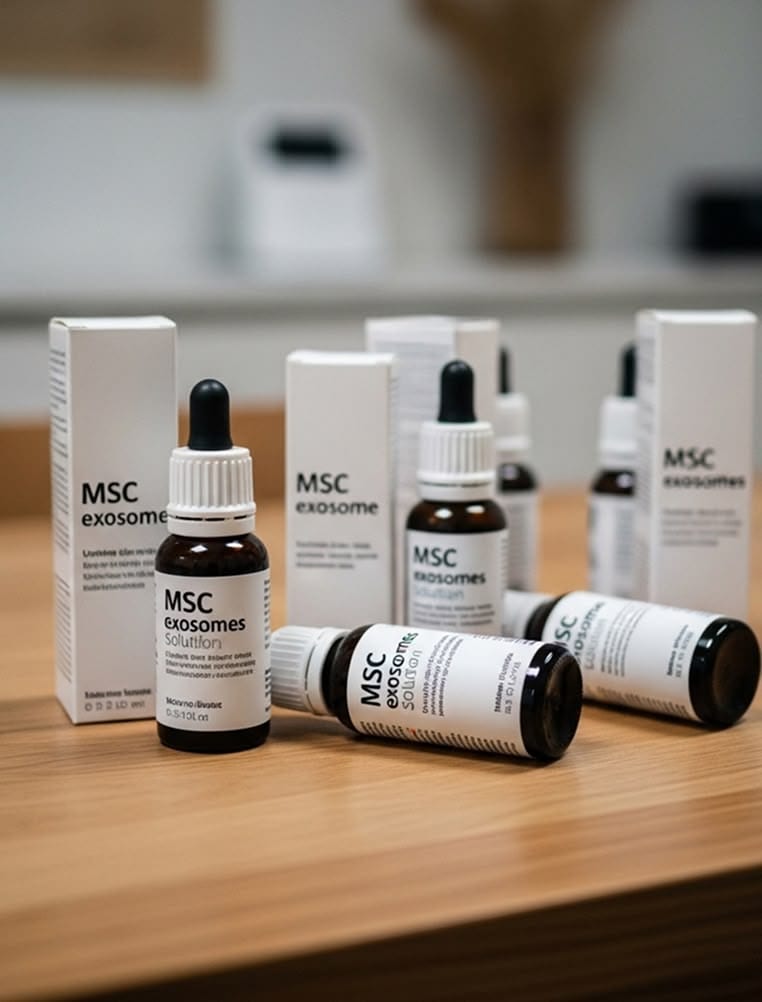
PRP and SVF are considered autologous. The material is taken from you and given back to you. That isn't the case for many exosome preparations. They are bought in from a supplier, and both contents and quality can vary. There is no shared definition of what such a preparation should contain.
The rules aren't the same everywhere, and they can change. Ask which product the clinic uses and who makes it. Also ask whether it is approved for this purpose where you are being treated, and which documents show where it comes from.
Is exosome treatment safe?
Nobody knows yet. The clinical studies are too small and too short to pick up rare or late problems, and since each product is made and formulated in its own way, you can't transfer a result from one brand to another.
Three things are unclear for you as a patient:
- Product quality. Authorities have expressed concern about safety, sterility and a lack of standards in unapproved exosome products. What you get depends on who supplied it.
- Effects over time. The studies have followed participants only briefly.
- Repeat treatments. You usually have to come back to maintain any effect, and nobody knows how often.
Nobody has shown that exosomes cause harm. The problem is that the evidence needed to call the treatment safe doesn't exist. With PRP, the questions about effect and consistency are open. With exosomes, safety is open too.
Are exosomes better than PRP?
That hasn't been shown. PRP has more research behind it and comes from your blood, while exosomes are at an earlier stage of research, often come from a manufacturer and usually cost more. The claim that exosomes beat PRP is a theory.
- Where it comes from. PRP: your blood. Exosomes: often a bought-in preparation, frequently from stem cells.
- How consistent it is. PRP is prepared differently from clinic to clinic. Exosome products vary from supplier to supplier, and nobody has defined their contents.
- Approval. PRP is your own blood and well established. Exosomes often lack approval for this use.
- Research. PRP: reasonable, with weaknesses. Exosomes: new and thin.
- Price. PRP: mid-range. Exosomes: usually more expensive.
If you want an injectable add-on, PRP stands strongest today, even though its evidence isn't consistent either.
What is "stem cell treatment for hair"?
It is an umbrella term for several different offerings, not one specific treatment. It can mean cells taken from your own tissue, or products derived from stem cells, and the latter shade into exosome treatment. SVF from fat tissue has a few small published studies, while the rest of the field is right at the starting line.
Clinics tend to stress that they don't use foetal stem cells. Most use cells from your own tissue, such as fat or a small piece of scalp, or products made from stem cells. The aim is to release growth factors and signalling substances that can support follicles you already have.
- Cells from fat. SVF is made from your own fat tissue. The published studies are small but point in the same direction.
- Products from stem cells. These overlap with exosomes and share the same weak research and the same unclear regulation.
- Promises to "wake up" the stem cells in your scalp. It's unclear what that means. Insist on knowing exactly what you are getting, and which studies lie behind it.
Research on stem cells and on multiplying hair follicles is exciting, but no treatment has so far managed to create new follicles that grow. None of the methods stops hereditary hair loss, and none can do the job of a transplant where you are already bald. Clinics do it differently, and which cells, preparations, intervals and patients give the best results hasn't been established.
Do exosomes improve results after a hair transplant?
That hasn't been shown. Some clinics give exosomes during or after the procedure on the idea that they may help healing and the grafts, but we have not found published studies showing better graft survival or growth. It is an assumption, and you don't need exosomes to get a good result.
A transplant moves follicles to areas where there are none. Exosomes are meant, if they work, to support follicles that are already there. They solve different problems, and one doesn't replace the other.
The idea is that the signals in exosomes may help the scalp heal while the grafts establish a new blood supply. It sounds sensible, but nobody has shown it. The result is still decided by the surgeon's technique, by how many grafts survive and by how well you follow the aftercare. The timeline is the same as usual. Between weeks 2 and 3 the hairs shed, around month 3 or 4 new hair appears, and after about 12 months you see almost the full result. An add-on can at best give a small advantage. It can't rescue a poorly performed procedure.
If exosomes are part of the healing and aftercare package, ask what they are meant to contribute, what they cost on their own, and which research the clinic points to. Packages often stack several add-ons on top of each other, and several uncertain effects don't add up to one certain one. Make up your mind in advance. Not when you're already on the table on the day of surgery.
What is missing from the research on exosomes?
No standard for product, dose or treatment plan, no long follow-up, and only small, short randomised trials, with no large study showing a lasting effect on hair. Exosome products are heavily marketed and poorly studied, and their contents vary widely between suppliers.
Four gaps you should know about:
- The product. Without a shared definition, two treatments with the same name may be impossible to compare.
- The protocol. Researchers are still looking for the best preparation, timing, dose and interval, including for people who have had a transplant.
- Duration. Whether any effect lasts, and whether you have to go back for further rounds, hasn't been established.
- Independence. As long as solid, independent studies and clear rules are lacking, early patients are in practice paying participants in a market with too little evidence.
Should you pay for exosome treatment today, and what does it cost over time?
Our advice is to wait. The research is early, in many places the products aren't approved, and the price is high, often several times what PRP costs, with further sessions needed to maintain any effect. Spent on documented medical treatment, the same money gives a more reliable result. If you choose it anyway, do so knowingly.
Our advice is to wait. The research is exciting, but it is early, in many places the products aren't approved for this use, and the price is among the highest you'll find in the hair industry. That doesn't mean exosomes are nonsense, and they may earn a place in hair treatment in a few years. But there is a difference between what people hope for and what can be recommended to someone who wants value for money now.
In favour: nobody needs to draw your blood, the theory of a higher and more consistent dose of growth factors is elegant, and early studies suggest denser hair, especially combined with microneedling. Against: weak evidence, unclear contents, a lack of approval and marketing that promises far more than the research can back up.
The total also ends up well above the first bill. A session often costs several times what PRP costs, and any gain usually needs further sessions to last. The total can quickly reach an amount that would have covered several years of documented medical treatment. Ask yourself one question before you decide: what gives the most reliable result for the same money? The hair industry has seen many "breakthroughs" come and go, from serums and supplements to devices and injections, and most disappeared when the studies didn't support them. That makes us sceptical, without dismissing anything in advance. Exosomes may turn out to be the exception, but until independent studies and clear regulation are in place, those who pay today are in practice taking part in a trial with no control group. You can choose that role, but do it knowingly, and not because a brochure says you can't afford not to.
What questions should the clinic answer before you pay for exosomes?
Ask who makes the preparation and what it is made from, whether it is approved for this use in the country where you are treated, which research supports it beyond the clinic's own experience, what it costs in total, and what you will get from it that you don't get from established treatment. A reputable clinic answers honestly, including about what it doesn't know.
Six questions to take with you:
- What does the preparation contain, where is it derived from, and who made it?
- Is it approved for this use in the country where I'll be treated, and can I see the documents?
- Which research do you rely on beyond what you have seen yourselves, and were the participants people like me?
- How many times will I need to come, what is the plan based on, and what is the total price outside any package?
- Which well-proven treatment have I been offered first, and why do I need this as well?
- What could I get for the same amount from treatment that is better documented?
If the clinic calls exosomes a breakthrough and says you have to act now, or pressures you on the day of surgery, they are selling, not treating.
What people ask about exosomes
Are exosomes approved for hair loss?
No. No authority has approved exosomes for hair loss, and the US authorities, among others, have warned against unapproved products sold as exosome treatment because their safety hasn't been documented. The clinic can tell you which rules apply where you'll be treated.
Where do the exosomes come from?
Usually from a manufacturer, not from you. The preparations are often derived from stem cells. PRP is made from your blood and SVF from your fat, but many exosome products have no connection to your own body, and contents and quality vary with the supplier.
Are exosomes and stem cells the same thing?
No, but they are linked. Exosomes are tiny vesicles released by cells, often stem cells, but they aren't cells themselves. The treatment is at an early stage and isn't approved for hair loss.
Do exosomes work for hair loss?
Early studies are reported to have shown denser hair. But they have few participants, short follow-up and different products, and the randomised trials we found were small and didn't show that the effect lasts. The research is promising, but the treatment isn't proven.
How long does the effect of exosomes last?
Nobody knows. The studies have followed participants only briefly, and it is unclear whether you'd need to go back for further rounds to keep any gain.
Are exosomes safe?
That hasn't been mapped. Trials in humans have been too few and too short, and each manufacturer makes its own product, so experience with one brand can't be transferred to another. Authorities have also warned against unapproved exosome products.
Are exosomes better than PRP?
That is a theory, not something that has been shown. PRP has more research behind it and comes from your blood. Exosome products are at an earlier stage of research, often come from outside sources and usually cost more.
Do exosomes help where I'm already bald?
No. If exosomes work, it is on follicles that are alive but thinning. Where the follicles are gone, there is no injection that will bring them back.
Can exosomes replace finasteride or minoxidil?
No. Exosomes are nowhere near as well documented as either of them, and shouldn't be used instead. At best they are an experimental add-on. They are not the foundation.
Are exosomes in a transplant package worth the money?
Nobody has shown that they give a better result after a transplant, or that you need them to get a good result. If you're offered them, ask what you'll get out of them and what they cost separately, and decide before the day of surgery.
Is it wise to wait on exosomes?
Yes, in our assessment. Waiting for better studies and clearer rules costs you nothing, and you avoid putting large sums into something whose real value nobody yet knows.
What does exosome treatment cost over time?
More than the first bill suggests. A session often costs several times what PRP costs, and any gain usually needs further sessions to last. The total can reach an amount that would have covered several years of documented medical treatment.
Start by finding the cause of your hair loss. Exosomes are an experimental option. They don't replace the treatments with the strongest research behind them, and dead follicles don't come back. A free hair analysis shows where you stand before you spend any money.
This is general information, not medical advice. Talk to a doctor before starting a treatment that isn't approved.
Goes to the clinic at the top of our ranking.
Sist oppdatert: October 2026 · Redaksjonelle standarder