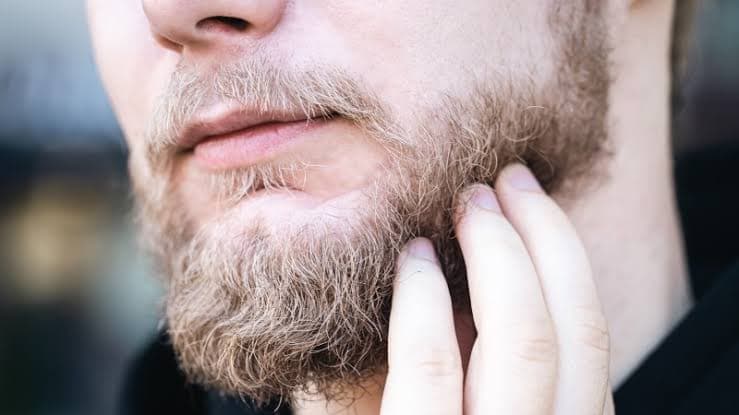
Months of beard oil, patience and maybe a tub of vitamins haven't helped. Your cheeks are still thin, and below the corner of your mouth there's a patch where nothing grows. That's not your fault. Beard growth is largely down to your genes. In a beard transplant, the surgeon moves hair from the back of your head to the areas where it's missing, and there it keeps growing, in practice for the rest of your life.
What does the surgeon do in a beard transplant?
The surgeon harvests hair follicles from the back of your head using FUE and places them where your beard is thin or missing. The hairs are your own, they carry on growing as beard once the skin has healed, and the result is close to permanent.
The technique is the same as for a transplant to the scalp. With FUE, hair follicles are removed one at a time, each called a graft, from the donor area at the back of your head. The surgeon then places each graft in your face, deciding the angle and direction of every single hair. There are no scalpel cuts and no stitches. The beard is built from many tiny extraction holes and just as many tiny channels for implantation.
Since the full beard became a common style, more and more men have asked about the procedure. Uneven growth is very widespread, and for most men it comes down to genetics, not anything they've done wrong. A beard transplant is a way to get the beard your genes held back, with hair that stays.
It helps that beard hair tends to be coarser and thicker than the hair on your head. Each graft fills a lot. At the same time, the coarse hairs and the face's clear growth directions mean every mistake shows. If a hair points the wrong way on the cheek, everyone sees it. On the crown it gets lost. Experience with the face and beard specifically therefore counts for more here than in most other hair procedures. If you want to see how FUE differs from other techniques, read the guide to methods.
Are you a good candidate for a beard transplant?
You may be if your beard is sparse, missing entirely in places such as the cheeks, has scars you want to cover, or has a shape you want to change. What has to be in place is enough donor hair at the back of your head, and a professional should assess whether your goal is realistic given your donor hair and your face.
Most people who ask about a beard transplant recognise themselves in one of these points:
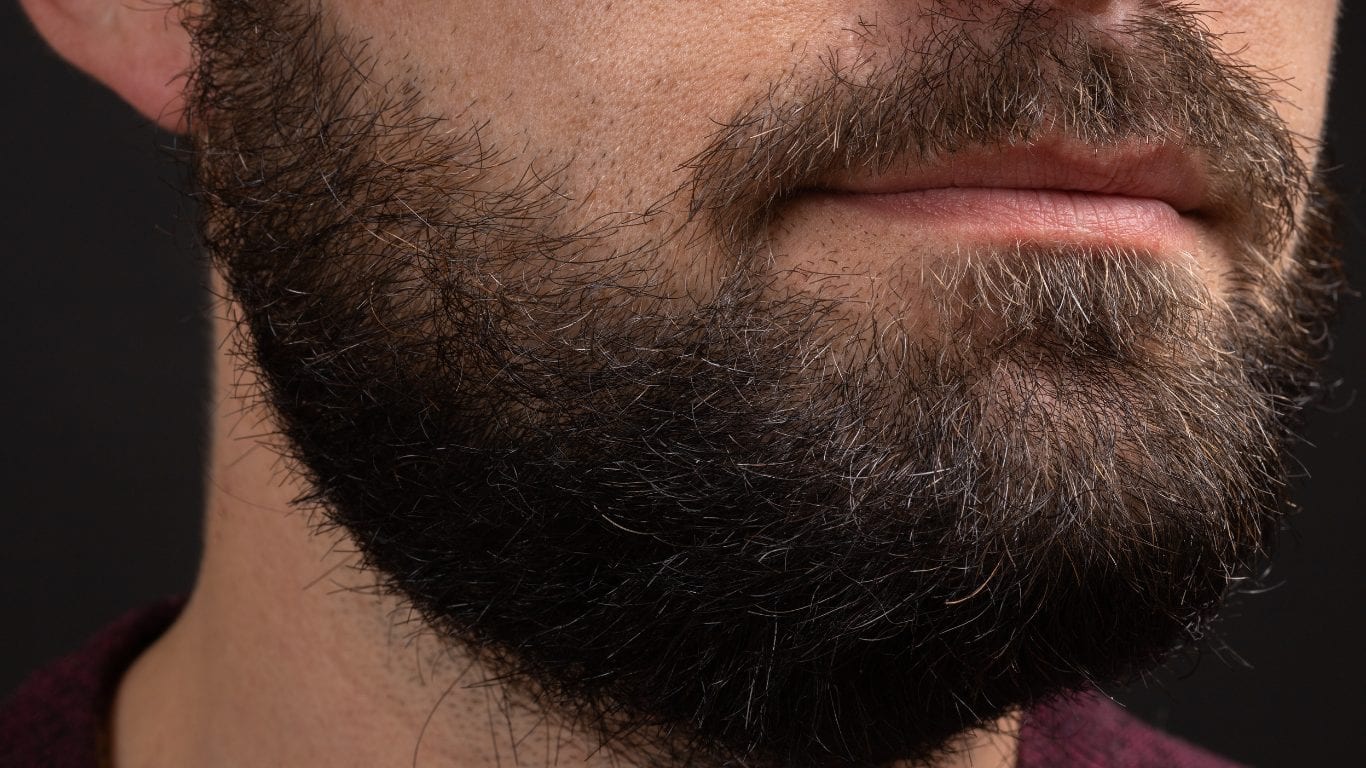
- Your beard grows, but so thinly or patchily that it never looks even.
- In some places, most often the cheeks, you get no growth at all.
- A scar or a hairless patch breaks up your beard.
- You want to give your beard a different edge, shape or density.
- You're a trans man and want a more masculine face.
Donor hair is the most important requirement. The grafts for the beard are taken from the same area at the back of the head that's used when a hairline needs filling. If you might want hair on your head one day, you and the surgeon need to plan your donor hair for both needs from the start. A serious assessment therefore looks at three things together: how much donor hair you have, what you want and how your face is built. If what you want is more than your donor hair can support, the clinic should tell you.
A common worry is that the beard will look fake. The hairs from your head keep their own characteristics, but on your face they blend with the beard hairs you already have and follow the same growth direction. When the surgeon gives every hair the right angle, it's hard to tell the difference, even up close. What separates a good result from an average one is a team with documented experience of the face. See how to check that in the guide to choosing a clinic.
How many grafts does it take to fill a beard?
Usually somewhere between 1,000 and 3,000, depending on whether you're closing a few gaps or building a full beard. The moustache and sideburns need the fewest, while a dense chin needs the most. The grafts are taken from the back of the head, where the hairs are close to permanent.
The size of the area and how dense you want your beard decide almost everything. If you only need to close a couple of sparse patches, you'll be at the low end of the range. If you're going from almost no growth to a full beard, you'll be at the high end.
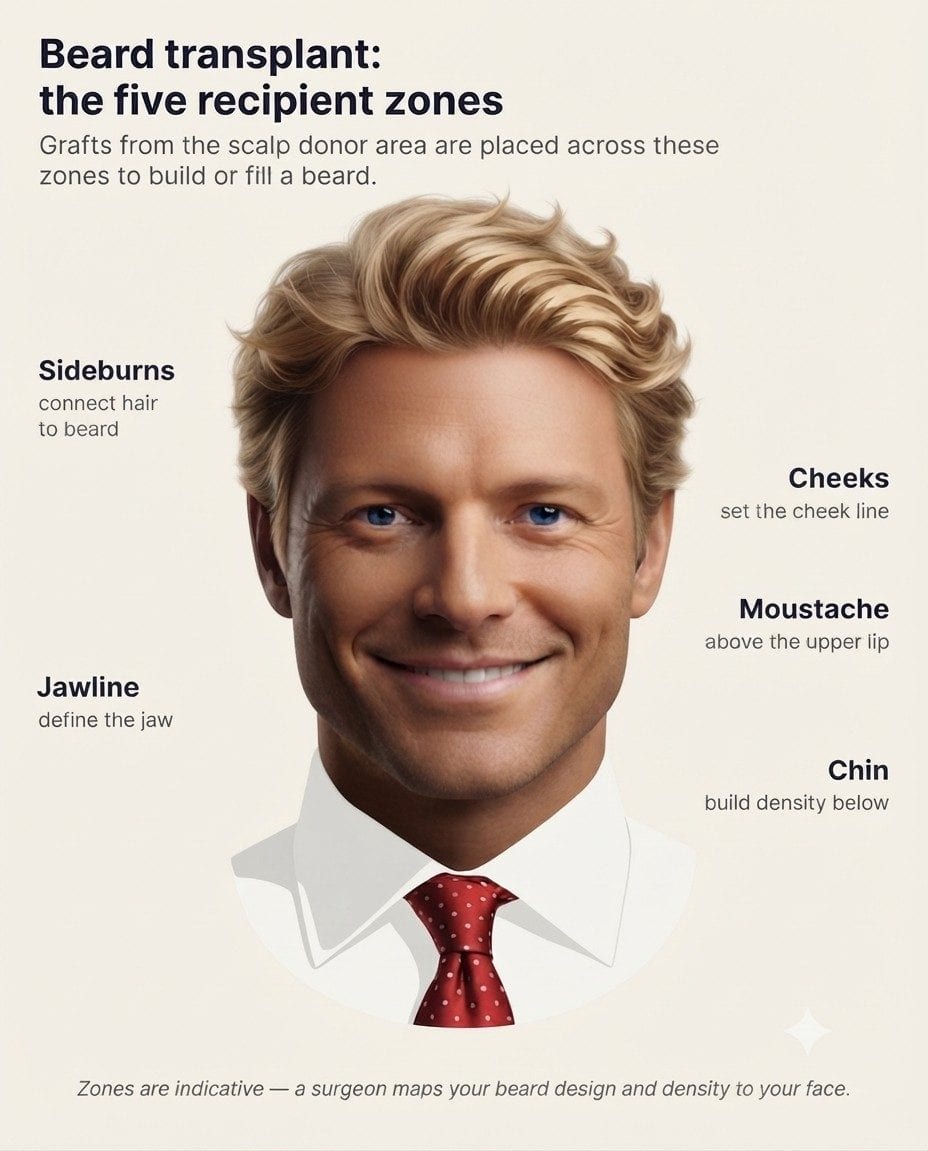
The pattern is fairly similar from man to man. The moustache and the edges along the sideburns need the least. The chin, especially if it's to be dense and well defined, needs the most. The cheeks often fall somewhere in between. Your own number depends on how much beard you have today, how coarse it is and the look you're after. Nobody can estimate that reliably without having seen you.
So start with a concrete estimate. The graft calculator gives you a rough idea straight away. You'll get a more reliable number by sending photos for a free hair analysis.
Send photos from the front and the side and you'll get a graft estimate from the medical team at the clinic at the top of our ranking. It costs nothing and doesn't commit you to anything.
Goes to the clinic at the top of our ranking.
What happens on the day of surgery and in the weeks after?
You're given a local anaesthetic, and the work usually takes a few hours, depending on how many grafts are being placed. A small scab forms around each new hair and comes off by itself within one to two weeks. The full course is in the guide to aftercare, and a free hair analysis gives you a timeline for your case.
You're awake throughout the procedure, which is done under local anaesthetic and usually lasts a few hours. How long depends on the number of grafts. Afterwards you go home. The surgeon harvests the grafts from the back of your head and places them in your face one at a time, at the angle and in the direction that lets them lie naturally among the hairs around them.
For the first few days after the procedure there's a small scab at each new hair. It comes off on its own within one to two weeks. Until then, be careful with your face. Don't touch it, scratch it or shave until the clinic tells you it's fine. Clinics have slightly different rules on when you can use a razor again, so check before you travel home. The holes at the back of your head are quickly hidden by the surrounding hair, so very few people will notice them.
After a couple of weeks comes the phase that scares many people. The hairs that were implanted fall out. It looks as if it was all for nothing, but the follicle sits safely in the skin and is simply resting before it starts to grow. What the weeks look like, and what you can do to help healing, is covered in the guide to aftercare.
Is a beard transplant permanent?
Almost. Donor hair from the back of the head withstands hair loss better than other hair, but it isn't immune. The hairs fall out in weeks 2 to 3, grow back from months 3 to 4 and then stay. Read more about how long the result lasts.
The honest answer is close to permanent. The explanation is the donor area. The hairs at the back of the head are genetically far better equipped against DHT, the hormone that thins hair in many men, than the hairs at the front and on top. They're not completely immune. When they're moved to the face, they keep this resilience, and most people keep them for life.
Progress doesn't go in a straight line, and it helps to know that in advance. In weeks 2 to 3 the new hairs fall out, and then not much happens for a while. From months 3 to 4 growth starts again. The full, dense result shows once 8 to 12 months have passed.
From then on, your beard behaves just like the rest of your facial hair. Trim it, shape it or shave it off completely if you like. You can read more about why the grafts hold for many years in the article on long-term results.
What determines the price of a beard transplant?
First and foremost the number of grafts, and so how large an area you want to fill. The method, the clinic and the country where you have surgery also affect the price. Because every beard is different, you get a concrete price level once your graft need has been worked out.
There's no fixed price, and that makes sense. No two beards are alike, and no two procedures are either. The number of grafts matters most. A larger area means more grafts and a higher bill. A couple of sparse patches cost a fraction of a full beard built from scratch.
The method plays a part, although almost all clinics use FUE for beards. The clinic plays an even bigger part: how much experience the team has with faces, what the facilities are like and which country you travel to. Many Norwegians choose Turkey, where good clinics keep a high standard at a lower price than is usual at home.
Because needs vary so much, we don't give you a fixed amount here. General price levels and market averages are on the prices page. With the graft calculator you can turn your graft need into a rough estimate, and in the ranking you can compare the clinics.
Questions we often get
Does a beard transplant last for the rest of your life?
In practice, for most people. The hairs come from the back of the head, where they withstand DHT far better than hair at the hairline and on the crown, although they're not immune. That trait comes with them to the face, so the hairs usually stay. The beard is fully grown after 8 to 12 months.
How long do I have to wait before I can shave?
For the first few weeks your face needs to be protected, and the clinic will tell you when you can use a razor. Once the hairs have grown back, usually from months 3 to 4, they count as your own beard hairs. Then you trim, shape and shave as before.
When does the beard really come through?
In weeks 2 to 3 the new hairs fall out, and that's expected. Between months 3 and 4 they come back, and once 8 to 12 months have passed, you see the dense final result.
Does a transplanted beard look real?
Yes, if the team knows what it's doing. The surgeon gives each individual hair, whether there are 1,000 or 3,000 of them, its own angle and follows the direction the beard naturally grows in, so nobody can tell the difference even at close range. That's why you should choose a team with plenty of beard experience.
Is it possible even if I have almost no beard?
Yes. If you have enough donor hair at the back of your head, a full beard can be built up from almost nothing. It takes more grafts, often close to 3,000. Send photos for a hair analysis and you'll find out what's realistic.
A free hair analysis gives you a concrete estimate of how many grafts your bare patches need. You send photos from home and decide nothing until you know what a dense, lasting beard would involve for you. If you'd like to do some sums yourself first, try the graft calculator.
Goes to the clinic at the top of our ranking.
Updated: October 2026 · How our editorial team works