Hair transplant aftercare: how to look after your grafts

Why does aftercare matter so much for the result?
Because the new grafts are fragile for the first few days and need to draw a blood supply from the surrounding skin before they're secure. Pressure and rubbing during this period can cost you grafts that can't be replaced, so what you do after surgery largely decides how many of them grow.
The first 72 hours and the first two weeks matter most. Sleep with your head raised, wash only when the clinic says so, leave the scabs alone, and expect the new hairs to fall out after a few weeks before the result arrives around 12 months after surgery.

The surgery takes a day. Healing takes a year, and the first weeks are the most fragile. Each graft is a tiny piece of tissue that has to connect to the blood vessels in your scalp. Until that happens, it's living on borrowed time, and it can't take much.
Here we walk through the period after the procedure step by step, from the first few days until you can see the finished result. Clinics have slightly different protocols, so your clinic's own instructions always come first. This page gives you the general picture and doesn't replace that guidance.
What do you need to watch out for in the first 24 to 72 hours?
The grafts sit loosely for the first three days and must be fully protected from pressure and rubbing. Don't touch the recipient area, keep hats and pillows off the grafts, keep your head raised and avoid any exertion that makes the blood pound in your head.
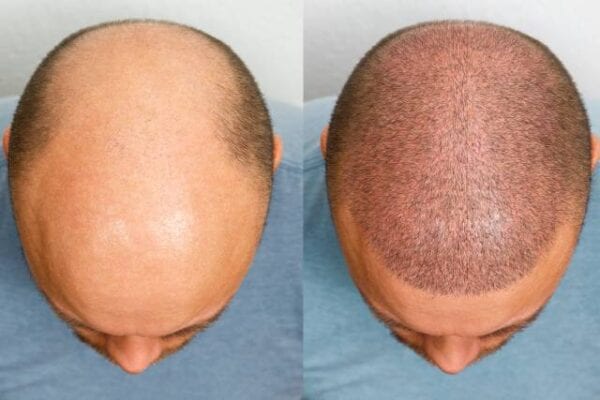
Think of the grafts as seeds that haven't taken root yet. They need to be left in peace.
- Keep your fingers away from the recipient area, even when it itches.
- Nothing should rest against the grafts, not a cap, a hat or a pillowcase.
- Keep your head raised, at night too, to keep the swelling down.
- Take it easy. Heavy lifting and bending forward increase the pressure in your head.
A little fluid from the wounds, tenderness and a tight feeling in the skin are common. Many people get swelling in the forehead around days 2 to 4, and it can drift down towards the eyes. It looks dramatic, but it's harmless and settles on its own after a few days.
How should you sleep in the first week?
Lie on your back with your head raised to around 45 degrees, for example with two pillows or a neck pillow. This keeps the swelling down and stops the grafts rubbing against the pillow. After 7 to 10 days, most people gradually return to their usual sleeping position.
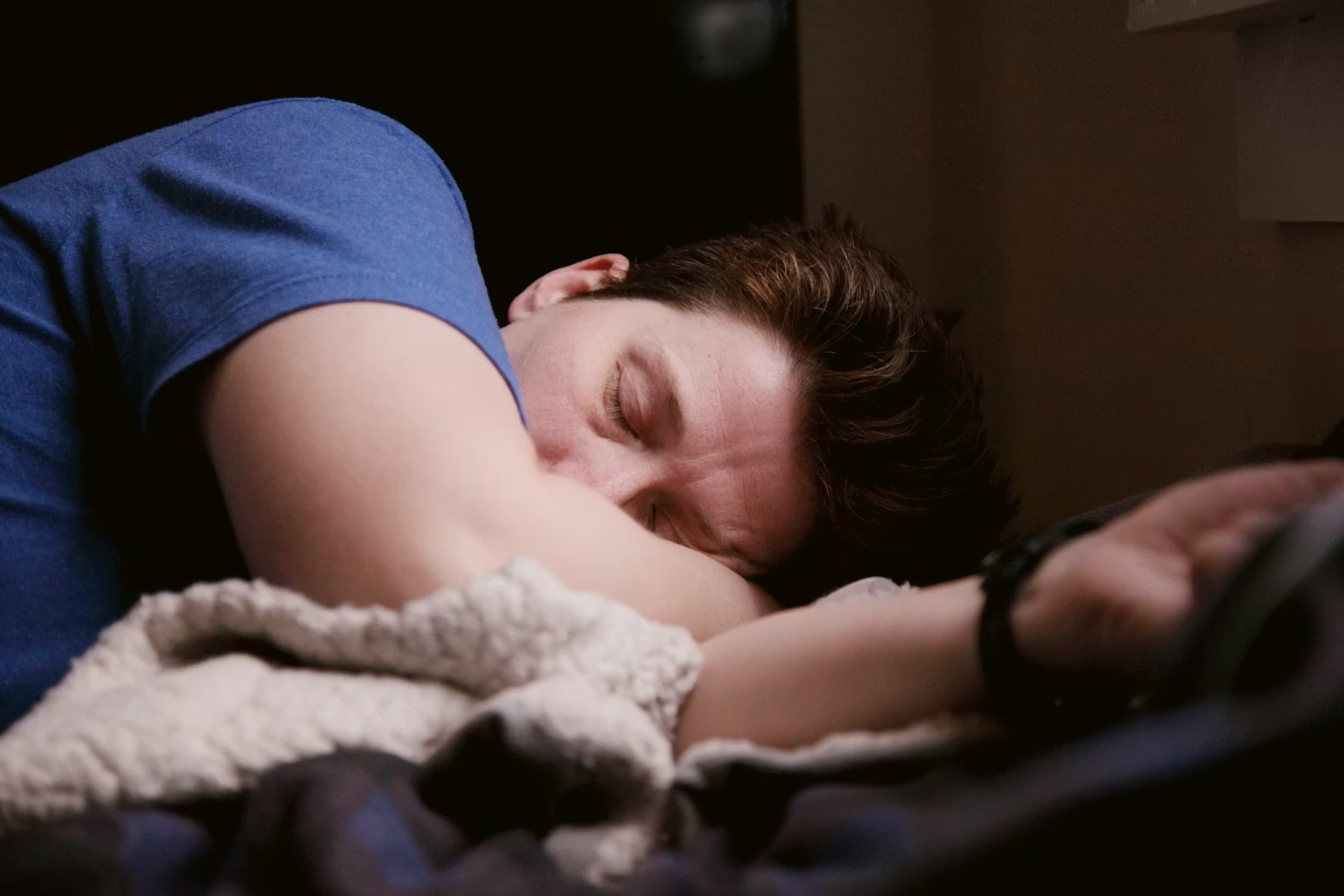
Sleep is the part many people underestimate. You're in control of your head all day, but not at night. If you lie on your side or your front, the recipient area can end up pressed against the bedding without you noticing.
A travel neck pillow, the kind you use on a plane, keeps your head in place and your neck free. Some people spend the first few nights in a reclining chair. Once the grafts have settled, after about 7 to 10 days, you can gradually start sleeping as you did before.
Good aftercare starts with a good plan. The medical team at the clinic at the top of our ranking will go through the whole process with you before you decide.
Goes to the clinic at the top of our ranking.
When and how do you wash your hair for the first time?
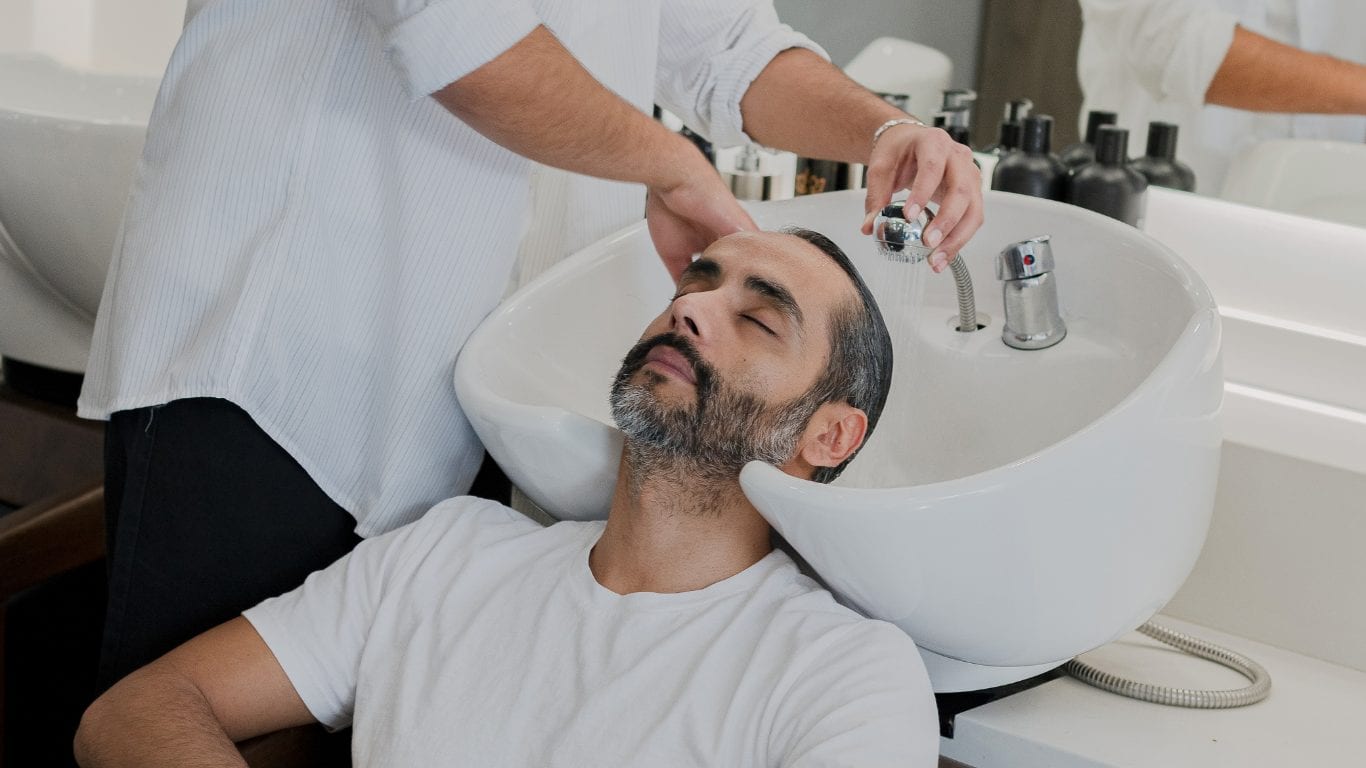
The first wash usually happens 1 to 3 days after the procedure, often at the clinic, so you can see how it's done. Gently pour lukewarm water over, apply a mild shampoo that you've lathered in your hand, and never rub.
Washing keeps the area clean, lowers the risk of infection and softens the scabs so they can come away naturally.
- Don't shower directly onto it: Keep the jet off the grafts. Pour lukewarm water over with a cup or your hand.
- Lather in your hand, not on your head: Work up a lather from the mild shampoo your clinic recommends, apply it gently and rinse off without rubbing.
- Leave the scabs alone: They come off by themselves, usually after 7 to 14 days.
- Dry without rubbing: Pat gently with a freshly washed towel, or let the air do the work.
Your clinic will tell you when you can go back to washing normally. Stick to that plan. A few weeks of a calm, careful routine is a small price to pay for your grafts.
What scabs, itching and other symptoms are normal?
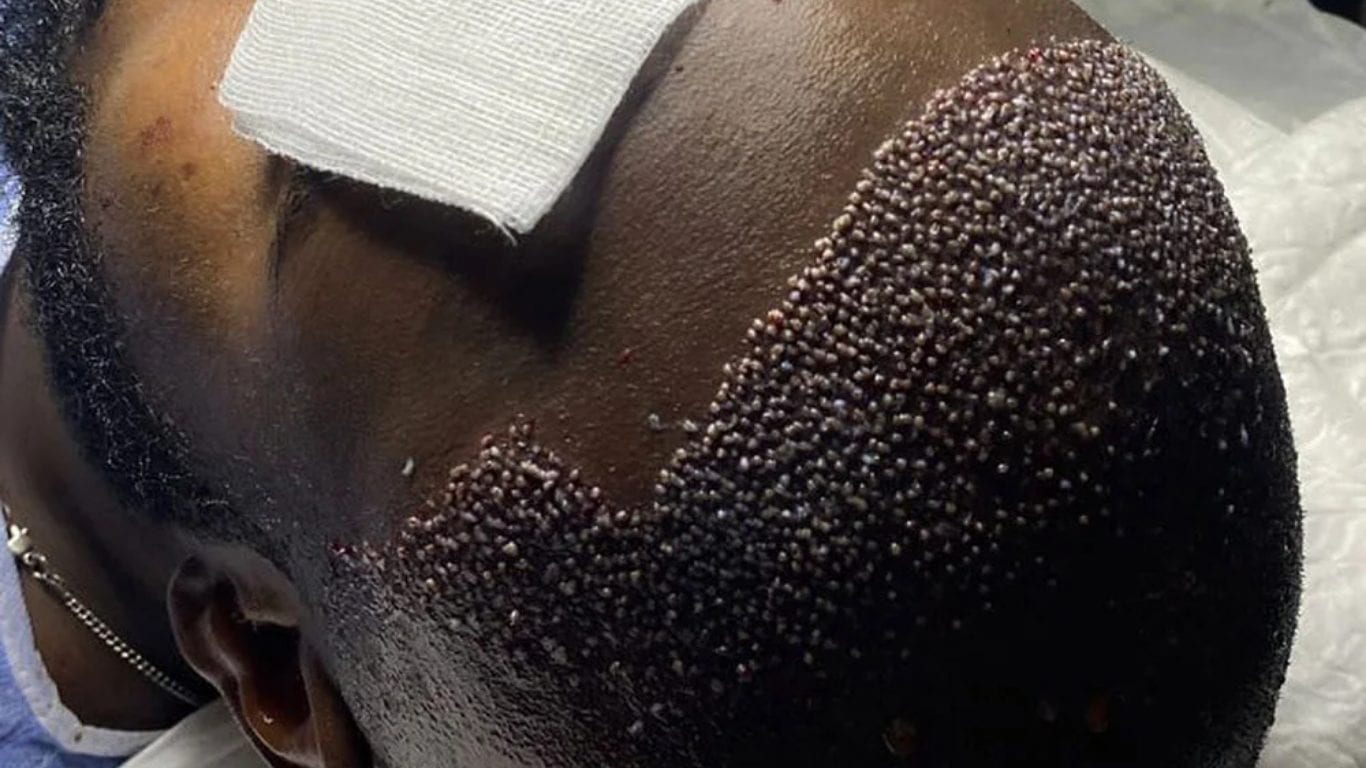
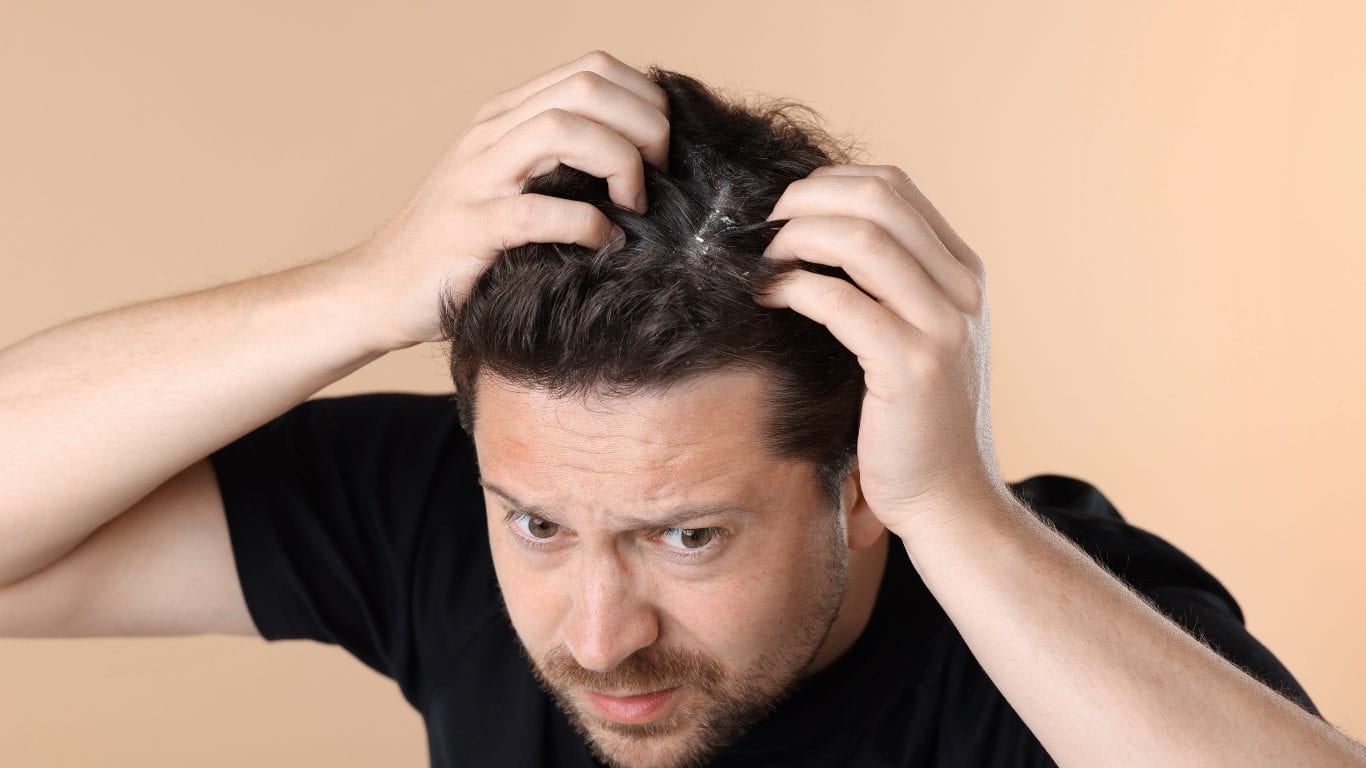
Scabs around the grafts are part of the skin healing, and they come away after 1 to 2 weeks. Itching, redness for a couple of weeks, and numbness or tingling that fades over weeks to months are also common. Never pick, and never scratch.
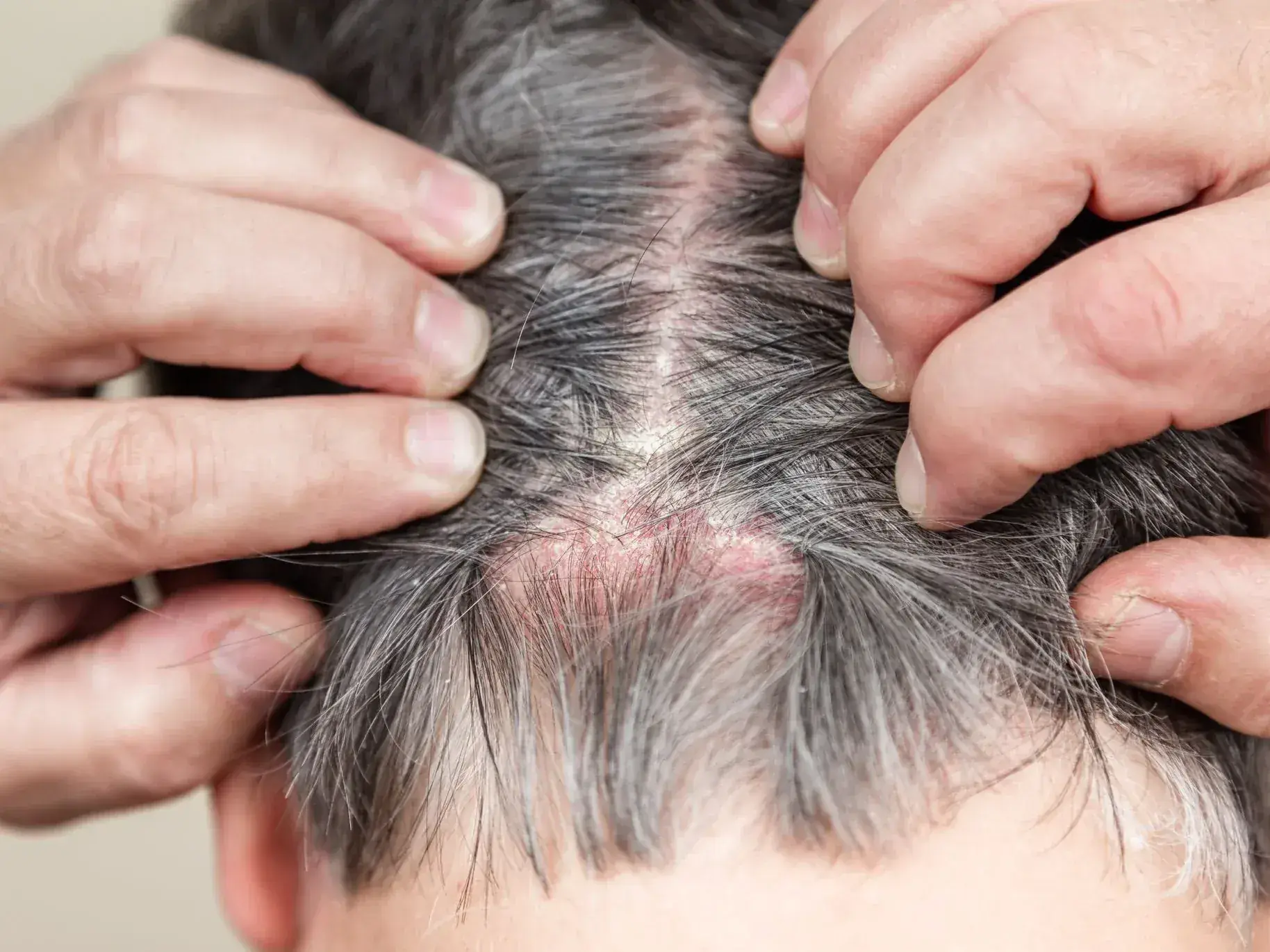
The scabs form during the first week. If you pick at them, the graft can come out with them. Itching is part of healing, and it can get annoying. Don't scratch. Ask your clinic for a soothing product they've approved instead.
Redness in the recipient area often lasts a couple of weeks. If you have fair skin, it can last longer. Both the donor area and the recipient area can feel numb or tingle. This usually settles after a few weeks or months.
Why do the new hairs fall out after a few weeks?
Shock loss means the transplanted hairs fall out, usually in week 2 or 3. The hair shaft itself is shed, but the follicle stays in the skin, rests for a while and then starts producing a new, permanent hair.
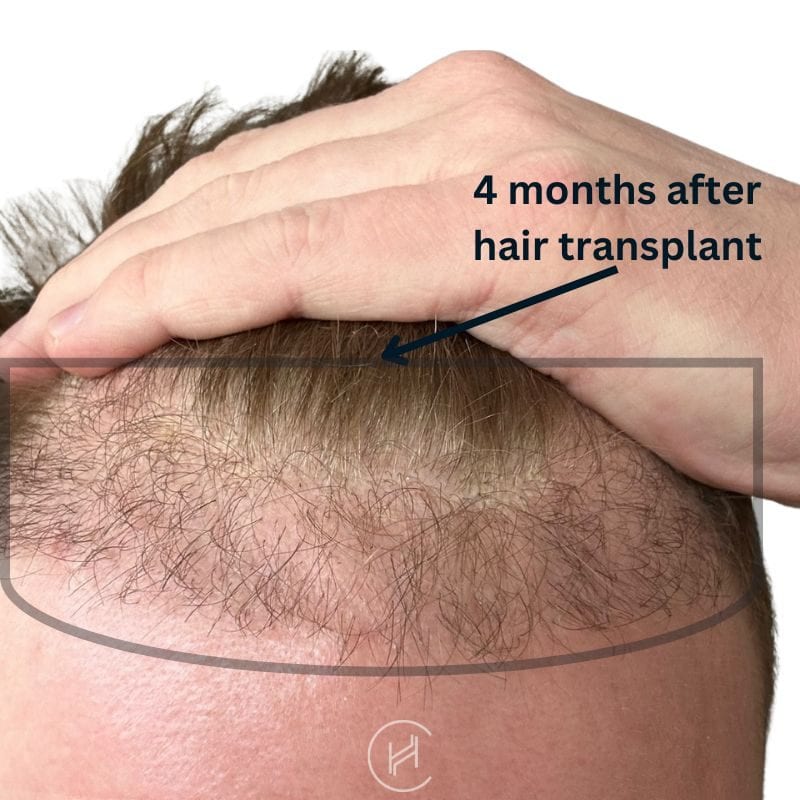
For many people, this is the most nerve-racking stage. You've paid for new hair, and then it disappears. But what falls out is only the shafts. The follicles sit safely in the skin and take a break before they start up again.
Some people also lose some of their own hair around the recipient area, because the procedure stresses the scalp. It usually grows back. So shock loss doesn't mean the surgery has failed. It's an expected part of the hair cycle. What you're waiting for appears around months 3 to 4.
When can you exercise, work, sunbathe and drink alcohol again?
Gentle walks are fine straight away, desk work after 2 to 5 days and light exercise after about 2 weeks, while hard training and contact sports should wait 3 to 4 weeks. Wait around 4 weeks before swimming, keep out of strong sun for several weeks, drink no alcohol for the first few days, and stay off cigarettes for as long as you can.
| Activity | Usually allowed again |
|---|---|
| Gentle walk | Straight away, without exerting yourself |
| Gentle hair wash | When the clinic says so, often days 1 to 3 |
| Desk work | Usually after 2 to 5 days |
| Light exercise and sweating | After about 2 weeks |
| Hard training, heavy lifting, contact sports | After about 3 to 4 weeks |
| Swimming in a pool or the sea | After about 4 weeks |
| Strong sun directly on your head | Stay in the shade for several weeks. Once the skin has healed, a hat or sunscreen protects it |
| Alcohol | None for the first few days, very little for the first few weeks |
| Smoking | Stop for as long as you can, smoking slows healing |
| Scissor cuts and colouring | Scissors once the clinic says yes, colour usually after several weeks |
Both smoking and alcohol impair blood circulation and healing. Cutting them out in the early period is one of the simplest and cheapest things you can do to help as many grafts as possible survive.
Which treatments can support the result after surgery?
There are medical options, such as finasteride, minoxidil and PRP, which act on the body from the inside, and non-medical ones, such as oxygen chambers, red light and microneedling, which aim to improve the conditions around the hair. The evidence varies widely between them.
Basic care is all about protecting the grafts. Around that, a range of treatments is offered that promise faster healing, better growth or a denser final result. Below we separate what's well documented, what might work and what's mostly marketing. Use it to say no to add-ons you don't need.
Which medical treatments help after a hair transplant?
Finasteride and minoxidil are the most important, because surgery doesn't stop the hereditary loss of the hair that wasn't moved. Some clinics offer PRP to help healing, but the evidence is weaker.
Finasteride and minoxidil
Without something to slow the loss, in a few years you could be left with a nice, transplanted front and thin hair around it. Finasteride suppresses DHT, so the hereditary loss progresses more slowly. Minoxidil stimulates growth and keeps hairs in the growth phase for longer. Many clinics advise you to continue with, or start on, one or both of them to protect your own hair, so the overall look stays natural in the years ahead. Some want you to stop minoxidil for a short period before and after surgery. Check this with your clinic. Whether you should take medication is something you decide together with your doctor, who knows your health and can go through the benefits and possible side effects. More on this in the guide on how to slow hair loss without surgery.
PRP, platelet-rich plasma
A little of your blood is drawn, the platelets and growth factors are concentrated, and the plasma is injected into the skin. When it's done after a transplant, the aim is faster healing and an earlier, stronger start to growth for the grafts. The research looks promising, but it's thinner than for the two medicines above, and protocols vary. The effect requires repeated treatments, so see it as an add-on and not as a solution in itself. Since it's your own blood, the safety profile is good. We go into it in more depth, and compare it with the newer variant PRF, in the article on PRP and PRF.
Medical treatments affect your body's biology. That's why they need care, the right dose and often a prescription and follow-up from a doctor. They're also the best-documented supporting treatments you have, and they're the foundation of a result that stays natural.
Do hyperbaric oxygen, red light and microneedling help after surgery?
Perhaps a little, but none of them is necessary for a good result. Hyperbaric oxygen has limited evidence for graft survival, red light has a mild and variable effect, and microneedling can support the hair only once the area has fully healed and the clinic has given the go-ahead.
Hyperbaric oxygen therapy (HBOT)
You breathe pure oxygen while sitting in a chamber under raised pressure, so your blood takes up much more oxygen and can deliver it to tissue with a poor supply. The idea after a hair transplant is that extra oxygen could help the grafts through the days before they have their own blood supply. The mechanism makes biological sense, and HBOT has a well-documented effect on wound healing in general. The evidence that more grafts survive, however, is thin. The treatment is expensive, time-consuming and needs several sessions. If it has a place at all, it's for the very largest procedures, or when your circulation is weakened for other reasons. If a clinic uses HBOT as its main selling point while being vague about who performs the surgery, you should ask more questions. The full review is in the article on hyperbaric oxygen and hair transplants.
Red light
Red light therapy (LLLT, or photobiomodulation in medical terms) shines weak red light on the scalp. The light is meant to stimulate the cells in the hair follicles, improve microcirculation and reduce inflammation. Among the alternative treatments, red light is one of the better documented, and several devices are approved, but the effect is usually modest, and some people notice more than others. It's painless and has hardly any side effects, but you have to keep it up for months. After a transplant, the skin must first be healed well enough for a device to rest against it without disturbing the grafts, and the clinic should have given the go-ahead. More in the article on red light therapy.
Microneedling and ketoconazole
Microneedling makes tiny punctures in the skin that trigger a healing response and help products such as minoxidil absorb better. Many months after surgery, once the skin has fully healed and the clinic has given the all-clear, it can support both the transplanted hairs and the hair around them. A freshly transplanted area must never be needled, because the grafts need a long time to take root. Shampoo with ketoconazole calms dandruff and inflammation, making the scalp a better place for hair to grow. None of these non-medical measures stops hereditary hair loss. They can only make the conditions around the hair a little better. Technique and timing are covered in the article on microneedling.
How do you prioritise between the supporting treatments?
Think of it in tiers. At the bottom are careful aftercare and the well-documented medicines finasteride and minoxidil, in the middle affordable add-ons such as microneedling and ketoconazole, and at the top the more expensive and less well-documented options such as PRP, red light and hyperbaric oxygen chambers.
The foundation accounts for almost everything that keeps your hair. The top tier is for those who want to do a bit extra and know the evidence there is weaker.
| Treatment | Type | Evidence | Place in the plan |
|---|---|---|---|
| Finasteride | Medical | Strong | Foundation |
| Minoxidil | Medical | Strong | Foundation |
| PRP | Medical | Promising | Add-on |
| Microneedling | Non-medical | Moderate | Add-on |
| Red light (LLLT) | Non-medical | Mild | Add-on |
| Hyperbaric oxygen | Non-medical | Limited | Optional extra |
The most effective step costs nothing: do what the clinic says, protect the grafts, and stay away from smoking and alcohol for the first few weeks. Only consider each paid add-on once that's in place.
How long does it take to see the final result?
New hairs start coming through after 3 to 4 months, around half the result is visible after 6 months, and you usually see the finished result with full density after 12 to 18 months. The crown is often last, so wait until at least 12 months have passed before you judge it.
- Weeks 1 to 2: The scabs come away, the redness fades and the swelling is gone.
- Weeks 2 to 3: Shock loss arrives, and most of the transplanted hairs fall out. All according to plan.
- Months 3 to 4: The new, permanent hairs appear. At first they're often thin and soft.
- Month 6: Around half of the final result is visible, and the hair gets stronger.
- Months 9 to 12: Most of it is in place.
- Months 12 to 18: Full density and texture. On the crown it can take 15 to 18 months.
Since everything happens so slowly, there's little point judging the result before 12 months have passed. You can read about how it holds up in the years that follow under long-term durability.
What's the most important thing you can do after surgery?
Protect the grafts for the first 72 hours, sleep with your head raised, wash gently, and let the scabs and shedding run their course. Stay away from smoking and alcohol at first, keep up the medication that protects your own hair, and wait 12 to 18 months before you pass judgement.
Aftercare is part of the treatment. You're the one responsible for it, and it's where a good operation becomes a good result. From 3 to 4 months the new hairs start to appear, and then it's a matter of waiting. Take a photo in the same light every month, and you'll see the progress the mirror hides.
If you're unsure about anything along the way, ask your clinic before you do anything on your own. It knows your plan best.
Go deeper into this chapter
- 72 hours after a hair transplant: how to protect your grafts
- After a hair transplant: how to look after your grafts on days 1 to 10
- Shock loss after a hair transplant: why the new hairs fall out
- Sleep and hair: can too little sleep make your hair thinner?
- Exercise and swimming after a hair transplant: week by week
Frequently asked questions
How soon can I wash my hair?
Usually 1 to 3 days afterwards, when the clinic tells you to. Be extremely careful the first few times: pour lukewarm water over, use a mild shampoo lathered in your hand, don't rub, and let the scabs come away on their own.
Is it dangerous that the new hairs fall out?
No. It's called shock loss and usually happens in week 2 or 3. The hair shafts are shed, but the follicles stay in the skin, take a break and then produce a new, permanent hair. It doesn't mean anything has gone wrong.
How long do I have to wait for the result?
The new hairs appear after 3 to 4 months, around half is visible after 6 months, and you usually see full density after 12 to 18 months. The crown often takes the longest. So wait at least 12 months before you judge the result.
How should I lie when I sleep?
For the first week, sleep on your back with your head raised to around 45 degrees. This keeps the swelling down and protects the grafts from the pillow. Once 7 to 10 days have passed, you can gradually go back to sleeping as before.
When can I start exercising?
Light exercise is usually fine after about 2 weeks, while hard training, heavy lifting and contact sports should wait 3 to 4 weeks. Sweating and exertion raise the blood pressure in your head, and you want to avoid that while the grafts settle.
Can I smoke or drink alcohol after the procedure?
Both should be cut back as much as possible while you heal, because they impair blood circulation and healing and can mean fewer grafts survive. Avoid alcohol completely for the first few days, and stay off cigarettes for as long as you can.
What do I do about scabs and itching?
The scabs should come away without help, usually after 1 to 2 weeks. Don't pick at them, because the grafts can come out with them. Itching is common while the skin heals. Don't scratch, and ask the clinic for a soothing product if it becomes a nuisance.
Good aftercare starts with a good plan. The medical team at the clinic at the top of our ranking will go through the whole process with you before you decide.
Goes to the clinic at the top of our ranking.