
Medicine with the sources in plain view

Hair transplant research and evidence

You should be able to see what the claims are based on. Here you'll find clinical studies, our own cohort data and in-depth reviews on hair transplants, written so you can read them without a medical background, with the numbers behind them easy to find.

Hair transplant research and evidence
Topic
Year

Showing 250 of 250 articles

Studies 3

In-house studies from IdealofMeD Research Academy, published here with their permission. Each one sets out its method, data and limitations.

Hyperbaric oxygenHealingFUE

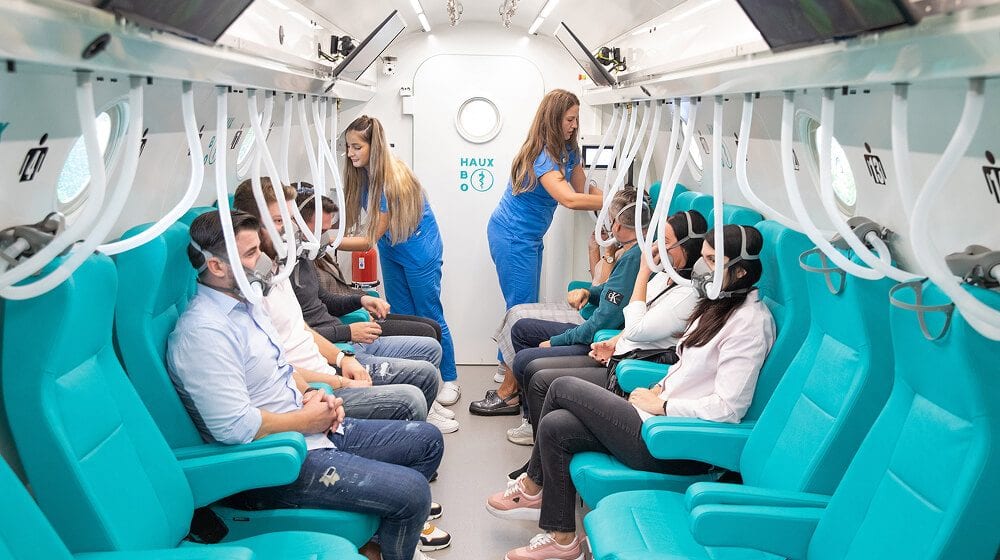
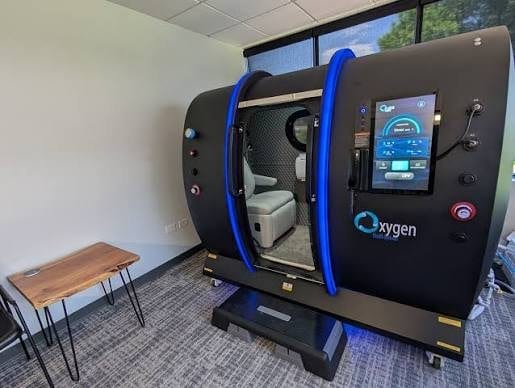
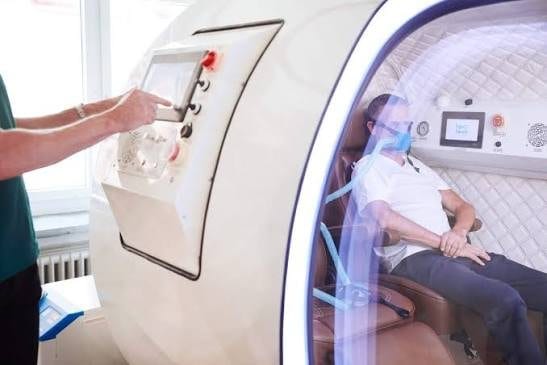
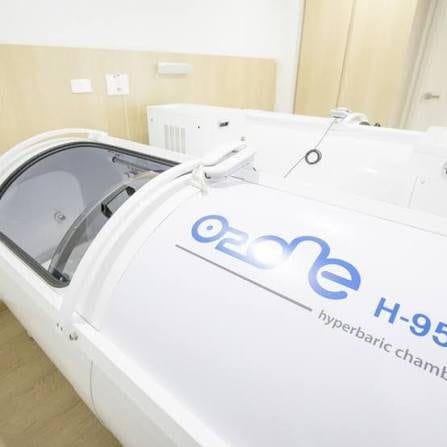
Does HBOT help after an FUE hair transplant? A 220-patient study

June 2026 · IdealofMeD Research Academy · 11 min read

Is a hyperbaric oxygen chamber worth the money after a hair transplant, or is it a pricey extra? Among 220 FUE patients, HBOT went hand in hand with patients feeling they healed faster, had less pain, slept better and lost the redness sooner. The pattern held both when patients answered for themselves and when blinded doctors assessed the photos.

Key findings

  • With two HBOT sessions, patients scored their overall healing around 40% higher than the group without HBOT. One session delivered most of that difference, but not all of it.
  • Sleep in the first few nights after the procedure was the measure where the groups differed most.

Read the full article
Long-term resultsMedicationHealing

Stress and hair loss: how much hair can a hard time really cost you?

March 2026 · IdealofMeD Research Academy · 10 min read

The literature is clear on one point: a major strain can trigger certain types of hair loss, above all telogen effluvium. For male hereditary hair loss, the evidence is far thinner. There, stress seems to speed up hair loss that your genes have already set in motion, rather than cause it on its own.

Key findings

  • After a long period of stress, you may notice clear shedding, typically 2 to 4 months later.
  • Once the strain is over, the hair usually comes back.
Read the full article
MedicationHealing

Vitamins for hair: what holds up, and what is just marketing?

September 2026 · IdealofMeD Research Academy · 9 min read

Search for hair vitamins and you hit a wall of products that all claim to be the answer. The research team set the marketing aside and instead looked at more than 100 transplant patients taking vitamins, sorted by what their blood tests showed. Vitamin D was the nutrient that stood out most often. Biotin is far more popular than the research justifies, and there is no single vitamin everyone should take routinely.

Key findings

  • Vitamin D had the most consistent link to hair loss. Among the studies that measured it, 63% showed a statistically significant association, while 37% did not.
  • In the studies with a significant association, nearly 90% of patients had low vitamin D levels in tests taken before the transplant.
Read the full article

Evidence reviews 247

Fuller answers to the questions we're asked most often. We go through what has been published and say plainly where the evidence is solid and where it's still thin.

Healing 46

HealingFUE

How does a hair transplant heal from day 1 to day 14?

August 2026 · The Hårtransplantasjon.com editorial team · 4 min read

During the first fourteen days, a graft can still be pulled loose. After that, it can't. Research on how grafts anchor showed that a tug on the hair dislodged the graft during the first two days, and that a stuck scab could take the graft with it as late as day five. From day six, the graft no longer came loose when someone pulled the hair, and from day nine the risk was over. All the advice on washing, sleeping and exercise after the procedure rests on this timeline.

Key findings

  • Among 42 patients studied, the grafts were fully anchored from day 9.
  • A scab that was torn off could take the graft with it as late as day 5. A tug on the hair was harmless long before that.
Read the full article
Healing

Scabs after a hair transplant: when do they fall off on their own?

August 2026 · The Hårtransplantasjon.com editorial team · 4 min read

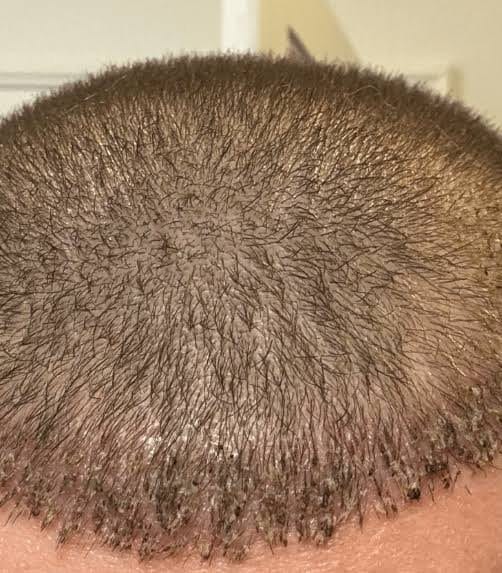
Scabs form within about 24 hours and usually come off around days seven to ten, by about day fourteen at the latest. They matter because they are stuck to the graft underneath. Research on graft anchoring found that a scab pulled off could take the graft with it as late as day five. The risk from tugging on the hair passes sooner than that. The point of the first washes is to soften the scabs so they loosen on their own.

Key findings

  • Scabs usually come off by themselves around days 7 to 10, by about day 14 at the latest.
  • As late as day 5, a scab that was still attached could take the graft with it if it was pulled off.
Read the full article
Healing

Did a scab come off too early? How to tell if the graft went with it

August 2026 · The Hårtransplantasjon.com editorial team · 4 min read

A scab that is ready comes off dry and painlessly, and there's no bleeding. If it's pulled off too soon, you feel it clinging, it stings, a small drop of blood appears, and sometimes there's a tiny white bulb on it. Research on how grafts anchor found that an attached scab could take the graft with it as late as day five, so telling the difference matters most during week one.

Key findings

  • If a small drop of blood appears where the scab was, the graft has probably been disturbed.
  • A tiny white or glassy bulb on the scab is tissue from the graft, not scab.
Read the full article
Healing

How long does swelling last after a hair transplant?

August 2026 · The Hårtransplantasjon.com editorial team · 4 min read

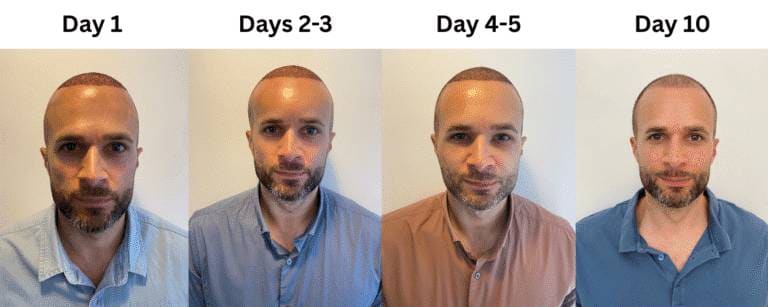
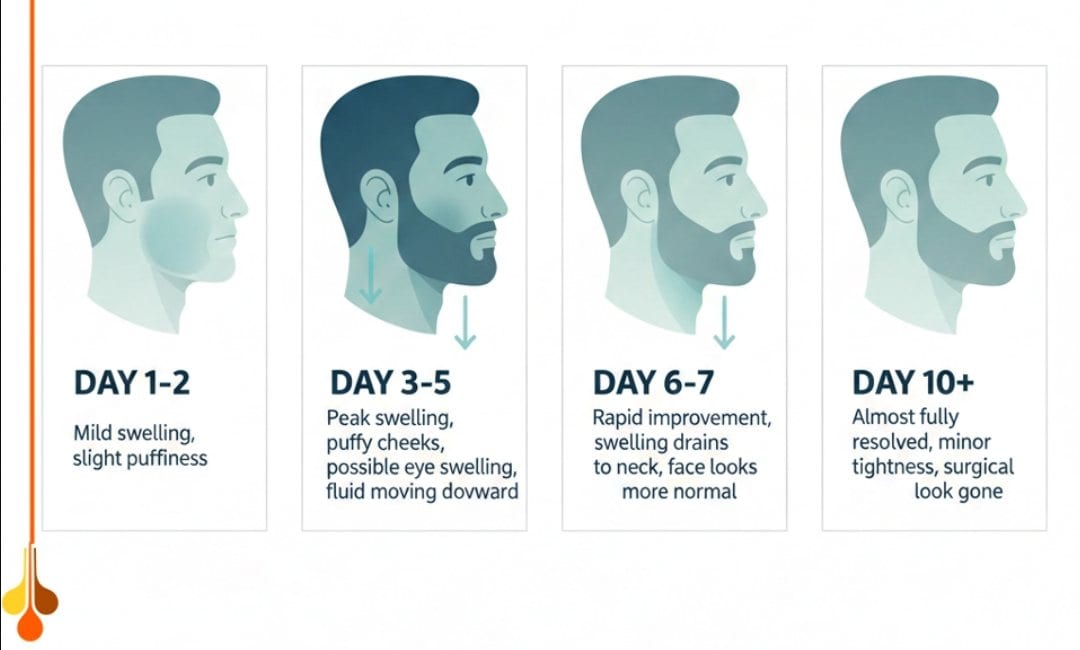
Anaesthetic fluid and the tissue's reaction to the procedure are the cause. Gravity pulls the fluid down from the scalp, so it's the forehead and sometimes the eyelids that puff up. Swelling usually appears on days two to four, peaks for a day or two and then eases. It can look dramatic but is almost always harmless. Swelling that shows up late or sits on one side is a different matter.

Key findings

  • It often takes 2 to 4 days for swelling to appear. Right after the procedure it's rarely visible.
  • Gravity pulls the fluid downwards, so it's the forehead and eyes that swell, not the scalp.
Read the full article
Healing

Hair transplant healing week by week: what happens in weeks 1 to 8?

August 2026 · The Hårtransplantasjon.com editorial team · 3 min read

After the procedure, the scalp goes through three phases in the first eight weeks. For the first fourteen days the grafts can still be pulled loose. Then comes a quiet period when the transplanted hairs fall out, before the first shoots of new growth appear. Knowing where you are in the process makes it easier not to read perfectly normal things as a failed procedure.

Key findings

  • From around day 9 the grafts are secure, but what you see in the mirror gets worse before it gets better.
  • The transplanted hairs usually shed during weeks 2 and 3. This is expected, and it doesn't mean the grafts are lost.
Read the full article
Healing

Red scalp after a hair transplant: when is it normal?

August 2026 · The Hårtransplantasjon.com editorial team · 3 min read

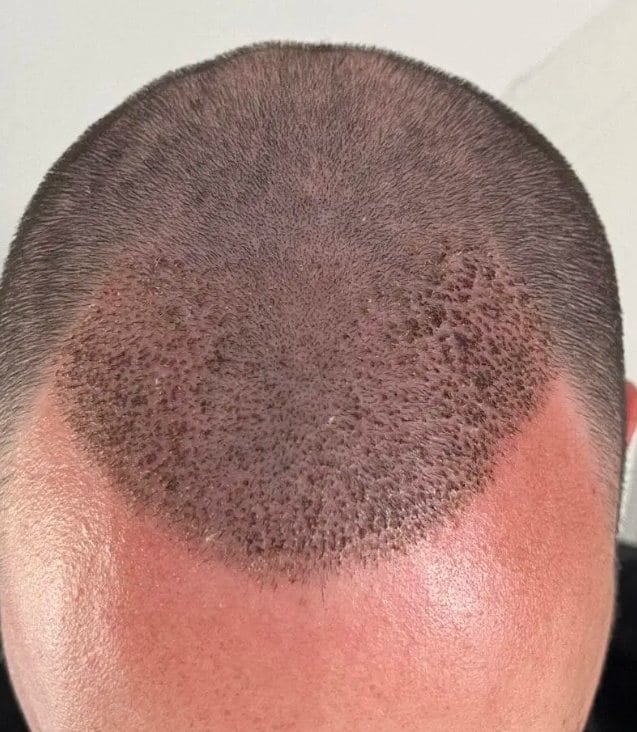
The redness you see after the procedure comes from the many small wounds healing and the area getting more blood than usual. It usually fades within a few weeks, sometimes only after a couple of months, and fastest in people with fair skin. Redness that gets stronger, gathers in one spot or comes with warmth and pain is something else.

Key findings

  • Even redness across the whole area that fades over weeks is normal. In people with darker skin it often lasts longer.
  • The most important warning sign is redness that gets stronger rather than weaker after the first few days.
Read the full article
Healing

Itchy scalp after FUE? Why it happens and what helps

August 2026 · The Hårtransplantasjon.com editorial team · 3 min read

It's common for the scalp to start itching during the first week after the procedure, and it's usually just down to healing and dry skin. The itch isn't dangerous in itself. Your fingernails can be, because they can tear at grafts that haven't anchored yet.

Key findings

  • The itching often starts during the first week, around day 3 to 7, and can last from a few days to a few weeks while the scabs come away and the skin is dry.
  • In the first few days, scratching can dislodge grafts. Later on, it can lead to infection.
Read the full article
Healing

When can you wash your hair after a hair transplant?

August 2026 · The Hårtransplantasjon.com editorial team · 3 min read

Most clinics want you to start washing gently within the first few days. The reason is that scabs kept evenly soft are safer than scabs that harden. Your clinic decides the day, not a rule of thumb, and how you wash matters far more than when.

Key findings

  • The main job of washing is to soften the scabs. Getting clean comes second.
  • A stuck scab could dislodge a graft as late as day 5, so the first washes must be gentle.
Read the full article
Healing

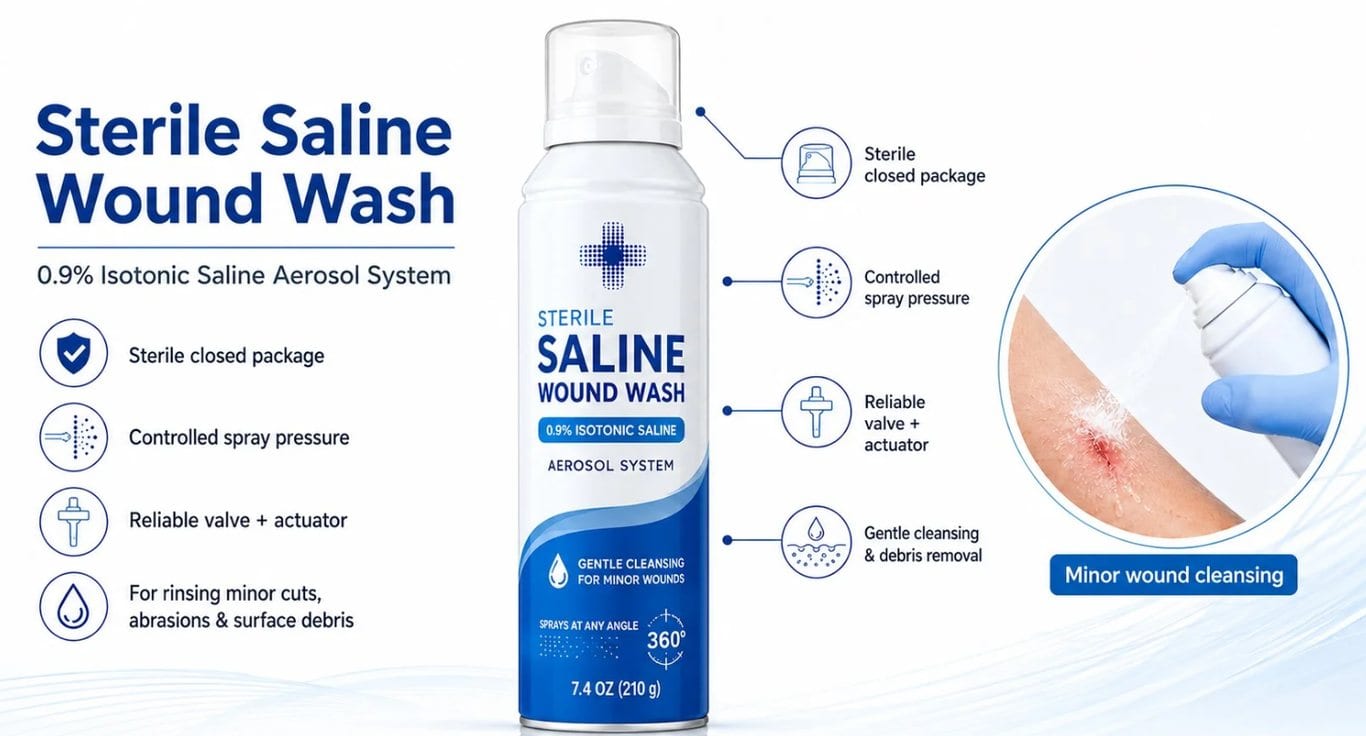
Saline spray after a hair transplant: how and why

August 2026 · The Hårtransplantasjon.com editorial team · 3 min read

Between washes in the first few days, saline spray stops the recipient area from drying out. Moist scabs stay soft and come away when the time is right. Without moisture they stiffen around the graft and can pull it out when they're torn off.

Key findings

  • Saline does its job by softening the scabs, so they come away without tearing at the graft.
  • Spraying often early in recovery matters more than which brand is on the bottle.
Read the full article
Healing

Shock loss: why you lose your own hair after a transplant

August 2026 · The Hårtransplantasjon.com editorial team · 3 min read

With shock loss you temporarily lose some of the hair you already had, in or around the treated area. The strain of the procedure pushes the follicles into their resting phase too early. It usually grows back, and it isn't the same as the transplanted hairs falling out.

Key findings

  • Shock loss affects the hair you already had. The moved hairs falling out is a separate process.
  • Most of the time the hair comes back, but it takes months, not weeks.
Read the full article
Healing

Shock loss: how long until the hair grows back?

August 2026 · The Hårtransplantasjon.com editorial team · 3 min read

Shock loss usually shows up within two months of the procedure, and it recovers over the following three to six months. The pace is set by the hair's own cycle, not by anything you use. The wait is hard, but there are rarely surprises in how it plays out.

Key findings

  • Your own hair usually falls out between week 2 and week 8.
  • In most cases the hair is back after 3 to 6 months, as the follicles start a new growth phase.
Read the full article
Healing

Spots after a hair transplant: folliculitis, causes and treatment

August 2026 · The Hårtransplantasjon.com editorial team · 3 min read

Folliculitis means some hair follicles are inflamed. After a transplant you see it as tiny red bumps and pustules, usually from the second week and for a couple of months after. It is common, usually mild and treatable. Your clinic should still assess it, and you should not squeeze.

Key findings

  • It usually appears from about week 2, once the scabs have gone.
  • Most cases are mild and clear up with what the clinic recommends. Squeezing can leave scars.
Read the full article
Healing

Panthenol and gel after a hair transplant: do they work?

August 2026 · The Hårtransplantasjon.com editorial team · 3 min read

Many clinics send you home with panthenol or a similar gel after the procedure. It soothes and moisturises, but there is little to suggest it helps more grafts survive or gives denser hair in the end. Its value is in keeping the scabs soft and making the scalp feel better.

Key findings

  • What has been shown is moisture, comfort and, in some studies, faster healing of the skin surface. Better graft yield has not been documented.
  • Only use products your clinic has approved on the recipient area.
Read the full article
Healing

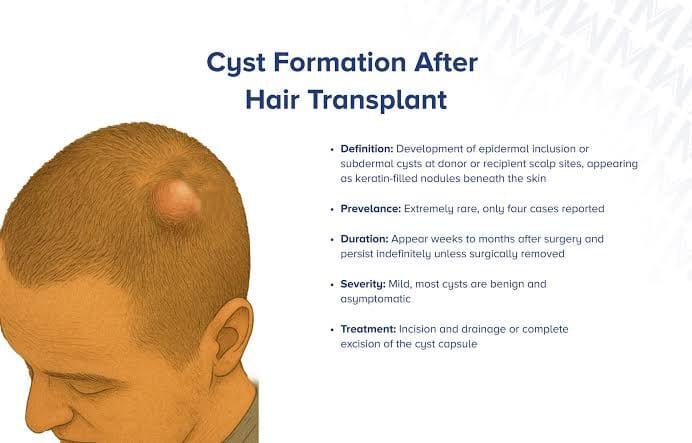
Are cysts after a hair transplant dangerous?

August 2026 · The Hårtransplantasjon.com editorial team · 3 min read

Small cysts where the grafts sit are a known side effect of the procedure and usually harmless. They tend to appear weeks later as small, hard bumps. Either a hair hasn't made it out, or a bit of tissue sits too deep. Most go away on their own or after simple treatment at the clinic.

Key findings

  • Cysts usually appear several weeks after the procedure, rarely in the first few days.
  • Let the clinic look at them instead of squeezing. Squeezing can cause scarring and infection.
Read the full article
Healing

Tight scalp after FUE or FUT: how long does it last?

August 2026 · The Hårtransplantasjon.com editorial team · 3 min read

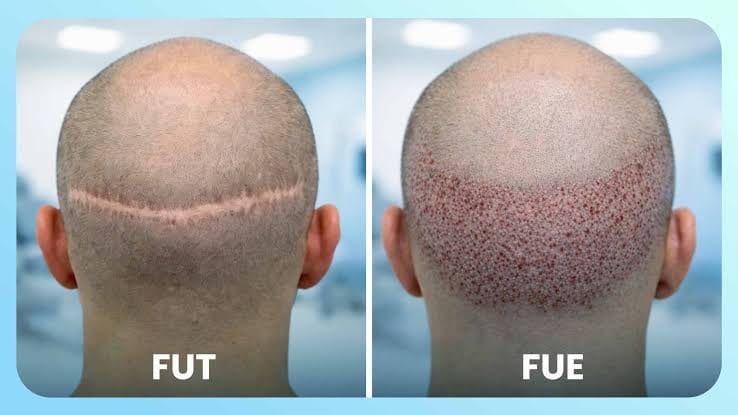
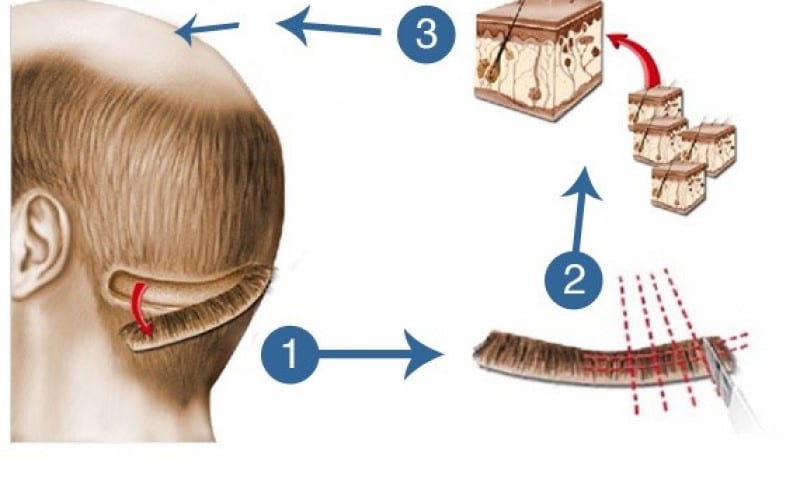
The method decides almost everything. In FUT (strip method), a piece of scalp is removed and the opening stitched closed, which causes real tightness that lasts. In FUE, follicles are taken out one by one, and the slight tightness you feel comes from swelling and passes quickly, because nothing had to be pulled together.

Key findings

  • After FUT, the tightness comes from the edges being pulled together, and it can last for weeks. After FUE, it comes from swelling and is gone within a few days.
  • If tightness after the strip method becomes severe or worse, tell your clinic rather than putting up with it in silence.
Read the full article
Healing

How to sleep after a hair transplant: first week and side sleeping

August 2026 · The Hårtransplantasjon.com editorial team · 3 min read

Flat on your back with your head raised is the position that does the least harm in the first week. The grafts are spared pressure while they can still come loose, and gravity draws fluid away from your forehead. Swelling there peaks at around days two to four.

Key findings

  • Sleeping on your back with your head raised protects the grafts and reduces swelling at the same time.
  • Raising your head helps most in the first 3 to 5 nights, while swelling is at its peak.
Read the full article
Healing

Travel pillow after a hair transplant: do you need one?

August 2026 · The Hårtransplantasjon.com editorial team · 3 min read

You can manage without one. But for the price, a neck pillow is one of the most useful things you can buy before you have to sleep with fresh grafts. It lifts the back of your head off the mattress and makes it harder to roll onto the transplanted area during the night.

Key findings

  • The main point is keeping the scalp clear and slowing down turning in your sleep. Comfort is a bonus.
  • It helps most in the first week or so, while the grafts can still fall out.
Read the full article
Healing

Hat after a hair transplant: when can you cover your head?

August 2026 · The Hårtransplantasjon.com editorial team · 3 min read

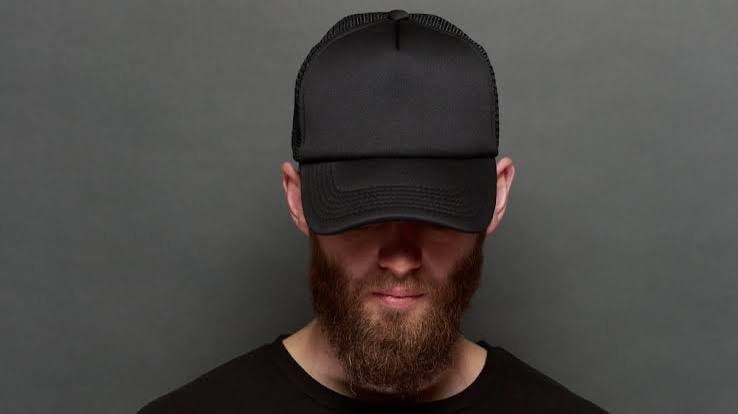
From around day ten, most clinics let you wear a loose hat, and some approve a loose, clean cap as early as the journey home. The risk is rarely the hat sitting on your head. It's the fabric scraping over grafts that aren't secure yet as you pull the hat on or take it off.

Key findings

  • In the graft anchoring study, grafts were secure from day 9. That's why day 10 is the usual limit.
  • The risk is greatest in the seconds you spend putting the hat on and taking it off. While it sits still, the risk is small.
Read the full article
Healing

Bike or motorcycle helmet after a hair transplant: when is it safe?

August 2026 · The Hårtransplantasjon.com editorial team · 3 min read

A helmet combines everything a healing scalp dislikes: sustained pressure, friction every time it goes on or off, heat and plenty of sweat. That's why most clinics ask you to wait considerably longer than with a soft hat. If you ride a motorcycle, the honest advice is that this needs solving before you book the procedure, not after.

Key findings

  • A helmet applies lasting pressure and traps sweat, so you need to wait longer than with a soft hat.
  • If a bicycle or motorcycle is how you usually get around, plan the timing of the procedure in advance.
Read the full article
Healing

Sun after a hair transplant: how long should you protect your scalp?

August 2026 · The Hårtransplantasjon.com editorial team · 3 min read

Healing skin burns easily and can develop uneven pigmentation. Sun in the first months can make redness last longer and leave colour differences that stay. Early on, shade and a hat are your only protection, because sunscreen doesn't belong on a fresh recipient area.

Key findings

  • The new skin where the grafts sit is thin and irritated and gets sunburnt very easily.
  • Shade and a hat are the first line of protection. Sunscreen comes in once the skin has closed.
Read the full article
Healing

When can you use sunscreen on your scalp after a hair transplant?

August 2026 · The Hårtransplantasjon.com editorial team · 3 min read

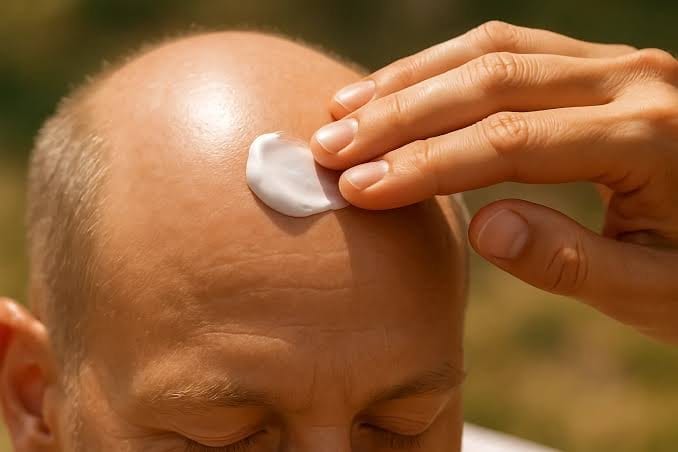
If you've lost the hair that shaded your skin, your scalp needs sunscreen. Just not on the new grafts at first. Every time you apply it, you're massaging a cosmetic product into wounds that haven't closed. That's why a hat and shade are your protection for the first few weeks, and sunscreen comes in once the skin has healed.

Key findings

  • Sunscreen has to be rubbed in, so you wait until the skin over the grafts has healed.
  • Mineral sun filters are usually better tolerated than chemical ones on newly healed skin.
Read the full article
Healing

Desk job after a hair transplant: how soon can you go back?

August 2026 · The Hårtransplantasjon.com editorial team · 3 min read

Your body is ready for screen work within a few days. What keeps people at home is almost always how their head looks, not what they feel up to. So the useful question when you plan is how visible you're prepared to be, not when you can manage a keyboard.

Key findings

  • Most people's bodies can handle office work again after two to three days.
  • Swelling peaks around days two to four, and that's when you look most worn.
Read the full article
Healing

Manual work after a hair transplant: when can you start?

August 2026 · The Hårtransplantasjon.com editorial team · 3 min read

Physical work brings back sweat, knocks and head protection, which is exactly what a healing scalp tolerates least. Most clinics recommend clearly longer time off from jobs like these than from a desk. Agree the plan before you book, not afterwards.

Key findings

  • It's sweat, dust and safety helmets that set the limit, not the exertion itself.
  • If you must wear a helmet at work, your time off should be planned before the procedure.
Read the full article
Healing

Exercise after a hair transplant: when can you go back to the gym?

August 2026 · The Hårtransplantasjon.com editorial team · 3 min read

Gentle movement is fine after a few days. Proper training has to wait. The reasons are sweat on healing skin, blood pressure that shouldn't be pushed up in the first days, and knocks or friction against grafts that haven't anchored yet. At most clinics the build-up happens over two to four weeks.

Key findings

  • From around day 9 the grafts are mechanically anchored. Sweat and blood pressure call for caution for longer.
  • The build-up goes from walks to gentle cardio and then strength training.
Read the full article
Healing

Cardio or weights after a hair transplant: which comes back first?

August 2026 · The Hårtransplantasjon.com editorial team · 3 min read

Running and weights each threaten a different part of your head. Cardio is mainly a problem for the recipient area, because you sweat for a long time. Strength training is mainly a problem for the stitches in the donor area, because you strain and your blood pressure rises. So after FUT (strip method), the running shoes come out long before the weights.

Key findings

  • With cardio, sweat is the danger to healing skin. With strength training, it's straining and tension on the stitches.
  • After FUT (strip method) it takes longer before you can lift heavy weights than after FUE.
Read the full article
Healing

When can you swim after a hair transplant?

August 2026 · The Hårtransplantasjon.com editorial team · 3 min read

In the pool your head spends a long time in chlorinated water that lots of other people have swum in. A healing scalp gets no benefit from any of that. Most clinics ask you to wait about a month, and longer for the sea, lakes and rivers, where nobody controls what's in the water.

Key findings

  • Chlorinated pools are usually off limits for the first month.
  • Open water often gets a longer deadline, because nobody can predict what's in it.
Read the full article
Healing

Sauna after a hair transplant: how long should you wait?

August 2026 · The Hårtransplantasjon.com editorial team · 3 min read

The sauna is one of the last things you get back after the procedure. Expect about a month, perhaps longer. The heat widens the blood vessels, you sweat heavily, and the healing skin turns soft and fragile. A steam room also adds humid, shared air where microbes thrive.

Key findings

  • You get the sauna back late because of the heat, the sweat and the widening blood vessels, often after about four weeks or more.
  • Steam rooms are usually treated more strictly than a dry sauna.
Read the full article
Healing

When can you use a hot tub after a hair transplant?

August 2026 · The Hårtransplantasjon.com editorial team · 3 min read

A hot tub has everything at once: heat, water around your head, chemicals and lukewarm water shared by many people. It's normally the last water your clinic approves. Hot tub folliculitis is also a known infection in people who haven't had any procedure.

Key findings

  • Warm water shared by many people can cause folliculitis even in people with no recent procedure.
  • Hot tubs are usually approved after both swimming pools and saunas.
Read the full article
Healing

Flying after a hair transplant: what is the real risk?

August 2026 · The Hårtransplantasjon.com editorial team · 3 min read

Your grafts can handle the flight home. Even so, the clinic will usually want you to stay until you've had your first check-up and first hair wash. What can actually go wrong happens at the airport and in the cabin: crowds, suitcases, overhead lockers, dry air and your head sinking back against the headrest when you fall asleep.

Key findings

  • The clinic normally wants your first check-up and wash done before you travel home.
  • Cabin air is bone dry, so keeping your skin moist during the flight matters even more.
Read the full article
Healing

Does flying make swelling worse after a hair transplant?

August 2026 · The Hårtransplantasjon.com editorial team · 3 min read

In a pressurised cabin, altitude barely affects swelling. The swelling you notice while travelling is the usual peak on days two to four, which just happens to coincide with the trip home. A longer stay high in the mountains is a different question, and one to raise with your surgeon.

Key findings

  • Swelling is greatest on days 2 to 4 even without a flight, which is why it so often coincides with the trip home.
  • Because the cabin is pressurised, an ordinary flight is not the same as spending time at altitude.
Read the full article
Healing

Sex after a hair transplant: how long should you wait?

August 2026 · The Hårtransplantasjon.com editorial team · 3 min read

The activity itself isn't the problem. It's the rise in blood pressure, the sweat and the chance of something touching the new grafts. Clinics usually ask for a short break, from a couple of days to around seven days, for the same reasons as the gradual return to exercise.

Key findings

  • What matters is blood pressure, sweat and contact with the grafts. The activity itself isn't the issue.
  • The advice normally follows the step-by-step plan for exercise rather than being a separate rule.
Read the full article
Healing

When can you drink alcohol after a hair transplant?

August 2026 · The Hårtransplantasjon.com editorial team · 3 min read

Straight after the procedure, it's best to leave alcohol alone. It widens your blood vessels, causes more bleeding and swelling, and can interact with the medication you're often sent home with. The break is short, but the reasoning holds up.

Key findings

  • Alcohol widens the blood vessels and so works against everything you do to keep early swelling down.
  • It can also interact with the painkillers and antibiotics many people are given after the procedure.
Read the full article
Healing

Does smoking affect a hair transplant? Why smokers heal more slowly

August 2026 · The Hårtransplantasjon.com editorial team · 3 min read

Smoking slows wound healing in two well-known ways. Nicotine constricts the small blood vessels, and carbon monoxide reduces the blood's ability to carry oxygen. Both hit the blood supply a fresh graft depends on completely, which is why clinics ask you to stop smoking around the procedure.

Key findings

  • Nicotine constricts the blood vessels and carbon monoxide reduces oxygen, and grafts depend on both blood flow and oxygen to survive.
  • Clinics normally ask you to stop smoking both before and after the procedure, not just afterwards.
Read the full article
Healing

Diet after a hair transplant: what helps and what's sales talk?

August 2026 · The Hårtransplantasjon.com editorial team · 3 min read

No diet has been shown to make more grafts survive. Even so, enough protein, energy and fluids, and treating any real deficiencies, give your body what it needs for normal wound healing. The aim is to avoid deficiencies. You can't eat your way to a better result.

Key findings

  • No diet has been shown to increase the proportion of grafts that survive.
  • Treating a confirmed deficiency helps. Supplements on top of a diet that already meets your needs usually don't.
Read the full article
Healing

Protein after a hair transplant: how much is enough?

August 2026 · The Hårtransplantasjon.com editorial team · 3 min read

Hair is mainly keratin, a protein, and wounds don't heal without protein. Getting enough of it therefore matters. But enough is the key word. There's no evidence that more than your normal requirement gives more surviving grafts or faster growth.

Key findings

  • Protein helps wounds heal and hair grow, as long as you get enough. More than enough brings no extra benefit.
  • No evidence supports the idea that protein loading improves transplant results.
Read the full article
Healing

Zinc and vitamin C after a hair transplant: do supplements help?

August 2026 · The Hårtransplantasjon.com editorial team · 3 min read

Your body needs both zinc and vitamin C to repair wounds. If you are genuinely low in either, correcting it helps. There's no evidence that supplements improve results when no deficiency has been found, and high doses of zinc can cause problems of their own.

Key findings

  • Both matter when wounds heal. There's no evidence that extra supplements help when you aren't deficient.
  • Too much zinc can cause nausea and stop the body absorbing copper.
Read the full article
Healing

Scalp massage after a hair transplant: when is it safe?

August 2026 · The Hårtransplantasjon.com editorial team · 3 min read

Early on, massage is off limits, because it creates exactly the shearing force that can dislodge grafts that haven't anchored yet. Later, massage has a clear role after strip surgery, where it is used to make the scalp more elastic, and a far less certain role when it comes to blood circulation in general.

Key findings

  • Don't massage while the grafts can still fall out. The anchoring study put that limit at up to day 9.
  • The clearest legitimate use is scalp stretching after strip surgery, when the clinic asks you to do it.
Read the full article
Healing

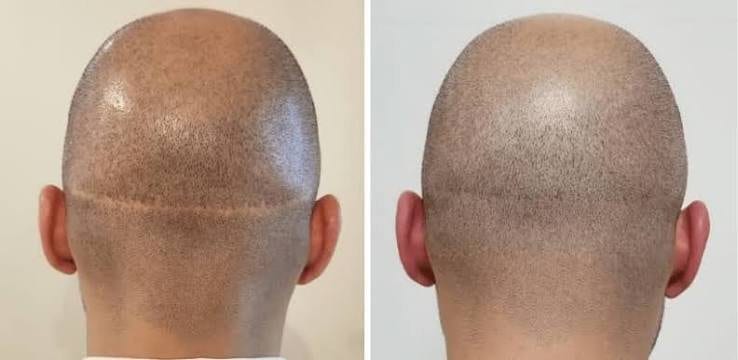
Can scalp micropigmentation hide hair transplant scars?

August 2026 · The Hårtransplantasjon.com editorial team · 3 min read

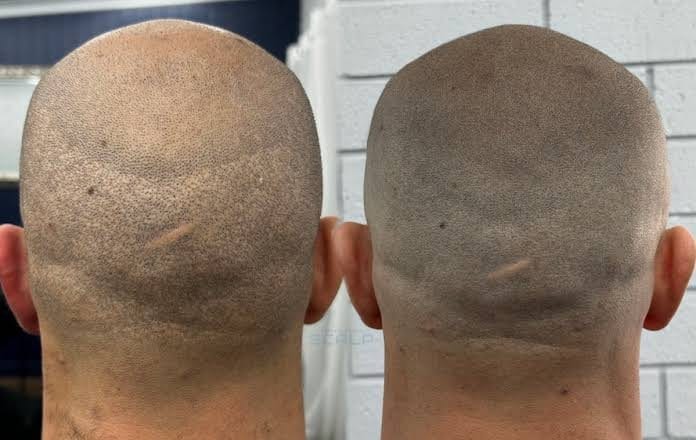
In micropigmentation, tiny dots are tattooed into the scalp so they look like short hairs. A pale donor scar then stands out less, because the contrast with the surrounding hair shrinks. The treatment belongs after healing, usually not until many months after surgery.

Key findings

  • Micropigmentation hides a scar by evening out the colour contrast with the surrounding hair. It doesn't produce a single new hair.
  • The pigment should only go in once the scar has fully matured, which usually takes many months after the procedure.
Read the full article
Healing

Beard or scalp as donor: how does healing differ?

August 2026 · The Hårtransplantasjon.com editorial team · 3 min read

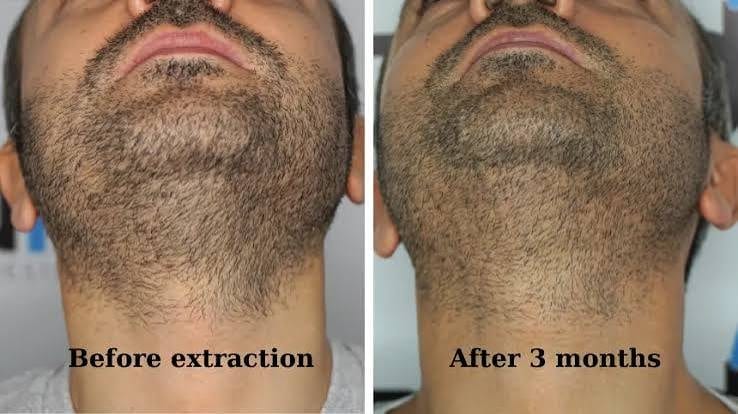
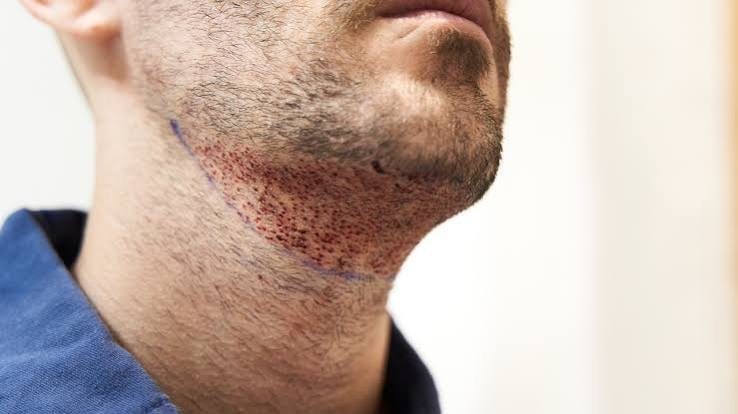
Extractions from the beard usually heal quickly, and the beard that grows back covers the area well. The price is that your face is visible to the world during the healing weeks, and beard hair doesn't turn into scalp hair when it is moved. In other words, you trade fast healing and good coverage for visibility and a hair with a different texture.

Key findings

  • Beard extraction points heal quickly, and the new beard growth hides them.
  • Beard hair is usually coarser than scalp hair and keeps behaving like beard hair after the transplant.
Read the full article
Healing

Body hair transplant: how does it heal and what can you expect?

August 2026 · The Hårtransplantasjon.com editorial team · 3 min read

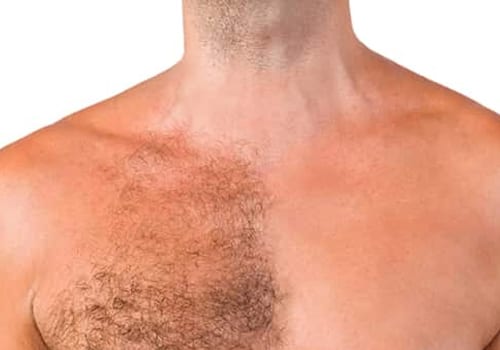
Body hair is the reserve surgeons turn to when there is nothing more to take from the scalp or the beard. The extraction sites usually heal without trouble. The limitation lies in the hair itself: body hair has a different growth cycle, doesn't grow as long and has a different texture from scalp hair, and that puts a ceiling on the result.

Key findings

  • The growth phase of body hair is shorter than that of scalp hair, so it never grows as long.
  • Body hair is a reserve that is only used when the scalp and beard have too little to give.
Read the full article
Healing

Diabetes and hair transplants: what does it mean for healing?

August 2026 · The Hårtransplantasjon.com editorial team · 3 min read

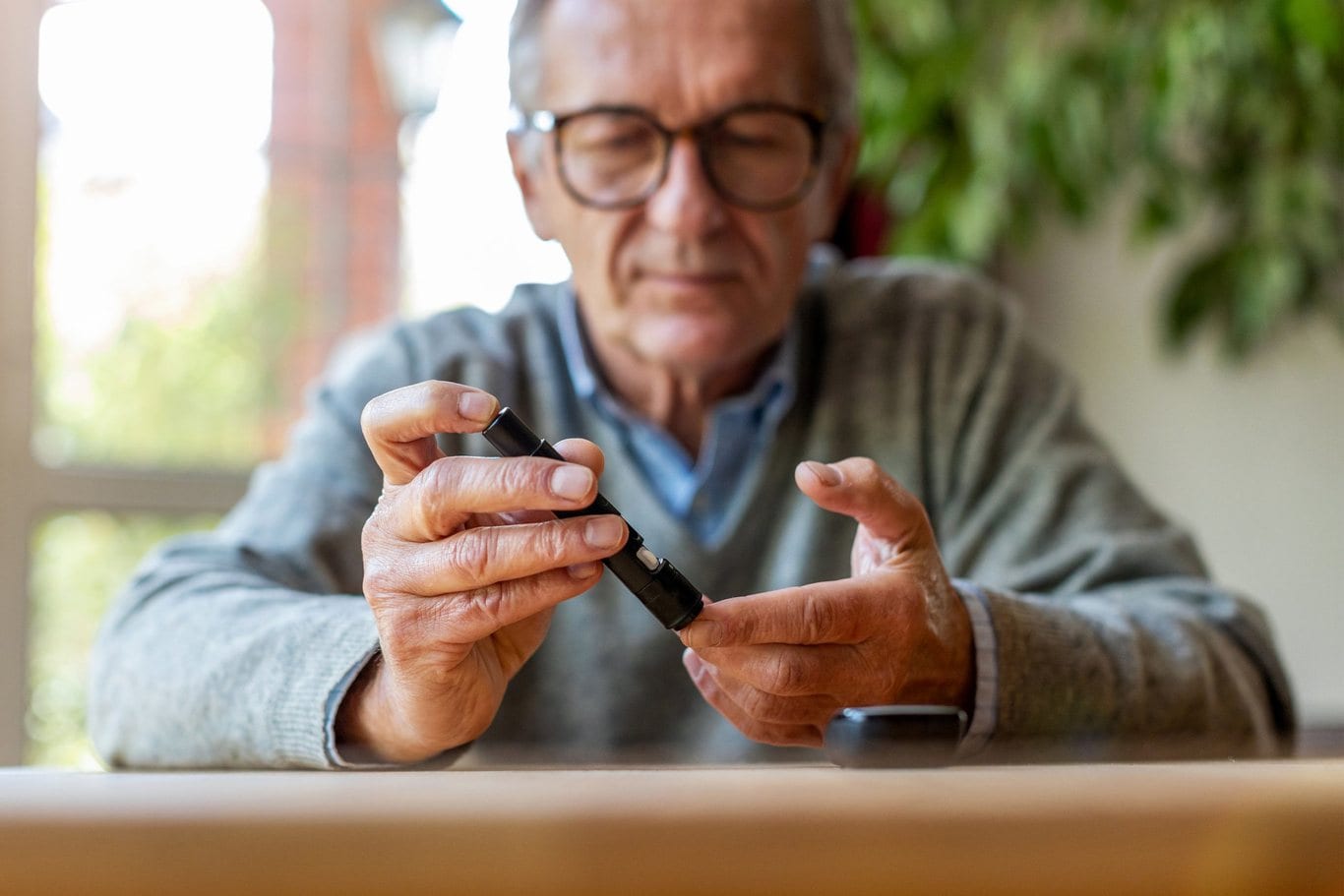
If you have diabetes, you can still have a hair transplant. The diagnosis simply makes the assessment more thorough. With stable blood sugar, the procedure usually goes smoothly. If the condition is poorly controlled, wounds heal more slowly and the risk of infection rises. So what matters is how well your blood sugar is managed, not the fact that you have the diagnosis.

Key findings

  • How well blood sugar is controlled, not the diagnosis alone, is what affects healing.
  • Diabetes can itself cause hair changes, so the cause of the hair loss should be established before surgery.
Read the full article
Healing

How does a hair transplant heal in women?

August 2026 · The Hårtransplantasjon.com editorial team · 3 min read

A woman's body heals on the same timetable as a man's. What differs is the context: women are more often operated on without shaving, have more of their own hair in the treated area, so shock loss is more noticeable, and need a clear diagnosis before anyone goes ahead.

Key findings

  • Because more of the original hair is still in place, shock loss is usually more visible in women.
  • The diagnosis carries more weight, since women can lose hair for many more reasons.
Read the full article
Healing

Haematoma after a hair transplant: how to spot it and get help

August 2026 · The Hårtransplantasjon.com editorial team · 3 min read

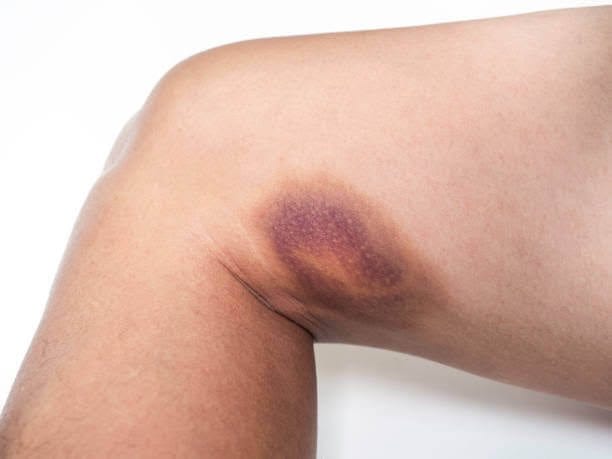
A haematoma is blood that has collected under the skin. It is rare after a hair transplant, but it is a well-known complication. Small collections go away on their own, while large ones have to be drained. It pays to know the difference between a haematoma and ordinary swelling.

Key findings

  • A haematoma is a hard, well-defined lump, often on one side only. Ordinary swelling is soft and evenly spread.
  • Small haematomas go away without treatment. Large ones have to be drained by a health professional.
Read the full article
Healing

When should you call the clinic after a hair transplant?

August 2026 · The Hårtransplantasjon.com editorial team · 3 min read

Almost everything that worries people in the weeks after surgery is part of the normal course of healing. With a short overview of the real warning signs, you know what calls for a quick phone call and what you can photograph and show at your next check-up instead.

Key findings

  • The clearest warning is a symptom that gets worse, not better, after the first few days.
  • If you have fever, spreading redness, pus or severe pain on one side, get in touch straight away.
Read the full article
HealingLong-term results

What are the side effects and risks of a hair transplant?

October 2026 · The Hårtransplantasjon.com editorial team · 8 min read

Most side effects after a hair transplant are temporary: swelling, scabs, itching, redness, numbness, folliculitis and shock loss. Rarer and more serious are infection, haematoma, poor growth, visible scars and overharvesting of the donor area. Two large reviews report an overall complication rate of 1.2 to 4.7%, but the figures depend on what is counted, and no registry collects outcomes. Smoking, poorly controlled diabetes and a large graft count in one session raise the risk of some of the complications.

Key findings

  • Two large series reported an overall complication rate of 1.2% and 4.7%. In another meta-analysis, 442 of 2,353 patients (19%) had some kind of complication, most often pain.
  • Folliculitis affected 12.1% of 1,317 patients, and shock loss 3.7% of 621 patients after FUE.
Read the full article
Healing

Can you get sick leave from NAV after a hair transplant?

October 2026 · The Hårtransplantasjon.com editorial team · 7 min read

A cosmetic procedure such as a hair transplant doesn't normally entitle you to sickness benefit (sykepenger), because section 8-4 of the National Insurance Act (folketrygdloven) only grants sickness benefit after such procedures if they are medically justified, and a circular from the Norwegian Directorate of Health (Helsedirektoratet) names hair transplantation as an example of a purely cosmetic indication. The safest option is to agree holiday or leave in advance. How long you need off depends on your job, from 2 to 3 days if you work from home to 4 weeks or more for heavy work. Travel insurance doesn't normally cover planned treatment.

Key findings

  • The last paragraph of section 8-4 of the National Insurance Act only grants sickness benefit after a cosmetic procedure if it is medically justified. Hair transplantation is given as an example of a purely cosmetic indication in the Directorate of Health's 1999 circular.
  • Self-certified sick leave (egenmelding) is at least 3 days at a time and 4 times a year, and your employer can withdraw the right if the absence isn't due to illness (nav.no).
Read the full article

FUE 42

FUEDonor area managementLong-term results

How long can a graft survive outside the body?

August 2026 · The Hårtransplantasjon.com editorial team · 15 min read

A follicle being moved can lie outside the body for hours without blood, and the longer it waits, the fewer survive. The most quoted figures come from a small piece of work done before FUE existed and amount to a loss of roughly 1 % an hour. Newer work suggests that drying out and rough handling are more dangerous than time itself, and a small 2021 comparison found better survival at room temperature than with chilling. The evidence is thinner and older than the confident percentages in clinic marketing would have you believe.

Key findings

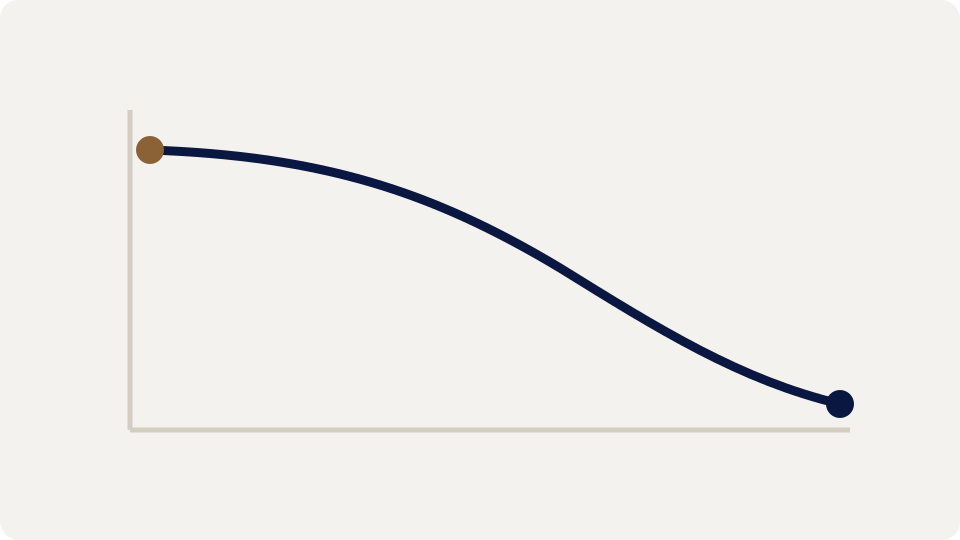
  • The curve everyone quotes shows 95 % survival after 2 hours, 90 % after 4, 86 % after 6 and 79 % after 24. That works out at roughly 1 % loss an hour.
  • In dry air, grafts can start to die after anything from 3 to 16 minutes.
Read the full article
FUE

What is FUE? The procedure explained step by step

August 2026 · The Hårtransplantasjon.com editorial team · 3 min read

In FUE, hair is removed in the small groups it naturally grows in, one at a time, with a tiny round hollow punch. Each group is then placed in a pre-made opening in the thinning area. At heart, the surgeon is moving living tissue from one place to another, and everything that happens along the way affects how many of the follicles survive.

Key findings

  • In FUE, the hair groups are lifted out one by one with a punch, without cutting a strip of skin from the back of the head.
  • How many grafts survive is decided during the operation: how they are handled, whether they are kept moist and how long they spend outside the body.
Read the full article
FUE

FUE or FUT: what is the real difference?

August 2026 · The Hårtransplantasjon.com editorial team · 3 min read

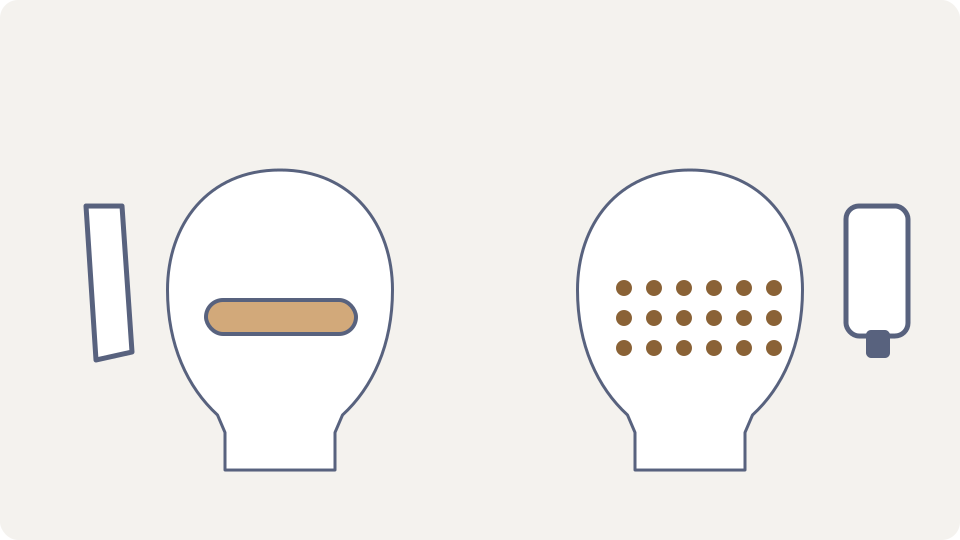
The only thing that separates the two methods is how the donor hair is harvested. In FUE, each hair group is punched out on its own, leaving many small, scattered dots. In FUT, a strip of skin is cut from the back of the head, leaving a single line. From implantation to final growth, the process is the same.

Key findings

  • The methods differ in how the hair is harvested. Implantation and the growth that follows are the same.
  • FUE leaves many small dot scars spread out, FUT leaves one linear scar, and the scar is what most often decides the choice.
Read the full article
FUE

Sapphire FUE: what do you actually get for the sapphire blade?

August 2026 · The Hårtransplantasjon.com editorial team · 3 min read

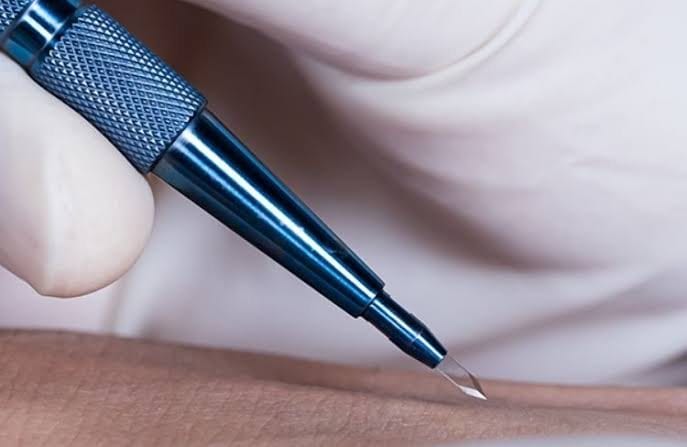
Sapphire FUE is an ordinary FUE procedure with one difference: the incisions in the recipient area are made with a sapphire blade rather than a steel one. Extraction is unaffected, only this one step changes, and there is little research showing that it gives a different end result.

Key findings

  • The sapphire is in the blade that makes the openings in the recipient area. Extraction and grafts are the same as before.
  • It is an adjustment to one step, not a separate method, and it is often sold as more than it is.
Read the full article
FUE

FUE without shaving: can you keep your hair long?

August 2026 · The Hårtransplantasjon.com editorial team · 3 min read

With unshaven FUE, the grafts are extracted without the back of the head being clipped short, so the surrounding hair hides the fact that you've had surgery. The price is a slower, more demanding procedure, usually with fewer grafts, and that is reflected in what it costs.

Key findings

  • The gain is that nobody can tell. The cost is slower harvesting and usually fewer grafts.
  • Fully unshaven procedures are often smaller sessions. Large sessions without shaving are possible, but they require a team with a lot of experience in this particular technique.
Read the full article
FUE

Robotic FUE (ARTAS) or manual FUE: what does the machine do better?

August 2026 · The Hårtransplantasjon.com editorial team · 3 min read

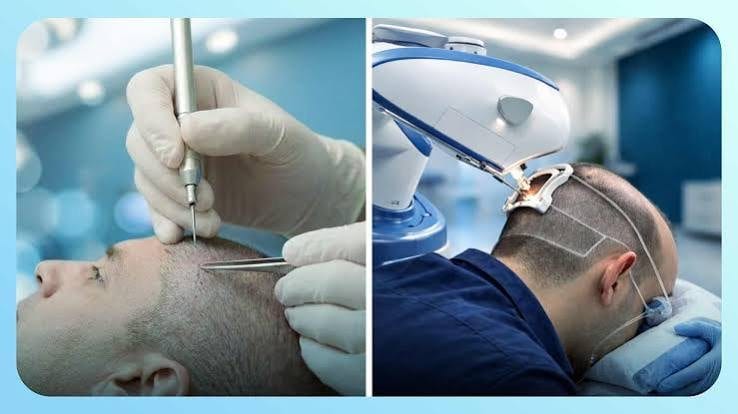
A robot can assist during harvesting by photographing the donor area and aiming the punch by itself. Few clinics use one, mostly because the machines are expensive and because many surgeons find that hands do a better job where the donor area is irregular.

Key findings

  • The robot helps with the extraction. Planning, design and responsibility for the procedure still lie with the surgeon.
  • Only a small share of procedures are done with a robot, held back by cost and by donor areas that aren't uniform.
Read the full article
FUE

Manual or motorised punch: does the tool matter in FUE?

August 2026 · The Hårtransplantasjon.com editorial team · 3 min read

A manual punch is rotated with the fingers, while a motorised punch is driven round or back and forth by a motor. The motor gives a faster pace and spares the surgeon physical strain. The hand gives a better feel for the tissue. Both can give fine results with a skilled surgeon.

Key findings

  • With a motor, extraction is faster. With a manual punch, the surgeon has a better feel for what is happening to each graft.
  • How many follicles are transected depends far more on the surgeon than on the type of punch.
Read the full article
FUE

Donor area scars after FUE: how visible will they be?

August 2026 · The Hårtransplantasjon.com editorial team · 3 min read

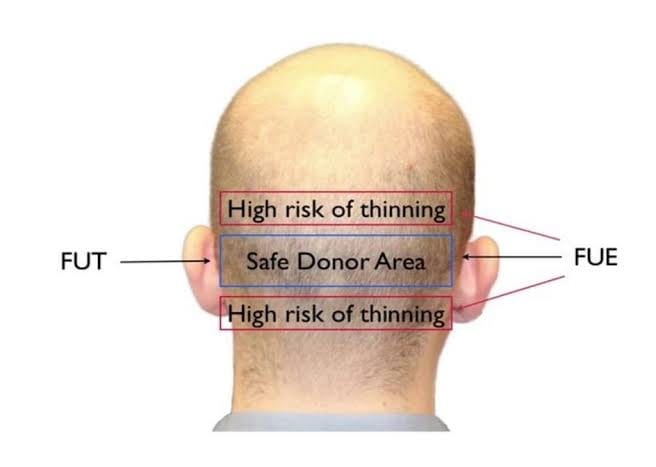
After FUE you're left with hundreds, perhaps thousands, of tiny round scars at the back of the head, and no line. Individually they are almost impossible to see. The risk lies in the total: if the clinic harvests too much, or too many times, the donor area becomes sparse and patchy, and that can't be reversed.

Key findings

  • The scars after FUE are spread across the back of the head rather than gathered in one line.
  • Over-harvesting is permanent. The donor area doesn't fill back in.
Read the full article
FUE

Donor density: why it decides how many grafts you can have

August 2026 · The Hårtransplantasjon.com editorial team · 3 min read

Donor density, given as the number of follicular units per square centimetre, decides how much can be harvested before the back of the head starts to look thin. No other measurement puts tighter limits on what a transplant can achieve, and it should be measured, not estimated.

Key findings

  • Density should be measured with a trichoscope. A naked-eye estimate isn't good enough.
  • Normal donor density is around 65 to 85 follicular units per cm², and around 40 or lower is considered weak. The lower it is, the fewer grafts can be taken safely.
Read the full article
FUE

FUE for women: what's different compared with men?

August 2026 · The Hårtransplantasjon.com editorial team · 3 min read

Women can have FUE too, but the assessment looks different. Hair loss is more often diffuse than patterned, the donor area can thin as well, there are more possible causes, and the procedure is more often done without shaving.

Key findings

  • Diffuse hair loss in women can reach into the donor area itself, which rarely happens with male pattern hair loss.
  • The cause has to be known first, because women can lose hair for many more reasons.
Read the full article
FUE

Eyebrow transplant with FUE: small area, high demands

August 2026 · The Hårtransplantasjon.com editorial team · 3 min read

In an eyebrow transplant, the grafts are harvested with the same FUE technique as usual. Placing them is far more demanding: single-hair grafts, an angle almost flat against the skin and a direction that changes from the inner to the outer end of the brow. The area is small, but the procedure is hard to get exactly right.

Key findings

  • Eyebrows are rebuilt with grafts containing just one hair, placed almost flat against the skin and in a direction that changes along the brow.
  • The hair that's moved is scalp hair, keeps growing like scalp hair and so has to be trimmed regularly.
Read the full article
FUE

Beard transplant with FUE: what it can do and what it costs

August 2026 · The Hårtransplantasjon.com editorial team · 3 min read

A beard transplant moves hair from the scalp to the face, almost always as single-hair grafts placed flat against the skin. Results are usually good. The price you pay on top of the bill is that the hair keeps the characteristics of scalp hair, and that every graft in the beard is taken from the reserve the scalp might need later.

Key findings

  • Beard grafts usually contain a single hair and are placed almost flat against the skin, the way natural beard growth lies.
  • Every graft used in the beard is permanently subtracted from what the scalp has left to draw on.
Read the full article
FUE

FUE into an old FUT scar: what the repair can achieve

August 2026 · The Hårtransplantasjon.com editorial team · 3 min read

A wide strip scar after FUT can be made less visible by placing FUE grafts into it. Scar tissue has a poorer blood supply than healthy scalp, so a smaller share of the grafts survive. That sets the limits on what you can expect.

Key findings

  • In scar tissue, a smaller share of grafts take than in healthy scalp, because the blood supply is weaker.
  • The goal is for the scar to stand out less, not for it to reach the same density as the surrounding hair.
Read the full article
FUE

Megasession of over 3,000 grafts: what do you gain and risk?

August 2026 · The Hårtransplantasjon.com editorial team · 3 min read

A single large session covers a big area in one trip to the clinic. Yet every extra graft lengthens the procedure, and the grafts harvested first spend the longest time outside the body. The size of the session therefore affects how many grafts survive. It is more than a question of logistics.

Key findings

  • The longer the session lasts, the longer the grafts spend outside the body, and the proportion that survives falls as the waiting time grows.
  • How high the number can go depends as much on the donor area as on how long the surgeon and team can keep going.
Read the full article
FUE

When does hair grow after FUE? The month-by-month timeline

August 2026 · The Hårtransplantasjon.com editorial team · 3 min read

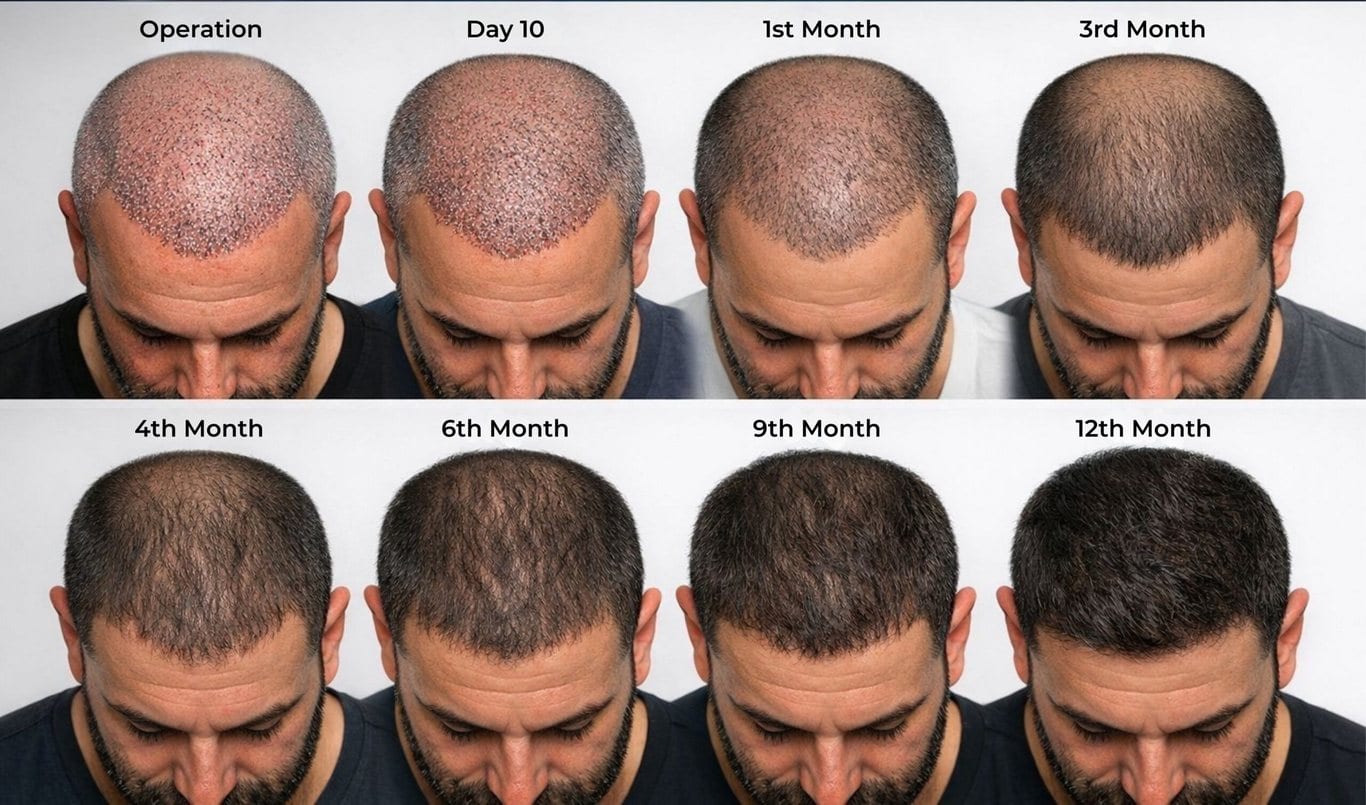
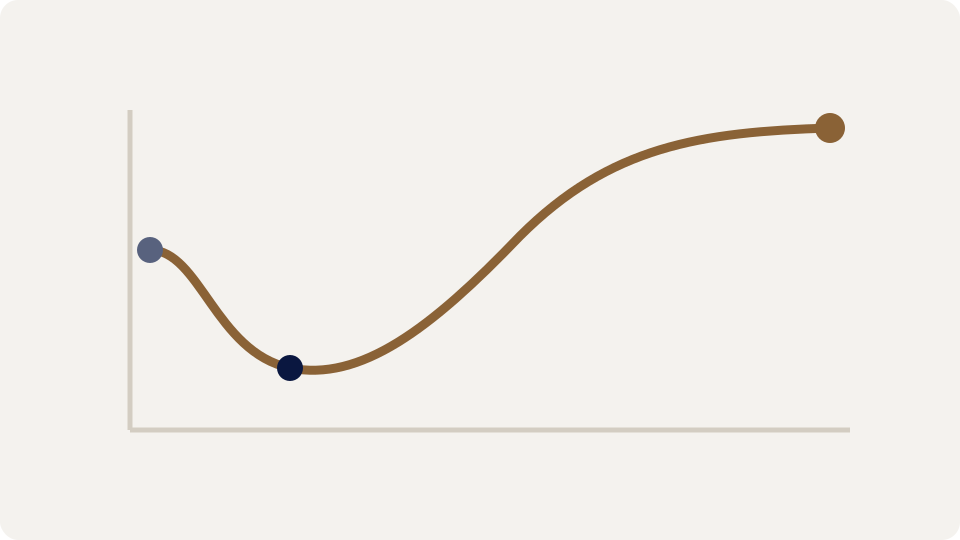
After FUE, the transplanted hairs let go after a few weeks, the follicles take a break, and new growth usually starts in month three or four. About twelve months after the procedure, the result has settled. Midway through, it often looks worse than before surgery, and that is exactly what to expect.

Key findings

  • The transplanted hairs fall out after 2 to 3 weeks, and new hairs become visible from month 3 to 4.
  • The result can only be judged after around 12 months, and the crown often needs even longer.
Read the full article
FUE

Graft angle: what makes a hair transplant look natural

August 2026 · The Hårtransplantasjon.com editorial team · 3 min read

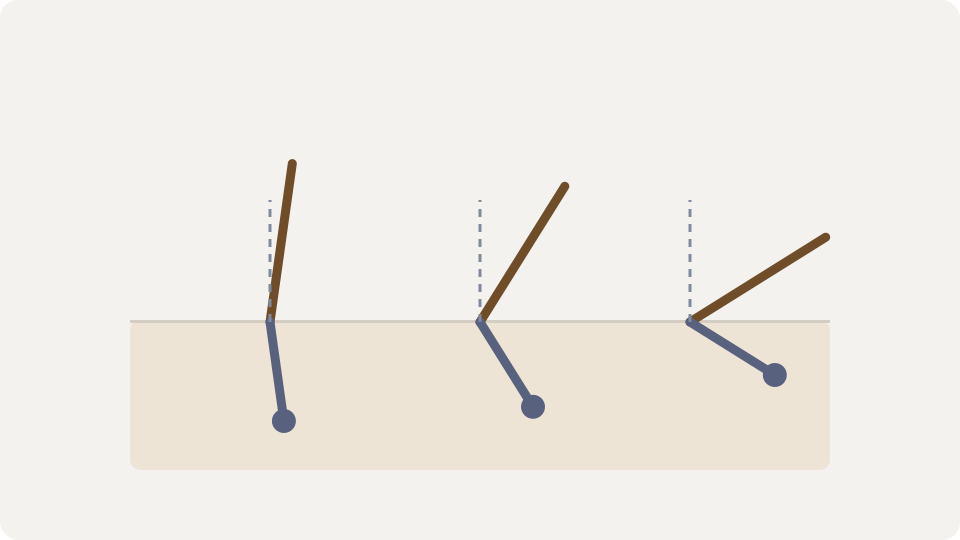
For a result to look real, angle and direction count for more than density. Every area of the scalp has its own angle at which hair grows out, and grafts placed against that pattern look unnatural, however many there are.

Key findings

  • How natural the result looks depends more on angle and direction than on the number of grafts.
  • The angle changes across the head: low at the hairline, steeper further back and shaped like a whorl at the crown.
Read the full article
FUE

Hairline design: how to draw a hairline that ages well

August 2026 · The Hårtransplantasjon.com editorial team · 3 min read

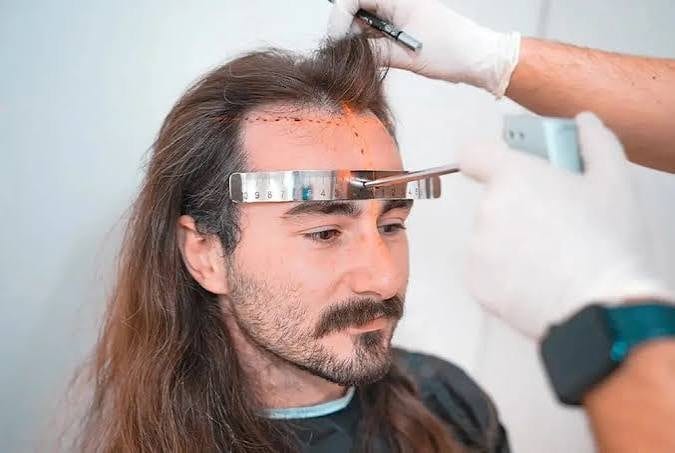
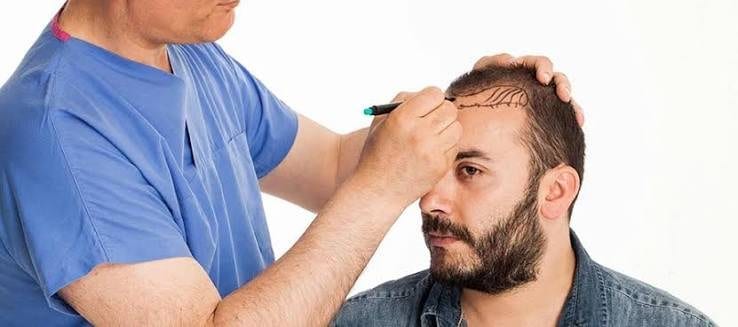
A natural-looking hairline is irregular, soft at the edge and suits the face. Most importantly, it is drawn with how you will look in twenty years in mind. No single decision does more to determine whether people can tell you have had a transplant.

Key findings

  • Natural hairlines are irregular and have a soft transition. They are never a straight line.
  • The line has to be planned for future hair loss, which is why very low hairlines age badly.
Read the full article
FUE

Temple points and hair transplants: a small area with high demands

August 2026 · The Hårtransplantasjon.com editorial team · 3 min read

The temple points frame the face, and when they disappear, many people look older than they had expected. They are also among the hardest places to transplant well: the hairs are fine, the angle is very flat, and there is no room for the wrong direction.

Key findings

  • Temple hair is fine and grows almost flat against the skin, so the surgeon can only use single-hair grafts there.
  • Badly angled work at the temples draws attention and is difficult to repair.
Read the full article
FUE

Crown hair transplant: why the crown is so hard to fill

August 2026 · The Hårtransplantasjon.com editorial team · 3 min read

The crown is large, curved and grows in a spiral. It uses up grafts at a rate no other part of the head matches, while the hair loss around it keeps spreading. Many surgeons deliberately push it further back in the plan, and in most cases that's good advice, not a shortcoming.

Key findings

  • The whorl in the crown has to be recreated. Filling the area evenly isn't enough.
  • The crown uses a lot of grafts and keeps spreading, which is why it often comes last in the queue.
Read the full article
FUE

Why do FUE prices differ so much in Turkey, Denmark and the UK?

August 2026 · The Hårtransplantasjon.com editorial team · 3 min read

The price gap between countries comes from wage levels, patient volume and what it costs to comply with regulations. Hair follicles behave the same everywhere. What you get more or less of as the price changes is the surgeon's own hands, room in the schedule and help on the day something goes wrong.

Key findings

  • Prices differ because of wages, volume and regulation. The biology is the same.
  • A higher price usually buys more time with the surgeon, fewer patients per day and follow-up that's easy to get hold of.
Read the full article
FUE

Does PRP improve hair transplant results? What the evidence shows

August 2026 · The Hårtransplantasjon.com editorial team · 3 min read

Platelet-rich plasma (PRP) is often offered alongside a transplant. The rationale is that concentrated growth factors help the grafts survive and strengthen the hair you already have. The treatment is widespread and the idea is reasonable. Even so, the evidence for using PRP specifically with a procedure is thinner than the marketing suggests.

Key findings

  • A large share of clinics offer PRP, and for many it has become an almost standard add-on.
  • Research support is weaker for PRP as a way to improve a transplant than for PRP as a stand-alone treatment for hair loss.
Read the full article
FUE

Do you need finasteride and minoxidil after FUE?

August 2026 · The Hårtransplantasjon.com editorial team · 3 min read

Surgery moves hair, while medication protects the hair you still have. A transplant doesn't stop hereditary hair loss in the areas that weren't treated, so it's common to combine the two to keep the result looking coherent over time.

Key findings

  • The hair around the grafts keeps thinning even after you've had a transplant.
  • Medication slows ongoing hair loss, while surgery replaces hair you've lost. They're two different problems.
Read the full article
FUE

Limited donor hair: where are the limits of FUE?

August 2026 · The Hårtransplantasjon.com editorial team · 3 min read

With sparse donor hair, an honest surgeon often has to say that surgery can't deliver what you imagine. If you and the surgeon recognise this before the operation, you can end up with a modest but good result. If you don't, you risk a depleted donor area and a top that disappoints.

Key findings

  • With low donor density, the safe ceiling for the number of grafts is lower, and sometimes it sits below what the goal requires.
  • If the surgeon takes too much from a small donor area, you get a new visible problem on top of the old one.
Read the full article
FUE

Can body hair be used for a hair transplant? What to expect

August 2026 · The Hårtransplantasjon.com editorial team · 3 min read

If you've used up the donor hair on your scalp, body hair can be a supplement. It has shorter growth cycles, doesn't reach the same length and gives a less predictable yield than hair from the scalp. Body hair is a last resort in difficult cases. It can't match the scalp as a source.

Key findings

  • Body hair has a shorter growth phase, so it never gets as long as scalp hair.
  • Body hair is used when the scalp and beard have too little to give, most often when an earlier procedure needs repairing.
Read the full article
FUE

A second FUE session: when it's right, and when it isn't

August 2026 · The Hårtransplantasjon.com editorial team · 3 min read

A second session is usually part of the plan from day one, not an emergency repair, because donor hair is limited and hair loss continues. What decides the timing? Above all, that the result of the first round has had time to mature, and that takes around twelve months.

Key findings

  • Wait around 12 months and see what the first session gave you before planning the next.
  • How the donor area has coped with the first session and how much density is left must be measured again, not guessed.
Read the full article
FUE

Graft storage solution: how much does it matter?

August 2026 · The Hårtransplantasjon.com editorial team · 3 min read

Between extraction and implantation, grafts are kept in a solution. Preservation solutions developed for organs do better than ordinary saline when the waiting time gets long. In a well-organised session, though, the choice of solution matters far less than keeping the session short and never letting the grafts dry out.

Key findings

  • Preservation solutions show their advantage mainly when grafts stay out longer than a good session should ever last.
  • Moist grafts and a short session count for more than which product is in the dish.
Read the full article
FUE

FUE punch technology: what's really behind clinic brand names

August 2026 · The Hårtransplantasjon.com editorial team · 3 min read

Clinics market their punches aggressively and give them their own brand names, even though they are mostly sharp, blunt, serrated or funnel-shaped tips. The differences are real but small, and no tip can make up for a lack of skill in the hand holding it.

Key findings

  • Punch types really do differ, but only slightly. Brand names often cover entirely ordinary tip shapes.
  • Keeping punches sharp throughout the session matters more than what they're called.
Read the full article
FUE

Old scars on the scalp: can FUE hide them?

August 2026 · The Hårtransplantasjon.com editorial team · 3 min read

A scar from surgery, an accident or a burn can become less visible when the surgeon plants grafts in it. Scar tissue has a weaker blood supply than normal scalp, so fewer grafts survive. A realistic goal is for the scar to stand out less. Full density is rarely within reach.

Key findings

  • Fewer grafts survive in scar tissue than in healthy scalp, and it's common to start with a test session.
  • The point is to break up the edges of the scar, not to erase it.
Read the full article
FUE

Red flags in an FUE consultation

August 2026 · The Hårtransplantasjon.com editorial team · 3 min read

The consultation says more about your result than any photo gallery. The red flags you can rely on are pressure to decide quickly, a graft count with nothing measured, vague answers about who operates, and a clinic that won't talk about the hair loss still to come.

Key findings

  • A graft count given without measuring donor density is a sales figure, not a plan.
  • When a clinic won't say who extracts and implants the grafts, that evasion is what matters most.

Read the full article
FUE

Cheap FUE: what clinics cut back on to keep the price down

August 2026 · The Hårtransplantasjon.com editorial team · 3 min read

When the price is very low, it's because the clinic has cut back where your result is decided: on the surgeon's involvement, the number of hands, the pace and the follow-up. The technique itself doesn't get any cheaper. What you save is almost always taken from things you can't see on the day of surgery.

Key findings

  • Low prices usually come from high volume and less time with the surgeon, not from a more efficient technique.
  • You rarely notice what's been cut on the day of surgery. It shows a year later.
Read the full article
FUE

FUE graft yield: from extraction to hair that actually grows

August 2026 · The Hårtransplantasjon.com editorial team · 3 min read

An FUE procedure has three graft numbers: how many were extracted, how many were implanted, and how many produce hair a year later. The clinic nearly always quotes the first. What you as the patient end up with is the third. Between them lie the losses from transected follicles, drying out and rough handling.

Key findings

  • Grafts extracted, grafts implanted and grafts that survive are three different quantities.
  • Quotes and contracts almost always state the number extracted, not how many hairs eventually grow.
Read the full article
FUEDHI

Recipient sites in a hair transplant: how the incisions are made

August 2026 · The Hårtransplantasjon.com editorial team · 3 min read

When the surgeon makes the recipient sites, the angle, direction, depth and density of every single hair are decided. The incision comes first and the graft afterwards, and a finished incision can't be moved. That's why this step decides much of how natural the result looks.

Key findings

  • Angle, direction, depth and density are controlled by the recipient sites, not by the grafts themselves.
  • How deep the incisions are and how close together they sit affect both survival and the visible result.

Read the full article
FUE

Sagittal or coronal slits: which way should the recipient slit run?

August 2026 · The Hårtransplantasjon.com editorial team · 3 min read

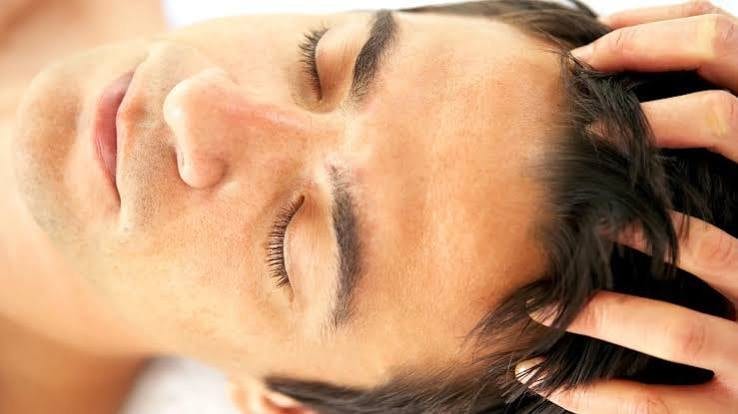
A recipient slit can either run along the hair's direction of growth (sagittal) or across it (coronal, also called lateral). The choice governs how the hairs in a graft spread out and how flat they lie. Surgeons have disagreed about this for many years, and both camps have good arguments.
Key findings

  • Coronal, or lateral, slits cross the hair's direction. Sagittal slits run along it.
  • Both directions give good results. The disagreement is about coverage versus how much control the surgeon has.
Read the full article
FUE

How dense can a hair transplant be in one session?

August 2026 · The Hårtransplantasjon.com editorial team · 3 min read

It's the blood supply in the recipient area that decides how closely grafts can be placed in one session, not how many grafts the surgeon would like to put in. Your original hair grew far more densely than any transplant can recreate. The goal is therefore an impression of fullness, not a copy of the density you had before your hair loss began.

Key findings

  • How densely grafts can be placed is decided by the blood supply in the area, not by how ambitious the surgeon is.
  • A transplant creates an impression of fullness. It doesn't recreate the density you once had.
Read the full article
FUE

Does FUE stop hair loss? How to plan for the years ahead

August 2026 · The Hårtransplantasjon.com editorial team · 3 min read

A transplant moves DHT-resistant hair into areas that have thinned. The process behind the hair loss carries on as before, and your own hair around the grafts keeps thinning at its own pace. A plan that ignores this can look great in the first year and fall apart in the years that follow.

Key findings

  • Surgery relocates hair. The process behind hereditary hair loss is not affected by the procedure.
  • Without treatment, your own hair around the grafts keeps getting thinner.
Read the full article
FUE

FUE and low-level laser therapy: does LLLT help after a transplant?

August 2026 · The Hårtransplantasjon.com editorial team · 3 min read

Low-level laser light is sold as an add-on to hair transplants, based on the theory that the light stimulates hair follicles. There is some evidence for it in hereditary hair loss. Evidence that it gives a better transplant result, however, is weak, and the devices on the market vary hugely in quality.

Key findings

  • LLLT has some evidence behind it for hereditary hair loss. Support for the idea that it improves transplant results is weak.
  • Power and instructions for use vary widely between devices, which makes study results inconsistent.
Read the full article
FUE

Is FUE done under local or general anaesthesia?

August 2026 · The Hårtransplantasjon.com editorial team · 3 min read

FUE is done under local anaesthetic, and the injections at the start are the worst part of the day for most people. Some clinics also offer sedation. General anaesthesia is not part of a standard procedure, and you should question a clinic that uses it routinely.

Key findings

  • FUE is done under local anaesthetic, and what hurts is mainly the injections at the start.
  • General anaesthesia is not standard practice for a routine hair transplant.
Read the full article
FUE

Does FUE hurt? Pain during and after the procedure

August 2026 · The Hårtransplantasjon.com editorial team · 3 min read

Once the anaesthetic has taken effect, most people find the procedure itself more tedious than painful. Afterwards it's usually the donor area that aches most, and for most people ordinary painkillers are enough for a few days.

Key findings

  • The anaesthetic injections are the most uncomfortable part. The rest of the day is usually pain-free.
  • After the procedure, the donor area is usually more tender than the recipient area.
Read the full article
FUE

Can you have FUE with a tight scalp? Why laxity matters little

August 2026 · The Hårtransplantasjon.com editorial team · 3 min read

With FUE, how mobile your scalp is matters far less than with strip surgery, because there are no wound edges to pull together. For FUT, a tight scalp is a major limitation. For FUE, it's a minor technical detail, and that is exactly why FUE is often the better choice for these patients.

Key findings

  • A scalp with little movement severely limits strip surgery, but has little effect on FUE.
  • If the scalp is tight, both extraction and the incisions in the recipient area can be somewhat more demanding.
Read the full article
FUE

Hairline or crown: where should the grafts go first?

August 2026 · The Hårtransplantasjon.com editorial team · 3 min read

Donor hair is limited, and every graft that ends up in the crown is a graft the hairline has to do without. Most surgeons prioritise the front, because that's what frames the face, and every graft placed there is more visible. As a rule, that's a sensible priority.

Key findings

  • Each graft in the front third does more visible good than a graft in the crown.
  • The crown keeps expanding. Grafts placed there early can end up surrounded by a growing bald ring.
Read the full article
FUE

Failed FUE: the signs, the causes and what can be fixed

August 2026 · The Hårtransplantasjon.com editorial team · 3 min read

A failed result has typical signs: hair at the wrong angle, a ruler-straight hairline, multi-hair grafts right at the front, a depleted donor area and lower density than promised. Almost all of these trace back to choices made before the procedure started, not to random bad luck.

Key findings

  • Poor results most often come from planning and design that went wrong, rarely from biology.
  • Wrong angles and poor design don't go away on their own and have to be corrected surgically.
Read the full article
FUE

Before you book FUE: the questions that reveal a good clinic

August 2026 · The Hårtransplantasjon.com editorial team · 3 min read

The questions that tell you how things will go for you are about measurements, people and workflow. The name of the technique tells you little. Clinics that answer everything clearly care about your result. Clinics that dodge several of the questions care most about selling a package.

Key findings

  • The most useful questions are about how dense your donor hair actually is, who does the work and how long the grafts are outside the body.
  • Get everything in writing before you pay any deposit.
Read the full article

Medication 45

MedicationLong-term results

Does low-dose oral minoxidil work for hair loss? What studies show

August 2026 · The Hårtransplantasjon.com editorial team · 14 min read

Low-dose oral minoxidil is used off-label for hair loss, and the research behind it is growing but still uneven. Observational data suggest hair density rises with the dose. A large multicentre safety study found mostly cosmetic side effects and few people stopping. In a 2024 randomised trial, the tablet did not beat the solution on the primary outcome. The same year brought an international consensus with recommended starting doses, contraindications and follow-up.

Key findings

  • Six studies were pooled in a meta-regression. Each extra 1 mg a day gave, on average, 47.1 more hairs/cm² in total after six months.
  • Hypertrichosis occurred in 15.1 % of 1,404 treated patients. Only 1.7 % stopped because of a side effect.
Read the full article
Medication

How does finasteride work for hair loss?

August 2026 · The Hårtransplantasjon.com editorial team · 3 min read

Finasteride inhibits the enzyme that converts testosterone into DHT, the hormone that makes genetically susceptible hair follicles shrink. With less DHT in circulation, miniaturisation slows down, and in many men it partly reverses.

Key findings

  • Finasteride blocks type II 5-alpha reductase, and DHT levels in the body fall.
  • In the studies, those given finasteride ended up with more hair than the placebo groups, who kept losing hair.
Read the full article
Medication

Dutasteride or finasteride: which works better for hair loss?

August 2026 · The Hårtransplantasjon.com editorial team · 3 min read

Of the two forms of 5-alpha-reductase, finasteride blocks only type II. Dutasteride blocks both, type I as well as type II, and so pushes DHT lower. According to meta-analyses, dutasteride produces more hair, while sexual side effects appear to occur about as often with either drug.

Key findings

  • Three studies, 576 participants, one meta-analysis: dutasteride gave on average 28.57 more hairs in total hair count than finasteride.
  • The share reporting reduced libido, erection problems or ejaculation problems did not differ significantly between the two drugs.
Read the full article
Medication

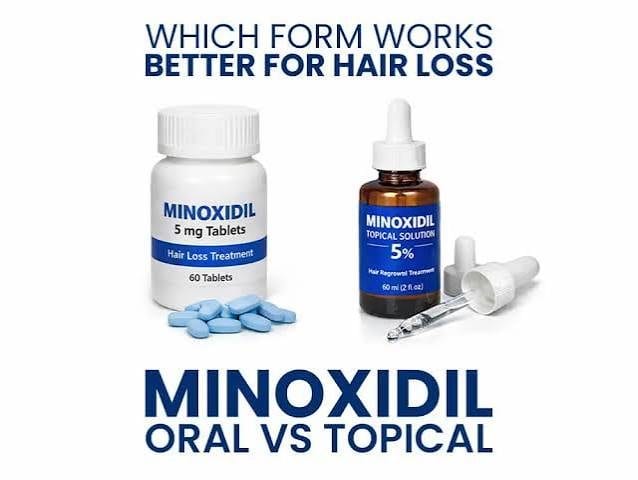
Oral or topical minoxidil: what does the randomised trial show?

August 2026 · The Hårtransplantasjon.com editorial team · 3 min read

Only one randomised trial has compared them head to head. After 24 weeks, 5 mg of oral minoxidil a day did not beat the topical solution (5 per cent, applied morning and evening) on the trial's primary outcome. What the tablet has going for it is that people actually take it. It has not been shown to be stronger.

Key findings

  • The 2024 randomised trial did not find that the tablet produced more terminal hairs per cm² than the solution.
  • Hypertrichosis, meaning unwanted hair growth on the body, affected 49 per cent of those taking tablets and 25 per cent of those using the solution.
Read the full article
Medication

Spironolactone for women with hair loss: what do we know?

August 2026 · The Hårtransplantasjon.com editorial team · 3 min read

Spironolactone is a diuretic, but it also dampens the effect of androgens. It is used off-label for hereditary hair loss in women. Finasteride is not approved for them and is ruled out as long as they can become pregnant. The research behind it is thinner than for the drugs approved for men, and treatment requires reliable contraception and regular follow-up.

Key findings

  • In women, spironolactone is used off-label. Its anti-androgen effect comes on top of its main diuretic action.
  • The medicine must not be used during pregnancy, and reliable contraception is a requirement.
Read the full article
Medication

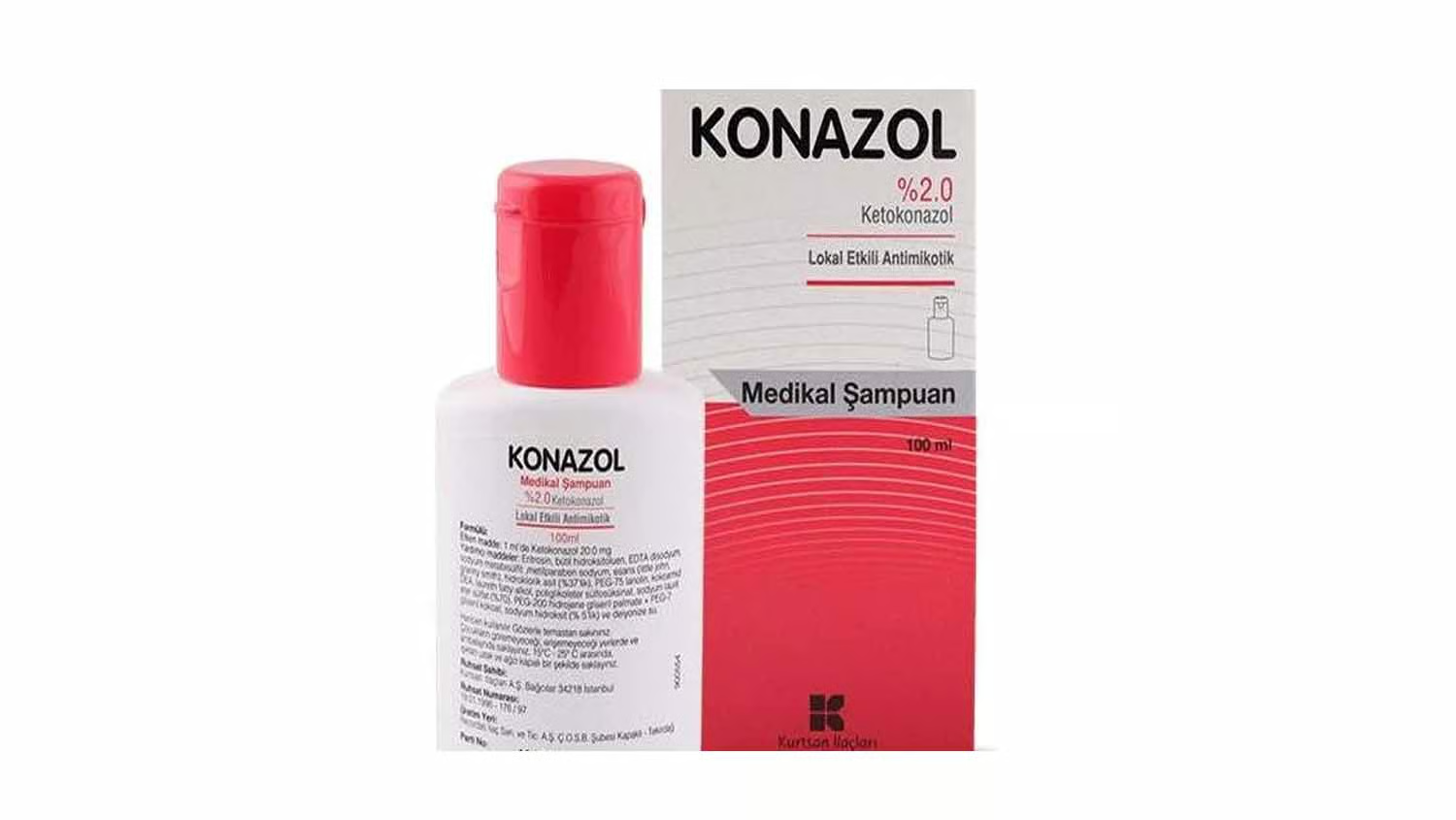
Ketoconazole shampoo for hair loss: useful add-on or myth?

August 2026 · The Hårtransplantasjon.com editorial team · 3 min read

Ketoconazole is an antifungal, and as a shampoo it is a well-known treatment for dandruff and seborrhoeic eczema. Many also recommend it as an add-on for hair loss, because it calms inflammation and because a few small studies point in that direction. It is not a main treatment.

Key findings

  • Its documented use is against fungus, meaning dandruff and seborrhoeic eczema.
  • A direct effect on hereditary hair loss is poorly supported, and the little evidence there is comes from small studies.
Read the full article
Medication

Biotin for hair loss: what does the research say?

August 2026 · The Hårtransplantasjon.com editorial team · 3 min read

Biotin is sold with big promises of stronger hair, but research shows a benefit only when the body is actually deficient, and that is rare. If you're not deficient, there is no good evidence that supplements help. Biotin can also give false results on common blood tests.

Key findings

  • Biotin has documented benefit in true deficiency, which is uncommon in people with a normal diet.
  • Large doses of biotin can give badly misleading laboratory results, including thyroid and heart tests.
Read the full article
Medication

Does saw palmetto block DHT? What studies say about hair loss

August 2026 · The Hårtransplantasjon.com editorial team · 3 min read

Manufacturers market saw palmetto as nature's finasteride, because the plant is said to slow the enzyme 5-alpha reductase. A handful of small studies point to a slight effect. Dosing is far less consistent and the evidence much weaker, and when the two were tested head to head in a two-year study of 100 men, finasteride clearly came out ahead.

Key findings

  • The mechanism is supposed to be the same as finasteride's. But in the only direct comparison, two years and 100 men, 68 % improved on finasteride and only 38 % on saw palmetto.
  • Saw palmetto is sold as an unstandardised dietary supplement, so both the dose and the contents vary from product to product.
Read the full article
Medication

Is RU58841 safe? An untested antiandrogen sold online

August 2026 · The Hårtransplantasjon.com editorial team · 3 min read

RU58841 is an antiandrogen that was never fully developed. It was meant to be applied to the skin, and today it is bought online as a research chemical. The substance is not approved in any country, and there are no established data on how safe it is for humans.

Key findings

  • No country has approved RU58841 as a medicine, and a full human safety programme has never been carried out.
  • The powders and solutions you can buy online are not made to pharmaceutical standards.
Read the full article
Medication

Do latanoprost and bimatoprost eye drops help hair loss?

August 2026 · The Hårtransplantasjon.com editorial team · 3 min read

Both are prostaglandin analogues, developed as eye drops for glaucoma. Longer eyelashes were an unexpected side effect. Today bimatoprost is approved for sparse eyelashes, while use on the scalp rests on little evidence.

Key findings

  • Bimatoprost's approval covers sparse eyelashes. Hair loss on the scalp is not included.
  • There is little evidence for use on the scalp, and treating a large area makes it expensive.
Read the full article
Medication

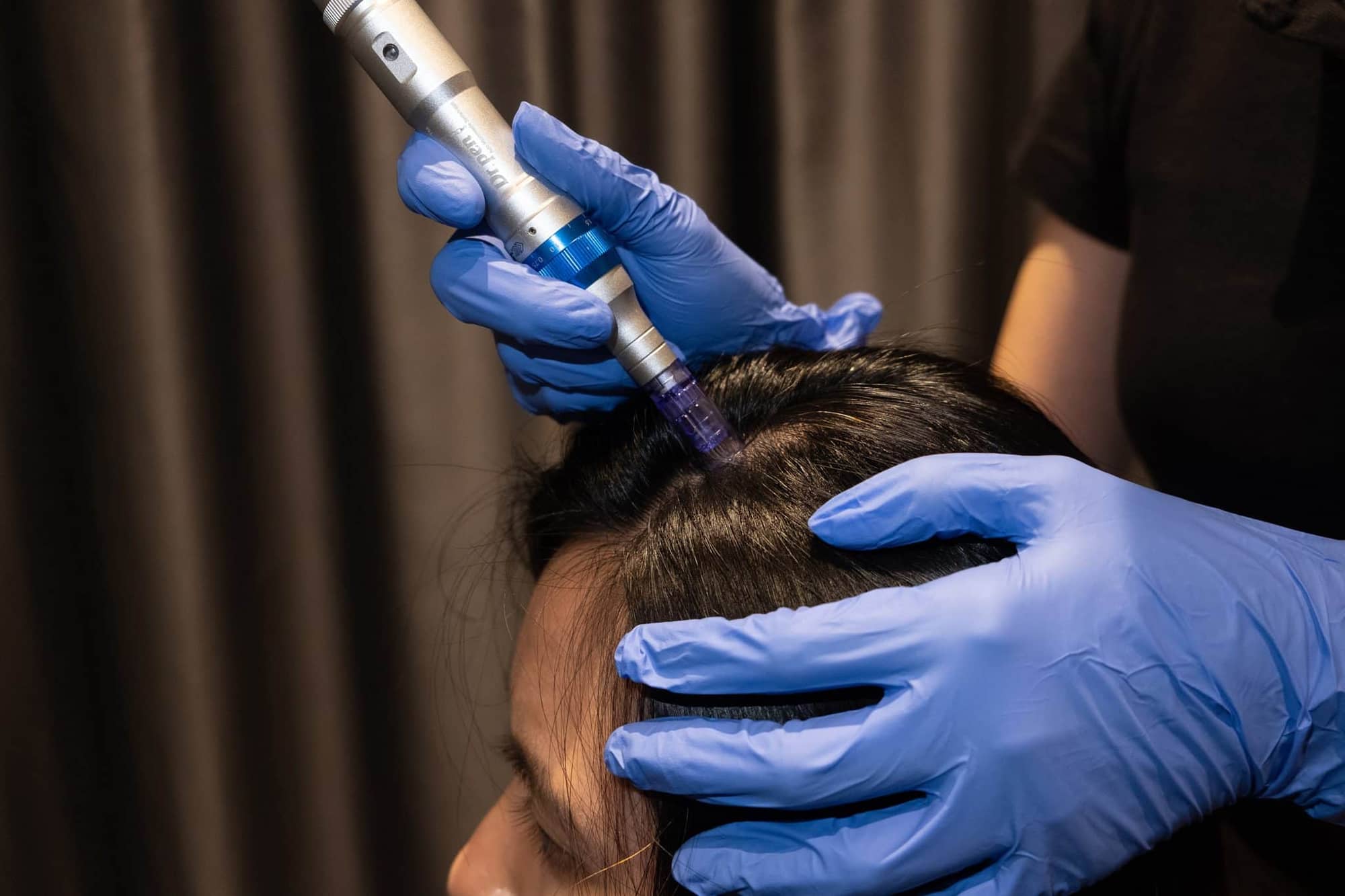
Microneedling and minoxidil: does the combination help?

August 2026 · The Hårtransplantasjon.com editorial team · 3 min read

Microneedling gives the scalp tiny, controlled puncture injuries. Around ten randomised studies with several hundred patients in total suggest topical minoxidil does more when the two are combined, but the quality of the studies varies a lot. It is one of the more promising add-ons, but the evidence is still thin, and clean equipment matters.

Key findings

  • In around ten randomised studies, needling combined with topical minoxidil did better than minoxidil without needling, but quality varies.
  • There is no standard for needle depth, how often it's done or how the equipment is kept clean, and practice varies widely.
Read the full article
Medication

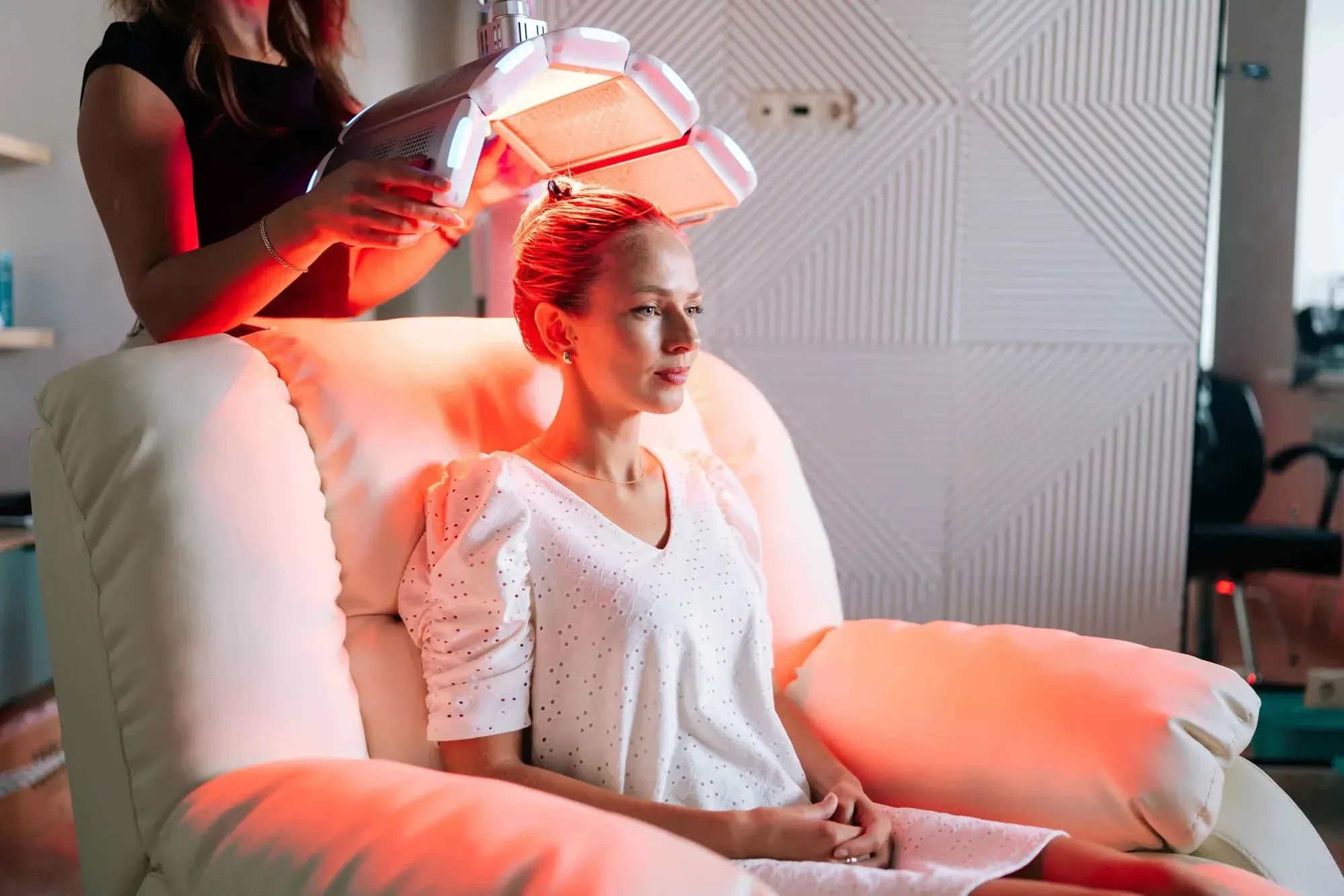
Laser helmets and laser caps for hair loss: what do studies show?

August 2026 · The Hårtransplantasjon.com editorial team · 3 min read

LLLT means shining low-level red or near-infrared light on the scalp. Several devices are approved for hereditary hair loss, and the body of research is real. Even so, the devices differ greatly from one another, the effect is moderate, and you have to keep up the treatment for as long as you want to keep the benefit.

Key findings

  • Several LLLT devices are approved for hereditary hair loss in some countries.
  • Wavelength, power and treatment schedule differ from device to device, so results from one device say little about another.
Read the full article
Medication

Steroid injections for alopecia areata: when do they help?

August 2026 · The Hårtransplantasjon.com editorial team · 3 min read

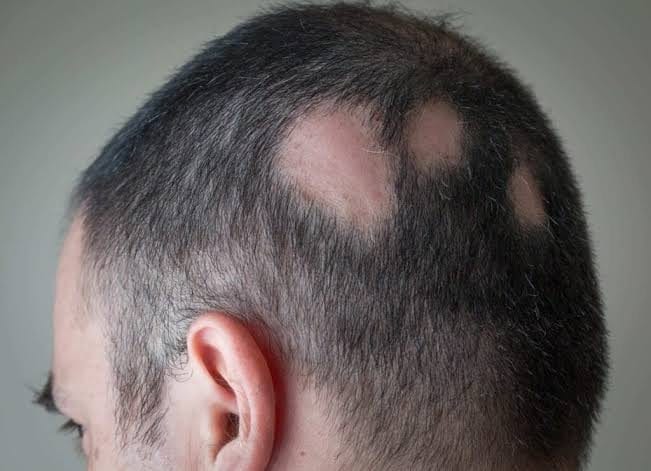
For limited patchy hair loss (alopecia areata), corticosteroid injected into the patches is a long-established first-line treatment. The steroid calms the immune reaction that is attacking the hair follicles at that exact spot. It has no place in hereditary hair loss, where the mechanism is completely different.

Key findings

  • Steroid injected into the skin is a treatment for patchy hair loss. It has no place in hereditary hair loss.
  • The skin at the injection sites can become thinner when treatment is repeated.
Read the full article
Medication

Do JAK inhibitors work for alopecia areata? Effect and risks

August 2026 · The Hårtransplantasjon.com editorial team · 3 min read

The first tablets approved for severe patchy hair loss are JAK inhibitors, and treatment options for this disease used to be thin. The outlook is better now. At the same time, the whole drug class carries a safety warning, and treatment needs close follow-up.

Key findings

  • In June 2022, baricitinib became the first medicine that works throughout the body to be approved for severe patchy hair loss.
  • The whole class carries a boxed warning that mentions death, cancer, blood clots and serious heart events.
Read the full article
Medication

Antibiotics after a hair transplant: are they really needed?

August 2026 · The Hårtransplantasjon.com editorial team · 3 min read

A short course of antibiotics after the operation is common, but far from every clinic gives one, and specialists disagree about prevention for everyone. Infection after a hair transplant is rare. The case for giving antibiotics to every single patient is therefore weaker than many people think.

Key findings

  • Preventive antibiotics after the operation are widespread, but specialists don't agree that they should be given routinely.
  • Infections after a hair transplant are rare, which weakens the case for giving everyone a course.
Read the full article
Medication

Dexamethasone after a hair transplant: what it does and doesn't do

August 2026 · The Hårtransplantasjon.com editorial team · 3 min read

After the operation, some clinics give a short steroid course where the dose is tapered day by day, mainly against the forehead swelling that peaks from day two to four. The course is about how you feel and look in the first week. It doesn't affect the result itself.

Key findings

  • A short steroid course after the procedure is meant to reduce swelling. It isn't meant to help the grafts survive.
  • Follow the taper exactly as prescribed, without making it longer or stopping early on your own initiative.
Read the full article
Medication

Can you take ibuprofen after a hair transplant?

August 2026 · The Hårtransplantasjon.com editorial team · 3 min read

NSAIDs, or non-steroidal anti-inflammatory drugs, ease pain and swelling. They also affect the platelets, which is why many clinics prefer paracetamol for the first few days. Use what the clinic has recommended, not whatever happens to be in the cupboard at home.

Key findings

  • Because NSAIDs affect the platelets, many clinics avoid them straight after the operation.
  • Paracetamol doesn't have this effect and is therefore often the first choice for the first few days.
Read the full article
Medication

Pain after a hair transplant: the first two days

August 2026 · The Hårtransplantasjon.com editorial team · 3 min read

For most people the first two days are more uncomfortable than painful, and the tenderest spot is the donor area. Painkillers taken at set times give better relief than waiting until it aches.

Key findings

  • Painkillers taken at set times work better than taking them only once the pain sets in.
  • In the first few days the donor area is usually more tender than the area where the grafts were placed.
Read the full article
Medication

Sleeping pills after a hair transplant: why you should ask first

August 2026 · The Hårtransplantasjon.com editorial team · 3 min read

After a transplant, sleep is often poor, mainly because you have to lie on your back with your head raised. Let the clinic approve any sleeping pill. Sedatives make it easier to roll onto the grafts without noticing.

Key findings

  • Sedatives raise the risk that you turn over in your sleep and rest your head on grafts that have not yet anchored.
  • A sleeping pill must always be checked against the medicines the clinic has prescribed.
Read the full article
Medication

Blood thinners and hair transplants: who decides on a pause?

August 2026 · The Hårtransplantasjon.com editorial team · 3 min read

Anticoagulants and antiplatelet medicines cause more bleeding both during and after the procedure, so many clinics want you to take a pause. That decision isn't yours, nor the clinic's alone. It belongs to the doctor who prescribed the medicine.

Key findings

  • Never stop a prescribed blood thinner yourself, not even because a clinic asks you to.
  • The doctor who prescribed the medicine must weigh the bleeding risk against the danger the medicine protects you from.
Read the full article
Medication

Hormone therapy and hair loss: why the plans must fit together

August 2026 · The Hårtransplantasjon.com editorial team · 3 min read

Hormone therapy changes the androgen environment that hereditary hair loss stems from, so it directly affects how hair loss is treated. If you take hormones of any kind, your hair plan should be built around the hormone therapy, not alongside it.

Key findings

  • Hormone therapy changes the androgen environment that hair loss medicines are meant to work in.
  • A hair loss plan should be made together with the doctor who manages your hormone therapy.
Read the full article
Medication

Does finasteride cause sexual side effects? What studies show

August 2026 · The Hårtransplantasjon.com editorial team · 3 min read

The sexual side effects are what people most often ask about with finasteride. In studies they affect a small minority, usually a few per cent, and a good share of the same complaints are also reported by people on placebo. Whether problems can persist after stopping treatment is still a disputed question.

Key findings

  • Studies find low single-digit percentages, and the placebo groups also report notable rates.
  • There is still genuine disagreement about whether problems can persist after stopping.
Read the full article
Medication

Can women take finasteride for hair loss?

August 2026 · The Hårtransplantasjon.com editorial team · 3 min read

If you could become pregnant, you won't be given finasteride, because 5-alpha reductase inhibitors interfere with how the genitals form in a male foetus. The evidence that the drug works is also weaker in women than in men.

Key findings

  • The main reason is the risk of harm to an unborn baby, because the drug affects how a male foetus develops.
  • In women, the evidence for an effect is thinner and less consistent than in men.
Read the full article
Medication

Hair loss in teenagers: which medicines are ruled out?

August 2026 · The Hårtransplantasjon.com editorial team · 3 min read

Hair loss in the teenage years should be assessed by a specialist. Finasteride isn't approved for under-18s, the pattern hasn't settled yet, and the first thing to establish is almost always whether this is hereditary hair loss at all.

Key findings

  • Finasteride is not approved for anyone under 18, and young people usually aren't given it.
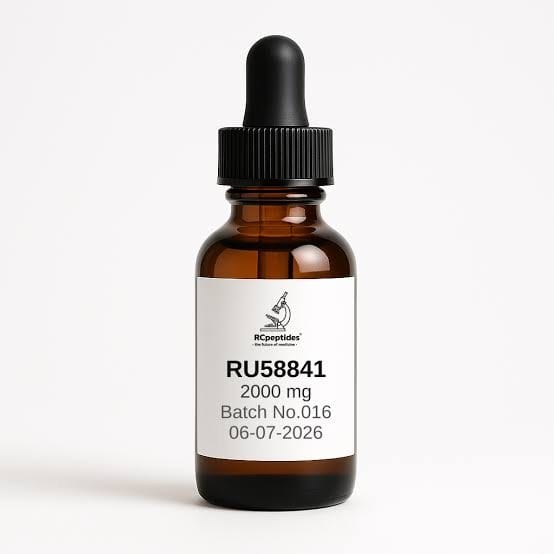
  • In this age group the diagnosis matters more, because other explanations for hair loss are relatively more common in young people.
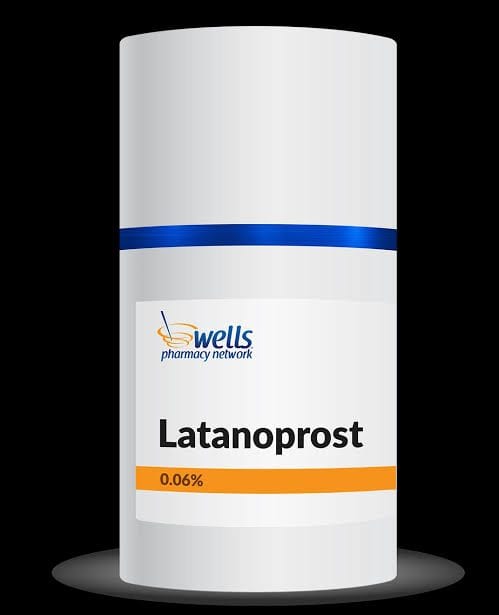
Read the full article
Medication

Medication and hair transplant: why they should be combined

August 2026 · The Hårtransplantasjon.com editorial team · 3 min read

Surgery moves hair that is resistant to DHT, and medication protects the vulnerable hairs you still have. A transplant doesn't stop hair loss that is still going on. Combining the two is therefore common when the goal is a result that still looks coherent in ten years.

Key findings

  • Around the grafts, hereditary hair loss carries on as before. The operation doesn't slow it down.
  • Medication alongside surgery is standard practice, not an attempt to sell you more.
Read the full article
Medication

Which medicines should you stop before a hair transplant?

August 2026 · The Hårtransplantasjon.com editorial team · 3 min read

Some medicines are paused around the operation, others carry on as normal. The difference matters. A medicine you have been prescribed is never one you stop on your own. That is for the prescribing doctor to decide, together with the surgeon.

Key findings

  • A prescription medicine should never be stopped on your own initiative, and not just because a clinic asks you to either.
  • Minoxidil on the scalp is often paused around the procedure. Medicines that act on the whole body are a different matter.
Read the full article
Medication

Shock loss after a hair transplant: can medication prevent it?

August 2026 · The Hårtransplantasjon.com editorial team · 3 min read

Shock loss means the strain of the operation sends some of your own hair into a resting phase. Medication may limit how much you lose and help the hair come back, but no medicine reliably prevents it. Anyone promising otherwise is promising more than the evidence supports.

Key findings

  • No studies have shown that any medicine reliably stops shock loss after surgery.
  • Stable treatment that is already under way is more likely to help than something started just before the operation.
Read the full article
Medication

Can medication help more grafts survive? What the evidence says

August 2026 · The Hårtransplantasjon.com editorial team · 3 min read

How many grafts survive is decided almost entirely on the operating table: by how carefully they're handled, whether they're kept moist, how long they're out of the body and how well the recipient sites are made. There is little evidence that a medicine you take afterwards changes how many grafts grow.

Key findings

  • It's the conditions during surgery that decide whether grafts survive, not medication you take afterwards.
  • What the medicines actually do is protect your own hair, and that's a separate question.
Read the full article
Medication

Generic or brand-name minoxidil: is there any difference?

August 2026 · The Hårtransplantasjon.com editorial team · 3 min read

Generic minoxidil for the scalp has the same active ingredient and the same strength as the original product, and equivalence is a requirement for approval. What sets the products apart is the base, the packaging and the price.

Key findings

  • The active ingredient and strength are the same in generic and brand-name minoxidil.
  • The difference you notice is in the base and the formulation. The medicine is the same.
Read the full article
Medication

Minoxidil foam or solution: which should you choose?

August 2026 · The Hårtransplantasjon.com editorial team · 3 min read

Foam and solution give you exactly the same medicine. What sets them apart day to day is the base. Solutions almost always contain propylene glycol, a substance that often irritates the skin. Foam rarely does. Choose based on how your skin tolerates it and on your daily routine.

Key findings

  • Foam and solution contain the same active ingredient and come in the same strengths.
  • Propylene glycol is found in most solutions but rarely in foam, and it makes a big difference to irritation.
Read the full article
Medication

Compounded hair loss medicine: what you gain and what you give up

August 2026 · The Hårtransplantasjon.com editorial team · 3 min read

Compounded formulas combine active ingredients in one solution made to order, most often minoxidil and finasteride, sometimes with more added. That can be genuinely useful. Even so, the medicines authorities don't assess them the way they assess approved products.

Key findings

  • Compounded formulas are made on prescription, and the authorities don't assess whether they work.
  • Quality depends entirely on the pharmacy that makes them.
Read the full article
Medication

Medication for thicker eyebrows and beards: what works?

August 2026 · The Hårtransplantasjon.com editorial team · 3 min read

Doctors use bimatoprost, which is approved for sparse eyelashes, on eyebrows without it being approved for that. Minoxidil is used the same way on beards, though the research base is thin. Both can only make existing hair follicles work harder. They don't create new follicles.

Key findings

  • The approval for bimatoprost covers eyelashes. Eyebrows and beards fall outside it.
  • What you apply to the skin affects the follicles that are already there. New ones aren't expected to form.
Read the full article
Medication

Why does the same hair loss drug vary so much in price by country?

August 2026 · The Hårtransplantasjon.com editorial team · 3 min read

One and the same hair loss drug can be priced very differently across borders, because countries have different rules on generics, prescriptions and reimbursement. Treatment usually lasts many years, so what you pay over a whole year tells you more than the price of one pack.

Key findings

  • What sets the price is mainly whether generics exist, whether the medicine needs a prescription and what the public health system reimburses.
  • When treatment has no planned end date, the cost per year is the figure to work out.
Read the full article
Medication

What happens to your hair when you stop finasteride?

August 2026 · The Hårtransplantasjon.com editorial team · 3 min read

A few weeks after the last tablet, DHT is back where it was before treatment, and the hair follicles that were protected carry on where they left off. Within about a year most of the gain is gone, and your hair looks like it would have if you had never started.

Key findings

  • If you stop, DHT returns to its starting level after a few weeks, and your hair follows its untreated course.
  • The hair you lose after stopping is mainly loss the medicine was holding back. There is no extra loss on top.
Read the full article
Medication

Hair loss medication before and after a transplant: a timeline

August 2026 · The Hårtransplantasjon.com editorial team · 3 min read

The usual approach is to be well established on medication before surgery, pause anything applied to the skin around the day itself and restart once the scalp has healed. Clinics do this a little differently, so ask for the plan in writing.

Key findings

  • If you're stable on medication before the procedure, shedding from the medication won't get mixed up with shock loss afterwards.
  • Treatments you apply to the skin are often paused around surgery. Tablets and other systemic medicines usually continue.
Read the full article
Medication

Topical finasteride: does less reach the blood than with tablets?

August 2026 · The Hårtransplantasjon.com editorial team · 3 min read

The idea behind finasteride applied to the scalp is full local effect with less of the drug in the rest of the body. Absorption is lower, but it doesn't disappear, so believing a skin treatment doesn't affect the body at all is wrong.

Key findings

  • When finasteride is applied to the skin, less of it reaches the blood than with tablets. Some still gets there.
  • Where you can get it varies: an approved product in some markets, a pharmacy-compounded preparation in others.
Read the full article
Medication

Can iron deficiency cause hair loss? Test before you treat

August 2026 · The Hårtransplantasjon.com editorial team · 3 min read

Low iron can cause hair shedding, most often in women, and the condition can be treated. Get tested before you draw conclusions, because unnecessary iron carries its own risks.

Key findings

  • Iron deficiency can cause hair shedding, and it can be both detected and treated.
  • Ferritin is the test that tells you something. Iron without a proven deficiency can do harm.
Read the full article
Medication

Does vitamin D deficiency cause hair loss?

August 2026 · The Hårtransplantasjon.com editorial team · 3 min read

Hair follicles use the vitamin D receptor during the growth cycle, and low levels keep turning up in people with several types of hair loss. The link itself is better supported than the evidence that treatment helps. Correcting a deficiency makes sense, but a supplement is not a cure for hair loss.

Key findings

  • The hair follicle uses signals through the vitamin D receptor throughout the growth cycle.
  • The link between low vitamin D and hair loss is better established than the idea that supplements help people who already have enough.
Read the full article
Medication

Can thyroid medication cause hair shedding?

August 2026 · The Hårtransplantasjon.com editorial team · 3 min read

An underactive and an overactive thyroid can both cause hair loss. Somewhat confusingly, starting treatment can do the same. Hair usually recovers once thyroid levels have stabilised, which is why stability matters more than which direction the first change takes.

Key findings

  • Too little and too much thyroid hormone both cause diffuse hair loss.
  • According to the summary of product characteristics for levothyroxine, hair loss can in rare cases occur when treatment starts, and it usually passes.
Read the full article
Medication

Medicines and supplements your hair transplant surgeon must know about

August 2026 · The Hårtransplantasjon.com editorial team · 3 min read

Your surgeon needs a complete overview of everything you take, supplements included. Three groups matter most: things that affect bleeding, things that affect blood pressure and things that affect blood sugar.

Key findings

  • Supplements that increase bleeding are what people most often forget.
  • Include everything, even what you think is unimportant or find embarrassing.
Read the full article
Medication

Off-label hair loss medicines: legal, common and less well documented

August 2026 · The Hårtransplantasjon.com editorial team · 3 min read

Many of the medicines prescribed for hair loss are approved for a different condition. That's legal and often a good choice, but the evidence lies elsewhere, and more of the responsibility shifts to the doctor.

Key findings

  • Prescribing a medicine outside its approved use is legal and common. It means this particular use isn't approved, not that the medicine has never been studied.
  • The research behind such use is usually thinner than the research behind the approved indication.
Read the full article
Medication

Should you try medication before a hair transplant?

August 2026 · The Hårtransplantasjon.com editorial team · 3 min read

Medication is often the wisest first step when hair loss is in its early stages, the pattern is still changing, the donor area is limited or you are young. An operation cannot be reversed, and it uses up donor hair you only have a limited supply of.

Key findings

  • As long as your hair is thinner but still there, medication is usually the best first step.
  • An operation uses up donor hair you have a limited supply of, and it cannot be reversed.
Read the full article
MedicationLong-term results

Diffuse hair loss: causes, tests and when a transplant is an option

October 2026 · The Hårtransplantasjon.com editorial team · 8 min read

Diffuse hair loss is even thinning over large parts of the scalp, and it's a description, not a diagnosis. The most common causes are telogen effluvium, hereditary diffuse thinning, iron deficiency, thyroid disorders, medications and diffuse unpatterned alopecia (DUPA). Your GP can measure ferritin, haemoglobin and TSH, and treatment depends on the cause. A hair transplant isn't an option until the cause has been established and the donor area has been examined, and never for telogen effluvium.

Key findings

  • Telogen effluvium shows up 3 to 4 months after the trigger, and the hair usually comes back within 3 to 6 months.
  • In a meta-analysis of 36 studies with 10,029 participants, women with non-scarring hair loss had lower ferritin, and 21 % had a very low level.
Read the full article
Medication

Can you buy Regaine in Norway? 5 % minoxidil and how to use it

October 2026 · The Hårtransplantasjon.com editorial team · 7 min read

Regaine isn't available as a brand name at Apotek 1, Vitusapotek and Boots Apotek, based on their websites as we read them on 14 October 2026, but the same type of product is sold without a prescription as Recrea Forte and Minoksidil Norfri, both 5 % minoxidil solution in 60 ml. A bottle costs 319.90 to 449.90 NOK and lasts about a month. You can't expect an effect until after two to four months, and extra shedding in the first weeks is common.

Key findings

  • Felleskatalogen (the Norwegian medicines directory) lists Regaine only as discontinued names. What's on sale is Recrea Forte and Minoksidil Norfri, both 50 mg/ml.
  • Packs up to and including 3 × 60 ml are exempt from prescription. The prices we read on 14 October 2026 were 319.90 to 449.90 NOK for 60 ml.
Read the full article
Medication

Does tretinoin make minoxidil work better? What the studies show

October 2026 · The Hårtransplantasjon.com editorial team · 8 min read

Tretinoin almost tripled minoxidil absorption in a study of 19 healthy men, and moved 3 of 7 predicted non-responders to predicted responders in an enzyme study of 20 people. The only randomised trial with hair outcomes (31 men, 18 weeks) found no difference between the once-daily mixture and minoxidil twice daily. A review from June 2026 concludes that the combination isn't supported as a first choice. In Norway tretinoin is prescription-only, and the creams require an exemption from marketing authorisation.

Key findings

  • Tretinoin almost tripled minoxidil absorption in 19 healthy men, compared with 1.3 times with a neutral cream (Ferry, 1990).
  • After five days of tretinoin, 43 % of predicted non-responders were predicted to respond, but the figure is based on 3 of 7, and the study measured an enzyme, not hair (Sharma, 2019).
Read the full article

Hyperbaric oxygen 22

Hyperbaric oxygen

HBOT explained: what pressurised oxygen does after a hair transplant

August 2026 · The Hårtransplantasjon.com editorial team · 10 min read

In hyperbaric oxygen therapy you breathe 100 % oxygen in a sealed chamber where the pressure is set higher than ordinary air, usually at 2.0 to 2.4 ATA. Hospitals have used the method for a long time, and we understand well why it works. Research on hair transplants began with one small randomised trial. Today there is also a prospective cohort of 220 patients, in which the photos were scored by assessors who did not know who had received treatment.

Key findings

  • Pressure is what defines HBOT. A mask is not enough: it takes 100 % oxygen at a minimum of 1.4 ATA, inside a chamber.
  • UHMS has not approved hair transplantation as an indication. If you get HBOT alongside your operation, it is an optional extra outside the approved uses, and you pay for it out of your own pocket.
Read the full article
Hyperbaric oxygen

How HBOT is meant to help grafts: oxygen, new vessels and survival

August 2026 · The Hårtransplantasjon.com editorial team · 4 min read

The theory behind HBOT after a hair transplant is about the first few days, while the grafts still have no blood vessels of their own. Oxygen dissolved in plasma reaches places the red blood cells cannot, and pressure treatment affects both the formation of new blood vessels and inflammation. The mechanism is logical. That it delivers a clinical benefit is not proven.

Key findings

  • For roughly the first 48 to 72 hours, transplanted grafts survive on diffusion before new blood vessels start to grow in. This is the window HBOT is aimed at.
  • According to Thom, hyperbaric oxygen works by generating reactive oxygen and nitrogen species, which trigger signalling pathways in the cells. That is more than "giving the tissue more oxygen".
Read the full article
Hyperbaric oxygen

HBOT after a hair transplant: pressure, session length and days

August 2026 · The Hårtransplantasjon.com editorial team · 4 min read

The protocols published for hair transplants use 2.0 to 2.4 ATA, 60 to 90 minutes per session and one session a day in the first week after surgery, six or seven days in a row. There is no agreed recommended protocol. The research is too limited for anyone to have been able to create one.

Key findings

  • Two clinical protocols have been published. Fan gave 60 minutes at 2.0 ATA for seven days (7). Giardiello gave 90 minutes at 2.4 ATA for six days (6), starting 4 to 6 hours after surgery.
  • If you are offered a higher pressure, more sessions or a "maintenance course", you are outside anything that has been studied for this use.
Read the full article
Hyperbaric oxygen

When should HBOT start after a hair transplant?

August 2026 · The Hårtransplantasjon.com editorial team · 4 min read

In both published protocols with daily sessions, HBOT starts on the day of surgery or the day after and is given every day for just over a week. That is the period when the grafts live on diffusion. Nobody has studied whether it makes a difference to start after a few hours rather than the next morning.

Key findings

  • The graft depends on diffusion for the first few days. In purely mechanical terms, it is therefore the early sessions that could matter.
  • Different start times have never been compared in any published study. Claims that one particular hour is decisive are not backed by research.
Read the full article
Hyperbaric oxygen

What does HBOT cost as an add-on to a hair transplant?

August 2026 · The Hårtransplantasjon.com editorial team · 4 min read

Wherever you live, you pay for HBOT after a hair transplant out of your own pocket. Hair transplantation is not an approved indication for hyperbaric treatment. What it costs depends on the number of sessions, the type of chamber used and the centre's running costs. The price should always stand on its own, separate from the price of the operation.

Key findings

  • The indication is not approved, so neither the public health service nor insurers in the Nordic countries pay for HBOT linked to an elective hair procedure.
  • The published protocols support six or seven sessions, no more. Longer packages should have their own price and their own justification.
Read the full article
Hyperbaric oxygen

Does your hair clinic offer real HBOT, and how can you tell?

August 2026 · The Hårtransplantasjon.com editorial team · 3 min read

It is very rare for a hair clinic to have its own hyperbaric chamber. Clinics that market HBOT usually refer patients on to a centre elsewhere, and some call a soft chamber HBOT even though it never reaches a clinical pressure. Start by finding out which of these set-ups you are actually being offered.

Key findings

  • To run a hard chamber, a clinic needs the equipment, trained hyperbaric staff and safety systems, and a hair clinic normally has no reason to have any of these.
  • Find out where the chamber is, who is responsible for it and how high the pressure goes. The answers show whether you are getting a clinical service or just a sales pitch.
Read the full article
Hyperbaric oxygen

Who should not have HBOT? The contraindications to know

August 2026 · The Hårtransplantasjon.com editorial team · 4 min read

Only one thing rules out hyperbaric oxygen therapy completely: an untreated collapsed lung. Beyond that, there are a number of relative contraindications, such as certain lung diseases, recent ear surgery, uncontrolled seizures and certain chemotherapy drugs. In those cases a specialist must assess you before you go into the chamber.

Key findings

  • An untreated tension pneumothorax rules out pressure treatment without exception, and everyone agrees on that.
  • Contraindications should be assessed by staff with hyperbaric training, not by the hair clinic that books the sessions.
Read the full article
Hyperbaric oxygen

Claustrophobia in a pressure chamber: can you manage a full course?

August 2026 · The Hårtransplantasjon.com editorial team · 4 min read

Quite a lot of people find a closed pressure chamber hard going, and a single-person chamber is harder to tolerate than one where several people sit together. Test whether you can cope before paying for a full course. You usually cannot get your money back for a prepaid package.

Key findings

  • Claustrophobia is a well-known practical obstacle in hyperbaric medicine, and many people stop their course because of it.
  • In a multiplace chamber you sit with others in a room the size of a small office. For anxious patients that is far easier than a tube for one person.
Read the full article
Hyperbaric oxygen

Hard vs soft hyperbaric chamber: why the difference is everything

August 2026 · The Hårtransplantasjon.com editorial team · 4 min read

A hard clinical chamber delivers 100 % oxygen at 2.0 to 2.4 ATA. An inflatable soft chamber usually goes no higher than about 1.3 ATA. Every published hair transplant protocol has used a pressure only hard chambers can reach. If you lie in a soft chamber, you are therefore not getting the treatment the researchers studied.

Key findings

  • The pressure was 2.0 ATA in Fan and 2.4 ATA in Giardiello. Neither pressure is within reach of a soft chamber.
  • When something is sold as "mild hyperbaric", it is a completely different exposure, not a gentler version of the same one.
Read the full article
Hyperbaric oxygen

What are the side effects of HBOT, and how common is barotrauma?

August 2026 · The Hårtransplantasjon.com editorial team · 4 min read

The most common side effect of hyperbaric oxygen therapy is pressure injury to the middle ear, known as barotrauma. Most of the rest is sinus barotrauma, short-sightedness that wears off, anxiety in confined spaces and, in rare cases, seizures because the oxygen affects the central nervous system. When patients are properly screened beforehand, safety is good.

Key findings

  • Heyboer and colleagues count HBOT among the safest treatments we have, but also list side effects that are real, can be quantified and to a large extent increase with the dose.
  • Because most side effects are linked to the pressure or the oxygen dose, the protocol and the pre-assessment matter more than many people think.
Read the full article
Hyperbaric oxygen

Does HBOT reduce swelling after a hair transplant?

August 2026 · The Hårtransplantasjon.com editorial team · 4 min read

Clinics often claim that HBOT means less swelling after a transplant. The published study never measured swelling. It found less itching, less folliculitis and less shedding in the first few weeks, but swelling was not one of the outcomes reported.

Key findings

  • The Fan study reported early shedding (69.1 % without HBOT, 27.6 % with) and itching and folliculitis (35.3 % without, 11.8 % with). Swelling was not measured.
  • The mechanisms thought to dampen inflammation give reason to believe HBOT could affect swelling. But something being plausible doesn't mean it has been measured.
Read the full article
Hyperbaric oxygen

Does HBOT protect against necrosis in very large hair transplants?

August 2026 · The Hårtransplantasjon.com editorial team · 4 min read

When many grafts are placed very densely in a single operation, tissue in the recipient area can die. It's rare, but serious. HBOT is established for skin grafts or flaps that fail to take, but no published study has examined whether it protects against necrosis in hair transplantation.

Key findings

  • When a skin graft or flap fails to take, oxygen under pressure is a recognised adjunct treatment. Thom stresses, however, that the evidence here comes mostly from animal studies and a few clinical trials.
  • Necrosis has never been an outcome in any hair transplant study. The Fan study, the only randomised one, had 34 participants, too few to pick up a rare complication.
Read the full article
Hyperbaric oxygen

HBOT or low-level laser therapy after a hair transplant?

August 2026 · The Hårtransplantasjon.com editorial team · 4 min read

There's far more research on LLLT than on HBOT. But almost all of it is about treating hereditary hair loss, not about helping a transplant. If you weigh them against each other as post-operative add-ons, you're comparing one small study with almost nothing.

Key findings

  • As a treatment for hereditary hair loss, low-level laser therapy has been tested in a number of randomised trials and pooled in meta-analyses. HBOT after a transplant has been tested in one trial, with 34 participants.
  • Neither treatment has solid evidence that more grafts survive. LLLT research looks at growth in hair you already have and says little about newly placed grafts.
Read the full article
Hyperbaric oxygen

HBOT or PRP: which has stronger research behind it?

August 2026 · The Hårtransplantasjon.com editorial team · 4 min read

There are far more studies of PRP than of HBOT, and PRP for hereditary hair loss has been pooled in several meta-analyses. Yet as an add-on meant to help more grafts survive after a transplant, neither has convincing support. Both are often marketed with promises that go further than the studies.

Key findings

  • The use of PRP for hereditary hair loss has been summarised in several systematic reviews and meta-analyses. The use of HBOT after a transplant rests on one study with 34 patients.
  • Most of the research on both treatments is about treating hair the patient already has, and little of it is about protecting grafts that have just been placed.
Read the full article
Hyperbaric oxygen

Does HBOT help grafts survive if you smoke?

August 2026 · The Hårtransplantasjon.com editorial team · 4 min read

Smoking makes wounds heal less well, because the blood vessels constrict and tissue gets less oxygen. That's exactly the shortfall HBOT targets in theory. Yet nobody has studied HBOT in transplant patients who smoke. The only measure with real evidence behind it is still stopping smoking.

Key findings

  • Nicotine constricts the blood vessels and reduces blood flow to the recipient area during the days when the grafts live on diffusion alone.
  • No published hair transplant study has reported results for smokers separately, and none has tested HBOT in this group.
Read the full article
Hyperbaric oxygen

Diabetes and hair transplants: can HBOT help the grafts?

August 2026 · The Hårtransplantasjon.com editorial team · 4 min read

No use of HBOT is better documented than the treatment of diabetic wounds that won't heal. That makes it tempting to believe patients with diabetes will also benefit from HBOT with a hair transplant. But that is an inference, not a finding. No hair transplant study has recruited people with diabetes or looked at them as a separate group.

Key findings

  • Thom counts non-healing diabetic wounds among the uses supported by systematic reviews and randomised trials.
  • That evidence is about chronic wounds that won't heal. It does not apply to planned surgical wounds in people with well-controlled diabetes.
Read the full article
Hyperbaric oxygen

Does HBOT work for women after a hair transplant?

August 2026 · The Hårtransplantasjon.com editorial team · 4 min read

There is no published study of HBOT after a hair transplant that looks at women separately. The only randomised trial did not break down results by sex, and that weakness was pointed out plainly in a letter to the journal.

Key findings

  • In their letter, Dong and Jin directly criticised the Fan study for not showing whether the results differed between men and women.
  • Women are often operated on without shaving, and the grafts are then handled differently. No HBOT study has examined that situation.
Read the full article
Hyperbaric oxygen

Does insurance cover HBOT after a hair transplant?

August 2026 · The Hårtransplantasjon.com editorial team · 3 min read

Whether hyperbaric oxygen therapy is reimbursed is decided by a fixed list of approved indications. Hair transplants are not on it. If you have chamber sessions in connection with a planned hair transplant, you pay for them yourself, in Norway, in the rest of the Nordics and with private insurers.

Key findings

  • Whether you get reimbursed is governed by the Undersea and Hyperbaric Medical Society's indications list and similar lists in each country.
  • Planned cosmetic surgery falls outside both public and private cover in any case. That alone settles the question.
Read the full article
Hyperbaric oxygen

HBOT bundled with PRP, laser and exosomes: does it add anything?

August 2026 · The Hårtransplantasjon.com editorial team · 4 min read

It is common to be offered HBOT in a package together with PRP, exosomes, laser and supplements. None of these combinations has been studied after a hair transplant. Putting several undocumented treatments together does not give you a documented treatment.

Key findings

  • There is no published study in which HBOT has been combined with another add-on treatment after a transplant.
  • When add-ons are stacked, the price rises with each one, and no one can say which of them, if any, worked.
Read the full article
Hyperbaric oxygen

Why are experts sceptical of the small HBOT studies?

August 2026 · The Hårtransplantasjon.com editorial team · 5 min read

With only 34 participants, it is impossible to detect a three percentage point difference in graft survival. A case series of five patients with no control group cannot link anything at all to the treatment. The doubts about HBOT with hair transplants concern how small the studies are and how they were designed. They do not say the treatment is implausible.

Key findings

  • After nine months, 96.9 % of grafts survived with HBOT in the Fan study, against 93.8 % without. The difference was not statistically significant, and with 34 patients such a small difference would not be expected to show up anyway.
  • Critics pointed out specific methodological weaknesses in the study in a published letter. They were never answered.
Read the full article
Hyperbaric oxygen

What study would prove whether HBOT works after a hair transplant?

August 2026 · The Hårtransplantasjon.com editorial team · 5 min read

Settling the question would take a randomised trial across several centres with several hundred patients. It would have to follow them for twelve months, count hairs blind in a marked patch of the recipient area and include a control group given sham pressure. The four published papers are a long way from that kind of design.

Key findings

  • When both groups sit at around 95 % graft survival, you need several hundred patients per group to detect a three-point difference. Seventeen is nowhere near enough.
  • Sham treatment is entirely feasible in hyperbaric research. It lets you separate the effect of the oxygen from the effect of the attention and routine that come with daily sessions.
Read the full article
Hyperbaric oxygen

HBOT and the first weeks after a hair transplant: comfort and downtime

August 2026 · The Hårtransplantasjon.com editorial team · 4 min read

What HBOT has the best support for is how you feel along the way, not how your hair looks in the end. Fewer people experience early shedding, itching and folliculitis occur about a third as often, and five patients in a case series lost their scabs quickly.

Key findings

  • In Fan's study, 11.8 % in the HBOT group had itching and folliculitis, compared with 35.3 % in the control group.
  • In Giardiello's series of five patients, the scabs were gone after 3 to 5 days, and recovery took 2.8 days on average. There was no control group to compare with.
Read the full article

Donor area management 44

Donor area management

The safe donor zone: how safe is the donor area really?

August 2026 · The Hårtransplantasjon.com editorial team · 3 min read

The follicles at the back of the head and above the ears resist DHT better than those at the front, and that is where the safe donor area lies. They are not immune. The surgeon has to use judgement to decide where the zone ends, because there is no anatomical line. Newer research also asks how safe the outer edges really are.

Key findings

  • Donor hair has better resistance to DHT, but it is not immune to it. The word "permanent" promises more than biology can deliver.
  • Newer papers have begun to challenge the idea that the hair at the back of the head is always spared when hair loss is far advanced.
Read the full article
Donor area management

How is donor density measured for a hair transplant?

August 2026 · The Hårtransplantasjon.com editorial team · 3 min read

Donor density is given as the number of follicular units in one square centimetre and is usually counted with a densitometer or trichoscope on a clipped area. The number should be measured, not guessed from a glance at the back of your head. And it says most when read together with how thick the hair shafts are.

Key findings

  • Density is given as the number of follicular units per cm², not as a number of hairs. The gap between the two figures depends on how many hairs each unit has on average.
  • A typical donor density is 65 to 85 units per cm², while around 40 or below is a weak starting point. If it is lower, the plan has to be smaller.
Read the full article
Donor area management

How much donor hair do you have for the rest of your life?

August 2026 · The Hårtransplantasjon.com editorial team · 3 min read

To estimate how much donor hair you have over your lifetime, the surgeon multiplies the size of the safe zone by the density. Then enough is subtracted for the back of the head to still look normal. The answer is a finite number, and every operation uses some of it up for good.

Key findings

  • Donor hair is a limited stock. A follicle that has been taken out of the donor area does not come back there.
  • How much you can actually use is far less than the total, because the donor area has to keep enough density that nobody can see it has been used.
Read the full article
Donor area management

Overharvested donor area: the signs, and why the damage is permanent

August 2026 · The editorial team at Hårtransplantasjon.com · 4 min read

Overharvesting happens when so many follicular units have been removed that the remaining hair no longer covers the area. The back of the head is left permanently sparse, patchy or moth-eaten. No treatment can give you back the follicles that were removed.

Key findings

  • A depleted donor area is a recognised complication of FUE that cannot be reversed. Follicles that have been removed do not grow back.
  • The damage is often not visible straight after the procedure. It tends to show several months later, once the donor area has settled.
Read the full article
Donor area management

How many grafts per cm² can safely be taken from the donor area?

August 2026 · The editorial team at Hårtransplantasjon.com · 3 min read

There is no fixed, safe extraction number. What matters is the share of units taken relative to the density you started with, and how evenly the extractions are spread. Clustered extractions in an area of average density give a worse result than evenly spread extractions where density is higher.

Key findings

  • The safest approach is to judge extraction as a share of the density where the grafts are taken, not as a fixed number per cm².
  • How evenly the extractions are spread matters as much as the total, because clusters give a patchy result.
Read the full article
Donor area management

Does FUE punch size affect the scars at the back of your head?

August 2026 · The editorial team at Hårtransplantasjon.com · 4 min read

After each FUE extraction, a small, round, colourless dot is left behind, roughly as wide as the punch. The smaller the punch, the less visible the dots, but the surgeon then has to be more precise. Balancing small scars against the risk of cutting through the follicle is at the very heart of donor area extraction technique.

Key findings

  • The punch diameter decides how large the permanent dot scar will be where each graft was taken.
  • A smaller punch means smaller scars, but the surgeon has less leeway around each unit.
Read the full article
Donor area management

FUE transection: when the punch cuts through the follicle

August 2026 · The editorial team at Hårtransplantasjon.com · 3 min read

In transection, the punch cuts through the follicle instead of around it. You get a wound in the donor area but no usable graft, and that follicle is gone for good. This is the biggest hidden cost when a large session is pushed through at high speed.

Key findings

  • A transected follicle leaves a wound in the donor area without producing a graft. For a limited reserve, there is no worse trade.
  • How many follicles are transected depends on punch design and on technique. A 2026 case series using a flared ring punch reported 3 % on average.
Read the full article
Donor area management

Do FUE dot scars show, and how long do they take to heal?

August 2026 · The editorial team at Hårtransplantasjon.com · 3 min read

Every graft taken with FUE leaves a small, round dot that usually ends up a shade paler than the surrounding skin. With normal density and a bit of length in the hair, nobody sees them. How visible they are depends on punch size, how densely the extractions are placed, colour contrast and how short you cut your hair.

Key findings

  • Loss of pigment where the grafts were taken is a documented donor area complication after FUE.
  • The dot scars never disappear. What changes over the years is how well the surrounding hair covers them.
Read the full article
Donor area management

Linear scar or dot scars: FUT and FUE seen from the back

August 2026 · The Hårtransplantasjon.com editorial team · 4 min read

FUT leaves one long line across the donor area. FUE leaves hundreds, perhaps thousands, of small round dots. Both methods scar, and which one suits you best comes down almost entirely to how short you want to cut your hair in the years ahead.

Key findings

  • With FUT the scarring is gathered in a single line that longer hair hides completely. With FUE the scars are spread across the whole donor area.
  • Shave your head and you'll see the FUE dots. Cut the back very short and you'll see the FUT line. Each method falls short in its own way.
Read the full article
Donor area management

Can you shave your head after FUE?

August 2026 · The Hårtransplantasjon.com editorial team · 3 min read

Sometimes. What decides it is how much was taken. If the donor area was harvested moderately, it can usually be clipped right down. If it was harvested hard, you'll see a paler patch and clear dots as soon as the hair is shorter than about 6 mm.

Key findings

  • Many clinics sell FUE with the promise that you can shave your head. That only holds if the extraction density was low, not automatically.
  • The colour contrast between skin and hair and the diameter of the punch shift the limit for how short the hair can be before the dots show.
Read the full article
Donor area management

Can beard hair be used as donor hair for your scalp?

August 2026 · The Hårtransplantasjon.com editorial team · 4 min read

If you have lost a lot of hair, the beard can add considerably to the donor reserve, and published patient series support its use. Beard hair is coarser than scalp hair and grows differently. That is why it is usually placed in the mid-scalp and crown, and rarely in the hairline.

Key findings

  • In East Asian men with advanced androgenetic alopecia, beard hair gave a better cosmetic result, according to a retrospective study. The beard had around 48 units per cm².
  • According to published criteria, the beard is poorly suited as a donor when there are fewer than about 8 units per cm², the diameter is below 60 μm or the exit angle is below 10°.
Read the full article
Donor area management

Chest and body hair as donor: a last resort with limits

August 2026 · The Hårtransplantasjon.com editorial team · 3 min read

If the donor hair on your scalp and beard is used up, body hair can give you a little more to work with, and a multicentre study has shown it can be harvested with FUE. How many grafts take, and how they grow, is still less predictable than when the grafts come from the scalp or beard. Body hair is therefore the last thing you turn to.

Key findings

  • A 2024 multicentre study described FUE of body hair using a skin-responsive device.
  • The growth phase of body hair is shorter than on the scalp, so the moved hair doesn't grow as long.
Read the full article
Donor area management

Hair at the nape of the neck: why good surgeons leave it alone

August 2026 · The Hårtransplantasjon.com editorial team · 3 min read

The fine hair right down at the nape lies below the safe donor zone. It often thins from the bottom up, and it grows differently and has a different texture from the hair higher up on the back of the head. If grafts are taken from here, it is often a sign that the plan demands more than the donor area really has to give.

Key findings

  • Nape hair lies outside the zone considered resistant to DHT, and it can thin over the years.
  • The hairs are fine and grow differently, so they can't replace donor hair from the back of the head.
Read the full article
Donor area management

Hair thickness: why thick hair can beat a high graft count

August 2026 · The Hårtransplantasjon.com editorial team · 3 min read

How well a bald area is covered depends on the total amount of hair transplanted, not on the number of follicles. If you have coarse hair, fewer grafts can give a visibly better result than the same number in someone with fine hair. That's why hair thickness has to be part of every assessment of the donor area.

Key findings

  • Published criteria for beard donor hair treat hairs thinner than about 60 μm as unsuitable. Thickness is therefore a concrete requirement when grafts are selected.
  • Two patients with exactly the same number of grafts can get very different results simply because their hairs differ in thickness.
Read the full article
Donor area management

Follicular units: how many hairs are in each graft?

August 2026 · The Hårtransplantasjon.com editorial team · 3 min read

A hair rarely grows on its own. It grows together with one, two or three others in a follicular unit, and the average number of hairs in your units decides how much hair an offer of a given number of grafts really contains. Grafts and hairs are therefore two different units of measurement.

Key findings

  • Jimenez and Ruifernández built a mathematical model of how human hair is distributed in follicular units, with the stated aim of calculating how large a donor area the procedure requires.
  • If your donor area is made up of many clusters of three or four hairs, each graft gives clearly more hair than in someone who mostly has single hairs.
Read the full article
Donor area management

Norwood stage and donor reserve: plan for the worst pattern

August 2026 · The Hårtransplantasjon.com editorial team · 3 min read

A good plan allows for the hair loss you may not have had yet. When the donor reserve is measured against the worst Norwood stage you could plausibly reach, the result keeps looking good over the years. When it's measured against today's stage, many end up with a nice hairline in front of a bare crown.

Key findings

  • When the donor area is managed badly, the most common root error is planning for the stage the patient is at today, not the stage he may end up at.
  • Two pieces of information shift the estimate of the worst outcome more than anything else: your age and hair loss in your family.
Read the full article
Donor area management

When the donor area runs out: what repeat sessions do to your reserve

August 2026 · The Hårtransplantasjon.com editorial team · 3 min read

The donor area doesn't fill up again between sessions. The second and third rounds draw on an area the first has already thinned, so the loss adds up and the maths for a new session is different from the first time.

Key findings

  • A depleted donor area is a recognised complication of FUE, and the damage is permanent.
  • Because each new session starts from a lower density, the same number of grafts becomes a proportionally bigger procedure each time.
Read the full article
Donor area management

What is retrograde alopecia, and how does it affect the donor area?

August 2026 · The Hårtransplantasjon.com editorial team · 3 min read

Retrograde alopecia starts low at the nape and around the ears and works its way upwards. It's easily overlooked, and it makes the donor reserve smaller than the plan may assume.

Key findings

  • Thinning first affects the lowest and outermost zone of the donor area, which is exactly where an over-ambitious plan often harvests from.
  • It's revealed when the edges of the donor area are examined under magnification. Looking at the crown tells you nothing about it.
Read the full article
Donor area management

Can donor hair miniaturise? Signs the back of the head is thinning

August 2026 · The Hårtransplantasjon.com editorial team · 3 min read

When the follicles in the donor area produce ever finer hairs, it is a sign of androgen-driven thinning. Found before surgery, it means the plan has to change. Found afterwards, it often explains why the result faded.

Key findings

  • Mature hairs in the donor area that vary noticeably in thickness are the trichoscopy finding that tells you whether the donor area will hold or is on its way to thinning.
  • Grafts taken from a donor area where the follicles are shrinking keep shrinking after they have been moved.
Read the full article
Donor area management

Is a woman's donor area good enough for a hair transplant?

August 2026 · The Hårtransplantasjon.com editorial team · 3 min read

Many women have diffuse hair loss, and the donor area may then be affected as well. For women, the donor hair examination therefore matters even more than for men, and it is what decides whether surgery is an option at all.

Key findings

  • Diffuse thinning that also involves the donor area gives poor prospects for the grafts lasting, and it is more common in female pattern hair loss.
  • Women more often have hair loss with a cause other than the hereditary one, and that cause must be clarified before anyone talks about surgery.
Read the full article
Donor area management

Afro-textured hair as donor: demanding extraction, strong coverage

August 2026 · The Hårtransplantasjon.com editorial team · 3 min read

Beneath the skin, the follicles in Afro-textured hair curve, often sharply. That raises the risk of transection and calls for a specific extraction technique. In return, each hair covers a lot, and when hair and skin are close in colour, dot scars show less.

Key findings

  • It is the curve beneath the skin that makes extraction technically difficult. Both the punch and the angle have to be chosen around it.
  • With tight curls each follicle covers a larger area, so the same number of grafts does more than in straight hair.
Read the full article
Donor area management

Asian hair as donor: thick hairs, low density and high contrast

August 2026 · The Hårtransplantasjon.com editorial team · 3 min read

Typical Asian hair is thick and straight, but the units have few hairs and grow less densely than in European hair. Each graft covers well, but the colour contrast between dark hair and light skin makes scars in the donor area easier to see.

Key findings

  • Straight, strong hairs cover well per graft, but hide extraction sites less well than wavy or curly hair.
  • Published Asian patient series show that beard hair can be a useful addition when hair loss is extensive.
Read the full article
Donor area management

How does scalp laxity affect your FUT graft yield?

August 2026 · The Hårtransplantasjon.com editorial team · 3 min read

Scalp laxity sets the limit for how wide a strip can be removed and closed without tension. A tight scalp gives fewer grafts with FUT and a higher risk of a scar that stretches. For FUE it hardly matters.

Key findings

  • Strip width is decided by how much skin can be stitched together without tension, and it is tension that makes strip scars widen.
  • The surgeon feels scalp laxity by hand during the consultation, and it varies a lot from person to person.
Read the full article
Donor area management

The donor assessment at your consultation: what should be measured

August 2026 · The Hårtransplantasjon.com editorial team · 3 min read

A proper donor assessment gives you measured density from several sites, hair thickness, the number of hairs per unit, a check of the edges under magnification for miniaturisation and, finally, a figure for how many grafts you have to work with for the rest of your life. If any of this is missing, what you got was a guess based on a photo.

Key findings

  • Four separate findings go into it: density, hair thickness, the number of hairs in each unit and any miniaturisation. Each of them can change the plan.
  • If nobody used magnification, diffuse unpatterned hair loss cannot be ruled out.
Read the full article
Donor area management

What is donor area trichoscopy, and what does it measure?

August 2026 · The Hårtransplantasjon.com editorial team · 3 min read

With trichoscopy, the scalp is examined under magnification and the donor assessment moves from an eyeball estimate to a concrete finding. The examination reveals miniaturisation, hairs of varying thickness and how the units are made up, things you cannot see with the naked eye.

Key findings

  • When hairs in the donor area vary in diameter, that is the trichoscopic sign that the area is starting to thin rather than being stable.
  • Diffuse unpatterned hair loss can only be ruled out with trichoscopy. An ordinary look at the scalp is not enough.
Read the full article
Donor area management

Overharvesting: the warning signs you can spot before you book

August 2026 · The Hårtransplantasjon.com editorial team · 3 min read

You can see the red flags before the procedure. The graft count is much higher than competitors' quotes, nobody has measured your donor density, nothing is set aside for later, and the clinic can't show you photos of donor areas twelve months on with short hair.

Key findings

  • The single most telling sign is that the clinic won't or can't show donor areas twelve months after the procedure.
  • If you are quoted a very high graft count without measured density, someone has made decisions about your donor area without having the numbers.
Read the full article
Donor area management

How many hairs are in a graft? Reading a hair transplant quote

August 2026 · The Hårtransplantasjon.com editorial team · 3 min read

Each graft is a whole cluster of one to four hairs, while a hair is just one strand. If a clinic counts hairs rather than grafts, the number on the quote comes out roughly twice as high for exactly the same procedure, and comparing clinics then makes no sense.

Key findings

  • One and the same procedure can be presented as 2,000 grafts or roughly 4,400 hairs, depending on which unit the clinic uses.
  • Before you put two quotes side by side, you need to know whether both the number and the price refer to grafts or hairs.
Read the full article
Donor area management

Two or three sessions instead of one big one: planning your donor hair

August 2026 · The Hårtransplantasjon.com editorial team · 3 min read

Spreading a large job over several sessions is often smarter for the donor area than doing it all at once. That only holds when the split and the reserve are fixed before the first procedure, not when new sessions crop up because the hair loss carried on.

Key findings

  • A planned second session means you have something in hand when more hair goes. An unplanned second session means nobody set a budget for the reserve.
  • Since each round starts from a lower level than the one before, later rounds have to shrink accordingly.
Read the full article
Donor area management

When is enough enough? Signs you should skip another session

August 2026 · The Hårtransplantasjon.com editorial team · 3 min read

Sooner or later the maths turns negative: every new graft takes more from the back of your head than it gives the front. The signs can be measured: density down to around 50 units per cm², dot scars that show at the hair length you usually wear, or a harvest that would force the surgeon outside the safe zone.

Key findings

  • Once density at the back has been brought down towards about 50 units per cm², there is little safe margin left.
  • If a surgeon turns down further sessions, that's valuable clinical information, not a rejection.
Read the full article
Donor area management

Numb back of the head after a hair transplant: what's normal?

August 2026 · The Hårtransplantasjon.com editorial team · 3 min read

Most people have reduced feeling at the back of the head after FUE as well as after FUT, and in almost everyone it comes back within a few weeks or months. After FUT the numbness is greater and lasts longer, because one long incision cuts across more of the small nerves in the skin.

Key findings

  • The numbness happens because small sensory nerves in the skin are disrupted, and it usually resolves as the nerves grow back together.
  • With strip surgery the numbness is more widespread and lasts longer than after FUE, because the incision is continuous.
Read the full article
Donor area management

Sore back of the head after a hair transplant: how long does it last?

August 2026 · The Hårtransplantasjon.com editorial team · 3 min read

The back of the head is sorest during the first two or three days, and the discomfort eases during the first or second week. FUT tends to hurt more than FUE because the wound is stitched closed, and most people describe tightness more than sharp pain.

Key findings

  • Patients most often describe the discomfort at the back as tenderness and tightness, rarely as sharp pain, and it is worst in the first 48 to 72 hours.
  • If the pain gets worse after the first few days instead of better, you should call your clinic.
Read the full article
Donor area management

Spots on the back of the head after FUE: folliculitis, ingrown hairs

August 2026 · The Hårtransplantasjon.com editorial team · 3 min read

In the weeks after harvesting, it's common to get small, inflamed spots in the donor area. Most often they come from hairs that can't get through the healing skin. Most disappear without you doing anything, but inflammation that persists or spreads should be seen by your clinic.

Key findings

  • Folliculitis is a known complication after FUE, and it typically shows up as small, tender spots a few weeks after the procedure.
  • Squeezing or picking at the spots while the back of your head heals increases the risk of infection and worse scarring.
Read the full article
Donor area management

How long does the donor area take to heal after a hair transplant?

August 2026 · The Hårtransplantasjon.com editorial team · 3 min read

The back of the head is covered in small scabs for the first few days, is clear after a week to ten days, loses its redness over the following month and looks the way it's going to look six months to a year after the procedure. If you judge the donor area before then, you're judging too early.

Key findings

  • With a normal washing schedule, the scabs over the harvest sites usually come away within a week to ten days.
  • You won't know whether density holds up, how visible the dots become or whether any shedding has recovered until about twelve months have passed.
Read the full article
Donor area management

Is shock loss in the donor area permanent?

August 2026 · The Hårtransplantasjon.com editorial team · 3 min read

In some people, hair around the extraction sites falls out in the weeks after surgery. It's usually temporary and recovers over a few months, but it's easy to believe the donor area has been emptied for good. That's why you should wait until twelve months have passed before drawing any conclusions.

Key findings

  • Shock loss means hair you already have falls out temporarily because of the strain of surgery. The follicles stay alive and start growing again.
  • At three months, shock loss and a genuinely depleted donor area look the same, so the only thing that tells them apart is time.
Read the full article
Donor area management

Donor area aftercare: washing, sleep and what to avoid

August 2026 · The Hårtransplantasjon.com editorial team · 3 min read

The back of your head should be washed gently and regularly from the day your clinic specifies. The most common mistake is washing too little, which leaves scabs that linger and more folliculitis. Your clinic's own plan always comes before general advice.

Key findings

  • Scabs that stay on longer than they need to raise the risk of folliculitis and of the back of the head taking longer to settle.
  • How the donor area ends up is decided in the first few weeks and can't be repaired afterwards, unlike the result at the front.
Read the full article
Donor area management

Visible donor scar: SMP, grafts into the scar or scar revision

August 2026 · The Hårtransplantasjon.com editorial team · 3 min read

A scar in the donor area can be toned down but never removed. Scalp micropigmentation is the option that most often gives a good result. Grafts placed into a strip scar only help some people, and a surgical revision replaces the old scar with a new one that will hopefully be narrower.

Key findings

  • Follicles that have been removed don't come back. Every repair hides the damage, none of them reverses it.
  • Grafts for a scar come from the same reserve that created the problem, which limits how much can be done.
Read the full article
Donor area management

Temple hair as a donor: useful for detail, risky in volume

August 2026 · The Hårtransplantasjon.com editorial team · 3 min read

Above and in front of the ears, hair is finer than at the back of the neck, and in many men it recedes as hair loss progresses. It has one narrow, sensible use: fine detail in the hairline and temples. If it's harvested in larger amounts, that's a warning sign.

Key findings

  • Temple hair is finer than nape hair. That makes it well suited to the details of a hairline and poorly suited when the goal is a lot of grafts.
  • In many men, the temples recede as part of androgenetic hair loss, so the hair here can't be counted on to be permanent.
Read the full article
Donor area management

Body hair as a donor: short growth phase and fewer hairs per graft

August 2026 · The Hårtransplantasjon.com editorial team · 3 min read

Body hair follicles have a shorter growth phase than scalp follicles, and more of them are resting at any given time. That's why transplanted body hair stays shorter. These traits largely sit in the follicle itself and move with it, so they determine how much body grafts can achieve.

Key findings

  • Body hair stops growing at a short length because the growth phase is short, and the follicle largely keeps that trait after it has been moved.
  • Most follicular units on the body have only one hair. A given number of grafts therefore gives noticeably fewer hairs than the same number from the scalp.
Read the full article
Donor area management

Scalp, beard and body hair in one session: how the sources are mixed

August 2026 · The Hårtransplantasjon.com editorial team · 3 min read

With extensive hair loss it's common to harvest from several sources: scalp hair for the front zone everyone sees, and beard or body hair to add fullness further back. The mix works when each hair is placed according to its characteristics. It fails when the grafts are treated as interchangeable.

Key findings

  • Beard and body hair belong in the mid-scalp and the crown. In the hairline, their texture and thickness give them away.
  • Published series find that beard hair, used alongside scalp hair, gives a better cosmetic result in extensive patterns.
Read the full article
Donor area management

How are grafts stored during a hair transplant?

August 2026 · The Hårtransplantasjon.com editorial team · 3 min read

Once a graft has been extracted, it can be damaged by drying out, temperature and mechanical stress before it's implanted. This is the stage where a well-harvested donor reserve can be lost without anyone noticing.

Key findings

  • How the grafts are handled, whether they dry out and how long they're out of the body are among the well-documented factors that govern the growth and survival of follicular grafts.
  • A graft lost in the dish costs the donor area just as much as one that was transected during extraction.
Read the full article
Donor area management

Failed hair transplant abroad: what's left in the donor area?

August 2026 · The Hårtransplantasjon.com editorial team · 3 min read

People who need a repair often struggle with two things: a result at the front that didn't turn out well, and a back of the head that has been depleted. The damage at the back is the hardest to deal with. That's why the assessment has to start with what's left of the reserve, not with how the hairline looks.

Key findings

  • What a repair can achieve is governed by the reserve that survived the first procedure, and that's often exactly what sets the limit.
  • An over-harvested donor area can't be rebuilt. Repair is therefore about camouflage and using what's left with care.
Read the full article
Donor area management

Medication after a hair transplant: why it saves your donor reserve

August 2026 · The Hårtransplantasjon.com editorial team · 4 min read

Hair loss medicines have little effect on transplanted grafts, because they already resist DHT. The benefit lies in your own hair around the grafts. If you slow further hair loss, the area that eventually needs covering shrinks, and that makes medical treatment a decision about your donor reserve.

Key findings

  • The grafts are largely resistant to DHT. What the medicines protect is your own hair, and it's losing that hair that makes you need more sessions.
  • If you keep your own hair, you need fewer grafts later. No other method stretches a limited donor reserve further.
Read the full article
Donor area management

Twelve donor area questions to get answered before you book

August 2026 · The Hårtransplantasjon.com editorial team · 3 min read

A dozen precise questions show you the difference between a clinic that has examined your donor area and one that has just given you a number of grafts. The answers you get should be figures and findings. Reassuring words don't count.

Key findings

  • No single request reveals more than asking for photos of the back of the head of the clinic's own patients twelve months after surgery, with short hair.
  • If the clinic can't say what density your donor area measured, it hasn't assessed the thing the whole procedure rests on.
Read the full article
Donor area managementHealing

Verteporfin and the donor area: can an eye drug give scar-free healing?

October 2026 · The Hårtransplantasjon.com editorial team · 5 min read

Verteporfin is a drug for eye disease that in animal studies has made wounds heal without scars, with new hair follicles and normal skin. That's why it's being discussed as a way to help the donor area heal better after FUE and FUT. In humans, only a single patient has so far been described after a hair transplant, and the first two controlled scar trials have not started yet. Use in the scalp is off-label.

Key findings

  • In mice and pigs, a single dose of verteporfin made wounds heal as normal skin, with new hair follicles, instead of scars.
  • The drug works by blocking the signal (YAP) that makes connective tissue cells produce scar tissue when the skin is under tension.
Read the full article

Long-term results 48

Long-term results

Five years after a hair transplant: what lasts?

August 2026 · The Hårtransplantasjon.com editorial team · 4 min read

Five years after the procedure the grafts are usually still growing, because they were taken from an area that largely resists DHT. The changes happen in the hair around them. Few hair transplant studies follow patients for that long, so most of what we know about this period is based on clinical experience rather than data.

Key findings

  • Almost every published hair transplant study measures the result at 12 months. Five-year data are rare.
  • Whether the result looks good after five years usually depends on how much of your own hair you have lost around the grafts. Graft survival is rarely the problem.
Read the full article
Long-term results

Ten years after a hair transplant: what has changed?

August 2026 · The Hårtransplantasjon.com editorial team · 3 min read

A decade after the procedure the grafts are usually still growing, while everything around them has changed a great deal. Published ten-year data on hair transplant results barely exist, so what you read here is based on clinical experience rather than evidence.

Key findings

  • No larger published series has followed patients for ten years after a hair transplant with standardised measurements.
  • A decade later, the picture is shaped mostly by lost native hair, older hair and skin, and the total of any further sessions.
Read the full article
Long-term results

Will your hair recede behind a transplanted hairline?

August 2026 · The Hårtransplantasjon.com editorial team · 3 min read

As long as the hair loss itself goes untreated, the hereditary pattern carries on around a transplanted front. The grafts stay where they were placed, so a low front can end up as a lone strip in front of a thin area.

Key findings

  • The grafts do not recede. The hair you have behind and beside them does, and over time that changes the shape of the result.
  • The temples recede at their own pace, which often explains why a new front looks more and more artificial over the years.
Read the full article
Long-term results

Is a hair transplant permanent? Graft longevity and DHT resistance

August 2026 · The Hårtransplantasjon.com editorial team · 3 min read

The grafts stay because they come from an area that largely resists DHT. That resistance is relative rather than absolute, and newer research has begun to ask whether it is safe to assume the hair at the back of the head is unaffected.

Key findings

  • The precise wording is that donor hair "largely resists DHT". When you hear "permanent" or "100 % resistant", that is marketing simplifying things.
  • Two publications from 2026 challenged the assumption that hair at the back of the head can safely be treated as unaffected in advanced androgenetic alopecia.
Read the full article
Long-term results

Hair transplant touch-up: fine-tuning or a new session?

August 2026 · The Hårtransplantasjon.com editorial team · 3 min read

A touch-up is one of two things: a correction of something from the first session, or a response to continued hair loss. Good surgery makes the first rare. The second is to be expected, and it should have been in the plan from day one.

Key findings

  • Genuine fine-tuning to add density is usually a small job, and it is assessed around twelve months after the procedure, once the result has matured.
  • If the aim is to fill a gap after you have lost more of your own hair, that is a second session, whatever it is called, and it should be planned as one.
Read the full article
Long-term results

What will a transplanted hairline look like in twenty years?

August 2026 · The Hårtransplantasjon.com editorial team · 3 min read

The hairline stays where it was drawn on the day of surgery, while your face and the hair around it get older. Conservative, irregular, age-appropriate designs look right for many years. Low, straight, densely packed ones look steadily worse.

Key findings

  • A hairline can never be moved up afterwards, which makes its placement the hardest decision in the procedure to undo.
  • What suits a face at thirty often looks artificial once that face is fifty.
Read the full article
Long-term results

Does transplanted hair change texture over the years?

August 2026 · The Hårtransplantasjon.com editorial team · 3 min read

Transplanted hair keeps the traits of the follicle it came from, so it ages the same way as the hair at the back of your head, with grey hairs and slightly finer strands. Texture differences early on are usually down to healing and are rarely permanent.

Key findings

  • Grafts carry the traits of the donor hair, so long-term texture follows the hair at the back of the head, not the hair where the grafts were planted.
  • Coarse, stiff or frizzy hair during the first year is common and usually evens out over the next few growth cycles.
Read the full article
Long-term results

FUE and FUT scars: why they can become more visible years later

August 2026 · The Hårtransplantasjon.com editorial team · 3 min read

A scar reaches its final form during the first year and changes little after that. The change happens in the hair around it. A scar that didn't show after one year can therefore become visible after ten, simply because the donor area has got thinner.

Key findings

  • The scars are fully formed within twelve months. How visible they are later depends on how dense the hair around them is.
  • Both thinning hair at the back of the head with age and further sessions leave less coverage over the scars that are already there.
Read the full article
Long-term results

How satisfied are patients after many years? Nobody knows

August 2026 · The Hårtransplantasjon.com editorial team · 3 min read

Satisfaction one year after a hair transplant has been studied thoroughly. Later years have barely been examined. Studies consistently find better quality of life and self-esteem, but none of them follow patients over several years.

Key findings

  • After hair transplantation, Maletic and colleagues measured clearly higher SF-36 scores, and in Nilforoushzadeh and colleagues' study quality of life was clearly better after the procedure than before.
  • Like almost all outcome research in the field, both measured about a year after the procedure, not years later.
Read the full article
Long-term results

Regret after a hair transplant: what research has actually measured

August 2026 · The Hårtransplantasjon.com editorial team · 3 min read

No one has published figures for how many people regret a hair transplant. Research gives us satisfaction measurements around twelve months after the procedure and psychological studies of expectations and screening before surgery. Together they point to where regret most often comes from.

Key findings

  • Regret after hair transplantation has never been measured as a separate outcome in any study, however long the follow-up.
  • Psychological research highlights unrealistic expectations and undetected body dysmorphic disorder as the biggest risk factors for a patient ending up dissatisfied.
Read the full article
Long-term results

Hair transplant or medication: what does it cost over a lifetime?

August 2026 · The Hårtransplantasjon.com editorial team · 3 min read

There is no published cost-effectiveness analysis that weighs hair transplant surgery against medical treatment over a lifetime. Nor can one replace the other. Surgery moves hair you already have, while medicines act on hair that is still growing.

Key findings

  • The published literature contains no health-economic analysis comparing hair transplant surgery with medication.
  • The comparison itself is skewed from the start, because the treatments solve different problems and are usually combined.
Read the full article
Long-term results

FUE or FUT: which method gives the longest-lasting result?

August 2026 · The Hårtransplantasjon.com editorial team · 3 min read

No study has compared results after FUE and FUT five or ten years after the procedure. Grafts from the same safe zone should behave the same way, whether they were extracted with a punch or taken from a strip. What separates the methods in the long run is the donor area, not the transplanted result.

Key findings

  • The literature contains no long-term study directly comparing outcomes after FUE and FUT.
  • Both methods take follicles from the same donor area, so the harvesting method should not affect how long the grafts last.
Read the full article
Long-term results

Hair transplant and medication: why the combination lasts longest

August 2026 · The Hårtransplantasjon.com editorial team · 3 min read

Surgery and medication solve two different problems. The transplanted grafts are already largely resistant to DHT, while the medicines protect the hair you already have. It is the combination that keeps the result looking seamless ten years later.

Key findings

  • Medical treatment works on the follicles you already have, not on the grafts, which already resist the hormonal effect.
  • For finasteride there are five-year data from several countries. It is one of very few datasets with a truly long horizon in hair treatment.
Read the full article
Long-term results

When hair around the grafts thins: your own hair after a transplant

August 2026 · The Hårtransplantasjon.com editorial team · 3 min read

The hair you already have, between and behind the grafts, keeps shrinking if no one treats it. This, and only rarely lost grafts, is why many results look thinner over the years. It is also what clinics hear most often when patients come back.

Key findings

  • The density you see in the transplanted area is made up of the grafts plus your own hair that survived. If your own hair disappears, density falls even though no graft fails.
  • Shock loss in the first months passes. Androgenetic thinning over several years does not.
Read the full article
Long-term results

Does hair loss continue in areas that were not transplanted?

August 2026 · The Hårtransplantasjon.com editorial team · 3 min read

Areas that got no grafts lose hair at their own pace. The crown is the most common and most costly example. If you treat only the front while the pattern is still spreading, you are in practice committing yourself to more operations.

Key findings

  • Each untreated area follows its own course, so a new front does nothing for hair loss at the crown.
  • The crown demands grafts at a faster rate than other areas, because the surface grows larger the further the hair loss spreads.
Read the full article
Long-term results

Quality of life after a hair transplant: what do we know long term?

August 2026 · The Hårtransplantasjon.com editorial team · 3 min read

Studies show that quality of life improves after a hair transplant, measured about twelve months after surgery. Nothing has been published for later than that. According to the psychological research, the screening done beforehand matters most, more than anything measured afterwards.

Key findings

  • The quality-of-life studies show a clear improvement, but every one of them measured about one year after surgery.
  • A 2025 review argues for making psychological assessment part of the work-up before surgery and points to screening tools that pick up high-risk patients.
Read the full article
Long-term results

Your Norwood stage at surgery: what it says about long-term results

August 2026 · The Hårtransplantasjon.com editorial team · 3 min read

Your Norwood stage on the day of surgery says most about the long-term result through what it reveals about how much donor hair you have and how much hair you will still lose. No study has followed patients over years and reported outcomes broken down by stage.

Key findings

  • There are no published long-term data with results broken down by Norwood stage.
  • The stage matters less than two other factors: how stable the pattern has become, and whether the donor reserve is enough for the stage you are likely to end up at.
Read the full article
Long-term results

Is there a registry for hair transplant results?

August 2026 · The Hårtransplantasjon.com editorial team · 3 min read

No country has a registry that tracks how patients do after a hair transplant, and there is no international registry either. Long-term data are missing because nobody collects them. That is why almost everything said about results over many years is based on clinical experience rather than documentation.

Key findings

  • Hair transplantation has no outcome registry in any country. Other surgical fields do have such registries, for example for joint replacements, implants and transplanted organs.
  • Without a registry, it is impossible to establish complication rates, the share of patients who need a correction, or how long results last across the population as a whole.
Read the full article
Long-term results

How many people need another hair transplant after ten years?

August 2026 · The Hårtransplantasjon.com editorial team · 3 min read

Nobody knows. Neither registries nor published series track how many people need a correction after a hair transplant, so any figure you hear is a guess. Why people end up having further procedures, on the other hand, is well understood.

Key findings

  • There are no published long-term data on how many people have corrective or repeat surgery after a hair transplant.
  • Most repeat procedures are a response to your own hair continuing to recede, not to the first operation failing technically.
Read the full article
Long-term results

Complications after a hair transplant: what do we know long term?

August 2026 · The Hårtransplantasjon.com editorial team · 3 min read

The complications that come with FUE are well described in the literature. How often they occur among everyone who has surgery is unknown, because no registry collects them. Most of the serious complications that last are in the donor area.

Key findings

  • Pigment loss, thickened scars, skin cysts and an overharvested donor area are described donor-area complications after FUE.
  • How often they occur in the population is unknown, because no country has an outcome registry.
Read the full article
Long-term results

What do graft survival rates in studies really mean?

August 2026 · The Hårtransplantasjon.com editorial team · 3 min read

Graft survival figures come from small studies that followed patients for twelve months or less, and the studies don't measure the same thing. There is no long-term survival data. The high percentages used in marketing are not backed by long-term research.

Key findings

  • The published figures, such as 96.9 % versus 93.8 % at nine months in a randomised trial, come from small studies with short follow-up.
  • Studies measure survival in different ways, so figures from different sources can't be compared directly.
Read the full article
Long-term results

Hair transplant results at 1, 3, 5 and 10 years: what each tells you

August 2026 · The Hårtransplantasjon.com editorial team · 3 min read

At twelve months the result looks as good as it ever will, measured against how you looked before. The more time passes, the less the picture is about the surgeon and the more it comes down to two questions: was your own hair treated, and was the plan conservative enough?

Key findings

  • Studies usually measure at one year, which is when the contrast with how you looked before the procedure is greatest.
  • After the first year, changes are mostly down to losing your own hair and getting older, not the grafts.
Read the full article
Long-term results

The donor area as you age: why scars can become easier to see

August 2026 · The Hårtransplantasjon.com editorial team · 3 min read

Hair in the donor area gets thinner with age, just as it does on the rest of the head, and gradually covers the extraction scars less well. The scars themselves don't change. It's the hair over them that does.

Key findings

  • Age-related thinning also happens in the donor area, quite separately from androgenetic alopecia.
  • If the donor area hid the extraction well one year after surgery, it may not manage it twenty years later, even if nothing has gone wrong.
Read the full article
Long-term results

Does transplanted hair go grey? How grafts turn grey

August 2026 · The Hårtransplantasjon.com editorial team · 3 min read

Grafts go grey on the same schedule as the hair at the back of the head, because colour is determined by the follicle itself. For most people this means the transplanted area turns grey at roughly the same time as the sides and back, and it looks natural.

Key findings

  • The follicle decides when hair goes grey, so transplanted hair follows the schedule of the donor area, not of the place it has been moved to.
  • As hair turns grey, the contrast with the scalp falls, and a thin result usually looks denser.
Read the full article
Long-term results

Hair transplants in women: what do we know about long-term results?

August 2026 · The Hårtransplantasjon.com editorial team · 3 min read

No one has published long-term data on how hair transplants turn out for women. Whether the result lasts depends on whether the hair at the back of the head is actually healthy, and that is harder to judge with diffuse hair loss in women than with male pattern loss.

Key findings

  • No published series has followed women for longer than about twelve months after a hair transplant.
  • Women more often have diffuse hair loss. The donor area may then be affected too, and that determines whether the grafts last.
Read the full article
Long-term results

Beard and eyebrow transplants: how long do the results last?

August 2026 · The Hårtransplantasjon.com editorial team · 3 min read

The grafts used for beards and eyebrows come from the donor area on the scalp and are largely resistant to DHT. They still keep the scalp's growth pattern. New eyebrows therefore need trimming for as long as you live, and a transplanted beard grows like scalp hair.

Key findings

  • Grafts carry the characteristics of the donor area with them, so hairs in a transplanted eyebrow grow as long as scalp hair and need regular cutting.
  • There is as little long-term data for beards and eyebrows as there is for scalp transplants.
Read the full article
Long-term results

Robotic or manual FUE: does a robot give a longer-lasting result?

August 2026 · The Hårtransplantasjon.com editorial team · 3 min read

Robot and hand have been compared in studies with short follow-up, but nobody has followed the patients for years. Both methods take follicles from the same donor area. What separates them in the long run is found at the back of the head, not in how long the grafts last.

Key findings

  • Robot-assisted extraction was compared with traditional FUE in 2024, but follow-up was short and didn't span years.
  • How long a graft lasts is decided by where the follicle was taken from, not by the equipment that extracted it.
Read the full article
Long-term results

Stopping hair loss medication: what happens to your transplant?

August 2026 · The Hårtransplantasjon.com editorial team · 3 min read

If you stop medical treatment, your own hair usually returns over the following months to the course it would have taken without treatment. The grafts stay. Your own hair around them thins again, and that can change how the result looks quite a lot.

Key findings

  • Medication works on the hair you already had. If you stop, it's the hair around the grafts that's affected, not the grafts themselves.
  • A plan that depends on daily treatment for life is fragile, because many patients stop sooner or later.
Read the full article
Long-term results

Hair transplant insurance: who pays, and what does it cost?

August 2026 · The Hårtransplantasjon.com editorial team · 3 min read

Cosmetic hair restoration is covered neither by public health services in the Nordics nor by private health insurance, and most policies also exclude complications. The whole bill over time is yours, including any corrections.

Key findings

  • Cosmetic procedures you choose yourself fall outside both public funding and standard private health insurance.
  • Complications after a procedure abroad are often not covered by travel insurance, because it excludes planned medical treatment.
Read the full article
Long-term results

Second and third hair transplants: how dense does it end up?

August 2026 · The Hårtransplantasjon.com editorial team · 3 min read

New sessions add grafts, but each time from a smaller reserve, and the grafts have to go between earlier grafts and your own thinning hair. How dense you end up depends less on the number of operations than on how much donor hair was left after them.

Key findings

  • Later sessions take grafts from a donor area that's already been depleted, so the same number of grafts takes a bigger share of what's left.
  • New grafts placed between old ones raise the risk that previously transplanted hair falls out in a shock loss phase.
Read the full article
Long-term results

Should you have a hair transplant before 25?

August 2026 · The Hårtransplantasjon.com editorial team · 3 min read

Patients under 25 have the weakest long-term outlook, but that isn't down to the surgery. It's because nobody knows where the pattern will end up. The usual advice is to wait until you're around 25 and your hair loss has settled before you consider surgery.

Key findings

  • You can't plan for a pattern that hasn't shown itself yet, so the donor hair gets allocated against a need nobody knows.
  • What clinicians hear most often in repair consultations is regret over a low hairline placed at a young age.
Read the full article
Long-term results

Can you have a hair transplant after 60?

August 2026 · The Hårtransplantasjon.com editorial team · 3 min read

Patients over 60 are the easiest to plan for, because their hair loss has reached its final shape. Against that, the donor zone thins with age, wounds heal more slowly, and a shorter time horizon means the plan should look different.

Key findings

  • Once the pattern is fully developed and stable, the reserve can be matched to the need far more reliably than in a young patient.
  • The donor area also thins with age, so the density measured now isn't a figure that will hold.
Read the full article
Long-term results

Why do hair transplant results often fade with diffuse hair loss?

August 2026 · The Hårtransplantasjon.com editorial team · 3 min read

With diffuse hair loss, the back of the head may not be stable, and these are the patients most often disappointed with their result after a few years. If you have diffuse unpatterned alopecia, the transplanted grafts keep thinning, and the donor reserve has been used without lasting benefit.

Key findings

  • Hair moved from a donor area that is undergoing miniaturisation doesn't become immune through the move. It keeps thinning wherever it ends up.
  • Published work has argued that an affected donor area is often overlooked in diffuse forms because the back of the neck is assumed to be unaffected, without this being checked.
Read the full article
Long-term results

Crown hair transplant: does the coverage last long term?

August 2026 · The Hårtransplantasjon.com editorial team · 3 min read

The grafts in the crown stay put, but the bald area around them keeps growing. Crown loss spreads outwards in every direction, so if the donor reserve can't keep pace with a pattern that's still developing, the transplanted coverage ends up as an island. And usually it doesn't.

Key findings

  • The area of a bald crown increases with the square of its radius. Each new year of hair loss therefore needs more grafts than the year before.
  • This arithmetic is why many conscientious surgeons decline to operate on the crown in younger patients.
Read the full article
Long-term results

Rebuilt temple points: how do they look after ten years?

August 2026 · The Hårtransplantasjon.com editorial team · 3 min read

Transplanted temple points sit in an area where the natural hair keeps receding. The grafts themselves don't disappear, but the recession around them narrows the frontal band, and a temple that was built up too heavily looks less and less natural as the years go by.

Key findings

  • The temples recede as part of the hereditary hair loss pattern itself, and that happens whether or not grafts have been placed there.
  • Temple work needs fine hairs and precise, almost flat angles. Small errors in planning or execution become clearly visible.
Read the full article
Long-term results

Can weight loss or gain change your hairline after a transplant?

August 2026 · The Hårtransplantasjon.com editorial team · 3 min read

Big changes in weight give your face new proportions, so a hairline that hasn't moved a millimetre can still look as if it sits somewhere else. Rapid weight loss can also trigger telogen effluvium. This is temporary, diffuse shedding that many people mistake for a failed transplant.

Key findings

  • Heavy or rapid weight loss is a well-known trigger of telogen effluvium, a diffuse hair shedding that is temporary and settles on its own.
  • The hairline stays where it was placed while the face around it changes shape. After a large change in weight it can therefore look different.
Read the full article
Long-term results

Sun and donor scars: why they become more visible over the years

August 2026 · The Hårtransplantasjon.com editorial team · 3 min read

Scar tissue doesn't take on colour in the sun the way normal skin does, so years of sun exposure make the contrast between pale scars and tanned skin steadily bigger. It's one of the few things in the donor area that you control yourself after surgery.

Key findings

  • Pale scars don't darken when the surrounding skin tans, so sun exposure makes them more visible over time.
  • After extraction, sensation in the donor area is often reduced, so you may not notice you're getting sunburnt until the damage is done.
Read the full article
Long-term results

Do some countries give better long-term hair transplant results?

August 2026 · The Hårtransplantasjon.com editorial team · 3 min read

No one has compared long-term hair transplant results country by country, and the market is organised in a way that makes it almost impossible. What actually differs between countries is regulation, who is allowed to operate and how easily you can get follow-up afterwards.

Key findings

  • There is no registry or comparative study that reports results by the country where the patient was operated on.
  • When patients travel for surgery, complications end up in a different healthcare system from the one that did the procedure. So under the current setup, this kind of data can't be collected.
Read the full article
Long-term results

How often should you be followed up after a hair transplant?

August 2026 · The Hårtransplantasjon.com editorial team · 3 min read

Whether more frequent check-ups give a better result has never been examined in any study. What we know follow-up does is catch problems while they can still be treated, and give you the photos you need to judge the result over several years.

Key findings

  • There is no published research linking how often a patient is checked to how the result turns out.
  • The clearest benefit of follow-up is that complications needing treatment are caught early, and that you get documentation you can compare over time.
Read the full article
Long-term results

PRP as maintenance after a hair transplant: what is known long term?

August 2026 · The Hårtransplantasjon.com editorial team · 3 min read

In 2025 a systematic review of PRP used alongside hair transplantation was published, and its conclusion matched the rest of the PRP literature: long-term follow-up and standardised protocols are needed. No study reports what repeated PRP over several years achieves.

Key findings

  • A systematic review published in 2025, on PRP used alongside transplantation, concludes that the field needs long-term follow-up and standardised protocols.
  • Most PRP research concerns the treatment of androgenetic alopecia. It says little about maintaining a result after a transplant.
Read the full article
Long-term results

Laser caps and red light after a transplant: what we know long term

August 2026 · The Hårtransplantasjon.com editorial team · 3 min read

Low-level laser therapy (LLLT) has been studied in randomised trials for androgenetic alopecia, but almost only over months and usually together with minoxidil. After a transplant, it's your own native hair the treatment may help. The grafts don't need it.

Key findings

  • In a 2025 meta-analysis of seven randomised trials, density increased more when LLLT was added to topical minoxidil than with minoxidil alone.
  • The research is about treating hereditary hair loss. Grafts that have been moved already tolerate DHT well.
Read the full article
Long-term results

Why are ten-year hair transplant before and after photos so rare?

August 2026 · The Hårtransplantasjon.com editorial team · 3 min read

Photo series that follow a patient through ten years are almost never published, and the reasons lie in how the field is organised. You'll get more out of learning what a long-term photo can and can't show than from hunting for series you'll hardly ever find.

Key findings

  • Practically all published and promotional hair transplant photos are taken around twelve months after surgery, the point at which the result looks its best.
  • Lighting, hair length, camera angle and styling can change how dense hair looks by more than a whole year of hair loss.
Read the full article
Long-term results

Trichoscopy over time: measuring density loss after a hair transplant

August 2026 · The Hårtransplantasjon.com editorial team · 3 min read

Trichoscopy gives objective measures of density and hair shaft thickness over several years, and it's the only reliable way to tell ongoing loss of your own hair from failing grafts. Almost no clinics repeat the measurement, which is why the data is missing.

Key findings

  • By counting follicular units and measuring how much hair thickness varies, you get numbers a photograph can never give.
  • In practice, repeat trichoscopy is rare, which is part of why the field lacks long-term data.
Read the full article
Long-term results

Hair transplant for scarring alopecia: when can it be considered?

August 2026 · The Hårtransplantasjon.com editorial team · 3 min read

Transplanting into a scarring alopecia that has burnt out can give a result, but fewer grafts survive in scar tissue, and the risk of the disease flaring up again is real. What has been published is small case series in which patients were followed from a few months to a couple of years.

Key findings

  • A case series published in 2025, of five patients who had lichen planopilaris, reported satisfied patients, who were followed for more than twelve months.
  • A transplant is only considered once the disease has been quiet for at least six months, often longer.
Read the full article
Long-term results

What can a repair after a failed hair transplant achieve?

August 2026 · The Hårtransplantasjon.com editorial team · 3 min read

It's the donor hair left after the first operation that sets the limits for a repair, and the realistic goal is usually a natural result rather than what you were originally promised. There's no published data following repair patients over several years.

Key findings

  • It's usually the remaining donor reserve, not the surgeon's skill, that sets the final limit on what a repair can achieve.
  • In a patient with a depleted donor area, camouflage that uses no donor hair often works better than even more grafts.
Read the full article
Long-term results

How does ageing scalp skin change the look of your grafts?

August 2026 · The Hårtransplantasjon.com editorial team · 3 min read

The scalp gets thinner and less elastic with age, and that slowly changes how the grafts sit and how the scars look. The changes are gradual and small, and the lower contrast between hair and skin once the hair turns grey largely makes up for them.

Key findings

  • As the scalp skin ages, it affects both how the hairs grow out of the skin and how the scars look, but the change happens slowly.
  • Grey hair contrasts less with the skin and usually makes the hair look denser. That gain is usually bigger than what the skin loses by ageing.
Read the full article
Long-term results

Does surgeon experience matter for your result in ten years?

August 2026 · The Hårtransplantasjon.com editorial team · 3 min read

No study shows whether more experienced surgeons deliver better hair transplants, because nobody collects outcome data. The choices that decide the result after ten years are mostly made during the consultation. That's where experience shows.

Key findings

  • No research has been published on whether the surgeon's experience is linked to how hair transplants hold up.
  • The choices that shape the result after ten years, such as the assessment of the donor area, where the hairline is placed and how the reserve is spread out, are made before the surgery starts.
Read the full article
Long-term results

Hair transplant after twenty years: what we know and what we guess

August 2026 · The Hårtransplantasjon.com editorial team · 3 min read

Almost no documented case reports have been published that follow hair transplants over twenty years. What we can say about two decades rests on biology, on what repair clinics see, and on the traces older techniques have left.

Key findings

  • In hair transplantation, there is no published cohort or case series that has followed patients for twenty years with standardised measurements.
  • The clearest evidence about twenty-year outcomes is negative. Repair clinics see how plans from two decades ago turned out.
Read the full article

Free hair analysis, no obligation

  1. 1Start
  2. 2Details
  3. 3Done
Ask the clinic