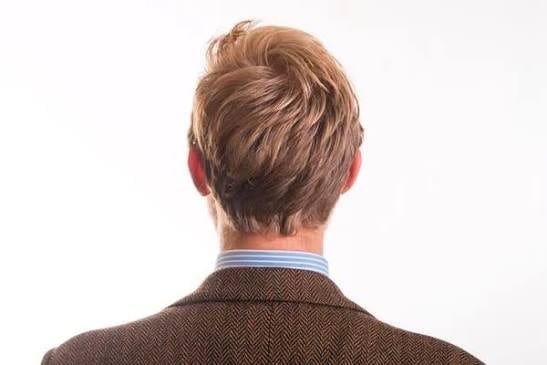
Sore back of the head after a hair transplant: how long does it last?
Tenderness at the back peaks within two or three days and eases during the first or second week.
The back of the head is sorest during the first two or three days, and the discomfort eases during the first or second week. FUT tends to hurt more than FUE because the wound is stitched closed, and most people describe tightness more than sharp pain.
What kind of pain do you feel at the back of the head after the procedure?
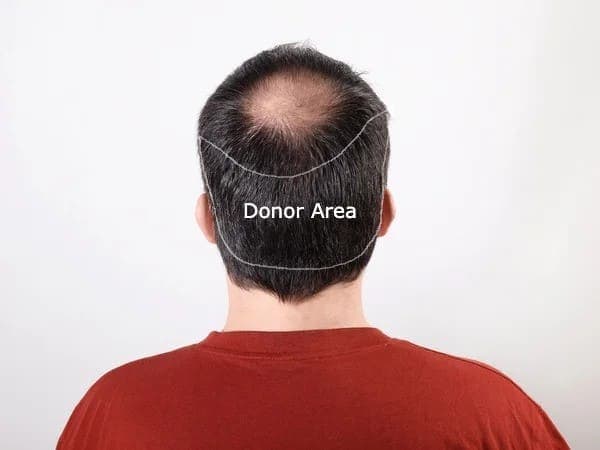
The back of the head is usually the sorest spot, while the area at the front is numb and later itches. After FUE it feels like a diffuse tenderness at the nape and behind the ears that worsens when you move or lie on it, and after FUT a tight feeling from the stitches dominates, usually better around day three.
Of the two surgical sites, the back of the head is usually the one that bothers people most. The area at the front goes numb and later starts to itch. The back of the head is sore.
After FUE, most people describe a diffuse soreness across the whole donor area. It gets worse when you turn your head or rest it on the pillow, and it feels more sore and tight than sharp. After strip surgery, tightness dominates, the feeling of the stitches pulling, and it's often more pronounced.
Many patients say the pain eases around day three. That's common experience, not a figure from larger studies.
How does the pain develop day by day?
It builds through the evening as the anaesthetic wears off, is worst on days 1 to 3 when sleep suffers, eases clearly on days 4 to 7 as the scabs come away, and leaves some tightness and itching in weeks 2 to 4. After a month most people no longer have pain worth mentioning.
- The day of surgery. The anaesthetic wears off within a few hours, and discomfort builds through the evening.
- Days 1 to 3. The worst stretch. Tenderness, tightness and sensitivity to touch are at their peak. The practical problem is sleep, because lying on the back of your head hurts.
- Days 4 to 7. Clearly better for most people. The scabs come away and it gets less sore.
- Weeks 2 to 4. A little tightness remains, mostly after FUT. Gradually itching takes over from tenderness, because the nerves are waking up.
- After a month. Almost no one still has pain worth mentioning at the back. Pain that lasts longer is unusual and should be examined.
Why does FUT hurt more in the donor area than FUE?
Because the strip wound has to be stitched closed under some tension, and you feel it constantly until the wound has healed well, often across a wide area and worst when you bend your neck. The tighter the scalp, the more discomfort, whereas FUE punch holes are never stitched and so cause more diffuse, shorter-lived tenderness.
What relieves pain at the back of the head?
Your surgical team is responsible for pain relief. What often helps is sleeping on your back with your head raised, taking prescribed painkillers on a fixed schedule, sticking to the washing schedule and avoiding bending your neck over your phone.
Your surgical team is responsible for pain relief, and what they say takes priority over the advice here. These things usually help:
- Head raised for the first few nights. It also reduces swelling.
- No pressure on the back of the head. Sleep on your back, perhaps with a neck pillow if it helps you stay in the right position.
- Painkillers by the clock. Take what you've been prescribed at set times for the first few days, before the pain has a chance to build up.
- Wash as agreed. Scabs left on too long make it more painful.
- Go easy on your neck. In the first week, a screen at eye level is much better than sitting hunched over your phone.
Aspirin (acetylsalicylic acid) and some anti-inflammatory medicines may be advised against around the procedure because they increase the risk of bleeding. Follow the instructions you've been given, and don't guess.
When should you contact your clinic about pain?
When the pain gets worse after the first three days, if the skin is red, warm or swollen or there is discharge, if you have a fever, if severe pain isn't relieved by what you've been prescribed, or when one particular spot hurts intensely. Infection is uncommon but treatable.
- The pain increases after the first three days instead of easing.
- The back of your head becomes red, warm or swollen, or something is seeping out.
- You develop a fever.
- Severe pain that the prescribed painkillers don't control.
- One spot that hurts intensely, as opposed to an even tenderness.
Infection at the back of the head after the procedure is rare, but it can be treated, and the earlier it's caught, the better. Skin cysts and folliculitis are also known complications in the donor area, and both can be tender.
What is useful to know about the pain before your surgery?
That tenderness at the back is expected, is worst early on and improves in a fairly predictable pattern, so you don't mistake normal soreness on day two for a complication. Plan around it: avoid travel and heavy work for the first three days, and make sure you have your medication ready.
Sources
- Romera de Blas C, Vega Díez D, Ricart Vayá JM, Gómez Zubiaur A. Complications in follicular unit excision hair transplantation: current evidence and practical approaches. Frontiers in Medicine, 2026;13:1750989. pubmed.ncbi.nlm.nih.gov/41709896
- Giardiello F, De Medeiros Quirino L, Brigante R, Chumak M. Hyperbaric Oxygen Therapy for Enhanced Postoperative Recovery in Hair Transplantation. Cureus, 2025;17(12):e99635. doi.org/10.7759/cureus.99635
- Rassman WR, Bernstein RM, McClellan R, Jones R, Worton E, Uyttendaele H. Follicular unit extraction: minimally invasive surgery for hair transplantation. Dermatologic Surgery, 2002;28(8):720-728. pubmed.ncbi.nlm.nih.gov/12174065
- Parsley WM, Perez-Meza D. Review of factors affecting the growth and survival of follicular graft. Journal of Cutaneous and Aesthetic Surgery, 2010;3(2). jcasonline.com
This article is based on published research and standard clinical practice. It is general information, not medical advice, and it never overrides what your own surgical team tells you. If they say something different from what you read here, follow their advice.
Wondering what's possible for your hair?
Send three sharp photos of your hair, from the front, the top and the back. You'll get an honest answer on what can be done, roughly how many grafts it would take and what it costs.
- Free and with no obligation
- Photos are assessed by the clinic's medical team
- Replies usually within an hour in the daytime


A study tells you something about groups. Only a doctor who has seen your photos can say what applies to your hair. The medical team at the clinic at the top of our ranking offers a free assessment.
Goes to the clinic at the top of our ranking.