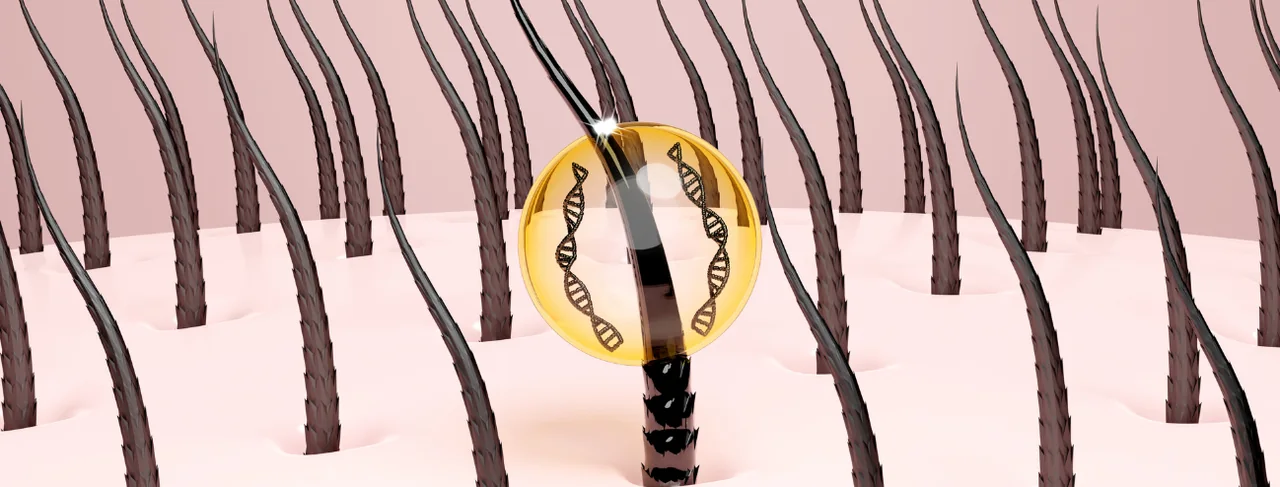
Stromal vascular fraction, or SVF for short, is a mix of different cells separated from your own fat tissue and injected into the scalp to treat hair loss. It counts as a regenerative method. All the material comes from you, is processed while you're at the clinic and goes back in the same day.
The research is modest in size, but it's unusually consistent in direction. Two systematic reviews and a number of controlled studies all find that hair density increases, and none describes a serious side effect. What's missing is a standard for how it should be done, follow-up over several years and a clear answer on whether SVF adds anything on top of treatments that already work. We cover both sides.
What is SVF, and where do the cells come from?
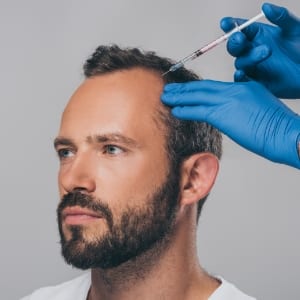
SVF is the cells left over when fat tissue is processed and the fat cells themselves are removed. The mix contains mesenchymal stromal cells, cells from blood vessel walls and cells that form new vessels, pericytes and immune cells. It's taken from your own body in the same hour you're treated.
Your fat is more than an energy store. Around the fat cells sits a group of support cells that help build blood vessels and repair damaged tissue. When these are separated from the fat cells, you're left with what's called the stromal vascular fraction.
The material is autologous, which means it's taken from and given back to the same person. Your body recognises it, so you avoid the rejection and tissue-compatibility problems that come with tissue from someone else. Usually a little fat is suctioned from the abdomen or the side of the waist while the area is under local anaesthetic. It's then processed and injected where the hair has thinned.
SVF isn't one specific product either. Clinics process the fat in different ways, and the reviews we discuss below point to exactly this as the biggest problem when comparing results.
Why would cells from fat help your hair?
Hair follicles depend on a good blood supply and on the signalling molecules around them, and the cells in SVF take part in exactly those processes. The idea is to give the follicles you still have better conditions. It's not about creating new ones.
In hereditary hair loss the follicles shrink gradually, but they remain in place for a long time. The idea behind SVF is the same as behind PRP and similar treatments: that better conditions around a shrinking follicle may slow the process, or partly reverse it.
The mechanism is plausible but not proven. The studies measure whether density changes. They don't measure what caused the change. Nor has any published study ever shown the mechanism directly in the human scalp.
What have studies of SVF for hair loss found?
A 2023 systematic review in Acta Biomedica pooled 9 studies with 236 patients, including 3 randomised controlled trials. Every study found that density increased, and the increase was statistically significant each time. Where there was a control group, SVF patients had between 18 and 31 more hairs per square centimetre after six months. Another systematic review, of SVF for non-scarring hair loss, covered 6 studies with 188 patients and reached the same conclusion.
We show the figures separately rather than averaging them, because the studies looked at different patient groups and used different protocols.
- Fukuoka et al.: the SVF group gained 18.4 ± 9.4 hairs per cm², while the group given saline gained 6.5 ± 11.7.
- Perez-Mesa et al.: 31.2 ± 17.7 hairs per cm².
- Stevens et al.: 30.7 ± 30.4 hairs per cm². Note how large the standard deviation is.
- Kadry et al.: 19.30 ± 13.65 hairs per cm², with p<0.001.
The direction is the same in all of them. The size isn't. In fact, the spread from study to study is larger than the gap between several of the studies and their own control groups.
If your hair loss has only just started, a procedure may not be the right step yet. The medical team at the clinic at the top of our ranking can look at your photos and tell you honestly whether to wait, start with treatment or consider more.
Goes to the clinic at the top of our ranking.
Does SVF work better than PRP alone?
Not in the only randomised trial that has tested exactly this. Patients who had two rounds of PRP and one SVF injection did not do significantly better than patients who had three rounds of PRP.
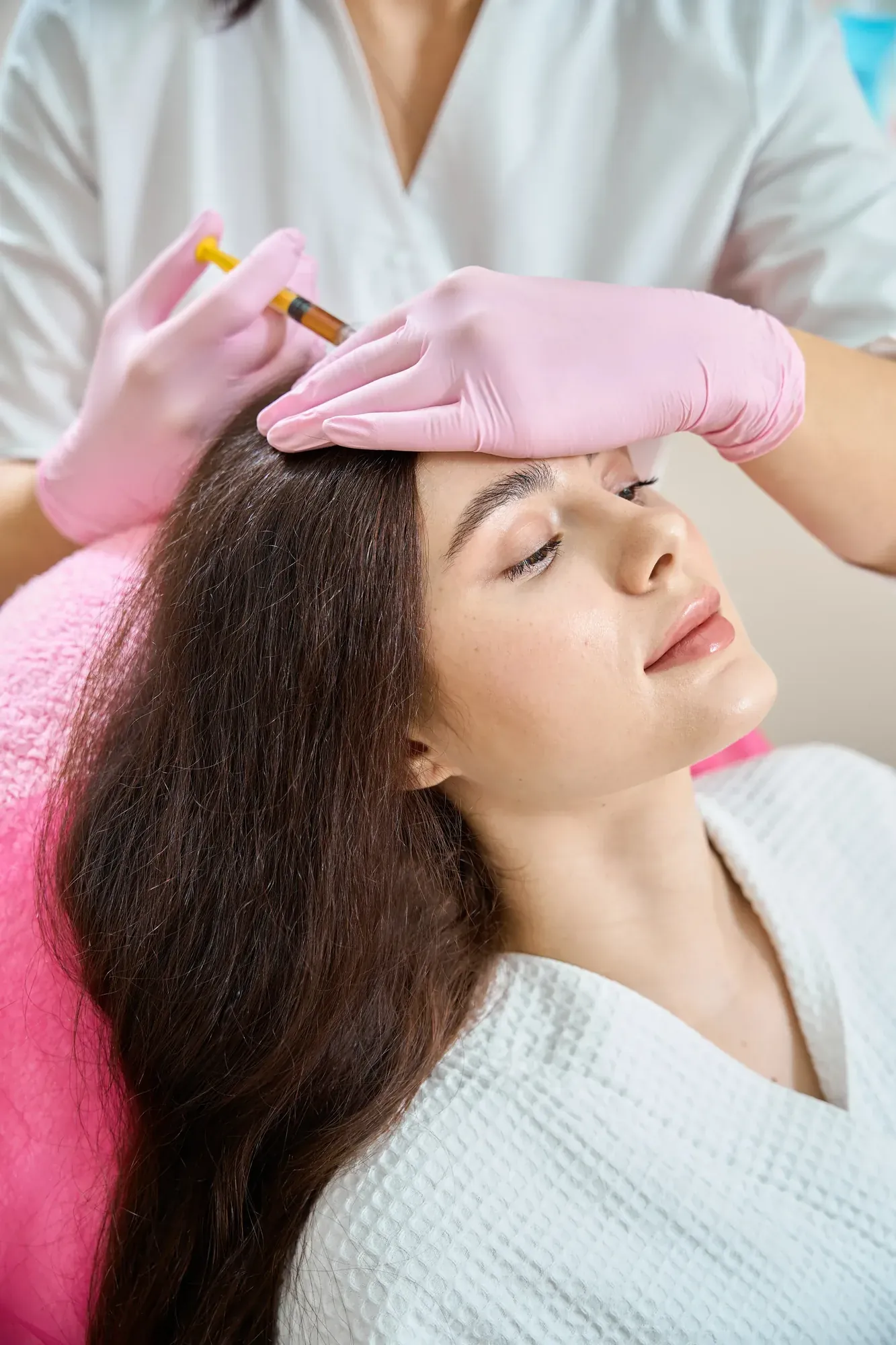
In 2024 the journal Skin Research and Technology published a randomised trial in which one group had SVF added to a course of PRP, while the other had PRP only. Both groups ended up with more hairs and thicker hair shafts than at the start, and the improvement was significant in both. Comparing the groups, hair count rose most with PRP alone, while the combination gave a slightly larger increase in thickness. Overall there was no significant difference.
This is one trial with one specific combination and one specific treatment schedule. It doesn't prove that SVF has no effect. It shows that the add-on, as given here, didn't make PRP measurably better. If SVF is presented to you as an "upgrade" to your PRP course, this trial is worth mentioning to the clinic.
Is SVF safe?
The two systematic reviews cover several hundred treated patients, and some studies are probably included in both. No serious side effects have been reported. What was described was pain where the needle went in and bruising at the injection site.
That's a good sign, but with two caveats. The studies are small and followed patients for a short time, and a small study only picks up side effects that are common. On top of that, SVF requires liposuction to harvest the material. So you take on the risk that always comes with that procedure, in addition to the injections.
Because the material is your own, there's no risk of rejection. That doesn't make the treatment risk-free. Liposuction is a surgical procedure and should be treated as one.
What do researchers still not know about SVF?
There's no standard for how the treatment should be done, no long-term follow-up and no study large enough to measure SVF against the established treatments. The authors of the 2023 review state plainly that they found no standardised protocol in the literature.
If you're trying to decide, four gaps matter most.
- No shared method. The studies harvest and process the fat differently, deliver different cell counts and treat at different intervals. Two treatments that are both called SVF aren't necessarily comparable.
- Unknown duration. Most results were measured after six months. Nobody knows whether the effect lasts, or whether you'd need repeat treatments.
- No comparison with the medicines. No study has tested SVF against finasteride or minoxidil, the two best-documented treatments for hereditary hair loss.
- Little research. A total of 9 studies and 236 patients isn't much. The review authors themselves warn against reading the favourable balance of benefit and risk as a green light for uncritical use.
Who might SVF be suitable for?
People with non-scarring hair loss who still have shrinking follicles left, who have already considered the better-documented treatments, and who know this is still at the experimental stage.
SVF can't bring back a follicle that has disappeared. If an area is completely bald rather than just thin, it's a transplant you should be looking at, not injections.
Nor is it the place to start. First find the cause of your hair loss, correct any deficiency that blood tests have shown, and consider the established medicines. SVF may then come alongside these, as an add-on that's still being explored. Not as a replacement.
Can SVF be combined with a hair transplant?
They solve different problems. A transplant places follicles where they're missing. SVF is meant to help the ones you already have. One can't replace the other.
Some clinics offer SVF around the operation, arguing that it may help healing or help more grafts survive. We haven't found any published trials that have tested SVF specifically for graft survival after a hair transplant. That use is therefore an extension of a line of reasoning, not something that has been shown.
If it's offered as part of a surgery package, ask what it's supposed to do for you, what it costs on its own, and what research the clinic is relying on.
What should you ask before agreeing to SVF?
Ask how the cells are processed, how many treatments the clinic suggests and why, what SVF costs when priced separately, and what the clinic thinks it can give you that an established treatment can't.
These questions bring out what you need to know:
- How is the fat harvested and processed, and who does it?
- How many treatments do you recommend, and what is that plan based on?
- What does SVF cost on its own, outside any package?
- What results have you seen in patients like me, and how were they measured?
- Which established treatments did you consider for me first, and why should this come on top?
If the clinic can't answer the last question, they're selling, not treating.
Common questions about SVF
Is SVF an approved treatment for hair loss?
SVF is being researched as a hair loss treatment, but it isn't an established standard treatment. How authorities regulate this particular use varies from country to country. Ask the clinic what applies where you'll be treated.
Where do the cells come from?
From your own fat. It's usually taken from the abdomen or the side of the waist with a small liposuction under local anaesthetic, in the same hour as the treatment.
Does SVF hurt?
In the studies, pain at the injection site and bruising where the needle went in were the side effects reported. Both the liposuction and the injections are done under local anaesthetic.
How many more hairs could I get?
In the studies with a control group, patients gained between 18 and 31 more hairs per square centimetre over six months, with large differences between studies. These are group averages from small trials. Nobody can promise you a specific result.
How long does the result last?
Nobody knows. Most studies measured the result after six months, and none has followed patients over the long term.
Does SVF work better than PRP?
So far nothing suggests it does. When researchers in a randomised trial gave some patients SVF on top of PRP, they did not do significantly better than those who had PRP alone. No other study shows an advantage for SVF either.
Can SVF help where I'm already completely bald?
No. SVF targets follicles that still exist but are shrinking. Where the follicles are gone, no injection can bring them back.
Can SVF be used instead of finasteride or minoxidil?
Nobody has tested SVF against these medicines. So there's no research basis for swapping the best-documented treatments for SVF.
How safe is SVF?
The studies, which together cover several hundred patients, haven't reported serious side effects. That's reassuring, but the studies are small and followed patients for a short time, and liposuction has its own known risks.
Why do clinics describe SVF so differently?
Because there's no standard. How the fat is processed, how many cells are extracted and how often you're treated varies from place to place. That's the main reason the results are hard to compare.
Start by finding out why you're losing hair. SVF is an add-on that's still being explored. It doesn't replace the treatments with the strongest evidence, and it can't create new hair follicles where the old ones are gone. A free hair analysis is a good first step, so you know where you stand before you reach for your wallet.
Goes to the clinic at the top of our ranking.
Sist oppdatert: October 2026 · Redaksjonelle standarder