
Yes, Asian hair can be transplanted with results just as good as any other hair. The difference lies in the plan. Hair of East, South or Southeast Asian origin is most often straight and noticeably thicker per strand. That affects how many follicles the donor area has per square centimetre, what shape the hairline should take and what the surgeon has to do so the result doesn't look like small plugs. The basic requirements for being a candidate are the same as for every other hair type: hair loss that has settled down, and donor hair at the back of the head that resists DHT.
There's no single Asian hair type, either. Many people with Chinese, Japanese or Korean backgrounds have smooth, straight hair with evenly coarse strands. People with roots in India, Pakistan, Bangladesh or Sri Lanka, and in the Philippines, Vietnam, Thailand, Indonesia or Malaysia, also often have straight hair, but it's just as likely to be wavy or curly. Skin tone varies widely, and it decides how much the colour difference between hair and scalp matters for you in particular. If your hair is curly or tightly coiled, the guide to curly and Afro hair is a better fit. This page is about straight to wavy hair with thick strands.
We go through the trade-off between density and coverage, why dark hair against light skin puts stricter demands on punch size and scarring, how a hairline is shaped for an Asian face, and what thick follicles mean for the graft plan. After that we compare FUE, DHI and FUT, look at beard and body hair as donor sources, go through the timeline and finish with the questions that reveal whether a clinic really knows this hair type.
- Asian hair gives results as good as other hair types. The plan changes. The requirements for being a candidate don't.
- The donor area often has fewer follicles per cm² than in some other groups, but each thick strand covers more scalp and makes up for much of the difference.
- When the hair is jet black and the skin is light, both thin patches and scars show more clearly. That raises the bar for punch size, spacing between grafts and closing a donor wound.
- Asian hairlines usually have a flatter line and rounder corners at the temples than the pointed V shape many Western clinics use as a template.
- Thick, straight grafts are unforgiving. A wrong angle or spacing shows, so the surgeon's experience with this particular hair type carries a lot of weight.
Is a hair transplant different when your hair is Asian?
Yes, but the difference lies in the planning, not in the procedure becoming harder. Straight hair is easy to extract, and thick strands cover more scalp per graft than fine strands do. At the same time, the donor area tends to have slightly lower follicle density than in some other groups, so the plan has to weigh the lower number against the greater coverage.
What decides the result is the same for everyone: a pattern that has settled, enough donor hair and a skilled surgeon. Ethnic background isn't a factor in itself. What sets Asian hair apart are two properties you can measure, namely how straight the hair is and how thick each strand is. Both affect how the plan is made.
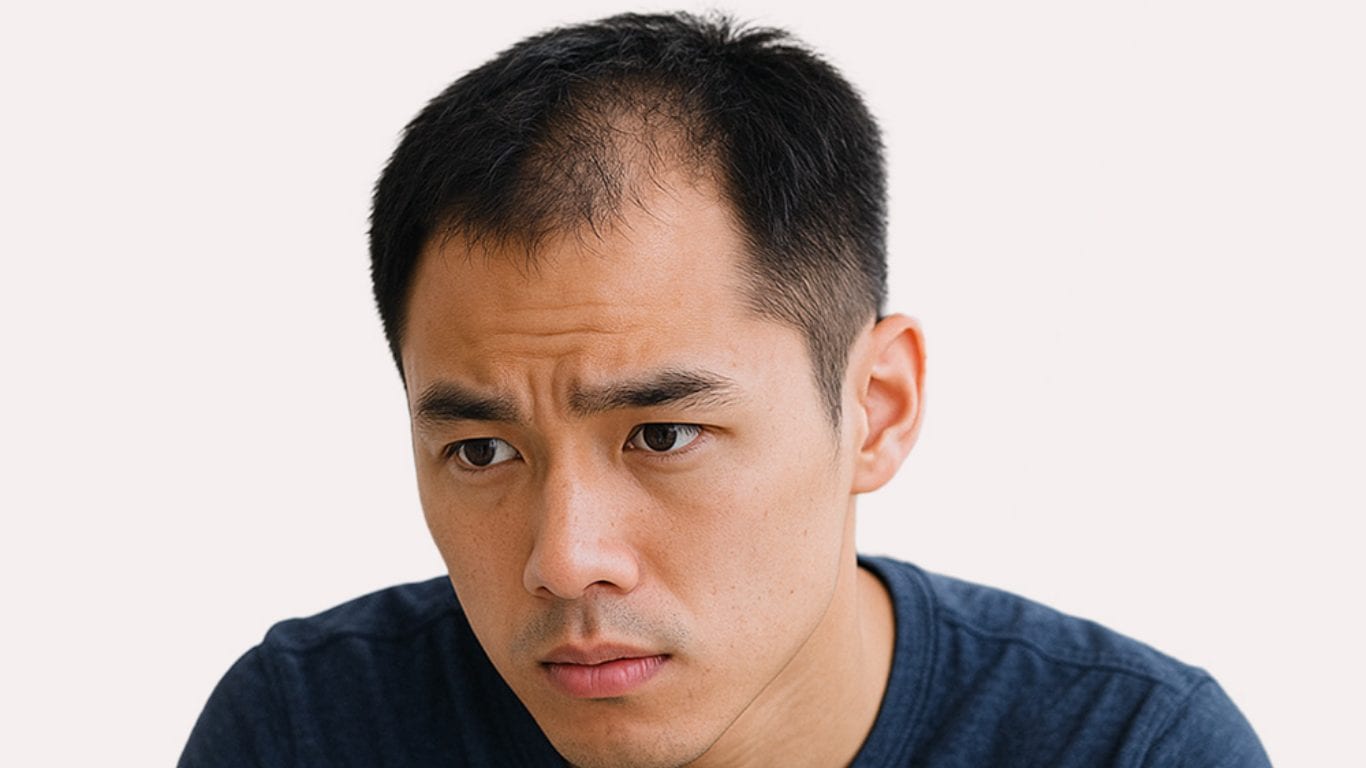
Why is straight, thick hair both an advantage and a challenge?
Under the skin, a straight hair runs downwards in a fairly straight line. That's one of the easiest paths for a standard punch to follow during FUE, and the risk of transection, meaning the follicle being cut by accident, is low. A thick strand also gives more visible coverage once it grows out. That's why sessions on straight, thick Asian hair often deliver both many viable grafts and a density that looks higher than the number would suggest. The challenge comes later, in the design, because thick strands expose every mistake.
How many follicles does the donor area have?
Donor density is measured the same way for all hair types. The surgeon measures the density in the safe zone at the back and sides of the head, given as the number of follicles per square centimetre, ideally with a densitometer rather than by eye. Typical density there is around 65 to 85 follicular units per cm², and if the figure is around 40 or lower, the donor area is weak. Clinical descriptions of Asian hair point out that the units in the donor area are often small. Units with one or two hairs dominate, while units with three or four hairs are relatively rare. Thickness doesn't close this gap, but it makes up for much of it. That's why density and thickness must always be assessed together.
How does that affect the graft plan?
The facts pull in opposite directions. Fewer follicles per cm² means you should expect modest graft targets and not the very highest numbers you see from donor areas with more hairs per unit. The strong coverage per graft means the opposite: a moderate number can still give a dense look once the grafts are in place. A surgeon who knows the hair type builds the plan on both and doesn't give you a standard number based on how big the bald area is. How the surgeon measures density and thickness and calculates the yield is covered in the guide to donor hair.
What is the same for all hair types?
Whether the procedure suits you is still decided by two things: a loss pattern that has stabilised, and donor hair that is genetically resistant. That applies wherever your family comes from, and the full assessment is in the candidate guide. Hair type shapes what the plan looks like. It doesn't decide whether you get one.
Why does colour contrast between hair and skin matter so much for Asian patients?
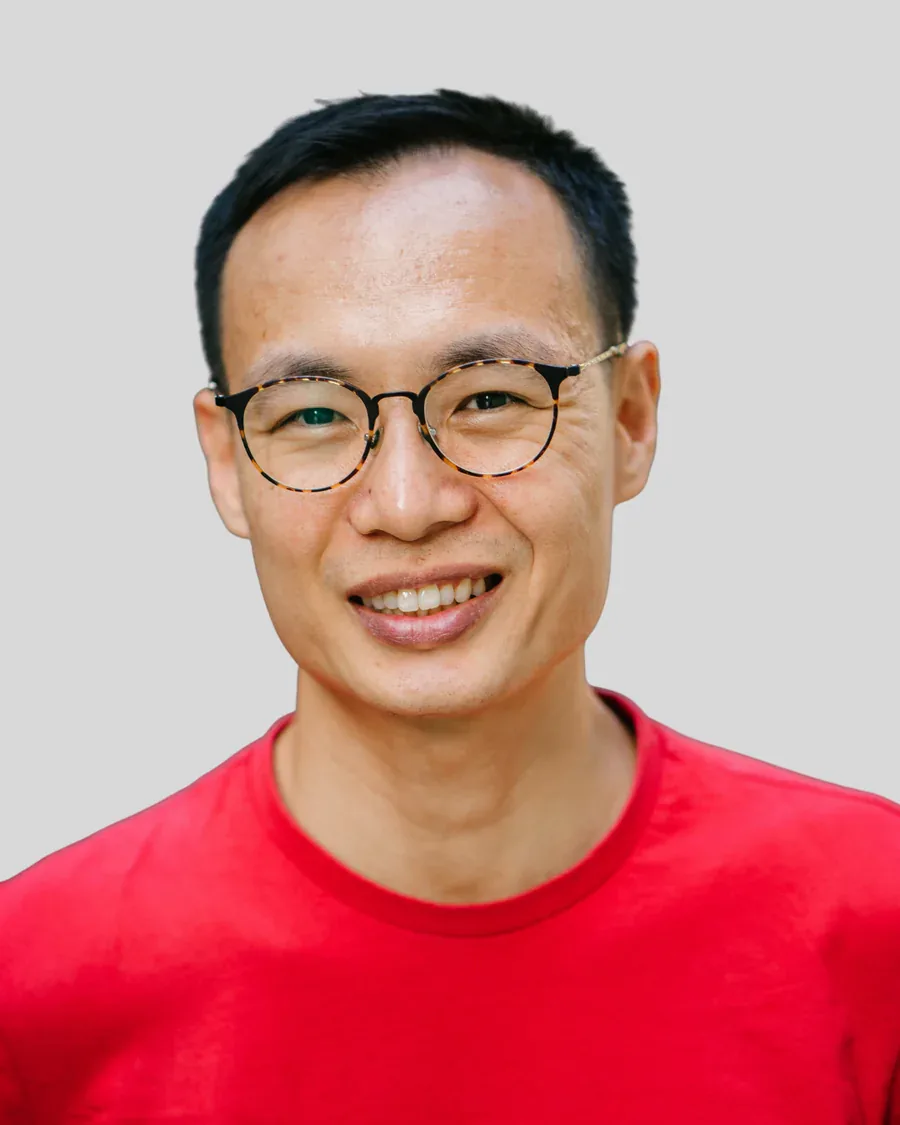
Black hair against light skin creates high contrast, and then both thin areas and scars show more than they would with lower contrast. The effect is strongest in East Asian patients with light skin and jet-black hair, and weaker in many people of South or Southeast Asian background, whose skin is closer to their hair colour. The contrast argues for small, carefully chosen FUE punches, and for a gentle closure if FUT is used.
Contrast between hair colour and scalp plays a part for everyone, and the general explanation is in the guide to hair type and texture. For Asian hair it still deserves its own place, because black, straight hair on light skin is among the most demanding combinations a surgeon meets.
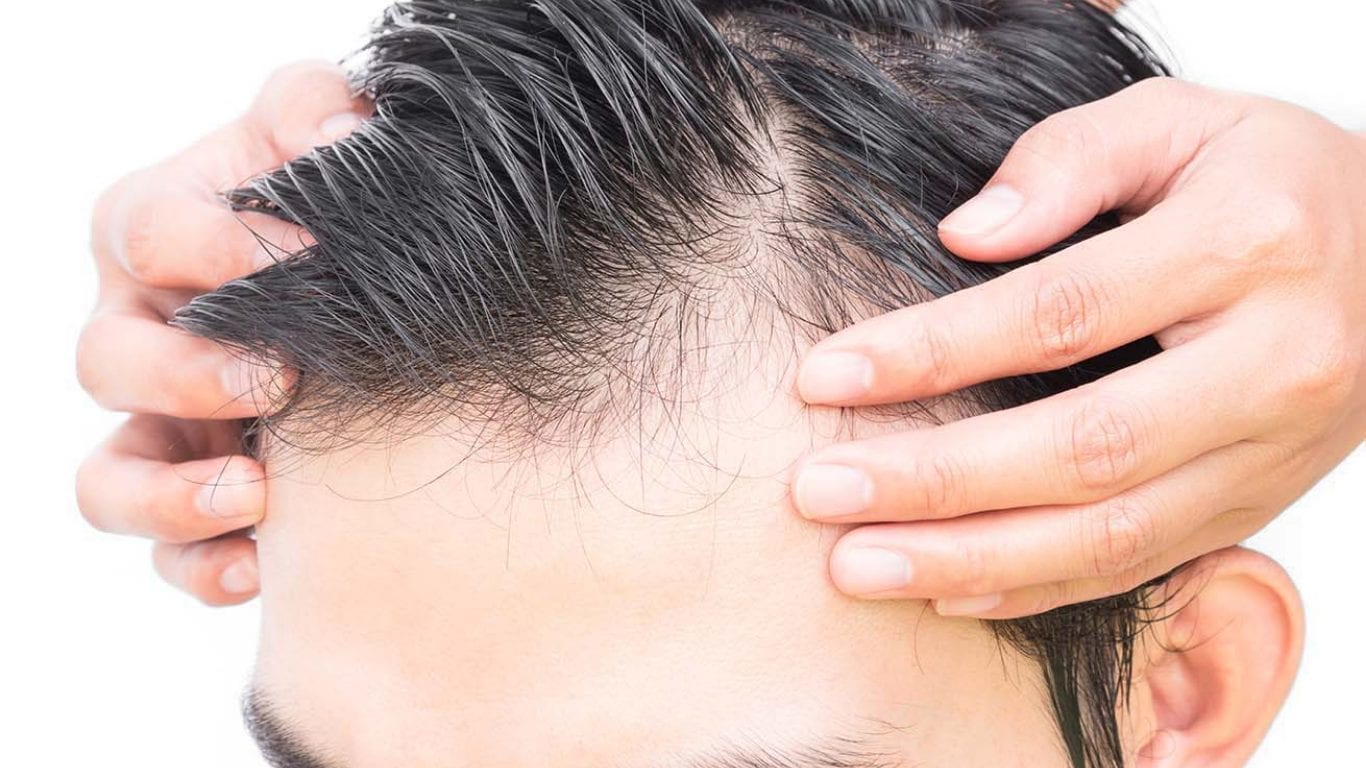
What makes high contrast so unforgiving?
When we look at a head, we judge fullness by two things: how many hairs are there, and how much skin shows between them. Against light skin, black hair hides almost nothing. A sparse patch, a graft that sits slightly crooked or a small scar becomes easy to see. With darker skin and lower contrast, the same details disappear much more easily.
East Asian patients most often have the strongest contrast. Many people of South or Southeast Asian background have a deeper, warmer skin tone that is closer to their hair colour, and then the same density can actually look fuller. Skin tone still varies a lot within each group. The surgeon has to look at you, not at your origins.
Which punch should the surgeon choose?
FUE leaves small, scattered dot scars. They're usually hard to see, but on high-contrast skin they stand out when the punch is unnecessarily large or the extraction is uneven. At the same time, thick follicles need a punch that is large enough, or they can be crushed or cut. So the surgeon has to get the size exactly right for you. A clinic that uses the same setting on every patient isn't doing that job.
What about the scar after FUT?
With FUT, also called the strip method, the scar is a thin line across the back of the head. If the line is poorly closed, it shows clearly on high-contrast skin, especially if you keep your hair short at the nape and sides. A low-tension closure helps a lot. So does trichophytic closure, where the surgeon trims one wound edge so hair grows up through the scar and not just around it. Many people who care about the donor area not showing therefore get FUE as their first choice. A well-closed FUT scar can still be barely visible when the surgeon is experienced.
What does this mean for you in practice?
The contrast doesn't decide whether you can have surgery, and it can't be changed. It affects how densely the surgeon plans the grafts and how carefully a donor wound is stitched closed. So ask straight out in the consultation how the clinic adapts its technique when hair and skin have high contrast. A good answer is specific.
What shape should the hairline take on an Asian face?
Most people of East, South or Southeast Asian background suit a flatter, straighter hairline, or a gentle curve, with soft corners at the temples. It tends to sit slightly lower and be less pointed than the V shape many Western clinics use as a starting point. When a Western template is transferred to an Asian face, the result often looks slightly off, even if the surgery itself is well done.
The hairline should be in proportion to the head and face. No template suits everyone. Research on the hairline in East Asian patients, published in the ISHRS journal Hair Transplant Forum International, describes typically flatter and broader foreheads and rounder angles at the temples than in Caucasian patients. Natural East Asian hairlines are mostly straight or gently sloping. Sharp points are unusual.
Why does a pointed V shape look unnatural?
The pointed V shape is a common standard in Western hairline design, and many patients ask for it because it's what they've seen in before and after photos. It belongs on a narrower, more angular face. On a round, flat forehead the same shape often looks stuck on rather than youthful. Surgeons who know the hair type therefore choose a straight or gently curved line and round off the corners at the temples.
Is there a difference between East, South and Southeast Asian faces?
Yes. Among South and Southeast Asian patients, the variation in face and head shape is greater than among East Asian patients. Some resemble the East Asian pattern described above, others are closer to shapes familiar from Western hairline design. The surgeon therefore draws the hairline based on your forehead, face shape and the width at your temples during the consultation. A regional label is too crude a basis.
Why do the corners at the temples matter so much?
A hairline is judged as much by its corners and temple points as by the line at the front centre. A neat, flat central line still looks artificial if the corners are too pointed or sit too high. This is one of the parts of the procedure that demands the most skill. The hairline is the first thing everyone sees, and a thick single graft sitting slightly wrong at the front edge is much easier to spot than a misplaced fine hair. More on this in the guide to hair type and texture.
What should you ask to see?
Ask for photos of hairlines the clinic has created on patients with the same face shape and background as you. A general gallery tells you little. Also ask how the surgeon adapts the shape itself, not just the position, to the proportions of an Asian face.
It depends on your donor area, your hair type and where the loss is. Send three photos and the medical team at the clinic at the top of our ranking will suggest a method and number of grafts.
Goes to the clinic at the top of our ranking.
Do you need fewer grafts when your hair is thick and straight?
Often slightly fewer, because each thick strand covers more scalp, so thick, straight Asian hair can look just as full with a somewhat lower graft target than fine hair over the same area. The downside is technical: a thick follicle needs a punch that is large enough. With a punch that's too small, the risk rises that the follicle is crushed or cut instead of coming out whole.
The graft plan for Asian hair consists of two calculations that have to be solved at the same time. How many grafts does the area need to look full? And what share of what is extracted survives? Thickness affects both answers.
How can fewer grafts give the same fullness?
A follicular unit with one or two thick hairs covers clearly more than a unit with the same number of fine hairs. The strand is wider, so each hair shades more skin. An estimate based only on area therefore often overstates how many grafts thick, straight Asian hair needs. The graft calculator gives you a rough starting point, but it can't take thickness into account. That has to be measured on you.
Why does the punch need to be bigger for thick follicles?
This is the counterweight. A thick follicle takes up more space under the skin. A punch made for fine or medium hair can crush it or partly cut through it, and then the graft doesn't survive. A surgeon who has worked a lot with thick, straight hair chooses the punch to match each patient's follicles and adjusts along the way if strands in different parts of the donor area vary in thickness.
Why can't density be assessed on its own?
Imagine two donor areas with exactly the same number of follicles per cm². One has fine, straight hair, the other thick, straight hair. The plans will still differ, because the thick hair gives more visible coverage per unit extracted. A serious assessment therefore always combines density with a separate measurement of thickness. How the measurement is done, and what it tells you about how many grafts you have available over your lifetime, is covered in the guide to donor hair.
How should you read the quotes?
A lower graft count isn't automatically a worse plan when your hair is thick and straight. A very high number isn't automatically the most generous offer either. Both have to be weighed against your actual density and thickness. More grafts aren't always better, and only a personal assessment gives you a target that fits your head.
Which method suits straight, thick Asian hair best: FUE, DHI or FUT?
FUE is the most common choice, because straight follicles run in a predictable, almost vertical line and are straightforward to extract, as long as the punch is large enough for the thick strands. DHI extracts the grafts the same way but gives the surgeon better control over angle and direction when they're implanted, which helps with a flat hairline. FUT is still a good option for large sessions, but leaves a scar line that becomes more visible when contrast is high.
None of the methods guarantees a good result on its own. Each changes a different part of the process: extraction, implantation or the scar. What suits you depends on thickness, donor hair, contrast and what you prioritise. There's no single right answer for all Asian patients.
Why is FUE usually the first choice?
With FUE, a small punch removes one follicular unit at a time. What's left behind is scattered dots that rarely show, not a line. Straight hairs sit predictably under the skin, so extraction goes relatively smoothly. The condition is that the punch is matched to the thick strands, as described above, and isn't left on a setting made for fine hair. Clean extraction and barely visible scars are why most people start here.
What does DHI add?
With DHI, the grafts are usually extracted with the same type of punch as in FUE. The difference comes at implantation. An implanter pen creates the channel and inserts the graft in the same movement, and the surgeon controls angle, direction and depth precisely. On a flat, straight hairline a thick single graft at a slightly wrong angle shows clearly, so that precision has real value. DHI doesn't, however, lower the risk at extraction. That still depends on the punch and on the surgeon's hand.
When is FUT a sensible choice?
With FUT, a strip of scalp is removed from the donor area and divided into grafts under a microscope. The method can yield many grafts in one large session. The price is a linear scar, and as mentioned in the section on contrast, it shows more against black hair and light skin if the closure isn't precise. FUT can suit you if you want as many grafts as possible in one go and care less about the donor area. If you keep your hair cropped very short at the nape, it's a poor choice.
How do you choose?
The name of the method counts for less than how much documented experience the team has with extracting and implanting coarse, straight hair. If you want to see the general differences between FUE, DHI, FUT and sapphire FUE, you'll find them in the methods guide.
Can beard, temples and body hair be part of the plan?
The temples are often where thinning is noticed first, and they should be shaped as flat and rounded as the rest of the hairline. Many Asian men have thinner, slower-growing beard and body hair than average, so the beard is a less reliable donor source, and body hair comes even further down the list. For the same reason, it's common to go the other way and move hair from the head to the beard.
In Asian patients, two areas next to the hairline itself often come up in planning. One is the temples. The other is facial and body hair, either as an area to receive hair, or as a reserve when the donor area on the head isn't enough.
How are the temples rebuilt?
At the temples, the hairline curves back towards the ear. This is where thinning often becomes visible first, and where the design is hardest, because an angular, high-set or pointed corner gives itself away far faster than a flat central line. As mentioned, hairlines of East, South and Southeast Asian origin have a rounder, softer curve here than the sharp recessions often used as a Western template. When the surgeon rebuilds a temple in Asian hair, that rounder shape is the benchmark.
Can the beard supply hair for the head?
Sometimes. Beard hair can be used as an extra donor source when the donor hair on the head is too limited for a large bald area. In many Asian men the beard grows thinner and more slowly than in some other groups, so a beard that can provide a useful number of grafts without looking visibly sparse is less common. If you have a strong, dense beard, it's a real reserve. If you don't, the donor area on the head has to carry more of the plan, and there's more about this in the guide to donor hair.
Why do many Asian men move hair to the beard instead?
Precisely because the beard is often naturally thin, it's common to use donor hair from the head to give the beard more density. It's a separate procedure with its own considerations, and you'll find everything about it in the guide to beard transplants. What matters here is that a thin beard works both ways: it limits the beard as a donor, and it's often the very reason someone considers a beard transplant.
What about body hair?
Hair from the chest and elsewhere on the body can be used in some repairs or when the need for grafts is very large. It has a different growth cycle from scalp hair and often a different texture, so it's used to fill in density and almost never in the hairline. For most people, body hair isn't a primary source. It only comes into the plan when the head, and possibly the beard, don't provide enough.
How long does it take before you see the result?
The timeline is the same for all hair types. Around weeks 2 to 3 you shed the new hairs, which is expected, growth returns from about month 3 to 4, and you see the final result after around 12 months. Straight or thick hair doesn't change the pace, although thick strands can make the result look full a little earlier.
Hair type shapes the plan and the technique, as you've read above. How a graft heals is governed by biology, not texture.
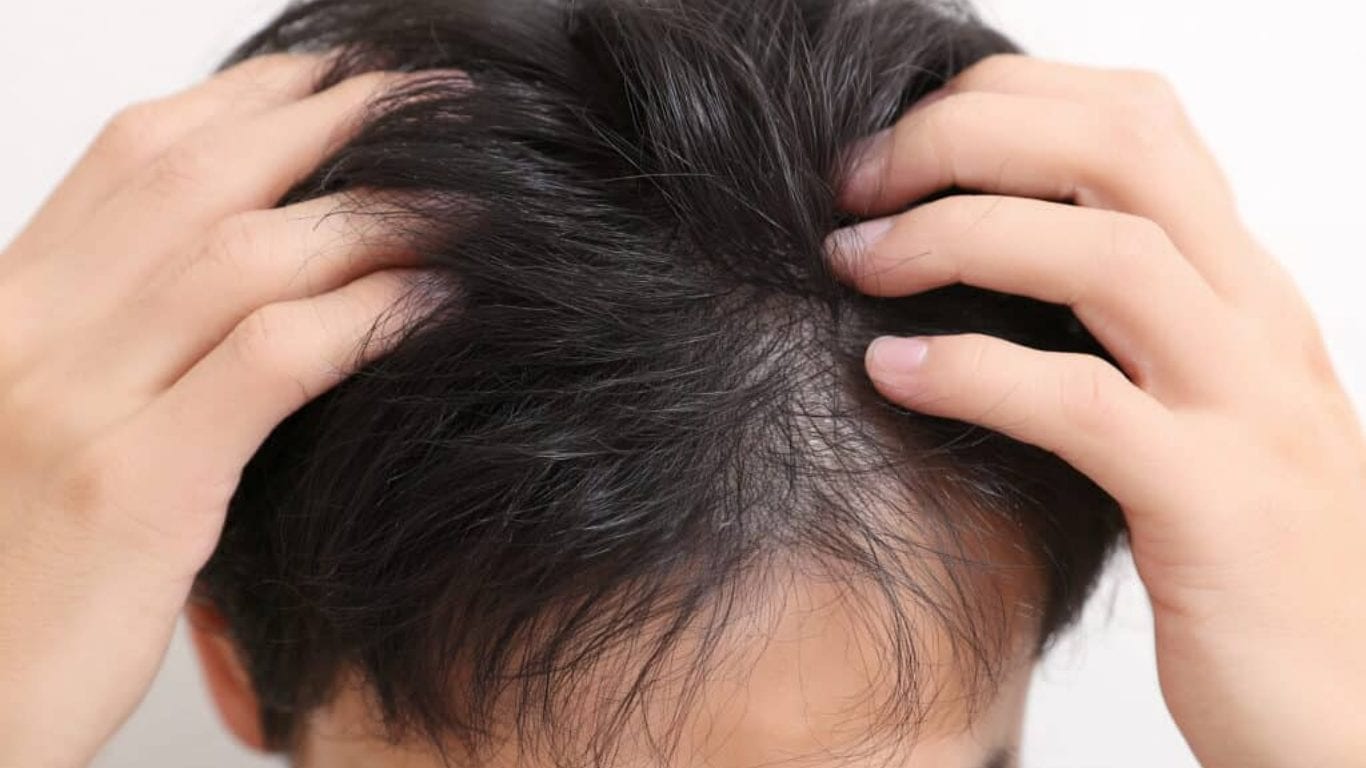
What milestones can you expect?
In weeks 2 to 3 the transplanted hairs fall out. That's expected and doesn't mean the grafts have failed, because the follicle stays in place under the skin. Between months 3 and 4 new hairs start to appear, and they gradually fill in. Once around 12 months have passed, growth is largely complete, and the surgeon then assesses the density, which way the hairs are growing and whether the hairline looks natural. How to care for your hair and scalp along the way is covered in the aftercare guide.
Why does thick hair seem to come in faster?
Each thick strand covers more scalp from the moment it starts to grow. That's why thick, straight Asian hair can look full earlier than the same number of grafts in fine hair. The biology doesn't speed up. The eye simply has more to see in each hair.
Does the result last?
The grafts are taken from the back and sides of the head, where hair resists DHT better than hair at the hairline and crown. DHT is the hormone behind most hereditary hair loss, and this applies to Asian hair just as it does to other hair. No follicle is completely immune, so an honest clinic never promises a permanent result or 100 % durability. It's the relative resistance that keeps the result holding up over time. The original hair around the grafts, however, won't stand still as you get older. Read more about how long the result lasts.
What can change the timeline?
How quickly you heal, your general health and how well you follow the instructions after the procedure affect the details. The main pattern is still so similar for all hair types that you should ask questions if a clinic promises a completely different timeline for Asian hair.
How do you find a clinic that really knows Asian hair?
Ask for before and after photos of Asian hair, ideally from patients who resemble you in face and skin tone, and ask how many such patients the specific team that will operate on you has treated. A clinic that has genuinely done this many times answers specifically about hairline shape, punch size for thick hair and how donor scars are handled, without slipping into general reassurances.
Everything you've read on this page, from the trade-off between density and coverage to contrast, hairline, punch and method, comes down to one question for the clinic. Does this particular team have documented experience with straight, thick Asian hair, and not just with hair transplants in general?
What should you ask the clinic for?
- Asian patients in the portfolio. Before and after photos of straight, thick hair, preferably from someone whose face and skin tone resemble yours. A gallery full of a different hair type tells you little.
- A clear view on the hairline. Does the surgeon usually draw a flatter line with rounder corners for Asian faces, or does everyone get the same template?
- A specific answer about the punch. What size do they choose for thick strands, and does it vary from patient to patient?
- A real number. How many patients with this hair type has the team that will operate on you treated? The clinic's overall figures in its marketing are something else.
- A plan for the scar if FUT is on the table. How do they close the wound, and how do they keep the scar barely visible when hair and skin have high contrast?
Why does this matter more than a big graft count?
A high graft count in a quote means little if the punch doesn't match the thickness and many follicles are cut. A damaged graft doesn't survive, no matter how many extractions were made. What counts is viable grafts placed correctly in your hair, and that depends far more on experience with straight, thick hair than on session size or price level. The general checklist, with a named surgeon, accreditation you can verify and open pricing, is in the guide to red flags. The questions above come on top of that.
Where do you start?
Take sharp close-up photos of your hairline, your donor area and your beard if relevant, ideally in daylight. With them, an experienced team can give you a useful first assessment of density and thickness and a sensible graft count long before you book any travel. Then read how to choose a clinic step by step, compare the options in the ranking and look through the clinics we recommend. Take the questions about Asian hair with you to the clinics on your shortlist.
Frequently asked questions
Can Asian hair be transplanted with good results?
Yes. Hair of East, South or Southeast Asian origin is usually straight and thick. It's extracted with a low risk of transection and gives a lot of visible coverage per graft. The donor area often has slightly fewer follicles per cm² than in some other groups, but the thick strands make up for much of that. The biggest challenge lies in the hairline and the choice of punch, not in whether the hair takes root.
Why do some Asian hair transplants look like plugs?
Wrong spacing and angle are the cause. The hair type isn't to blame. If the grafts are too sparse, lie too flat or stand in an obvious straight row, you get visible tufts where the edge should be soft. Thick hair makes such mistakes easier to see. The solution is well known: closely placed single-hair grafts at the front edge, with slightly varied angles pointing forwards. So a plug-like result says something about the surgeon and nothing about what Asian hair can achieve.
Should I choose FUE or FUT if my hair is Asian?
Both can give good results. FUE is used most because straight hair is easy to extract, and because the small dots left behind show less against black hair and light skin than a scar line. With FUT you can get many grafts in one large session, and it's a sensible choice when volume matters more to you than how the donor area looks, provided the wound is closed precisely.
Are fewer grafts enough if you have Asian hair?
Usually you need slightly fewer grafts than a person with fine hair would need over the same area, because thick strands cover more scalp. Still, there's no fixed rule. The number depends on your own density, thickness and how large the area is, and it has to be confirmed in a personal assessment. A standard estimate based on ethnicity won't do.
Do Asian patients get a different hairline?
Most often, yes. Many people of East, South or Southeast Asian background suit a flatter, straighter hairline, or a gentle curve, with soft corners at the temples. The pointed V shape many Western clinics use as standard rarely fits. The final shape is still decided by your own face and head.
Can beard or body hair be used as a donor?
Sometimes, but don't count on it. Many Asian men have thinner, slower-growing beard and body hair than average, so it's not that common to have a beard that can give up many grafts without becoming sparse. If you have a dense beard, it's a good reserve. If you don't, the donor area on the head has to do more of the work.
How long does it take for Asian hair to grow after a transplant?
The same as for everyone else. Around weeks 2 to 3 the new hairs shed. From about month 3 to 4 they start growing again, and the final result is assessed once around 12 months have passed. Thick strands each cover more scalp, so the result can look full earlier than with fine hair. The timeline itself is the same.
The density of your donor area, the thickness of your strands and which hairline suits your face can only be found out by someone looking at your hair. An article can't give you that answer. Ask for a free hair analysis and you'll get an honest assessment from the clinic ranked number 1 on our list: what you have to work with, what's possible and what's realistic. You're not committing to anything.
This is general information and not medical advice. What's possible for you in particular can only be decided by a qualified surgeon after examining you.
Goes to the clinic at the top of our ranking.
Updated: October 2026 · How our editorial team works