
Your ponytail feels thinner. Your parting looks wider in photos, and under the ceiling light your scalp shows through on top. Many women live with this for a long time without telling anyone, because it feels embarrassing. It's far more common than you think. And the answer rarely lies in an operation, at least not at first. The first step is understanding what's happening to your hair.
In women, hair usually thins differently from men, and the cause can often be treated when it's caught early. Below you'll see what most often lies behind it, what you can do yourself, and in which cases a transplant may be right.
Why do women lose hair?
Most often it's down to hormonal changes, telogen effluvium after childbirth or illness, low iron stores, stress or hereditary hair loss. Women rarely go bald, as the hair tends to thin evenly on top. Losing between 50 and 100 hairs a day is normal.
Usually several things play a part at the same time. Hormones are often central. Your hair notices when your body goes through a major change, such as pregnancy, the period after giving birth, stopping the contraceptive pill or reaching menopause.
Two causes are overlooked more often than others. One is low iron stores, which doctors measure as ferritin. The other is a thyroid that's out of balance, whether it's running too slow or too fast. Both tend to cause diffuse thinning over the whole head, and both can be detected with an ordinary blood test at your GP.
Illness and stress can push a large share of hairs into the resting phase at once. The shedding itself then tends to come a couple of months later. And then there's female pattern hair loss, where the hair on top gradually gets thinner over many years. What helps depends entirely on which cause you have. Guesswork rarely gets you there. The in-depth overview of causes of hair loss goes deeper into each of them.
Why might a woman suddenly start losing a lot of hair?
The most common explanation is telogen effluvium. When the body or mind is put under heavy strain, such as childbirth, surgery, an infection with high fever or prolonged stress, many hairs can enter the resting phase at the same time and shed 2 to 4 months later. In most cases the hair is back within 6 to 12 months.
The term sounds dramatic, but the condition usually passes. Normally the vast majority of your hairs are growing, and only a small share are resting. Then something puts your body to the test. Childbirth. An infection with high fever. An operation, a strict diet or months of pressure at work or at home. A large share of hairs can then switch to the resting phase at once, and a few months later they let go. When you see the amount in the shower drain or on your pillow in the morning, it's easy to get frightened.
The follicles themselves are almost never damaged. Once the strain is gone, the hair starts growing back, gradually and without you needing to do anything. Two things should still send you to your GP. One is shedding that lasts more than six months. The other is having other symptoms at the same time, such as unusual tiredness, weight changes or irregular periods. Blood tests should then rule out iron deficiency and thyroid disease.
How does hair loss in women differ from hair loss in men?

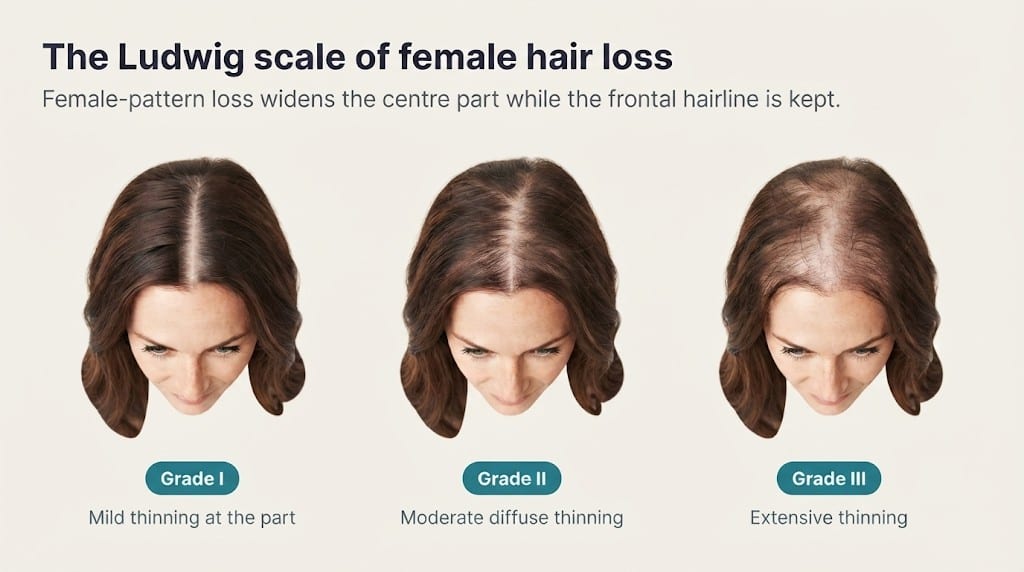
In women, the hair most often thins across the whole top, while the front hairline holds and bald patches are rare. Men usually lose hair first at the temples and the crown. Women's hair loss is usually graded with the Ludwig scale and its three stages, men's with the Norwood scale and its seven.
| Women | Men | |
|---|---|---|
| Where it thins | Evenly across the whole top | Temples and crown |
| Front hairline | Usually holds | Often recedes |
| Completely bald areas | Rare | Common with age |
| Grading | Ludwig, three stages | Norwood, seven stages |
The pattern is more than a curiosity. It determines how you should be investigated and what can help. When hair becomes sparse everywhere rather than in one clear area, there's a greater chance that something inside the body is driving it, and that can often be treated. That needs to be clarified before surgery is even on the table. Women therefore often need a more thorough investigation than men before anyone can say anything about a transplant. The article on hair loss in women goes into more detail.
For women, the answer depends on the type of hair loss. Send photos discreetly from home and the medical team at the clinic at the top of our ranking will tell you honestly whether a procedure is an option.
Goes to the clinic at the top of our ranking.
What helps with hair loss without surgery?
Quite a lot. If you correct a trigger, such as iron deficiency or a thyroid imbalance, the hair can come back on its own. Minoxidil and other treatments with documented effect need to be used daily for at least 6 to 12 months before it makes sense to judge the result.
Almost every woman should start here, and there's more to gain than many people think. If iron deficiency, an unstable thyroid or a tough period of stress is behind it, the hair often grows back once that's addressed. If the loss is hereditary, there are evidence-based treatments that can slow it down and give thicker hair over time. Some clinics also offer supportive treatments for thin hair. What they all have in common is that the effect comes slowly. Give them time before you judge.
If the loss came on quickly, or you have other symptoms alongside it, your GP should check iron, thyroid and hormones before you try anything else. Remember that a transplant only moves hair from one place to another. It does nothing about what makes the hair fall out. In the guide to slowing hair loss without surgery you'll find all the options in one place. For iron specifically, read the article on iron deficiency and hair loss.
When is a hair transplant a good choice for a woman?
When the loss is limited to one area and the donor hair at the back of the head is dense and stable. For many women the loss is diffuse and has a cause that can be treated without surgery, so the assessment should start with the cause, not an operation date. The result itself usually takes 9 to 12 months.
Women can certainly get good results from a transplant. It's just rarely where you should start. The best results come when the hair loss is in one specific place and the hair at the back of the head is dense and not thinning itself. That might be a parting that has widened, a hairline that sits high or has receded, a scar, or traction alopecia. The last is hair loss after years of tight hairstyles such as ponytails and braids, and it's especially common in women with Afro hair.
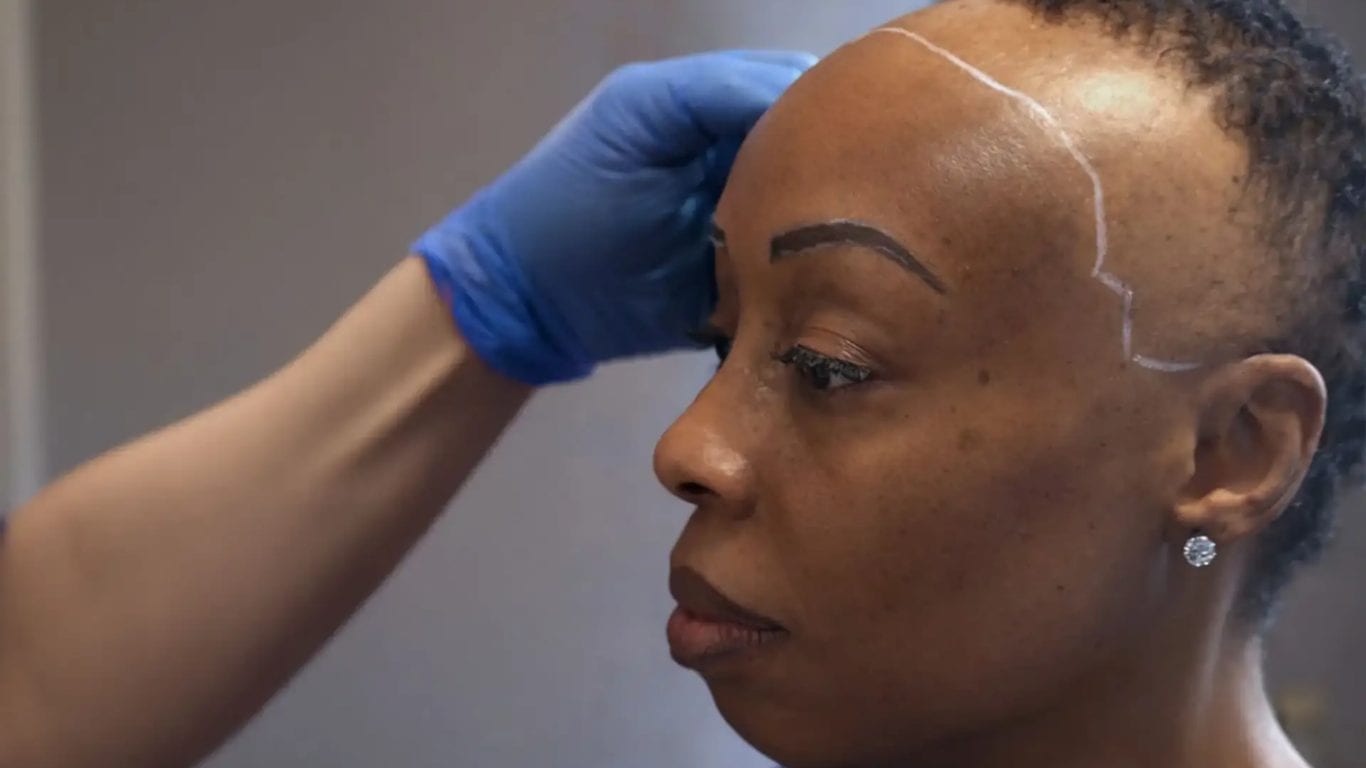
If the whole top is evenly thin, and the donor hair has also started to give way, a transplant is usually not the answer. The moved hairs may then disappear along with the rest. The procedure also doesn't stop loss that is still ongoing, so the cause must be treated regardless. A serious assessment looks at why you're losing hair, how good your donor hair is and what you hope to achieve. Read more about the methods, work out your graft needs with the graft calculator and see what to ask when you choose a clinic.
Questions we're often asked
Does hair grow back after postpartum hair loss?
In most cases, yes. This is telogen effluvium and not permanent. It usually starts 2 to 4 months after the baby is born, and it has generally settled within 6 to 12 months. If it lasts longer, it's wise to have blood tests at your GP.
Can a woman have a hair transplant?
Yes, but it depends on the type of hair loss you have. It's your own hair that is moved, and that requires stable donor hair at the back of the head. When thinning is spread across the whole top, the result is less predictable, so the cause should always be found first. A free hair analysis can give you a first indication.
Do I have to shave my whole head?
No, usually not. Often it's enough to trim a small area short at the back of the head, and it's covered by the hair above. Some techniques don't require shaving any visible hair. The trimmed area has usually grown back after a few weeks. Ask the clinic what applies to the method you'll have.
Does the result last, or will the new hairs fall out again?
The moved hairs come from the back of the head, which usually resists hereditary hair loss, and they generally stay for life. Even so, they shed in weeks 2 to 3 after the procedure, and new hairs only appear after 3 to 4 months. That's completely normal. The hair you already have isn't protected, so the cause of the loss still needs ongoing treatment.
Is the hair analysis private?
Yes. The form takes a couple of minutes to fill in, and the assessment comes to you at home, so you don't need to go anywhere. It costs nothing and you're not committing to anything. Whether you take things further, and when, is up to you. Nobody expects you to book a procedure.
Thinning hair can affect how you feel day to day, and that's completely understandable. But in women, hair loss can often be treated once the cause is known. Start by finding out what's going on. The operation can wait.
A free hair analysis is a discreet place to start, from home and with no obligation. You'll find out what's probably behind the loss, and whether a transplant is an option for you, or whether something else would help more. Every next step is your choice.
Goes to the clinic at the top of our ranking.
Updated: October 2026 · How our editorial team works