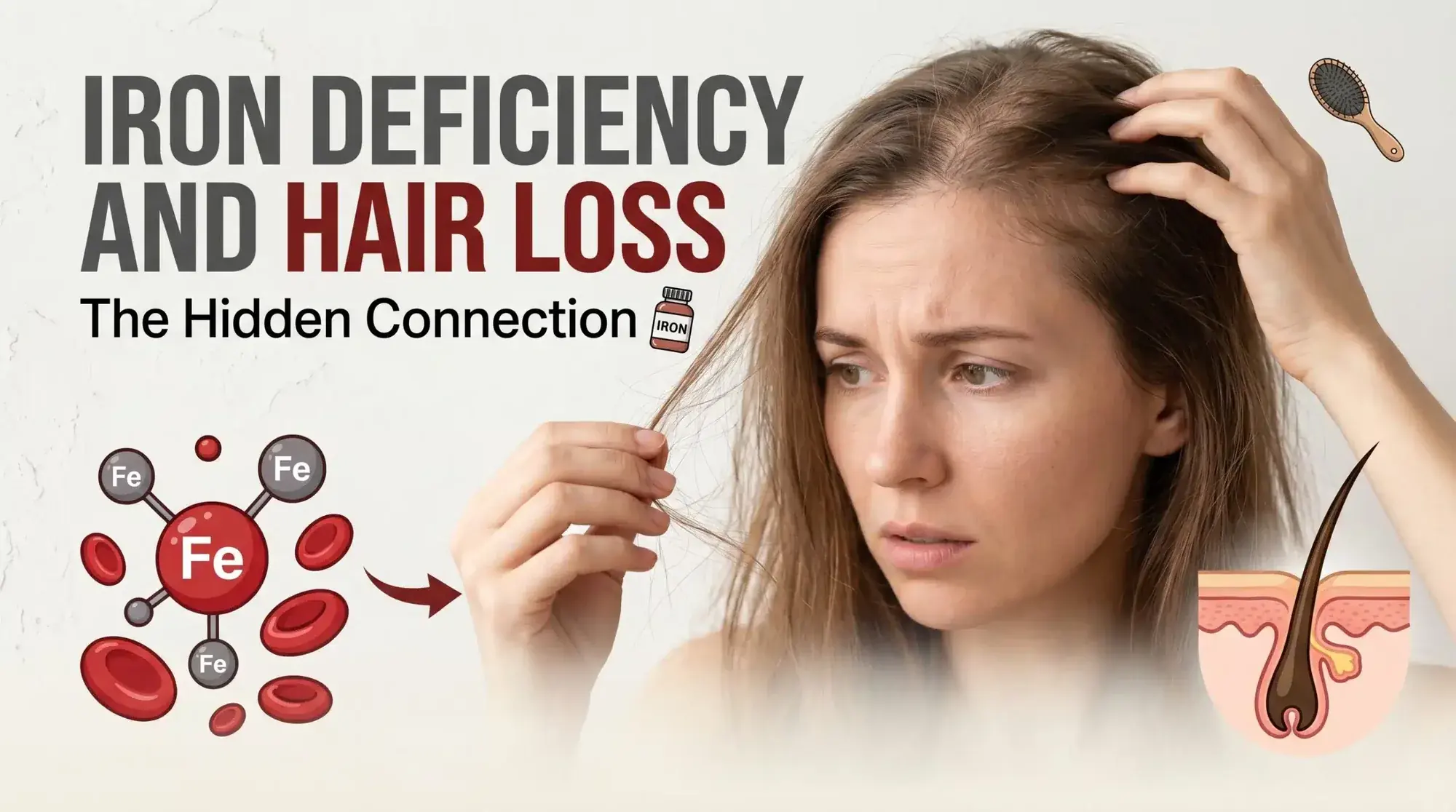
Iron deficiency and hair loss: ask for ferritin, not just haemoglobin
You can have normal haemoglobin and still have too little iron for your hair to thrive. Here's who's most often affected, which test gives you the answer, and how long it takes for the hair to come back.
Which blood test shows whether iron deficiency is causing hair loss?
Ferritin. It measures the body's iron stores, and it can be low even when your haemoglobin is normal.
Many people are told their blood test was fine because their haemoglobin was normal. You can easily have no anaemia and still have so little iron in storage that it affects your hair. So ask your doctor specifically for ferritin.
Several clinicians believe low ferritin levels are relevant to hair loss even when they fall within the wide reference range the laboratory gives. Ask your doctor what your number means for your hair, not just whether it's "within range". Ask for thyroid function and vitamin D at the same time. Deficiencies often come together.
Why does hair need iron?
The hair follicle is among the fastest-growing tissues in the body, and it uses a lot of nutrients and oxygen. Iron carries oxygen in the blood and plays a part in the processes that keep production in the follicle going.
When the stores run low, the body saves its iron for what's vital. Hair growth isn't high on that list. The follicles move from the growth phase into the resting phase, and you get shedding that's spread evenly over the scalp.
Who most often gets hair loss from iron deficiency?
Women, especially with heavy periods, during pregnancy and breastfeeding, and after giving birth. For women, iron deficiency is one of the most common reasons for diffuse hair loss. Read also about hair loss after giving birth.
Vegetarians and vegans are also at higher risk, because iron from plants is absorbed far less well in the gut than the iron in meat.
Men get iron deficiency less often. If a doctor finds it, it should always be investigated further, since the cause may be something else that needs checking.
How is iron deficiency treated?
By topping up the stores, usually with iron supplements as your doctor recommends, and by finding out why the iron got low. Don't take iron on your own over a long period. Too much iron is harmful too.
Absorption improves with vitamin C and gets worse with coffee and tea around the time you take the supplement. So a glass of orange juice does more good than a cup of coffee alongside your iron tablet.
How long does it take for the hair to come back?
Longer than most people hope. The shedding you get from too little iron belongs to the group called telogen effluvium, and it's usually temporary. Even so, the body has to refill its stores before anything happens, and then each hair has to go through a full growth cycle. It often takes six months to a year before the difference is clear.
Supplements only make sense if your stores really are low. Iron does nothing for hereditary hair loss. That calls for other measures.
What should you do now?
Book an appointment with your GP and say you'd like ferritin, thyroid function and vitamin D measured because of hair loss. Take a photo of your head the same week, so you have something to compare with in six months. If your ferritin is low, follow your doctor's plan for supplements and have a new test when your doctor recommends. If you want to know more about the other possible causes, read about causes of hair loss.
This article is general information and doesn't replace a medical assessment of you.
If your hair loss has only just started, a procedure may not be the right step yet. The medical team at the clinic at the top of our ranking can look at your photos and tell you honestly whether to wait, start with treatment or consider more.
Goes to the clinic at the top of our ranking.