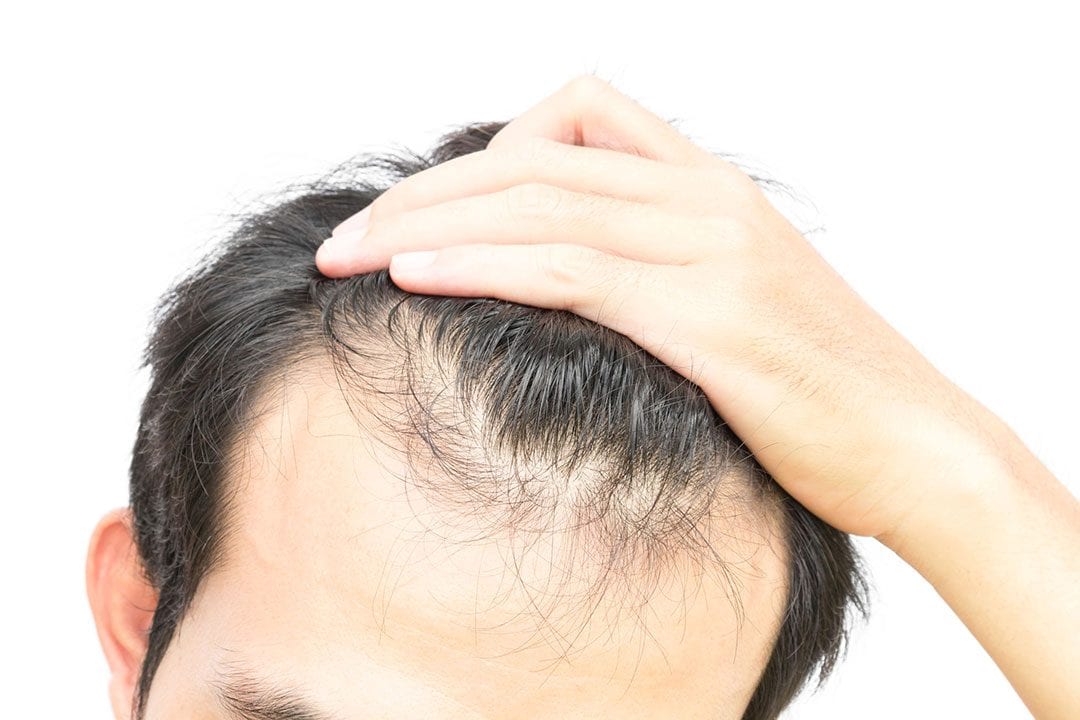
More hair in the drain in autumn? What we know about seasonal shedding
Autumn arrives and the brush fills up. Many people go through the same thing every year. Here's what research says about seasonal variation in hair loss, and how to tell whether it's something other than the time of year.
Do you really lose more hair in autumn?
It looks as though many people do, yes. There is some evidence that hair loss varies with the seasons, and that autumn is when most people notice it. For most, it's a normal, temporary increase, not a sign of illness.
Even so, it's easy to get worried. Extra hair in the drain one autumn morning can make you think inherited hair loss has set in for real. Usually it hasn't.
What does the research say?
Some studies have found that more hairs than usual are in the resting phase, telogen, towards the end of summer. Hairs in the resting phase fall out after a few months. Count forward and you land in autumn. That fits well with the brush filling up at exactly that time.
Why would hair follow the seasons?
Nobody knows for sure. The most common explanation is that the body has its own rhythms through the year, probably governed by daylight and temperature. Think of how many animals change their coats between summer and winter. Humans have lost most of their fur, but some of the rhythm may remain. So most likely this is an ordinary biological fluctuation and not a problem.
How much hair is it normal to lose?
Between 50 and 100 hairs a day is considered normal, and the number can vary somewhat over the year. A little extra hair in the drain in October rarely means you're going bald.
With ordinary seasonal shedding, the hairs that fall out are replaced by new ones. The total amount of hair stays stable over the year. You don't need to worry about, or treat, this kind of variation.
When is autumn hair loss more than seasonal shedding?
When the loss is heavy, goes on for a long time or leaves visible traces. Seasonal shedding should be mild and pass. If you see clear, lasting thinning or bald patches, or the shedding carries on well beyond one season, autumn is unlikely to be the cause.
Then you should see a doctor to find out whether something else is behind it. Common explanations are inherited hair loss, telogen effluvium (heavy shedding a few months after stress, illness or giving birth) and deficiencies, for example of iron. Read more in the overview of causes of hair loss.
How can you tell whether it's just the season?
Take a photo of your hairline and crown now, in the same light you'll use later, and take another in January. If your hair looks equally dense in both photos, it was seasonal shedding. If you see clear thinning, or the shedding continues into the winter, book an appointment with your GP. If you'd like a simple plan for how to go about it, start with the article on the first steps when you notice hair loss.
This article is general information and does not replace a medical assessment of you.
If your hair loss has only just started, a procedure may not be the right step yet. The medical team at the clinic at the top of our ranking can look at your photos and tell you honestly whether to wait, start with treatment or consider more.
Goes to the clinic at the top of our ranking.