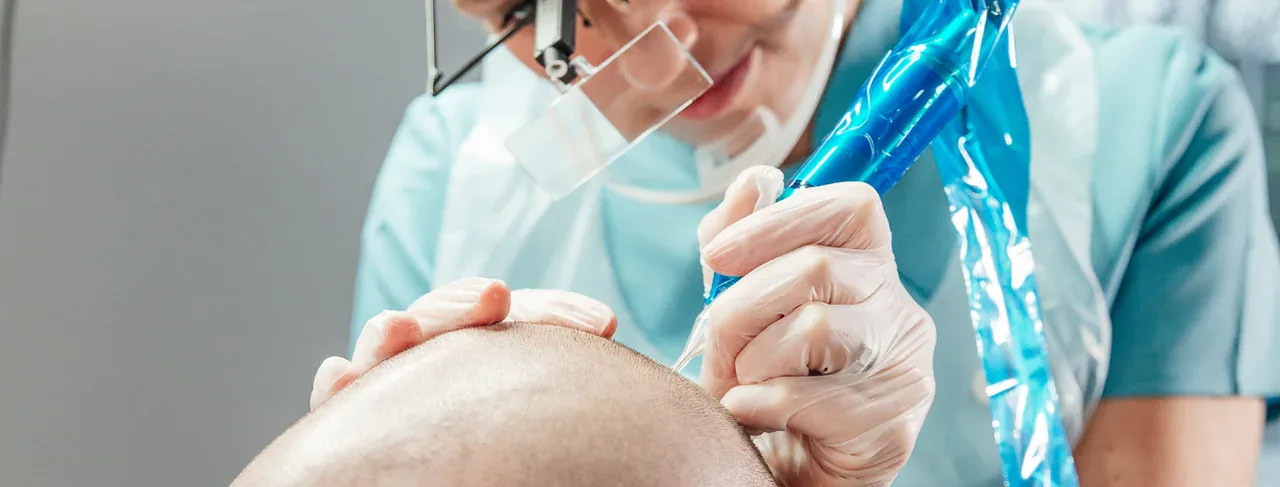
Scalp micropigmentation, or SMP for short, is a cosmetic treatment for the scalp. The practitioner places pigment in the outermost layer of skin on your head, in thousands of tiny dots. Each dot is placed so that, from a little distance, it looks like the stubble of a closely cropped hair. Together they can make your hair look denser, or give the look of a sharp, freshly shaved hairline.
The first thing to know: SMP doesn't give you more hair. You have exactly the same number of hair follicles afterwards. No hair starts growing, and any loss you already have continues at the same pace. The only thing that changes is how it looks. Once you've taken that in, you'll know fairly quickly whether SMP is for you, or whether what you really want is something else.
Below we go through what the treatment is, what a typical course looks like, who it may suit and where it falls short. If you'd rather move real hair follicles, you'll find the surgical options in our overview of hair transplant methods.
What is SMP, and what does it do to the scalp?
SMP is cosmetic pigmentation of the scalp. A fine needle places tiny dots of pigment in the skin, and the dots look like short hair follicles. No hair is added and hair growth isn't affected. The treatment only changes how things look, by reducing the contrast between hair and skin.
The technique resembles a tattoo, but it's done differently. The pigment sits shallower in the skin, the dots are much smaller, and the practitioner uses only a few shades chosen to match your hair colour and skin tone. It isn't a drawing. It's an optical illusion: the eye reads lots of small dark dots as hair stubble.
Why does the hair look thicker?
Thin hair looks thin because pale skin shows between the strands. It's the colour difference between dark hair and light skin that the brain registers as "I can see scalp here". When pigment fills those pale gaps, the contrast drops and the hair looks denser. The number of hairs is exactly the same.
That's why SMP works best where the contrast is high. If you have fair hair and fair skin, there's little contrast to remove and the effect is more modest.
One technique, two very different goals
In practice SMP is used for two different things. The first is density. Pigment is placed between the hairs you still have, in an area that has thinned, so the skin doesn't shine through. The second is the shaved look. The whole bald area is pigmented so it resembles dense, closely cropped hair with a defined hairline. The results are very different and call for different choices. Work out which one you're after before your first consultation.
How does SMP treatment work, step by step?
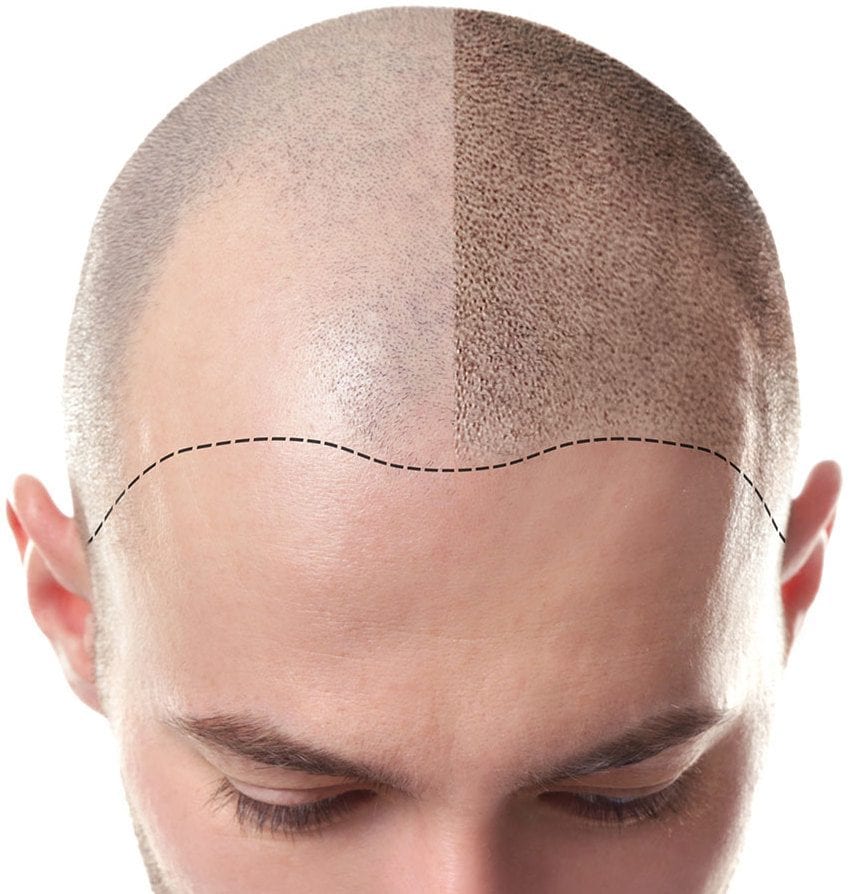
First comes a consultation, then the hairline is drawn, the scalp and skin are assessed and the pigment colour is chosen. The scalp is then pigmented over several sessions. Between sessions the practitioner checks the result and adds another layer until the density looks right. Afterwards it's mostly about keeping the skin clean, dry and out of the sun while it heals.
There's no single agreed way to do SMP. The order below is the one most courses follow. How many sessions you need, and how long you wait between them, is decided by the practitioner you choose.
- The consultation. You go through how your hair loss has developed, what you expect and how you want it to look. This is also where you should agree that SMP can actually give you what you're after.
- The hairline is drawn. The line is drawn on before any pigment goes in. This is the single choice that does most to decide whether the result looks natural. You should approve the line while it can still be washed off.
- The scalp is assessed. Your skin type, any scars, how much hair you have, possible skin conditions and how easily your skin bleeds or gets irritated all affect both technique and result.
- The colour is chosen. The shade should match your hair and skin. A neutral grey base is usually used rather than black, precisely so the pigment doesn't turn bluish over the years.
- First session. The practitioner deliberately applies a cautious layer. It's easier to add more later than to take anything away.
- Check-up. Once the skin has healed, you see the real result. Some pigment always fades in the first few weeks. That's entirely expected.
- Further sessions. Density is built up layer by layer until it looks right.
- Maintenance. Pigment fades over time, and after a while a top-up may be worth considering.
Why not do it all at once?
It's about control, not time. Pigment can be added, but it can't easily be removed. Building density over several rounds lets both you and the practitioner see the result along the way and adjust colour and density while there's still room to do so. If someone offers to do the whole job at full density in one session, treat it as a warning sign, not an advantage.
Who can benefit from SMP?
Mainly people with a receding hairline, diffuse thinning, scalp showing through or scars from an earlier procedure, and people who keep their hair closely cropped. It can also be an option if surgery isn't right for you. If you're hoping for longer hair or something to comb, SMP can't help.
When is SMP usually considered?
- Receding hairline. Pigment can draw a line and soften the transition. With the shaved look, it can create an entirely new hairline.
- Thin hair. If you still have a fair amount of hair, dots placed between the strands can hide the skin underneath.
- Diffuse hair loss. If the whole top has thinned evenly, adding density can give a more even impression.
- Visible scalp. The crown is usually where the contrast between skin and hair first becomes obvious.
- Short or closely cropped hair. This is where SMP does best, because the result is meant to look like something that's already very short.
- Scars from earlier procedures. Read more about scars further down.
- When you don't want surgery. Some people don't want an operation. Others can't have one, often because the back of the head has too little hair to give. You can read what decides this in our guide to who can have a hair transplant and in our article on the donor area.
When doesn't SMP help?
Know what the treatment doesn't do. You don't get longer hair. You don't get hair you can comb or style. If you wear your hair long, you'll notice almost no difference. And the hair loss doesn't stop. If it continues, the area around the pigmentation thins over the years, and the result can end up uneven if nobody has planned for it. If your loss is at an early stage and still active, first read about how to slow hair loss without surgery. That's where you can actually influence how things develop.
If your hair loss has only just started, a procedure may not be the right step yet. The medical team at the clinic at the top of our ranking can look at your photos and tell you honestly whether to wait, start with treatment or consider more.
Goes to the clinic at the top of our ranking.
What is the difference between SMP and a hair transplant?
In a transplant, the surgeon takes hair follicles from the back of the head, where hair is stable, and plants them where it's missing. That gives you real hair you can cut, comb and style. With SMP nothing is moved. Colour is placed in the skin and the area looks denser. One gives you hair, the other a visual impression, and they answer two different problems.
| Hair transplant | SMP | |
|---|---|---|
| What's done | Your own hair follicles are moved | Pigment is placed in the skin |
| Gives more hair | Yes | No |
| Hair that grows and can be styled | Yes | No |
| Is surgery | Yes | No |
| Needs a donor area | Yes | No |
| When you see the result | Gradually, over months | Mostly straight away |
| How long it lasts | Moved hair stays, but loss around it may continue | Fades gradually and may need topping up |
| Suits long hair | Yes | No, works best with short hair |
Neither wins across the board. What decides it is your goal. If you want hair you can comb, SMP is out. If you want a crisp edge to a buzz cut, a transplant won't necessarily do the job better. And many people end up with a combination. If you're worried a transplant will look artificial, it may help to read why today's results are so different from the old plugs. You'll find the techniques under sapphire FUE, DHI and FUT.
What are the advantages of SMP?
You see the result almost immediately, it isn't surgery, you don't need a donor area, and it still works when surgery isn't an option. The downside is that the result is purely cosmetic and needs maintenance.
- Visible quickly. A transplant only shows its final result after about a year. With SMP you see a difference after the first session, although the final shade only appears once the skin has healed.
- No operation. No incisions, and no recovery period like the one after a surgical procedure.
- Not dependent on donor hair. If the back of your head has little or nothing to give, this is the reason SMP comes into the picture at all.
- Can be combined. SMP doesn't rule out medication or a transplant later.
- Can make scars less visible. More on that in the next section.
Still, remember what you're paying for: a look that needs maintenance, and no treatment of whatever is making your hair fall out. If you want to know how different results hold up over many years, read about long-term results.
Does SMP help hide scars from a previous transplant?
Yes, it can soften them. Many people use SMP on donor scars, whether that's the long, narrow line FUT leaves or the small white dots from FUE. The scar doesn't disappear. The pigment makes the pale scar tissue less different from the surrounding skin, so it shows less when your hair is short. Scar tissue often takes colour differently from healthy skin, which makes the outcome less predictable.
Scars are one of the best-known reasons to choose SMP, because the problem is about appearance rather than biology. If you wear your hair at a normal length, nobody sees the scar at the back of your head. It's only when the clippers come out at the barber's that it shows, and that's exactly when less contrast is what you need.
What should you know before pigmenting a scar?
- Scar tissue is built differently from healthy skin and doesn't always take colour evenly. Some patches may end up lighter than others, more so than on undamaged skin.
- The scar must be fully healed before there's any point pigmenting it.
- The goal is usually for the scar to show less, not for it to vanish.
If you're unhappy with an earlier procedure, the scar is rarely the only thing you need to think about. In our article on repairing a failed hair transplant you can see how the whole picture is assessed, and where micropigmentation fits in.
How many SMP sessions do you need?
Nobody can give you an honest number before they've seen your scalp. The number depends on the area to be covered, the result you want, how much hair you have left, how well your skin takes and holds colour, and any scars. Ask for an estimate of the number of sessions and the total price before the first needle.
SMP is built up in layers, and almost nobody is finished after one visit. The number depends on:
- What you want to achieve. Adding a little density at the crown is a different job from creating a full shaved look with a drawn hairline.
- How big the area is. More skin takes longer.
- Your skin. Skin reacts differently, and some colour is lost during healing regardless.
- How much hair you have. If there's hair to work between, fewer sessions are often needed.
- Scars. Scar tissue usually needs extra rounds, and each one must be done carefully.
If someone promises you a specific number of sessions without having seen you, that's sales, not assessment. We've gathered what you should get in writing before any treatment in our guide to red flags.
How long does SMP last?
A long time, but not forever in the same form. The pigment fades gradually because the body slowly breaks it down and because sunlight bleaches it. The rate varies from person to person. Skin type, sun exposure and the depth of the pigment all play a part. Over time you may need a top-up, so don't call it permanent.
It helps to separate two things that happen over time.
Why does SMP pigment fade over time?
The pigment fades gradually. It happens to everyone, and it doesn't mean anything has gone wrong. Sun is the factor you can do most about yourself. UV rays break down pigment, and the scalp is hard to shield. Sunscreen and a hat are therefore about more than your skin. They also decide how long the result lasts.
The shade can change
Pigment in the skin can shift in tone over the years. That's one reason practitioners use neutral grey shades rather than black, and why the pigment is placed relatively shallow. It's also why experience matters so much. A colour that looks right in the first week should still look right several years later.
What happens to SMP if your hair loss continues?
The last thing that changes is your hair. If the loss continues, the hair around the pigmentation thins. What fits perfectly now may therefore fit less well in a few years. The treatment is just as good, but the head underneath has changed. You can read why hair falls out, and how it typically progresses, under causes of hair loss.
Does SMP hurt?
Most people call it uncomfortable rather than painful, but it varies. The needles go into the skin and you feel it. How bothersome it is depends on the area, how sensitive you are and how long the session lasts. Along the hairline and over scars the skin is usually more tender than elsewhere.
It would be wrong to say it doesn't hurt. It would also be wrong to compare it with an operation. The truth lies in between. You feel a prickling, persistent discomfort over a long time. Most people manage fine, but it's tiring.
- Length matters. A short session on a small area feels completely different from several hours over the whole top.
- Location matters. The skin on your head isn't equally sensitive everywhere.
- Scars feel different. Some scars are more tender than the skin around them, others are almost numb.
Ask beforehand what pain relief you can have and how long each session will last. They're perfectly reasonable questions, and a reputable provider will give you specific answers.
Is SMP used differently for men and women?
Yes. Both men and women can have SMP, but the goal is usually different. Men often choose to add density at the crown or to build a full shaved look with a drawn hairline. Women more often have diffuse thinning and long hair, and then it's almost always about adding density between the hair they have, not a shaved look.
Men
In men, hair loss usually follows a familiar pattern, with a receding hairline and a thinning crown. That's why both uses are relevant for men. The pattern is also so predictable that the design should be made for the head you'll have ten years from now, not just for today. See also our pages on hair loss in men and about the hairline.
Women
In women, hair tends to thin evenly over the top, and it's often first noticed at the parting. Clearly bald patches are unusual, and most have long hair. A shaved look therefore rarely suits. Adding density along the parting and over the crown can still make a big difference. Because long hair falls differently from day to day, the dots must be placed so they don't give themselves away when you change your parting. The patterns are described in our guide to hair loss in women.
Whatever your sex, you should know why you're losing hair before choosing a cosmetic solution. Diffuse thinning can have a treatable cause. See causes of hair loss.
How do you care for your scalp after SMP?
Treat the scalp like irritated skin. Keep it clean and dry for the first few days, don't rub or scratch, and protect it from the sun. Sweating, swimming pools, saunas and hard exercise are usually advised against for a short period. Your practitioner should give you the specific advice, because it depends on the technique and how much has been done.
There's no official standard for aftercare following SMP, and we won't give you one here either. Below are the principles that come up again and again, so you can judge the advice you're given.
- The first few days. The skin is open and irritated. Keep it clean and dry, and don't pick at it.
- Sweat and heat. Avoid sweating on the fresh skin for a while. Skip saunas, steam rooms and heavy training during the same period.
- Swimming. Swimming pools and chlorinated water usually have to wait until the skin has healed.
- Sun. Sun protection helps healing now and how long the result lasts later.
- In the long term. Ordinary skincare and regular sun protection are what look after the result best.
This is different from aftercare following a hair transplant, where moved grafts need to take root. You'll find that in our guide to aftercare.
What should you ask the practitioner before SMP?
Ask for examples on people with your hair colour and skin type, ideally photos taken long after treatment, not the day after. Get the sessions, total price, colour choice and aftercare in writing, and clarify what happens if the colour fades patchily or your hair loss continues.
- How many sessions do you think I'll need, and what will the total be for all of them?
- Can I see results on people with my hair colour and skin tone?
- Can I see clients you treated three to five years ago, as they look now?
- Which shade will you use, and why does it suit my skin?
- How do you plan for the possibility that my hair loss continues?
- When should I expect to need a top-up, and what do you charge for it?
- What happens if I don't like the hairline?
- What exactly does aftercare involve, and how long does it last?
It's the same advice we give before any procedure. Get the details in writing, and be sceptical of promises that sound too good to be true. More on this in our guide to how to choose a clinic.
Common questions about SMP
What does SMP stand for?
SMP is short for scalp micropigmentation. Tiny dots of pigment are placed in the outermost layer of skin on the scalp so they look like short hair follicles. You don't get any more hair.
How does SMP work?
Thin hair looks thin because lighter skin shows between the strands. SMP fills the gaps with pigment, so the contrast between skin and hair is reduced. The eye then reads the area as denser, even though you have exactly as many hairs as before.
How long does SMP treatment last?
A long time, but it changes. The pigment fades gradually, partly because sunlight bleaches it and the body itself breaks it down, and you may need a top-up after a while. How fast this happens varies from person to person.
Is SMP permanent?
Not in the sense that it looks the same forever. The pigment stays in the skin for a long time, but both its strength and its shade can change over the years. SMP therefore shouldn't be called permanent without qualification.
Is SMP painful?
Most people describe it as uncomfortable rather than painful, but it varies. The needles go into the skin, so you feel it. It's usually most tender along the hairline and over scars. Ask about pain relief before you start.
How many sessions should I expect?
That's decided for you personally, based on how large the area is, what you want, how much hair you have, how well your skin holds pigment and whether there are scars. Because SMP is built up in layers, one session is rarely enough. Ask for an expected number before you start.
Can SMP cover hair transplant scars?
It can soften both the line FUT leaves and the dots from FUE, because the scar stands out less from the surrounding skin. The scar itself remains. Scar tissue often takes colour less evenly than healthy skin, so the outcome is less certain, and the scar must be fully healed before anyone starts.
Will SMP give me thicker hair?
You won't get more hairs, but your hair can look thicker. That's exactly the aim when pigment is placed between the hairs you have. The effect is greatest when skin and hair are clearly different in colour, and smaller when both hair and skin are fair.
Can women have SMP?
Yes. For women it's almost entirely about adding density between existing hair, typically along the parting and over the crown. A shaved look is rarely relevant. With long hair, the dots need to sit so they don't give themselves away when the hair falls differently.
Is SMP suitable for everyone?
No. If you want longer hair or something to style, you won't get it here. If your hair and skin are about equally fair, the effect will be weak. If you have an active skin condition on the scalp, or your hair loss is fast, it may be wise to wait. It needs a personal assessment.
Can I combine SMP with a hair transplant?
Yes, and many people do, for example by colouring in scars at the back of the head or giving the transplanted area a denser look. The order needs planning, because the transplanted hair has to grow out before anyone can tell how much pigment is needed in the end.
How much does SMP cost?
The price varies with the area, the number of sessions and the provider you choose, so we don't give fixed figures. Ask for the total for all sessions, and find out what a top-up will cost later.
Can SMP be removed if I regret it?
Laser can lighten pigment in the skin. It's a separate treatment over several rounds, and nobody can promise the result. That's exactly why good practitioners work layer by layer: adding is far easier than removing. Always approve the hairline while the drawing can still be washed off.
SMP is an optical illusion in the skin. It does nothing about the cause of your hair loss. Whether it's right for you depends on how much hair you have left, how fast you're losing it and what you want to see in the mirror. Ask for an honest assessment before you decide.
Goes to the clinic at the top of our ranking.
Updated: October 2026 · How our editorial team works