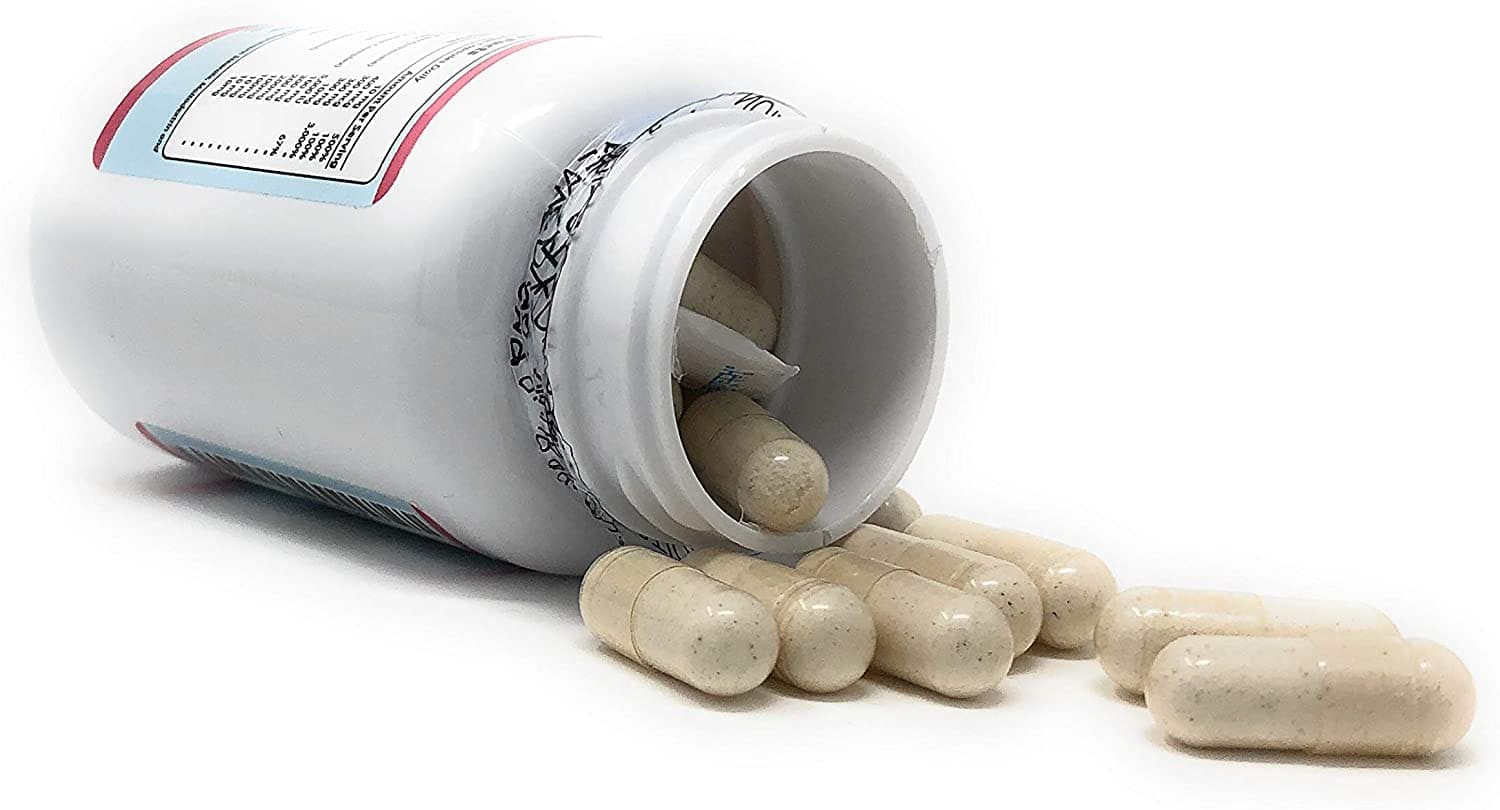
Peptide treatment for hair loss is an umbrella term. It covers cosmetic serums and shampoos with peptides, usually copper peptides such as GHK-Cu. It covers mixtures that some clinics inject into the scalp or work in with microneedling. And it covers unlicensed so-called "research peptides" sold online. Because the term spans so much, it pays to know which version is being talked about.
The lab findings point the same way and are encouraging. More and more clinics use peptides as a gentle support alongside treatments with a long evidence record, and they are well tolerated. But the human studies so far are fewer, have fewer participants and run for shorter periods than the many decades of large trials behind minoxidil and finasteride. In 2026 a review of the evidence described GHK-Cu as promising but not fully proven. That is an argument for using peptides as an add-on, not for writing them off. You can see how they compare with the better documented options in the comparison further down.
What does peptide treatment for hair loss actually mean?
It isn't one specific treatment. The term is used loosely for cosmetic products with peptides, for mixtures that clinics inject or work in with microneedling, and for unlicensed "research peptides" sold online. Which substance, how strong and how often all vary freely, because none of it is standardised.
Peptides are short chains of amino acids. Insulin is a well-known example, and many approved medicines are peptides. So the word says little about whether a product has been tested or not. For hair loss, peptides turn up in three forms.
- Cosmetics. Serums, sprays and shampoos with a peptide on the ingredient list. The best known are the copper peptides, especially GHK-Cu. That is GHK bound to copper, and GHK is a small peptide the body makes itself, built from three amino acids. Other cosmetic peptides are entirely different molecules. So two products can share the word "peptide" and almost nothing else.
- Clinic mixtures. The clinic decides the contents and amounts itself, and injects the mixture into the scalp or applies it after microneedling. Here the treatment shades into mesotherapy.
- Research peptides from the internet. Small vials labelled "for research use only". These are not approved medicines, and nobody guarantees that they are made, tested or labelled to the standards that apply to products for humans. This is where the safety concern is clearest.
Why might peptides help hair?
Peptides act as messages between cells. Lab experiments suggest that some of them may influence the cells around the hair follicle, the formation of new blood vessels and tissue repair, which in theory could support follicles that are still alive. The mechanism is plausible, but nobody has shown that it has an effect on hair in humans.
In hereditary hair loss the follicle shrinks, but it isn't gone. If a signalling substance could improve the conditions around it, with healthier neighbouring cells, better blood supply and better repair, the follicle might work better. The idea is the same as with PRP. You support what is left, you don't create anything new.
For copper peptides the lab findings point the same way. In a 2007 study AHK-Cu, a copper peptide from the same family, made cultured human hair follicles grow and increased division of the dermal papilla cells at the base of the follicle. GHK-Cu has also been studied for tissue repair, inflammation and the formation of new blood vessels. Supporters point out that GHK occurs naturally in the body and that its level reportedly falls with age.
Why don't lab results prove that peptides work?
- A cell culture is not a scalp. What works on cells in a dish and in animals doesn't always apply to humans. We have not found any human study showing that this mechanism is what changes the hair.
- The substance has to reach the follicle. A 2026 systematic review points to absorption through the skin as one of the biggest bottlenecks for GHK-Cu applied to the skin.
What have the studies actually found?
The lab data are consistent and promising, and early clinical trials, including some with injected mixtures of peptides and growth factors, have shown good results. What we lack is a large independent trial testing a peptide product against or alongside minoxidil or finasteride. That is why a 2026 review concluded that GHK-Cu deserves attention as a support but is not proven as a treatment on its own.
The research falls into four stages:
- Cells and animals. Here the copper peptides show consistent effects. This is the strongest part of the evidence, and also the part furthest from a patient.
- Topical products tested in small trials. In 2016 a randomised, double-blind, placebo-controlled trial in 45 men tested a scalp spray with 5-aminolevulinic acid plus a GHK peptide. The trial ran for six months. Hair counts rose in the treated groups, but hair length and thickness did not differ significantly between the three groups. The product had two active ingredients, so it is impossible to say what the peptide contributed on its own. In 2020 a randomised, triple-blind trial gave 32 people either a blend of plant extracts with acetyl tetrapeptide-3 or minoxidil solution for 24 weeks. The increase in terminal hairs did not differ significantly. Without a placebo group, the trial can show neither that the blend works nor that it is as good as minoxidil.
- Injected mixtures of growth factors and peptides. The best studied is one specific, patented product with growth factors and biomimetic peptides. Two trials found that the product did better than the option it was compared with: a randomised, single-blind trial from 2020 in which 25 men in each of two groups received either the product or PRP, and a randomised, single-blind trial from 2025 in which 112 men had the product used around a hair transplant. That is encouraging for that particular product. But most of the controlled trials with it have so far been carried out by the group behind the product, and the natural next step is for others to repeat the findings. A retrospective study of 50 patients, published in 2026, also found better hair measurements after mesotherapy where the mixture contained biomimetic peptides together with vitamins and micronutrients. It had no control group, and the authors themselves name that as a weakness.
- Reviews. A 2026 systematic review of injection treatments for androgenetic alopecia found that peptide mixtures were among the most frequently studied agents. It concluded that standardised randomised trials are needed before such treatment can be recommended as routine. Another review the same year, on GHK-Cu, described the human data as thin, with few, small and cosmetic clinical studies.
So the signal is positive and points the same way. What is missing is the decades of large randomised trials that minoxidil and finasteride have behind them. That is why peptides make sense as something you add, not as a proven treatment in their own right.
If your hair loss has only just started, a procedure may not be the right step yet. The medical team at the clinic at the top of our ranking can look at your photos and tell you honestly whether to wait, start with treatment or consider more.
Goes to the clinic at the top of our ranking.
Capixyl, Procapil and Redensyl in hair serums: do they help with hair loss?
Capixyl, Procapil and Redensyl are brand names that cosmetics suppliers give their ingredient blends, and you'll find them in plenty of hair serums. The few studies that exist are positive. In a 2019 study a blend of all three did better than 5% minoxidil, and in a blinded 2020 trial a similar product did about as well as 3% minoxidil, with no skin irritation. All of these studies are small, and nothing in the 2019 paper says anyone was blinded. Use these serums alongside minoxidil or finasteride, never in their place.
The names keep turning up on Instagram and TikTok, often with the claim that a serum beat minoxidil. Here's what the studies behind that claim actually show.
- What's in them. Redensyl is built on two stabilised plant compounds (polyphenols) with glycine and zinc. Capixyl pairs the peptide acetyl tetrapeptide-3 with red clover extract. Procapil is a biotin-linked peptide with oleanolic acid from olive leaves and apigenin. They're sold as cosmetic ingredients, and none is a licensed medicine.
- The 2019 study. Karaca and Akpolat randomly assigned 120 men with hereditary hair loss to the blend or 5% minoxidil, morning and evening for 24 weeks, and 106 finished. In the researcher's judgment, 64.7% on the blend showed clear or moderate improvement, against 25.5% on minoxidil. Photos showed improvement in 88.9% against 60%, and the patients themselves were happier with the blend. Nobody had serious side effects, only mild irritation from minoxidil. The weak points: nothing in the paper says anyone was blinded, the blend is patented under the name Procare, and the authors say bigger controlled trials are still needed. (Karaca and Akpolat, J Cosmo Trichol 2019)
- The 2020 trial. In a triple-blinded trial in Bangkok, 32 men and women used either a hair tonic with the same two active ingredients as Capixyl, plus ginseng and sage oil, or 3% minoxidil for 24 weeks. The number of hairs went up by 8.3% with the tonic and by 8.7% with minoxidil, a gap too small to count as a difference between the groups. Nobody reacted to the tonic, while one person on minoxidil developed scalp eczema. There was no placebo group, so the trial shows the two were roughly equal, not how much either one worked. (Lueangarun and Panchaprateep, J Clin Aesthet Dermatol 2020)
- The 2024 trial. In a randomised trial from Pakistan with 140 patients over 12 months, Procapil alternated with 5% minoxidil produced more hairs than minoxidil alone. (Fahim and co-authors, J Pak Assoc Dermatol 2024)
We haven't found a blinded study that repeats the 2019 comparison. Still, the numbers are good enough that a serum like this is worth trying next to minoxidil or finasteride, and it's a sensible pick if minoxidil irritates your skin. Wait at least half a year before you judge it, and take photos in the same light before you start so you have something to compare.
What still needs to be proven?
Nobody has yet settled on one standard product with a fixed dose and a fixed regimen, we lack long-term follow-up, and there is no large independent trial against or alongside minoxidil or finasteride. Like all non-surgical treatment, peptides can only support follicles that still exist, not bring back those that are gone. This assessment is based on a literature search in September 2026 and will sharpen as larger trials arrive.
Four gaps matter if you are making a decision:
- What is it, and what works? The 2026 GHK-Cu review pointed out that research often treats the substance as a single ingredient, even though chemical form, stability and toxicity depend on how the product is formulated. Many trials also test the peptide together with other active ingredients, so a good result can't be credited to the peptide.
- Size and independence. The controlled trials we found had from about 30 to 115 participants. The injection data come largely from one patented product. Enough to see a signal. Not enough to give an answer.
- Time. Results have mostly been measured in months, not years. Nobody knows whether the effect lasts or disappears when you stop.
- Comparison. There is no large double-blind trial run by independent researchers that measures peptides against minoxidil or finasteride, or on top of them.
The assessment will change with large double-blind trials from independent research groups that compare against placebo or an established treatment, and that follow participants long enough to see whether the effect lasts.
How safe are peptide products, and why are research peptides especially risky?
In the small trials we found, topical cosmetic peptide products caused no serious side effects, but any product can irritate the skin. Unlicensed "research peptides" from online shops are neither made nor tested for humans, so you can't rely on what they are, how pure or strong they are, or whether they are sterile. Lægemiddelstyrelsen, the Danish medicines agency, has issued a warning that an unapproved peptide product is at best ineffective and at worst can harm your health.
Are topical peptide cosmetics safe?
The trials of topical products described above reported no side effects from the peptide products. Small trials still only pick up the common problems. Any product can irritate the scalp or cause an allergic reaction. If the skin turns red, sore or itchy, stop and contact a doctor. A product being suitable for intact skin doesn't mean it has been developed or tested for skin you have just needled. In a single case report, a patient developed a granulomatous reaction when a cosmetic serum was used together with microneedling.
Injections and research peptides
- What is it, how pure is it, and is it contaminated? A 2026 review in Cureus described the core of the concern like this: consumers take products whose identity, purity, strength, sterility and safety are uncertain, without medical follow-up. That contrasts with peptide medicines that are developed, made and monitored through regulated channels. A review in Missouri Medicine from the same year lists contamination, manufacturing impurities and imprecise dosing among the dangers of unapproved injectable peptides sold without a prescription.
- The label guarantees nothing. "For research use only" tells you what the seller says the product is for. It is not a quality standard for injecting something into a human being.
- The authorities have issued warnings. Early in 2026, unapproved peptides for performance and appearance were being sold via social media. Lægemiddelstyrelsen in Denmark commented at the time that a product the authorities have not approved is at best ineffective and at worst can harm your health. The legal status of individual peptides varies between countries and has changed, so check the rules in the country where you will be treated.
Nothing here gives you a reason to inject something you have bought online. If a clinic offers an injectable peptide, ask for the product name, the manufacturer, its approval status where you will be treated, and documentation for the production batch. The questions for the clinic below apply in full.
How do peptides compare with the best documented treatments?
Finasteride and minoxidil are the foundation, with solid evidence. PRP and microneedling are well-established add-ons. Peptides came later and are well tolerated, with encouraging data that are still maturing. We are not aware of any medicines regulator having approved a peptide as a medicine in its own right for hair loss, so peptides should be used together with the foundation, not instead of it.
| Treatment | Type | How well documented | Place in the plan |
|---|---|---|---|
| Finasteride | Medicine | Good | Foundation |
| Minoxidil | Medicine | Good | Foundation |
| PRP | Medical treatment | Reasonable but mixed | Add-on |
| Microneedling | Not a medicine | Moderate | Add-on |
| Peptide products | Cosmetic, injection or unlicensed | Promising lab data and early clinical findings. Larger trials still to come | New, well-tolerated add-on |
| Hair transplant | Surgery | Solves a different problem by moving hair follicles | When the follicles in an area are gone |
What matters is the order. Start with the foundation. In 2025 a Canadian expert consensus was published in which a panel of 11 doctors reviewed 45 interventions for androgenetic alopecia using the Delphi method. Seven were recommended: oral dutasteride, oral finasteride, topical finasteride, topical minoxidil, PRP, microneedling and oral minoxidil. Peptide products were not included. They are newer than the interventions the panel assessed, so the large trial is still to come. That doesn't mean anyone has given a negative verdict.
Research has not yet answered whether peptides give a measurable extra benefit on top of minoxidil or finasteride. As a gentle extra alongside the foundation, the risk is low. If you want the add-ons with the best evidence, PRP and microneedling are better supported.
Who might benefit from trying peptides?
The best candidate has thinning hair rather than bare skin, already has a well-documented treatment under way and wants a gentle add-on that most people tolerate. Peptides support hair that exists, not bald patches, and they should be used together with minoxidil or finasteride, not as a replacement for them. Injections and research chemicals from the internet are not something to try on your own.
When are peptides worth a closer look?
- You still have hair where you want to treat. Whatever a peptide does, it targets living follicles, not those that are gone.
- The foundation is in place. You know what is causing the loss, and you have talked to a doctor about the well-documented options. Read about causes of hair loss.
- You want a low-risk extra. A topical product bought from a reputable retailer that lists all its ingredients is something entirely different from an injection. Treat it like any other add-on. Affordable and gentle, but never a replacement for something that works.
When are peptides rarely the answer?
- Smooth or shiny areas. A dead follicle can't be brought back to life, whatever you apply or inject. Then a transplant is the real question.
- Hair loss that comes on suddenly, in patches or with scarring. This needs a diagnosis, not cosmetics. See a doctor early, because some of the causes need treatment within a certain window.
- As a replacement for medicines. We have not found a single study in which a peptide product could take over from minoxidil or finasteride. If you can't or won't use standard treatment, talk to a doctor about documented alternatives.
What can you realistically expect?
Expect a supporting effect, not a dramatic transformation, and give it time, because hair grows slowly and changes take months. No peptide product yet has a precise effect size confirmed by several trials, so an honest provider won't promise a specific percentage. If your hair improves while you use it, that is a good sign, but not proof.
We give neither a timeline nor a percentage. That would require a specific product to have shown a documented effect, and none has. We can still say three things for certain:
- Hair takes time. Even minoxidil usually needs 3 to 6 months of daily use before you see anything. If a product promises results within a few weeks, you have reason to be sceptical.
- Hair loss comes in waves. Temporary shedding after stress or illness usually settles by itself. Your hair improving while you use something doesn't prove the product did it.
- Consistent photos are the most honest test. Take photos before you start and regularly afterwards, with the same lighting and the same angle every time.
Well-documented treatments have to be used continuously, and when people stop, the loss usually returns within 6 to 12 months. We have not seen data suggesting peptides are any different here.
Can peptides help when you have a hair transplant?
The evidence around transplants consists of one randomised, single-blind trial from 2025 with a patented product of peptides and growth factors, in which regrowth and density were better than with a transplant alone. A 2026 systematic review found that GHK-Cu is widely used on wounds after transplants, without registered randomised trials to support it. A transplant moves hair follicles and doesn't stop ongoing loss, and a peptide product doesn't change that either.
Peptides and transplants solve two different problems. A transplant moves hair follicles from the area where hair still grows to the area where it is missing. Loss in the hair you have left continues, which is why documented medicine is still needed afterwards. The best a peptide can do is support the hairs that remain.
- The 2025 trial. A total of 112 men were randomised to either a standard transplant or a transplant with the peptide and growth factor product. The product was injected into the scalp both before and after the procedure and added to the solution the grafts were stored in. The group that received the product did better on regrowth and density, and the hair shafts were thicker. That is one promising trial with one product. It was single-blind, and the comparison was a transplant without the product, not placebo. Most of the research on the product has been done by the developers themselves, so independent data would strengthen the case.
- Copper peptides on wounds after a transplant. A 2026 systematic review described them as widely used in wound care after both transplants and other procedures, but without support from registered randomised trials.
Some transplant packages include PRP and peptides as part of the aftercare, and many patients like that. Still, ask before you leave home, not on the day of surgery, exactly what you will get. Which product is it, who makes it, is it approved for this use in the country where you are operated on, and is it a separate item on the bill? Hair after a transplant follows its own timetable. The transplanted hairs fall out in weeks 2 to 3, new hairs start to appear from around months 3 to 4, and the final result only shows after about 12 months. That makes it hard to know what an add-on has actually contributed.
Which questions should the clinic answer before you pay?
Find out which product it is, who makes it and whether it is approved for this use in the country where you are treated. Ask for the evidence behind the claims, and whether it has been tested on people like you. Get the total price in writing, and ask which well-documented treatments the clinic recommended first. If the provider can't answer clearly, it is selling, not treating.
Ten questions you can take with you:
- What exactly is the product, and who makes it?
- Is it a cosmetic, an approved medicine or an unlicensed preparation, and what is its status where I will be treated?
- Is it applied to the skin, worked in with microneedling or injected? If it is injected, who prepares it, and to what standard?
- What is your evidence? Which published study, how large, with what design, and was the manufacturer involved in it?
- What is the peptide supposed to achieve that minoxidil or finasteride can't?
- Which established treatments have I been offered first, and why does this come on top?
- How many treatments or how many weeks do you suggest, and why exactly that?
- What does the whole course cost, without it being hidden in a package?
- How will we measure the result with photos taken the same way, and when do we conclude that it isn't working?
- What side effects could I get, and what do we do if my skin reacts?
The question about established treatments reveals the most. An honest answer is about what the peptide adds, not why it should take over. If the product is called a "research peptide", or the provider can't tell you what is in it, say no.
What people ask about peptides and hair
What is peptide treatment for hair, really?
A broad umbrella term, not one specific treatment. It covers cosmetics with peptides (often the copper peptide GHK-Cu), mixtures some clinics inject into the scalp or work in with microneedling, and unlicensed research peptides from the internet. Contents, strength and regimen are not standardised.
Do peptides help with hair loss?
There is no reliable proof yet. The lab data point the same way, but the human trials we have found are small and mostly short. They often test a peptide mixed with other active ingredients, or a single patented product. In a 2026 review, GHK-Cu was judged promising but not proven.
What is GHK-Cu?
GHK-Cu is GHK bound to copper. GHK stands for the amino acids glycine, histidine and lysine. GHK is a tripeptide that occurs naturally in the body, and it is used in cosmetics. Its effect on tissue repair and on the cells around the hair follicle has been studied in the lab. Whether it helps against hair loss in humans has not been established.
Does copper peptide work better than minoxidil?
No study has shown that. Minoxidil has large randomised trials behind it, while copper peptides mostly have lab data and small human trials. Be wary of advertising that pits them against each other.
Can peptides bring back hair that has fallen out?
Not from a follicle that is dead. At best a peptide may support a living follicle that is producing thinner hair. If the area is bald rather than just thin, a transplant is what you should look at, not a product.
Is it safe to use research peptides from the internet?
No, they carry a real risk. They are unlicensed medicines with no guarantee of what they are, how pure or strong they are or whether they are sterile, and the authorities warn that they may be ineffective or harmful. We advise against injecting them.
Is there an approved peptide for hair loss?
We are not aware of any medicine for hereditary hair loss, approved by the authorities, whose active ingredient is a peptide. If a clinic still injects a peptide mixture, ask what it contains, who makes it and what approval status it has where you are treated.
Can I use peptides together with minoxidil or finasteride?
Some people do. Even so, we have not found any large independent trial in which a peptide product made either medicine work better than it does alone. Stick with the well-documented treatments as your foundation, and talk to a doctor or pharmacist before adding anything.
Do peptides help after a hair transplant?
The evidence is one randomised, single-blind trial from 2025 with a patented product of peptides and growth factors. It says nothing about other peptide products. Copper peptides are widely used on wounds after transplants without registered randomised trials behind them. A transplant also doesn't stop ongoing loss, so documented medicine is still needed.
How long before I see anything?
Nobody can say, since no peptide product has an effect in humans that has been confirmed in several trials. Hair grows slowly, and even minoxidil usually needs 3 to 6 months. Be sceptical of products that promise results within a few weeks.
Find out what is actually causing your hair loss before you choose anything. Peptides can be a gentle support that most people tolerate well, alongside the treatments with the strongest evidence. They don't take their place. And like other non-surgical treatments, they can't revive hair follicles that are already dead. A free hair analysis shows what suits you before you spend any money.
Goes to the clinic at the top of our ranking.
Sist oppdatert: November 2026 · Redaksjonelle standarder