
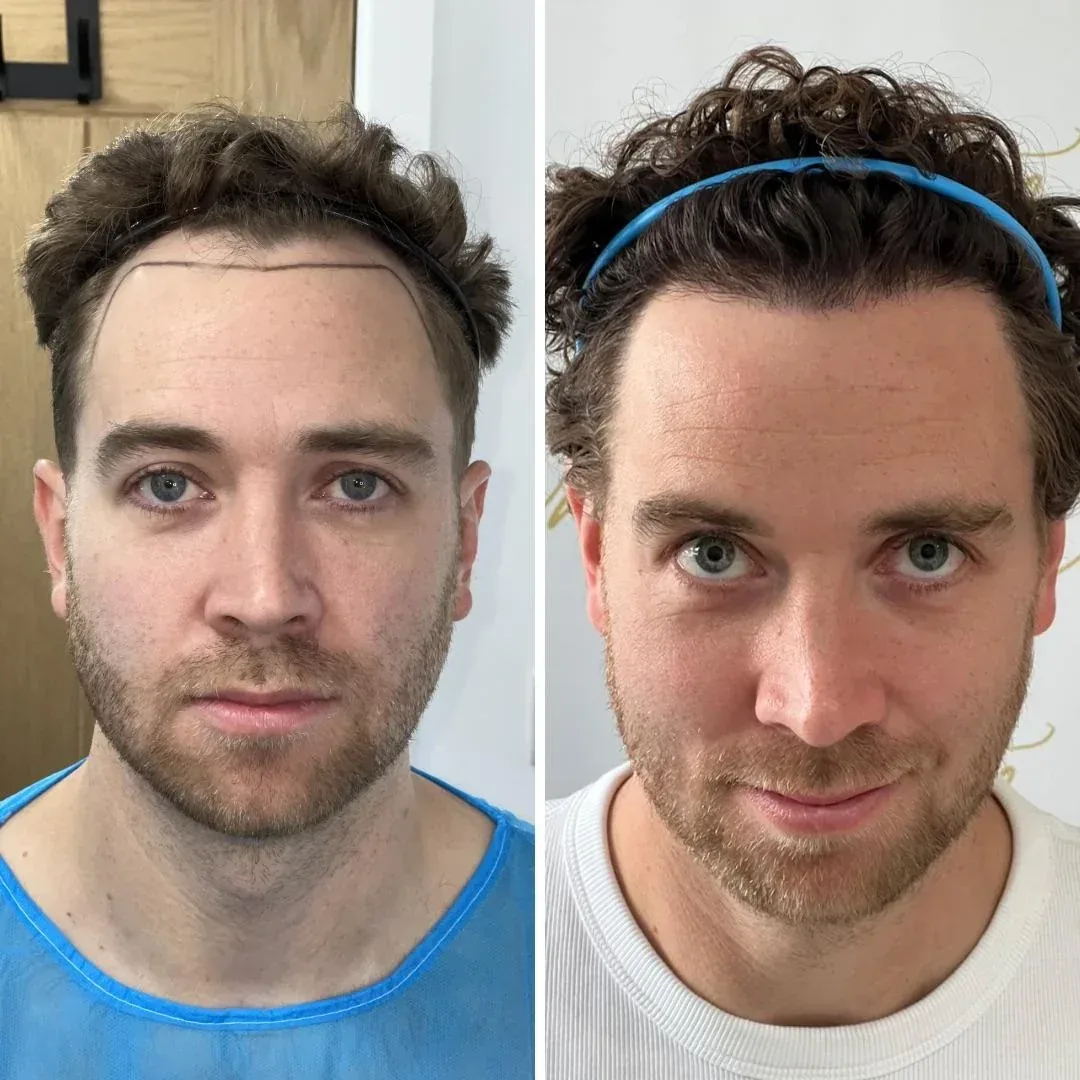
Can a hairline that has receded be rebuilt so nobody can tell it was ever gone? Yes. The front is the part of the head best suited to transplantation. It's a narrow band, it needs far fewer grafts than the crown or mid-scalp, and modern follicular unit technique lets the surgeon rebuild it hair by hair. It's also where the difference between a skilled and a mediocre clinic shows most, because everyone you talk to looks straight at it.
Below we go through what makes a transplanted hairline look real and what gives it away, when the temples should be part of the plan, why the goal is your adult hairline and not the one you had as a teenager, and how the front and crown have to share the same limited donor hair. If you're not that far along yet, start with the candidate guide or the broader page on hair transplants for men.
- The front is the zone that gives the most visible effect per graft, and the result is predictable once hair loss has stabilised.
- A natural hairline has single hairs at the very front, a slightly uneven edge and hairs that lie low and point forwards.
- The goal is a mature, adult hairline. A low teenage hairline uses up donor hair you may need later.
- After 2 to 3 weeks the transplanted hairs shed. In months 3 to 4 they start growing again. The result is assessed after about 12 months.
Can a receding hairline be transplanted, and when is the right time?
Yes. Nothing makes more men consider a hair transplant than a receding hairline, and the front is the zone that gives the best return. It frames the face, needs relatively few grafts and gives very predictable results once hair loss has settled. The time is right when the recession genuinely bothers you, the pattern has been stable for a while, and medication or some waiting has shown where your hair loss is heading.
Almost all adult men see their hairline move back a little over the years. That's why timing matters more at the front than anywhere else. If you have a new line placed while the hair around it is still receding, it can end up standing alone within a few years. Before a surgeon agrees to work on the front, they want to see two things: a pattern that has settled, and a wish for a hairline that suits your age, not a trip back to your teens.
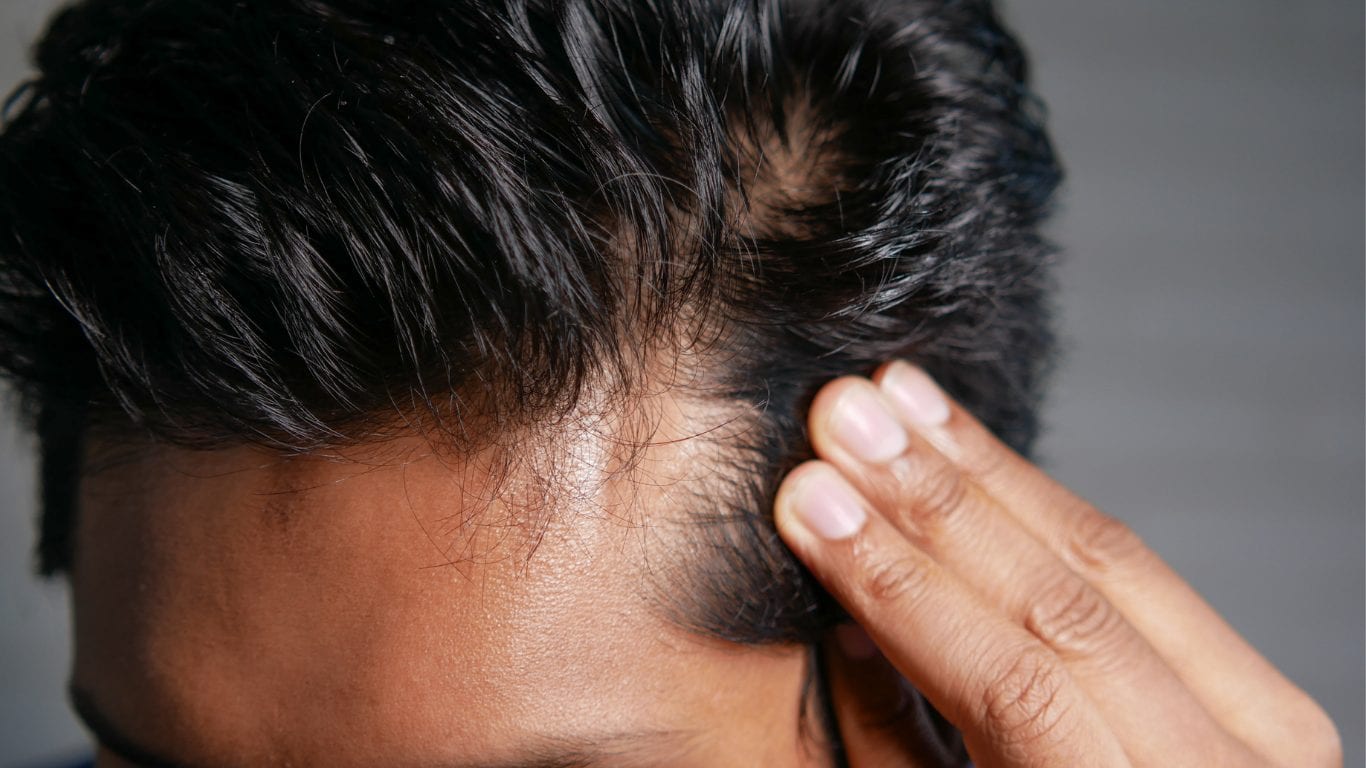
If the recession is recent and still moving, you'll usually start with what has the best evidence: slowing hair loss without surgery, then reassess once it has stabilised. If your temples have been stable for several years but sit further back than you'd like, you're close to the textbook example of a good candidate for a new hairline.
What separates a natural new hairline from one that gives itself away?
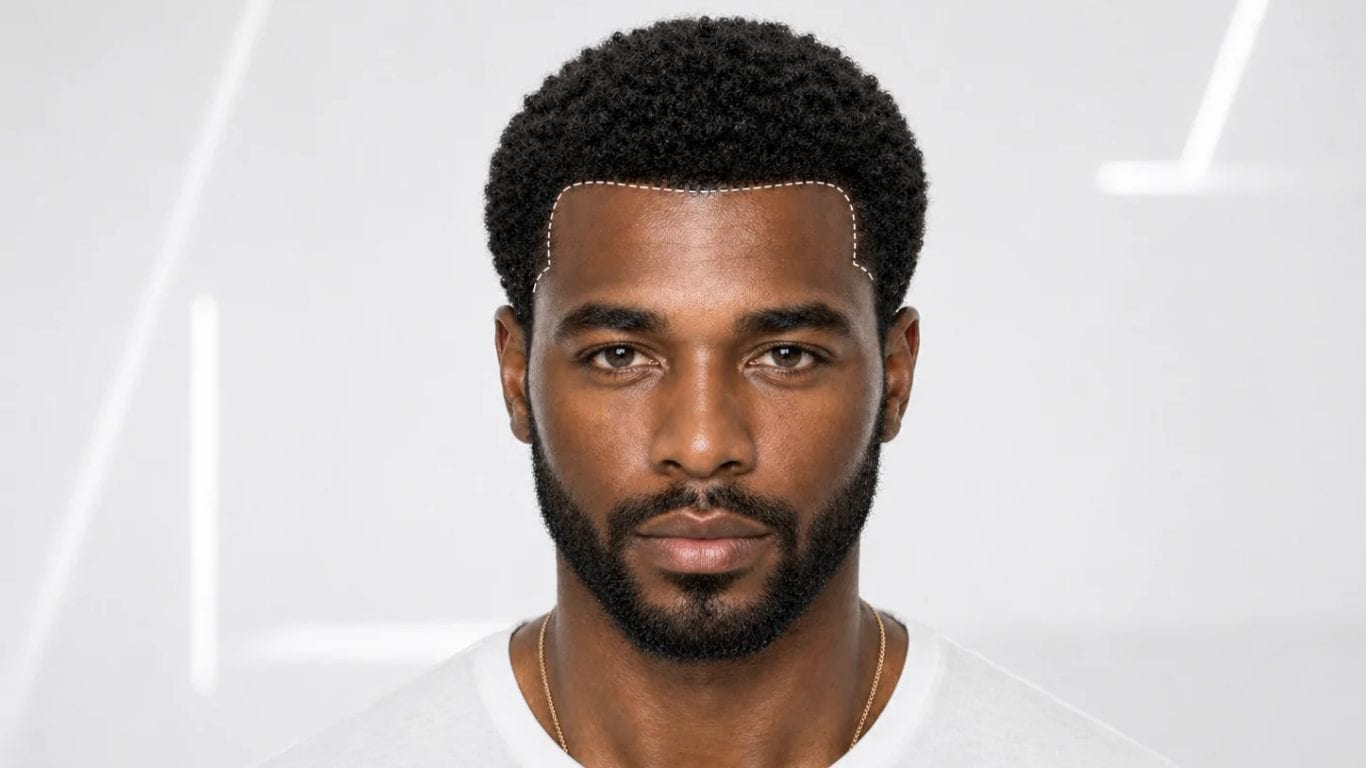
A natural hairline is built with single hairs at the very front, placed at a low, forward-pointing angle, along a line that is deliberately irregular. Behind it comes a soft transition where density increases gradually and multi-hair grafts take over. Poor hairlines fail on exactly these points, with thick grafts right at the front, a line that is ruler-straight or mirror-identical on both sides, hairs pointing the wrong way, or a shape that ignores the face.
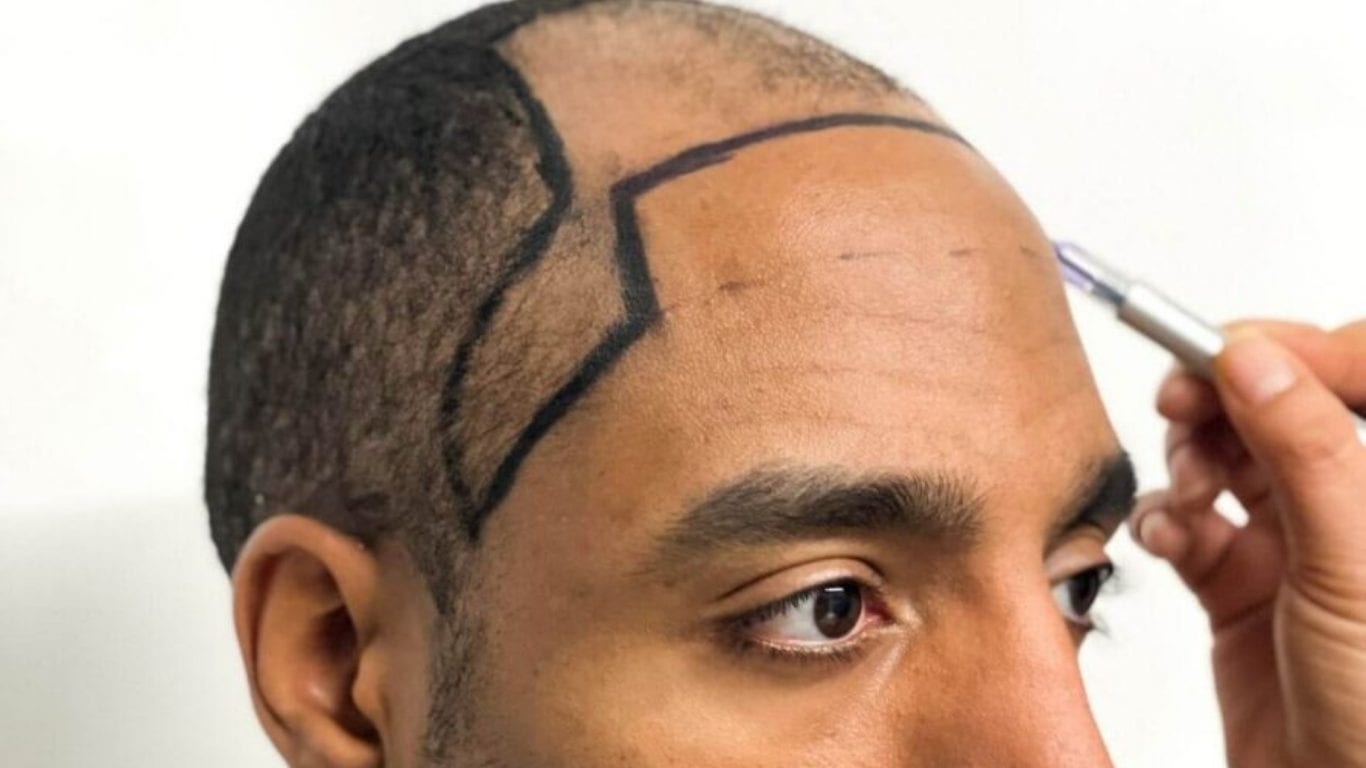
A real hairline isn't a sharp edge. It's a zone. At the very front, fine single hairs are scattered, behind them small groups, and full density only comes a couple of finger-widths further in. For a clinic to achieve this, the team has to sort out the single-hair grafts and save them for the front row. They must be placed at the low, forward-facing angle the hair naturally has there, and the line needs small, triangular irregularities so that light falls on it the way it does on a hairline that has never been touched.
The typical mistakes are visible from across the room. A row of thick grafts right at the front that looks doll-like. A perfect arc that no adult man has naturally. Hairs sticking straight out of the skin at ninety degrees. These are exactly the kinds of mistakes we describe in the guide to clinic red flags, and it's why the skill of the surgeon and team first becomes visible in the hairline.
Should deep temple recessions be treated together with the hairline?
Often, yes. The temples and recessions frame the hairline from the sides, and deep recessions can make an otherwise good front look unnatural, as if the line is floating above a face that's too open. If the recessions have gone far back, the result is more convincing when the front and the temple area are planned as one whole rather than the line being treated on its own.
Deep temple recessions are among the things people search for most when they wonder about their hairline, and no wonder. It's in the corners between forehead and temple that hair loss usually starts, and those corners decide how wide the forehead looks. The temples are technically difficult. The hairs there are finer, grow almost flat along the skin and point downwards, and that direction has to be copied precisely. Not every clinic manages it, and if a clinic takes the temples lightly, you should ask why.
Experienced surgeons often follow a simple rule of thumb. The recessions and the front are drawn as one continuous design. The pointed tufts of hair in front of the ears are a separate decision, and they're only treated if they've actually thinned. When you choose a clinic, ask to see fully healed results of the temples, not just photos of the front.
It depends on your donor area, your hair type and where the loss is. Send three photos and the medical team at the clinic at the top of our ranking will suggest a method and number of grafts.
Goes to the clinic at the top of our ranking.
Why shouldn't you try to get your teenage hairline back?
Because your donor hair runs out, while hair loss often continues. A low, straight teenage line requires a lot of grafts, ignores the fact that the male hairline naturally moves a little with age, and leaves nothing for the loss that often continues behind it. Specialists aim for a mature hairline, slightly higher and with softly shaped temple recessions, that will still suit you on your fiftieth birthday.
In almost all men, the hairline creeps up a little from the late teens into the twenties. That isn't baldness. It's where the line belongs on an adult man. If you try to recreate your teenage line, the grafts end up where no adult hairline naturally sits. You spend donor hair on the part of the design that holds up worst, and if hair loss continues, you've effectively paid in advance for a repair.
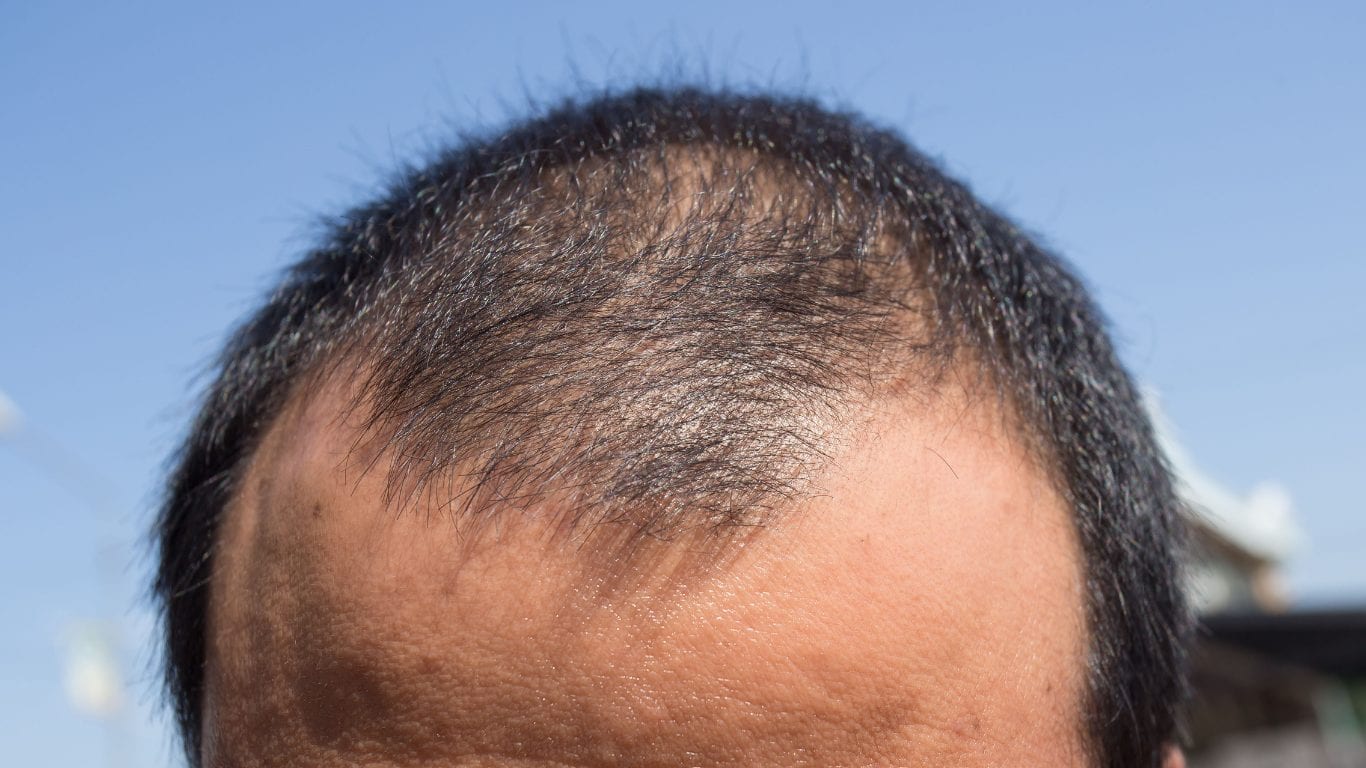
That's why our age advice carries extra weight at the front. A transplant usually becomes an option around age 25, provided hair loss has settled, and the younger you are, the more conservatively the hairline should be drawn. Read the page on age and hair transplants before you decide on a low line.
Should the front or the crown get the grafts first?
Usually the front. It's the part people see when they talk to you, it gives the most visible change per graft, and it's the least forgiving of thin coverage. The crown is a whorl that swallows grafts, and many surgeons deliberately leave it until later, once the front is done and they know how much donor hair is left.
The front and the crown draw from the same source, and it's limited: the hair at the back of the head and above the ears that resists DHT. Every graft used in one place can never be used in the other. The order is therefore a genuine strategic decision, not a scheduling detail. The front frames the face, which is why the plan almost always starts there. The crown has a whorl and needs a lot of grafts, which is why it often has to wait.
When it's right to do the crown first, and how the rest of the maths works out, we explain on the page about crown hair transplants. How much you have to draw on, you'll find on the page about donor hair.
How many grafts does a new hairline need?
Fewer than most people think, and fewer than any other major zone of the head. The temple recessions alone need a small session, while a whole new front including temples after deep recession is a medium-sized session. The number for your head depends on how deep the recessions are, how wide the forehead is and the density your donor area can supply.
The hairline is a band, not a surface. Graft needs therefore rise with how deep the recessions are, not with how many square centimetres of bare skin you have. Compared with the crown or the whole top of the head, the numbers are modest. Just the temple recessions, a whole front, and a front with temples are three different budget levels. A serious clinic prices each separately and doesn't sell you one round figure.
The graft calculator works zone by zone. According to its figures, the front usually needs around 400 to 1,000 grafts at Norwood 2 and 1,200 to 2,000 at Norwood 3. If the temples are to be filled as well, roughly 100 to 800 grafts are added.
For a personal estimate based on your Norwood stage, use the graft calculator. How the number of grafts translates into price in different countries is covered under how much a hair transplant costs.
Which technique matters when building a hairline?
At the front, implantation matters more than anywhere else. That's why implanter pens and fine sapphire incisions have earned their reputation precisely here. The extraction itself is almost always done with standard FUE, and the differences you see in the mirror come down to control of the angle, the size of the incisions and how carefully the single hairs are saved for the front row.
At the front, the angle and direction of every single graft show. Techniques that give the surgeon control over each graft during implantation are therefore strongest here. Two techniques have their rightful place here: the DHI implanter pen, which places each hair at the right depth and direction in one movement, and sapphire FUE, where the narrow incisions make it easier to place grafts densely and at a precise angle in the transition zone.
In the methods guide we compare all the techniques and show where the advertising exaggerates. If you dread shaving your head, small front sessions are often well suited to a no-shave hair transplant.
What can you expect from your hairline, and when?
The hairs in the grafts usually shed after 2 to 3 weeks, and new growth starts in months 3 to 4. After about 12 months you can assess the final result. A well-designed front becomes dense enough to style within that time. Because the grafts come from the donor band that resists DHT, the result lasts a long time, although no hair follicle is completely immune.
The first weeks are hardest at the front, precisely because it's the part you see in the mirror every morning. The line is visible for the first few days, almost disappears, and then comes back hair by hair over the first year. Photograph the front at 4, 8 and 12 months and put the photos side by side. That gives an honest picture of progress. Scrutinising the mirror every day doesn't.
How dense the front looks also depends on how long you wear your hair, how thick the hair shafts are and the contrast between hair and skin. That's why the same number of grafts can look different on two heads. Everything about washing, sleeping and when you can style your hair as usual is in the aftercare guide. What you can expect in the long term is covered in how long the result lasts.
Frequently asked questions
Will people be able to tell my hairline has been transplanted?
Not if it's well designed and well placed. A natural result requires single hairs at the very front, correct angles and a line that isn't perfectly even. When that's in place, even hairdressers often don't notice. What gives a transplant away is design errors. The technique is rarely the problem.
Is the head shaved for a hairline transplant?
Often not completely. Front sessions are relatively small and are therefore often suited to partial shaving or no shaving, where your own hair hides the treated area. Whether it's possible for you depends on how large the session is and how long your hair is.
Does a hairline transplant hurt?
The procedure is done under local anaesthetic, and most people describe it as uneventful. The anaesthetic injections are the least comfortable minutes of the whole day. Some tightness and tenderness in the forehead for the first few days afterwards is normal and easy to manage.
How much does a hairline transplant cost?
Less than a full transplant, because the number of grafts is moderate. The price is driven by the number of grafts and the country you have surgery in, far more than by which zone is treated. Filling in the temple recessions sits at the affordable end, while a whole front with temples sits in the middle of the usual price range for a session.
Can women have a hairline transplant?
Yes. Many women have their hairline lowered or thin areas at the front filled in, and it's among the procedures women most often choose. The assessment is different, though, because women lose hair in different ways from men. On the page about hair transplants for women, we explain when it's possible.
How long does a transplanted hairline last?
The grafts come from the hair at the back of the head and above the ears, which largely resists DHT, so the result is long-lasting and not a temporary fix. Still, no hair follicle is completely immune to DHT, and your own hair behind the line may thin over time. That's why it pays to stabilise hair loss first.
How high the line should sit, how deep your recessions are, whether the temples should be included and how much donor hair you have are decided for you and your head, not by an article. Request a free hair analysis and you'll get an honest, no-obligation assessment of your hairline from the team at the clinic ranked first in our ranking. You'll find all the clinics we've assessed in the Nordic ranking.
Goes to the clinic at the top of our ranking.
Updated: October 2026 · How our editorial team works