Hair falling out after giving birth: why, and how long does it last?
A few months after giving birth, there are suddenly clumps of hair in the shower. It looks dramatic, but it almost always settles down on its own.
There are clumps of hair in my brush. Is something wrong?
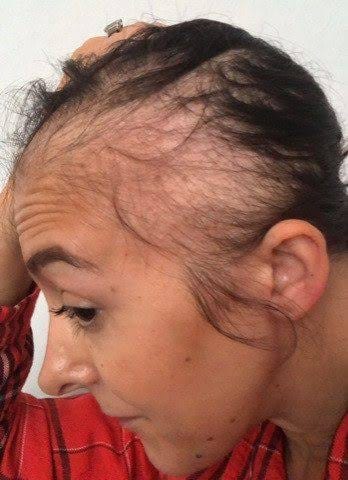
Almost always, no. Hair loss a few months after giving birth is very common. It's your body tidying up after pregnancy, not a sign of illness. The shedding usually starts 2 to 4 months after birth, almost never in the first few weeks. Many women notice it most along the hairline and at the temples.
The amount can be alarming. But the hair falling out now is hair that would normally have fallen out during pregnancy. Your body is catching up on what it skipped. The hair follicles are not damaged.
Why does hair fall out after giving birth?
Because of oestrogen. While you're pregnant, high levels of oestrogen keep more hairs than usual in the growth phase (anagen). That's why many women find their hair extra thick during pregnancy. They simply shed less than usual.
After the birth, hormone levels drop back to normal quickly. All the hairs that had their growth extended then move into the resting phase at roughly the same time, and a few weeks later they let go. The medical name is postpartum telogen effluvium. The mechanism is the same as in other forms of sudden shedding, which you can read more about in the article on telogen effluvium.
When does postpartum hair grow back?
For the vast majority, within 6 to 12 months, without any treatment at all. The condition is temporary and resolves on its own. The follicles are intact and find their way back to their normal rhythm as your hormones settle.
If you're breastfeeding, you don't need to worry that it will delay recovery. Breastfeeding has little effect on this. What you need most is patience.
What can you do for your hair in the meantime?
Not much is necessary, but a few simple steps support your hair while it's fragile:
- Get enough iron and protein. Iron stores are often low after giving birth. Read more in the article on iron deficiency and hair loss.
- Be gentle with your hair. Skip tight ponytails and braids, brush lightly, and go easy on straighteners and hot hairdryers. Tight hairstyles over time can cause a separate type of hair loss, see the article on traction alopecia.
- Sleep when you can, and try to relax. Easy to say with a newborn in the house, and hard to do. But stress and lack of sleep don't help.
Do you need serums, treatments or minoxidil?
Usually not. Because the hair comes back on its own within 6 to 12 months, expensive serums, clinic treatments or minoxidil are rarely necessary. Many new mothers spend a lot of money on solutions to a problem that solves itself.
Excessive worry doesn't help either, because stress puts a strain on the body. Keep your money, be kind to your hair, and eat enough iron and protein.
When should you see a doctor?
If the shedding lasts longer than 12 months, is very heavy, or comes with other symptoms such as tiredness, weight change or feeling cold easily. Then your doctor should test ferritin (your iron stores) and thyroid function.
After giving birth, the thyroid gland can become inflamed, known as postpartum thyroiditis. It's an easily overlooked cause of long-lasting hair loss in new mothers. If you wonder whether there might be an explanation other than the birth, the overview of causes of hair loss gives a broader picture, and the page on hair loss in women goes into more depth.
What's a good first step?
Write down the date you noticed the shedding start, and take a photo of your hairline now. Set a reminder for one year after the birth. If the shedding is still going on then, or you feel unusually tired and cold before that, book an appointment with your GP (fastlege) and ask to have your iron and thyroid checked.
This article is general information and does not replace a medical assessment.
For women, the answer depends on the type of hair loss. Send photos discreetly from home and the medical team at the clinic at the top of our ranking will tell you honestly whether a procedure is an option.
Goes to the clinic at the top of our ranking.