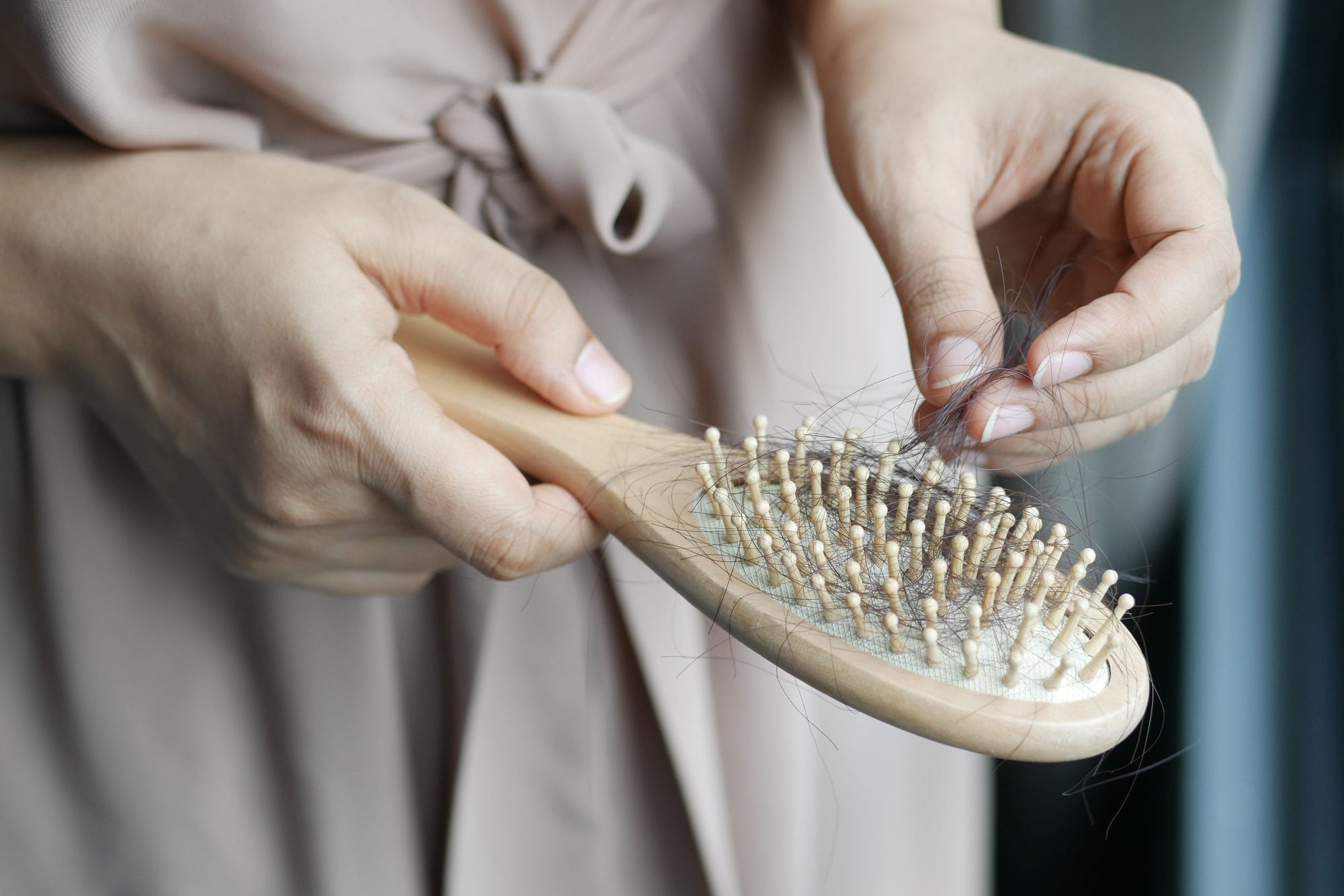
Telogen effluvium: why is your hair suddenly falling out?
Your hair is falling out in clumps, evenly all over your head, and you can't work out why. The answer often lies a couple of months back, and in most cases the hair grows back.
Why is your hair suddenly falling out all over your head?
Very often because your body went through something demanding a couple of months earlier. In telogen effluvium, an unusually large number of hair follicles enter the resting phase, telogen, at the same time. When the resting phase ends, the hairs let go almost at once. The result is diffuse hair loss, spread evenly over the whole head, without the receding temples and thinning crown you see with hereditary hair loss.
You notice it in your hairbrush, on your pillow and in the shower drain. Your parting may look wider. Because the loss is evenly spread, very few people go bald from it. The hair just gets thinner everywhere.
Why does the shedding start so long after the cause?
Because each hair has to see out the whole resting phase before it comes loose. So the shedding usually starts 2 to 3 months after whatever triggered it, not while it's happening.
That delay is why so many people don't understand what's going on. If your hair seems to be disappearing for no reason at all, try to remember what happened two or three months ago. A flu with a high fever, an operation, a breakup, a crash diet. That's often where you'll find the explanation.
What can trigger telogen effluvium?
A strain on the body. The most common are:
- Physical stress: serious illness with fever, an operation or an accident.
- Psychological stress: crises, grief or long periods of pressure. There's more on this in the article on stress and hair loss.
- Hormonal changes: giving birth, or stopping the contraceptive pill. See hair loss after giving birth.
- Rapid weight loss and a restricted diet: including deficiencies such as low iron stores (ferritin).
- Thyroid and medicines: thyroid disease and some medications.
How do you know it isn't hereditary hair loss?
Look at the pattern, the course, and whether you can find a trigger. The distinction matters, because the treatment is completely different:
- Pattern: telogen effluvium thins evenly everywhere. With hereditary loss, the temples and crown go first.
- Course: telogen effluvium comes on suddenly and often passes. Hereditary loss comes on slowly and continues.
- Trigger: with telogen effluvium, you can usually point to a cause 2 to 3 months earlier.
A good rule of thumb: if you can find a clear strain two to three months before the hair started falling out, and the thinning is even across the whole head, that points strongly to telogen effluvium. In that case the outlook is good.
But the two can also happen at the same time and amplify each other. Telogen effluvium can make hereditary loss that was already under way much more noticeable.
Does the hair grow back?
Almost always. The condition is reversible. Once the strain is over, the hair follicles find their way back to their normal rhythm, and for most people the shedding stops after 3 to 6 months, while full density takes 6 to 12 months. The scalp isn't scarred. Treatment is mostly about getting rid of the cause and making sure you get enough iron and protein in your diet.
Does switching shampoo or buying a serum help? No. The hair follicles aren't damaged. They just need time.
When should you see a doctor?
When the shedding lasts longer than 6 months, or you're not sure whether it's actually hereditary hair loss that has started. If it goes on for a long time, it's called chronic telogen effluvium. Ask your GP (fastlege) to check your ferritin, vitamin D and thyroid function (TSH), and have a doctor assess the pattern. Low iron stores are a common and easily overlooked cause, especially in women. Read more about iron deficiency and hair loss.
You'll find a longer review of causes, tests and treatment in the article on diffuse hair loss.
What should you do today?
Get a calendar and count two to three months back from when your hair started falling out. Write down everything that happened in that period: illness, stress, giving birth, weight change, a new medicine. Then take a photo of your parting and crown, so you can see whether the hair is coming back. If the shedding lasts more than six months, take the list and the photos to your GP. If you want to see the other types of hair loss, you'll find them in the overview of causes of hair loss.
This article is general information and doesn't replace a medical assessment of you.
If your hair loss has only just started, a procedure may not be the right step yet. The medical team at the clinic at the top of our ranking can look at your photos and tell you honestly whether to wait, start with treatment or consider more.
Goes to the clinic at the top of our ranking.