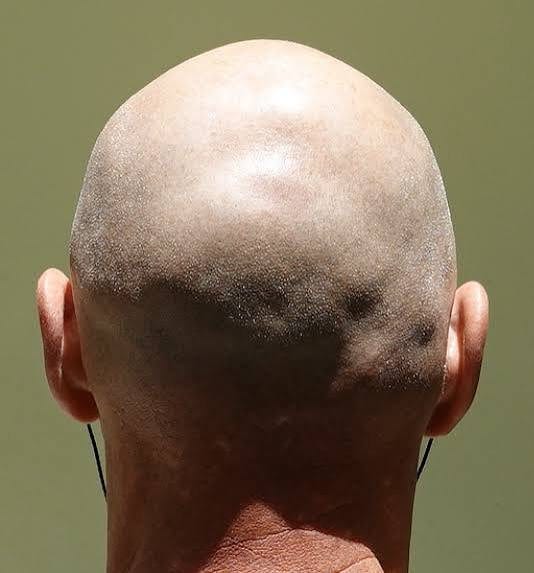
Is shock loss in the donor area permanent?
Normally not. In some people, hair around the extraction sites falls out in the weeks after surgery, then grows back.
In some people, hair around the extraction sites falls out in the weeks after surgery. It's usually temporary and recovers over a few months, but it's easy to believe the donor area has been emptied for good. That's why you should wait until twelve months have passed before drawing any conclusions.
What is shock loss in the donor area?
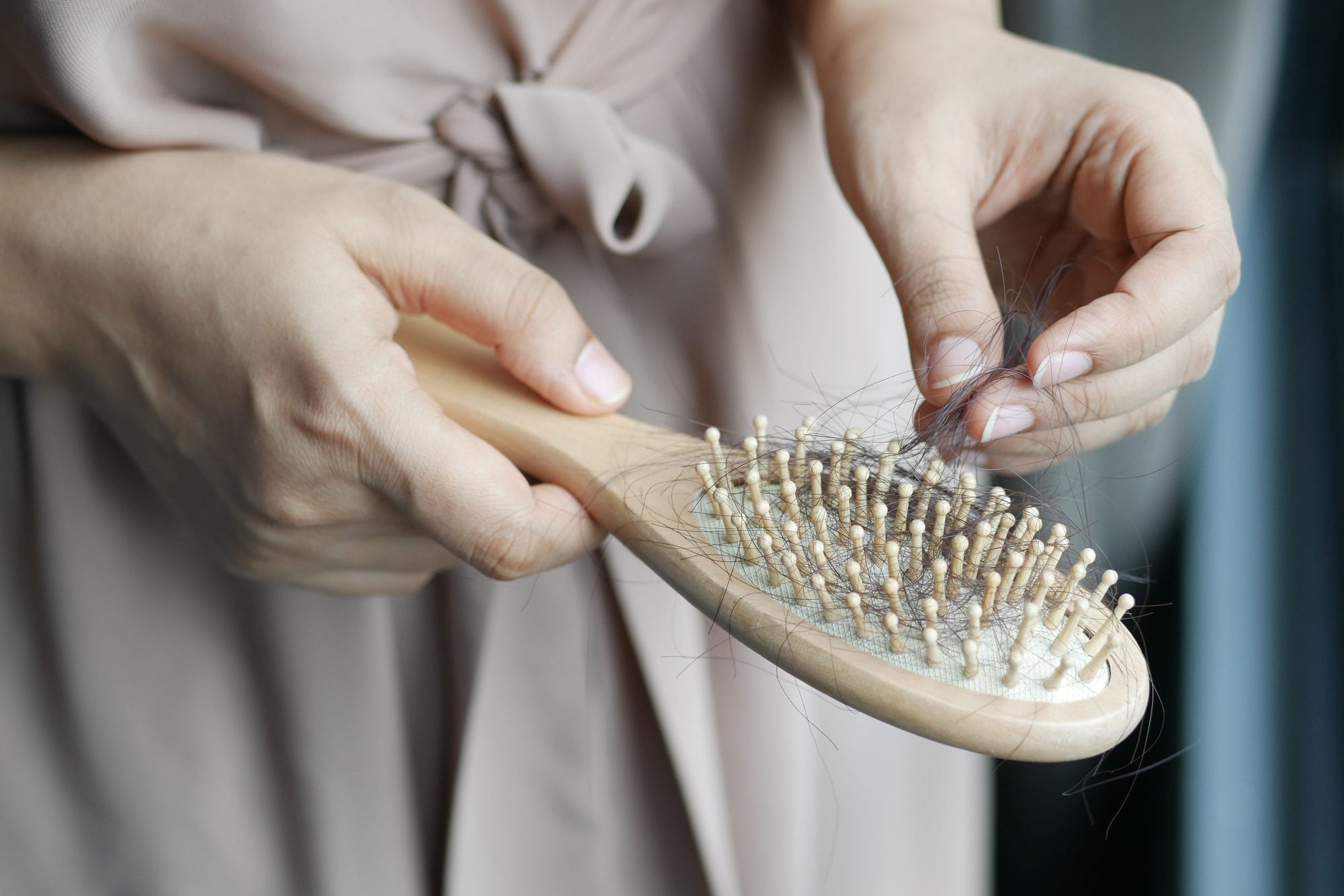
It's a temporary loss of your own hair around the extraction sites, because the stress of surgery sends follicles into a resting phase too early. The hair falls out, but the follicle survives and grows again, with shedding after two to three weeks, new hairs from the third or fourth month and usually full recovery by twelve months.
With shock loss, you temporarily lose hair you already have because your body reacts to the strain of the operation. Most people know the phenomenon from the front, where your own hair between the new grafts can fall out. The same can happen at the back, around the spots the grafts were taken from.
The explanation is that the stress pushes follicles out of the growth phase and into a resting phase too early. The hairs lose their grip and fall out. The follicles themselves aren't destroyed, and once the resting period is over, they start producing hair again.
The course is similar to that of the transplanted hair. The hairs shed after two to three weeks, new ones appear in the third or fourth month, and by twelve months things are mostly back to how they were.
Why does shock loss at the back frighten so many people?
Because you've just paid for more hair and then, a month later, see less hair in the area that was supposed to be safe. At the same time, the transplanted hair at the front is shedding, two to three weeks after surgery, so you're losing hair at the front and back at once, and everything is going as it should.
It's understandable that it's alarming. You've just paid for a procedure that was supposed to give you more hair. Then you look at the back of your head a month later and find it's thinner than before, in exactly the area that was meant to be the stable one.
It feels worse because it happens at the same time as the hair at the front is shedding. Two to three weeks after the transplant, the new grafts also drop their hairs. So you're losing hair at the front and the back in the same period. It's the lowest point of the whole process, and it's completely normal.
How do you tell shock loss from a permanently depleted donor area?
At three months they look the same, but they're completely different: with shock loss the follicles are alive and the hair comes back, while a depleted area has lost its follicles for good. There's no early test, so any assessment of damage at the back has to wait until around twelve months.
Three months after surgery, the two can look exactly alike. The consequences, however, are very different.
- Shock loss: the follicles are alive, and the hair grows back.
- Depletion: the follicles have been removed and won't come back.
No test can tell them apart early on. You only get the answer by giving it time and watching whether the density recovers. That's why an honest surgeon won't draw conclusions about damage to the donor area until around twelve months have passed.
Anyone who panics at the three-month check-up and immediately books a correction elsewhere is making a decision without the information they need.
Who is more likely to get shock loss in the donor area?
People who already have miniaturisation at the back, where follicles go into rest more easily and may not fully recover, and those who have dense extraction or large sessions. High transection that damages neighbouring follicles also raises the risk, and some people are simply more prone to it in ways that can't be predicted.
- Existing miniaturisation at the back. Follicles already under pressure from androgens go into rest more easily. Some of them may also never fully return.
- Dense extraction. More strain on the same area.
- Large sessions. Greater overall surgical stress and longer time on the operating table.
- High transection. Follicles next to the ones that were removed are damaged too.
- Individual susceptibility, which varies and can't be predicted.
What can you do about shock loss at the back of your head?
Not much beyond waiting, because it takes months for the hair to return and it can't be hurried. Take photos the same way each time, tell the clinic so it's on record, talk to a doctor about medication if the donor hair is miniaturising, and don't book more surgery until the twelve-month photo is in.
In practice, very little. It's an unsatisfying answer, but it's the right one.
- Wait. Regrowth takes months, and there's no way of speeding it up that makes a real difference.
- Take photos with the same hair length and the same lighting, so you can see whether it's actually improving instead of guessing.
- Tell the clinic, so it goes on your record and they can assess it.
- Talk to a doctor about medication. If the donor hair is miniaturising, treatment can address the process itself. Even so, it's your doctor, who knows your health, who should decide that, not something you start on the advice of a forum.
- Don't book more surgery until you see how things stand at twelve months.
What should you ask your surgeon about shock loss before surgery?
Ask the surgeon to tell you whether temporary hair loss at the back can happen and how it usually develops. Patients who know it's a known, temporary phenomenon find it annoying but aren't frightened by it. Without a warning, many read the shedding as proof that something went wrong.
Temporary shedding is a common part of the process, and it's covered in our aftercare guide.
Sources
- Romera de Blas C, Vega Díez D, Ricart Vayá JM, Gómez Zubiaur A. Complications in follicular unit excision hair transplantation: current evidence and practical approaches. Frontiers in Medicine, 2026;13:1750989. pubmed.ncbi.nlm.nih.gov/41709896
- Fan Z, Gan Y, Qu Q, Wang J, Lunan Y, Liu B, Chen R, Hu Z, Miao Y. The effect of hyperbaric oxygen therapy combined with hair transplantation surgery for the treatment of alopecia. Journal of Cosmetic Dermatology, 2021;20(3):917-921. pubmed.ncbi.nlm.nih.gov/32770782
- Bernstein RM, Rassman WR. Graft Anchoring in Hair Transplantation. Dermatologic Surgery, 2006;32(2):198-204. pubmed.ncbi.nlm.nih.gov/16442039
- Xu Y, et al. Case Report: Paired vertex-occipital assessment reveals donor-area involvement in diffuse unpatterned alopecia. Frontiers in Medicine, 2026;13:1797275. pubmed.ncbi.nlm.nih.gov/41982548
- Parsley WM, Perez-Meza D. Review of factors affecting the growth and survival of follicular graft. Journal of Cutaneous and Aesthetic Surgery, 2010;3(2). jcasonline.com
This article is based on published research and standard clinical practice. It is general information, not medical advice, and it never overrides what your own surgical team tells you. If they say something different from what is written here, their advice is the one to follow.
Wondering what's possible for your hair?
Send three sharp photos of your hair, from the front, the top and the back. You'll get an honest answer on what can be done, roughly how many grafts it would take and what it costs.
- Free and with no obligation
- Photos are assessed by the clinic's medical team
- Replies usually within an hour in the daytime


A study tells you something about groups. Only a doctor who has seen your photos can say what applies to your hair. The medical team at the clinic at the top of our ranking offers a free assessment.
Goes to the clinic at the top of our ranking.