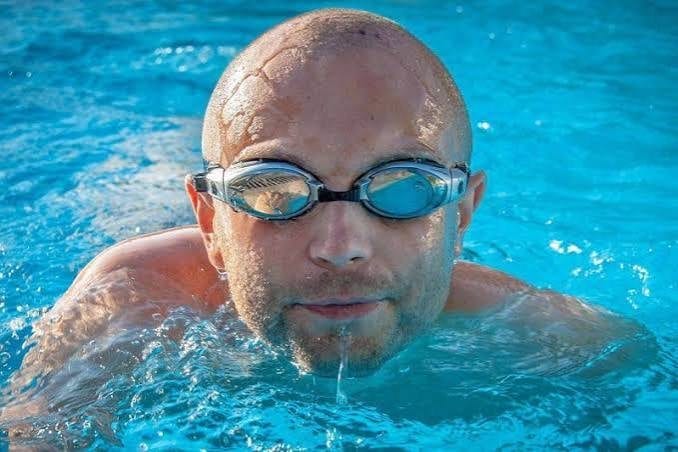
When can you swim after a hair transplant?
Most clinics ask you to wait about four weeks for the pool, and longer for the sea, lakes and rivers. In the pool your head spends a long time in chlorinated water that lots of other people have swum in, and a healing scalp gets no benefit from any of that.
In the pool your head spends a long time in chlorinated water that lots of other people have swum in. A healing scalp gets no benefit from any of that. Most clinics ask you to wait about a month, and longer for the sea, lakes and rivers, where nobody controls what's in the water.
Why does the pool have to wait longer than the gym?
Because swimming puts several strains on your scalp at once. Long sessions in water soften scabs and new skin without you being able to control it. Chlorine and bromine sting a skin barrier that hasn't rebuilt itself. Water shared with many people carries microbes that fresh wounds are more vulnerable to. Swimming caps, goggle straps and towel drying add extra friction, and outdoors there's the sun as well.
- Long periods in water soften scabs and new skin in a way you can't control
- Chlorine and bromine irritate a skin barrier that hasn't rebuilt itself
- Shared water carries microbes that fresh wounds are especially vulnerable to
- The kit, from swimming caps and goggle straps to towel drying, adds friction
- The sun at an outdoor pool hits a scalp that burns easily
How long do you wait for different kinds of water?
A chlorinated pool, indoors or outdoors, is usually fine after about four weeks, with sun protection as well if it's outside. The sea often needs at least as long, because salt water isn't sterile. Lakes and rivers tend to have the longest deadline, and hot tubs come even later. These figures reflect common clinical practice, not studies, so it's your clinic's instructions that count.
- Indoor chlorinated pool: usually after about four weeks
- Outdoor pool: the same deadline, plus sun protection
- The sea: at least as long, often more, because salt water isn't sterile
- Lakes and rivers: the longest wait, well over a month at some clinics
- Hot tubs: a category of their own, normally even later
These deadlines are based on common clinical practice, not on studies. Your clinic's advice comes first.
How do you start swimming again?
Shower with clean water both before you get in and afterwards. Keep your first few swims short. Don't dive, and avoid anything that sends water forcefully at your head. If a swimming cap is allowed, a loose silicone cap is gentler than a tight latex one. Watch for redness or spots over the next few days.
- Shower with clean water before and after swimming
- Short sessions the first few times
- No diving, and keep your head away from strong water jets
- A loose silicone cap rather than tight latex, once a cap is allowed
- Check your skin for redness or spots in the days after
What should you do if you swim competitively?
Plan the timing with your clinic before you book. Four weeks out of the water is a big break in training, and it's far better to schedule the procedure for a quiet part of the season than to discover the deadline when it's too late.
Swimming is one of the timed deadlines in the aftercare guide.
Sources
- Jacob JS, Tschen J. Hot Tub-Associated Pseudomonas Folliculitis: A Case Report and Review of Host Risk Factors. Cureus, 2020;12(9):e10623. pubmed.ncbi.nlm.nih.gov/33123436
- Romera de Blas C, Vega Díez D, Ricart Vayá JM, Gómez Zubiaur A. Complications in follicular unit excision hair transplantation: current evidence and practical approaches. Frontiers in Medicine, 2026;13:1750989. pubmed.ncbi.nlm.nih.gov/41709896
- Bernstein RM, Rassman WR. Graft Anchoring in Hair Transplantation. Dermatologic Surgery, 2006;32(2):198-204. pubmed.ncbi.nlm.nih.gov/16442039
This text summarises published studies and common clinical practice. It is general information, not medical advice. Instructions from your own surgical team always come first, including where they differ from what is written here.
Wondering what's possible for your hair?
Send three sharp photos of your hair, from the front, the top and the back. You'll get an honest answer on what can be done, roughly how many grafts it would take and what it costs.
- Free and with no obligation
- Photos are assessed by the clinic's medical team
- Replies usually within an hour in the daytime


A study tells you something about groups. Only a doctor who has seen your photos can say what applies to your hair. The medical team at the clinic at the top of our ranking offers a free assessment.
Goes to the clinic at the top of our ranking.