Itchy scalp after FUE? Why it happens and what helps
Many people start to itch during the first week after the procedure. Most of the time it just means the wounds are healing and the skin is dry.
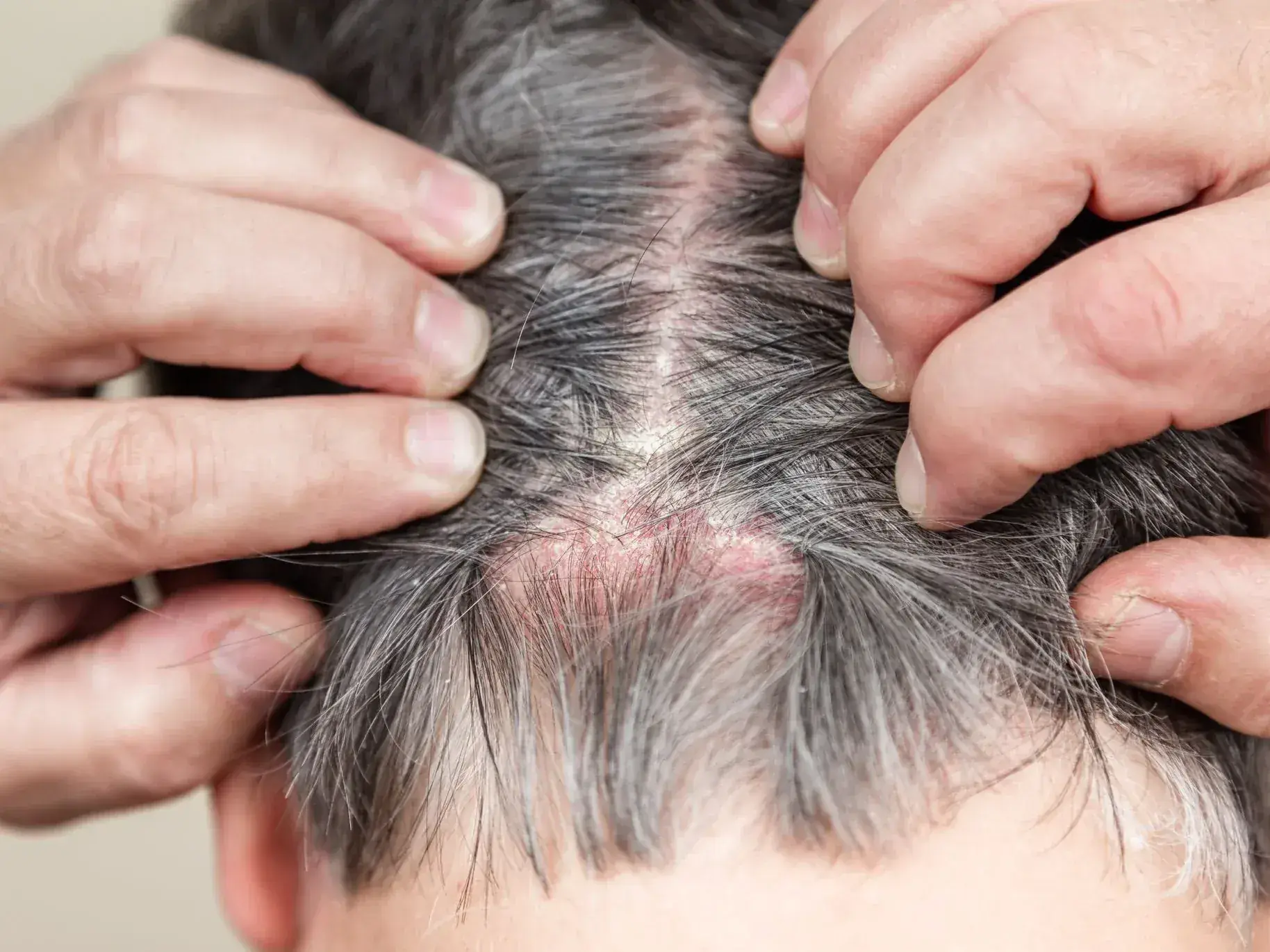
It's common for the scalp to start itching during the first week after the procedure, and it's usually just down to healing and dry skin. The itch isn't dangerous in itself. Your fingernails can be, because they can tear at grafts that haven't anchored yet.
Why does my scalp itch after FUE?
Because a lot is happening at once. Healing skin releases substances that make it itch. Scabs tighten as they dry and come loose. The scalp is drier than usual because you aren't washing normally and its natural oils are missing. And new hairs are pushing up through the skin. Many people feel the itch just as much in the donor area as where the grafts are.
What relieves the itching?
Moisture works best. Spray the scalp with saline or whatever the clinic gave you. Gentle washing on schedule clears away flakes, which itch. Once the grafts have anchored, you can tap lightly with your fingertips when it itches, and a cool room helps, because heat and sweat make it worse.
- Moisturise the scalp. Nothing works better than saline spray or whatever the clinic has prescribed.
- Start gentle washing when the plan says so. Washing removes the flakes, and flakes itch.
- Tap, don't scratch. If you have to do something, tap lightly with flat fingertips, and wait until the grafts have anchored.
- Keep cool. Heat and sweat make the itching worse.
- Ask the clinic before taking antihistamines. You may already be on other medication from them.
What should you avoid?
Don't scratch with your nails. Don't use medicated or anti-dandruff shampoo the clinic hasn't approved, don't put tea tree oil or similar essential oils on fresh wounds, and don't put anything at all on the recipient area until the clinic has given the go-ahead.
When is itching a warning sign?
When it comes with pus, spreading redness or a bump around a graft. When it keeps you awake at night after two weeks have passed. When it starts late, several weeks after the scalp had settled down. Or when the skin flakes heavily and is inflamed underneath, as with eczema.
- Itching together with pus, a bump at a graft or spreading redness
- Itching that keeps you awake after two weeks have passed
- Itching that starts late, several weeks after the scalp had settled down
- Heavy flaking over inflamed skin, which may be eczema and needs treatment
Keep your fingers off and follow the washing and moisturising plan described under aftercare.
Sources
- Romera de Blas C, Vega Díez D, Ricart Vayá JM, Gómez Zubiaur A. Complications in follicular unit excision hair transplantation: current evidence and practical approaches. Frontiers in Medicine, 2026;13:1750989. pubmed.ncbi.nlm.nih.gov/41709896
- Kerure AS, Patwardhan N. Complications in Hair Transplantation. Journal of Cutaneous and Aesthetic Surgery, 2018;11(4):182-189. pubmed.ncbi.nlm.nih.gov/30886471
- Bernstein RM, Rassman WR. Graft Anchoring in Hair Transplantation. Dermatologic Surgery, 2006;32(2):198-204. pubmed.ncbi.nlm.nih.gov/16442039
This text brings together findings from published research and standard clinical practice. It is meant as general information and is not medical advice. The instructions from the team that operated on you come first. If they tell you something different from what's written here, follow their advice.
Wondering what's possible for your hair?
Send three sharp photos of your hair, from the front, the top and the back. You'll get an honest answer on what can be done, roughly how many grafts it would take and what it costs.
- Free and with no obligation
- Photos are assessed by the clinic's medical team
- Replies usually within an hour in the daytime


A study tells you something about groups. Only a doctor who has seen your photos can say what applies to your hair. The medical team at the clinic at the top of our ranking offers a free assessment.
Goes to the clinic at the top of our ranking.