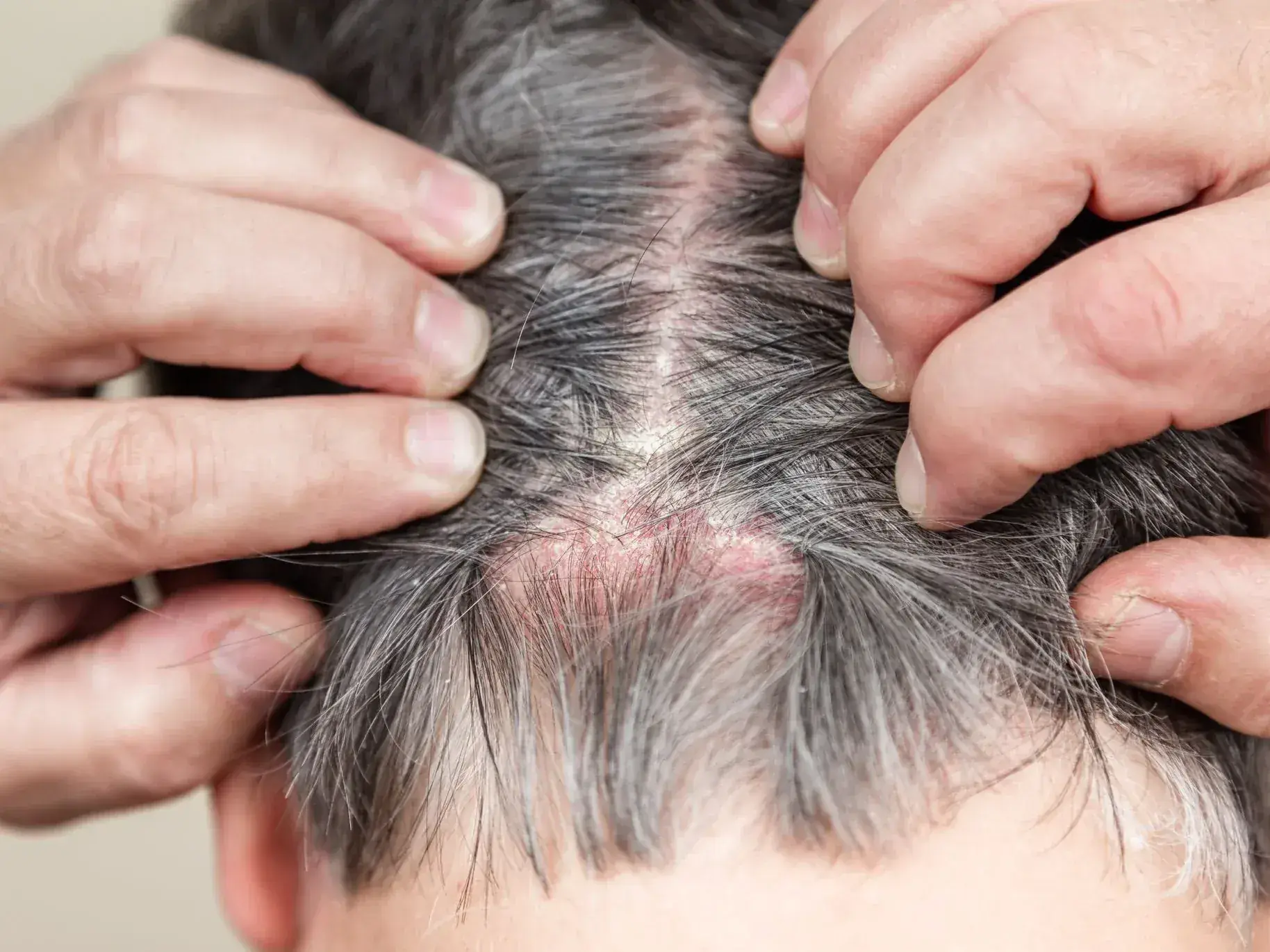
Itchy scalp and thinning hair: is there a connection?
Hereditary hair loss doesn't itch. If you have itching, flaking or stinging while your hair thins, it may be a clue worth following. Here's how to know when to get it checked.
Can an itchy scalp be linked to your hair loss?
Sometimes, yes. Many people who are losing hair also notice that their scalp itches, flakes or feels irritated. Often these are two things that just happen at the same time. But in some cases the itching is an important clue to what's really going on.
The first thing to know is that ordinary hereditary hair loss (androgenetic alopecia) usually does not itch. So if you have strong itching along with the hair loss, it may mean something else is going on, or that something else is adding to it. That's worth finding out.
Which skin conditions could be behind it?
The most common are seborrhoeic dermatitis (greasy, yellowish flakes), psoriasis and fungal infection of the scalp. All three cause inflammation in the skin.
If the inflammation around the hair follicles lasts a long time, it can on its own contribute to hair loss or make existing hair loss worse. Treating the skin condition therefore often brings two benefits: the itching settles, and your hair gets better conditions to grow in. Other possible causes of hair loss are listed in the overview of causes of hair loss.
When is itching a warning sign?
When it comes with redness, stinging, heavy flaking, sores or bald patches. A doctor should always look at that. It could be an inflammatory disease, or a form of hair loss that causes scarring (scarring alopecia). With conditions like these, prompt treatment can stop the hair follicles from being lost for good.
In those cases the itching is more than a nuisance. It's a signal you shouldn't ignore. You can read more about the scarring type in the article on scarring alopecia.
How can you treat an itchy scalp yourself?
For ordinary dandruff and mild itching, ketoconazole shampoo is a good first choice. It knocks out fungus, reduces flaking and calms inflammation. See the article on ketoconazole shampoo for how to use it.
Try not to scratch, however tempting it is. Scratching irritates the skin further and can cause small sores. If the itching is strong, doesn't go away, or you notice any of the warning signs above, book a doctor's appointment rather than experimenting with products on your own.
Is it normal to itch after a hair transplant?
Yes. Itching is part of the skin healing after the procedure, and it passes. Still, keep your fingers away, because your nails can dislodge or damage new grafts. Follow the clinic's advice, and ask about a soothing product they approve if the itching becomes bothersome. Read more about the healing phase in the guide to aftercare and about small spots after the procedure in the article on folliculitis.
What should you do now?
Ask someone to take a photo of your scalp where it itches most, or use a mirror and your phone. Look for redness, sores or bare patches. If you find any of these, book an appointment with your GP and bring the photo. If it's just dandruff and mild itching, try a ketoconazole shampoo for a few weeks and see whether it settles.
This article is general information and does not replace a medical assessment of you.
If your hair loss has only just started, a procedure may not be the right step yet. The medical team at the clinic at the top of our ranking can look at your photos and tell you honestly whether to wait, start with treatment or consider more.
Goes to the clinic at the top of our ranking.