
Can body hair be used for a hair transplant? What to expect
When the scalp donor supply is used up, body hair can add to it. It grows for shorter periods, doesn't grow as long and gives a less certain yield than scalp hair.
If you've used up the donor hair on your scalp, body hair can be a supplement. It has shorter growth cycles, doesn't reach the same length and gives a less predictable yield than hair from the scalp. Body hair is a last resort in difficult cases. It can't match the scalp as a source.
Where on the body is the donor hair taken from?
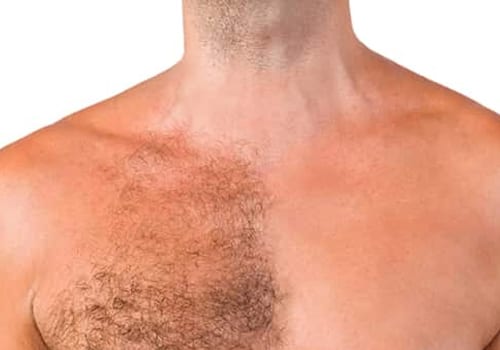
Grafts can be taken from the chest, back, shoulders, abdomen, arms and legs. In practice, body hair is used almost exclusively in patients with extensive hair loss and a depleted scalp donor area, often after previous surgery. If you have both a beard and body hair, the surgeon will usually choose the beard first, because those hairs are coarser and more reliable.
Why does body hair behave differently?
Body hair has a shorter growth phase, moves through the hair cycle faster and never gets as long as scalp hair. Its thickness and curl also differ, often finer or more curved. The yield is lower and less certain than with grafts from the scalp, and because the hairs don't follow the same rhythm, coverage can look uneven.
- Short growth phase. The hairs shed more often and never grow to full scalp length.
- Different thickness and curl, often finer or more curved.
- Lower yield, and less predictable than with scalp grafts.
- The hairs are out of sync, so coverage can look patchy.
- Uncertain how much of the donor site's characteristics the hair carries with it to the scalp.
What can body hair achieve?
Body hair can add fullness and reduce how much the scalp shows through in areas where there are no other donor sources. Placed between existing hairs, it can make the hair look denser. It works poorly in the hairline, because length and a uniform look matter most right there.
Is body hair as good as hair from the scalp?
No. For the right patient, body hair can give usable coverage that wouldn't otherwise be possible, and that has value, but it won't be as long, as even or yield as much as scalp hair. If you're offered body hair as the main source, ask why the scalp isn't enough, and get an assessment from another surgeon before you go ahead.
The scalp is still the main reserve, and you can read how far it goes under donor supply.
Sources
- Goldin J, Zito PM, Raggio BS. Hair Transplantation. StatPearls, 2025 (updated 2 Aug 2025). pubmed.ncbi.nlm.nih.gov/31613520
- Gupta J, Chouhan K, Kumar A, Chandrasegaran A. A Comparative Study on the Rate of Anagen Effluvium and Survival Rates of Scalp, Beard, and Chest Hair in Hair Restoration Procedure of Scalp. Journal of Cutaneous and Aesthetic Surgery, 2019;12(2):118-123. pubmed.ncbi.nlm.nih.gov/31413480
- Parsley WM, Perez-Meza D. Review of factors affecting the growth and survival of follicular graft. Journal of Cutaneous and Aesthetic Surgery, 2010;3(2). jcasonline.com
This article is based on published research and established clinical practice in the field. It gives you general knowledge and is not medical advice. The instructions from the team operating on you take priority, including where they differ from what is written here.
Wondering what's possible for your hair?
Send three sharp photos of your hair, from the front, the top and the back. You'll get an honest answer on what can be done, roughly how many grafts it would take and what it costs.
- Free and with no obligation
- Photos are assessed by the clinic's medical team
- Replies usually within an hour in the daytime


A study tells you something about groups. Only a doctor who has seen your photos can say what applies to your hair. The medical team at the clinic at the top of our ranking offers a free assessment.
Goes to the clinic at the top of our ranking.