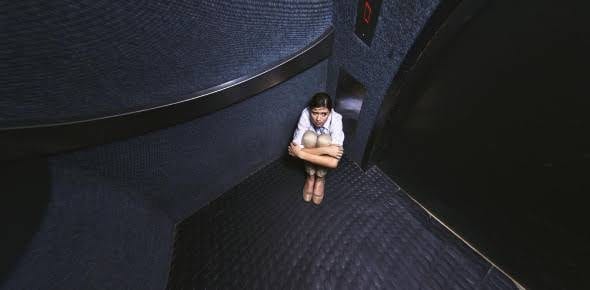
Claustrophobia in a pressure chamber: can you manage a full course?
Quite a lot of people find a closed pressure chamber hard going, and a single-person chamber is harder to tolerate than one where several people sit together.
Quite a lot of people find a closed pressure chamber hard going, and a single-person chamber is harder to tolerate than one where several people sit together. Test whether you can cope before paying for a full course. You usually cannot get your money back for a prepaid package.
What does it feel like to lie in a pressure chamber?
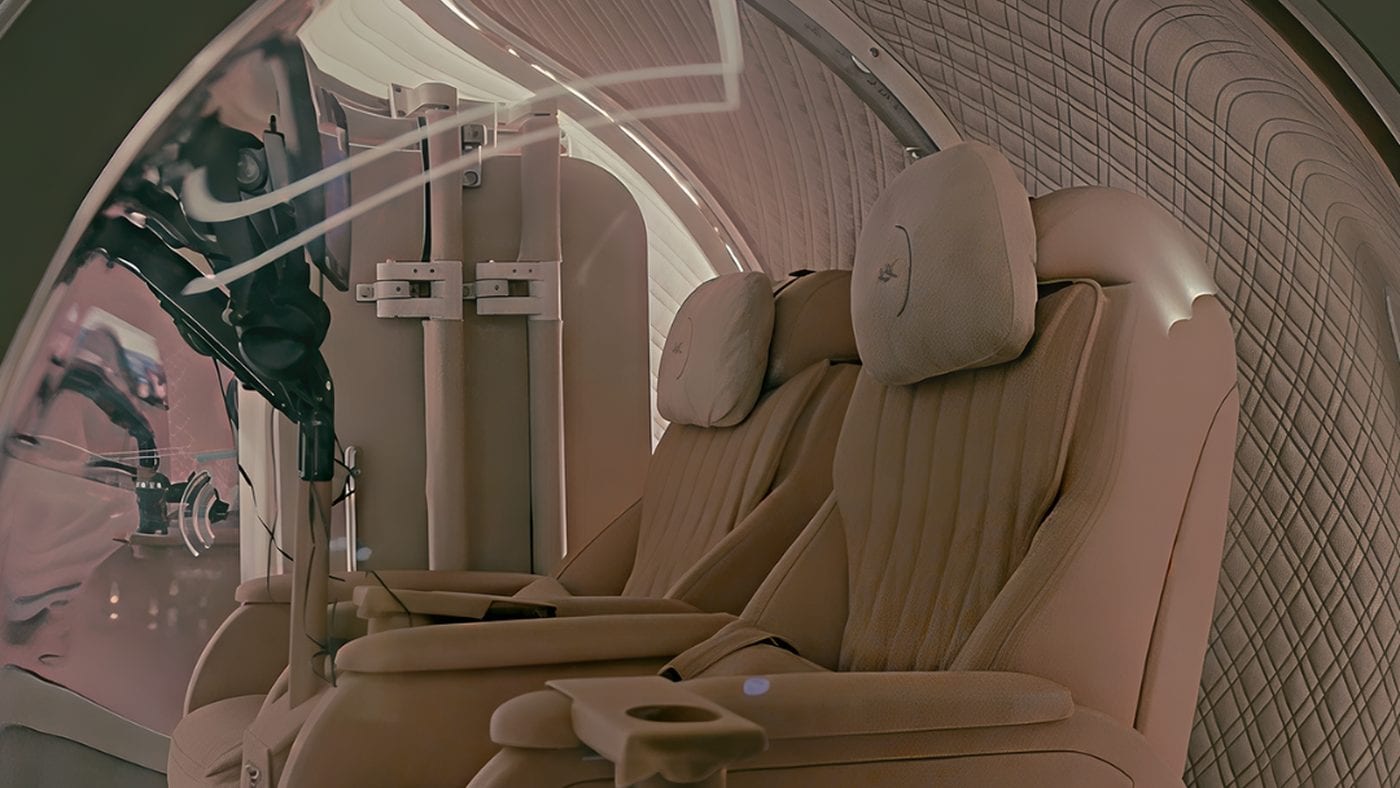
A single-person chamber is a closed acrylic cylinder in which you lie alone for 60 to 90 minutes. You can see out and talk to the staff, but it takes minutes to bring the pressure down. A multiplace chamber is a small room where several people sit together with a mask or hood, and it is the room that is filled with pressurised air. Most people are more comfortable with this. In both you have to equalise the pressure in your ears actively.
Clinic advertising for pressure treatment tends to be reassuring and vague. It pays to know what it is actually like, because whether you can tolerate it is not something you want to discover after six sessions have been paid for.
The hair transplant case report used a single-person chamber: a cylinder you lie in, usually made of clear acrylic. It stays closed for the whole session. Sixty to ninety minutes is a long time to lie still in a tube. You can usually see out and talk to the person operating the chamber, and the pressure can be released if needed. But that takes minutes, not seconds.
A multiplace chamber is a steel vessel the size of a small room. It holds several patients, and usually an attendant sits inside with them. The oxygen comes through a mask or hood, and the pressure in the room itself is built up with ordinary air. Most people are clearly more comfortable with this. You sit upright, have space around you and are not alone.
In both types it takes several minutes to build up the pressure and several minutes to release it again. You feel the pressure in your ears and have to equalise actively, just as when a plane comes in to land.
Why should claustrophobia be taken seriously when HBOT is cosmetic?
Many people stop pressure treatment because the chamber feels too confined. When a hospital is treating a diabetic wound, it is worth working through. With cosmetic HBOT, what has been shown is that fewer people shed early and get folliculitis, while graft survival at nine months did not differ significantly. Six or seven distressing sessions for so little is a bad deal, and nobody should pressure you.
Claustrophobia is one of the well-known practical obstacles in hyperbaric medicine, and many patients stop their course for that reason. When a hospital is treating a diabetic foot ulcer or radiation damage, there is good reason for the staff to help the patient through it.
When the treatment is cosmetic, the calculation looks different. Here you are facing an optional extra used outside its approved indications. The published study found less shedding in the first weeks and fewer cases of folliculitis, but the number of grafts surviving at nine months did not differ statistically significantly. Forcing yourself through six or seven sessions that really distress you for a gain like that is poor value, and nobody should pressure you into it.
Why is the chamber harder to tolerate just after surgery?
You are tired after an FUE operation that has lasted six to eight hours, and the most intensive protocol starts 4 to 6 hours afterwards. Lying still with a freshly operated scalp in a narrow tube is uncomfortable. The forehead and eyes are most swollen on days two to four, halfway through the course. A blocked nose makes equalising harder. And with one session a day for six days, it often gets worse, not easier, as the week goes on.
- You are tired. A large FUE procedure takes six to eight hours. When you are exhausted you tolerate less anxiety, and the most intensive published protocol starts as early as four to six hours into the process.
- Your scalp aches. Just lying still with a freshly operated recipient area is uncomfortable, and in a single-person chamber you can hardly turn over.
- The swelling. The forehead and the area around the eyes swell most on days two, three and four, which is halfway through a course that runs every day for a week.
- A blocked nose. Many people have a blocked nose after a long operation under local anaesthetic. It makes equalising harder and can itself cause unease as the pressure builds.
- The daily routine. Most people can manage one session. Six days in a row is something else entirely, and many find it gets harder over time, not easier.
What can make the pressure chamber easier to tolerate?
Ask for a multiplace chamber if one is available. Sit in the chamber for a while without it being pressurised before you decide. Ask in advance what happens if you need to get out mid-session. Do not prepay for a course without a refund. Start with a single session. Practise equalising your ears. And stop if it is not working.
- Ask for a multiplace chamber. Many people tolerate it far better, and asking costs nothing.
- Try the chamber before you decide. Five minutes inside with the door closed, without pressure, tells you more than any brochure.
- Find out what happens if you need to get out mid-session. Just knowing the answer calms many people. Insist on a concrete answer.
- Do not prepay without a refund. Ask whether you get money back for sessions you do not use. If not, start with a single session.
- Practise equalising. If you cannot clear the pressure from your ears, panic can set in while the pressure is building. It is largely a matter of technique.
- Stop if it does not work. No known medical downside comes from dropping a cosmetic add-on with no proven effect on the final result.
Can you get a sedative to help you through a chamber session?
Usually not. It is the hyperbaric centre that decides, not the hair clinic, and for elective treatment the answer is usually no. The staff need you to be clear-headed so you can equalise your ears, report symptoms of oxygen toxicity and do as you are told when the pressure is released. If you cannot manage the chamber without a sedative, an elective course is usually not for you.
If a pressure chamber is not for you, other add-ons are covered on the page about supportive treatments.
Sources
- Heyboer M, Sharma D, Santiago W, McCulloch N. Hyperbaric Oxygen Therapy: Side Effects Defined and Quantified. Advances in Wound Care, 2017;6(6):210-224. pubmed.ncbi.nlm.nih.gov/28616361
- Giardiello F, De Medeiros Quirino L, Brigante R, Chumak M. Hyperbaric Oxygen Therapy for Enhanced Postoperative Recovery in Hair Transplantation. Cureus, 2025;17(12):e99635. doi.org/10.7759/cureus.99635
- Fan Z, Gan Y, Qu Q, Wang J, Lunan Y, Liu B, Chen R, Hu Z, Miao Y. The effect of hyperbaric oxygen therapy combined with hair transplantation surgery for the treatment of alopecia. Journal of Cosmetic Dermatology, 2021;20(3):917-921. pubmed.ncbi.nlm.nih.gov/32770782
- Undersea and Hyperbaric Medical Society. Indications for Hyperbaric Oxygen Therapy (approved indications list). uhms.org/resources/featured-resources/hbo-indications.html
This article summarises published research and standard clinical practice as general information. It is not medical advice and does not replace the instructions from the team operating on you. If they tell you something different from what is written here, follow their advice.
Wondering what's possible for your hair?
Send three sharp photos of your hair, from the front, the top and the back. You'll get an honest answer on what can be done, roughly how many grafts it would take and what it costs.
- Free and with no obligation
- Photos are assessed by the clinic's medical team
- Replies usually within an hour in the daytime


A study tells you something about groups. Only a doctor who has seen your photos can say what applies to your hair. The medical team at the clinic at the top of our ranking offers a free assessment.
Goes to the clinic at the top of our ranking.