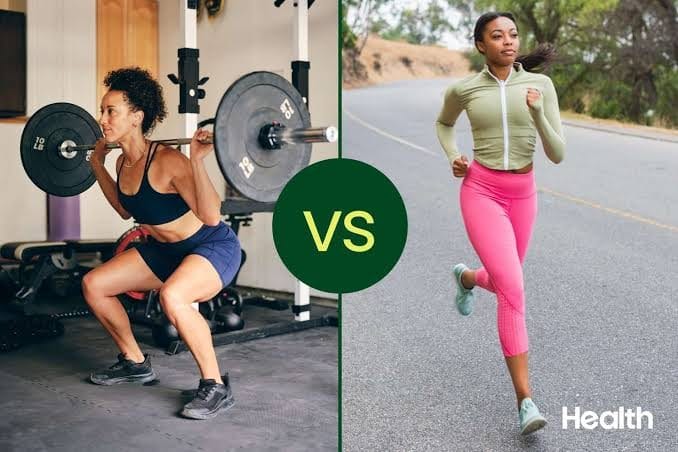
Cardio or weights after a hair transplant: which comes back first?
Cardio comes back first: light cardio around week two and full cardio in weeks three and four, while heavy lifting waits until around week four after FUE and longer after FUT. Running and weights each threaten a different part of your head.
Running and weights each threaten a different part of your head. Cardio is mainly a problem for the recipient area, because you sweat for a long time. Strength training is mainly a problem for the stitches in the donor area, because you strain and your blood pressure rises. So after FUT (strip method), the running shoes come out long before the weights.
Why is sweat the main problem with cardio?
Running, cycling and other endurance training keep you sweating for a long time. Salt and moisture soften the skin where the grafts sit and give folliculitis better conditions. After the first week the problem isn't the effort, it's the heat and the duration. Twenty easy minutes in cool air is something entirely different from a long session in a heated room.
Why is strength training a different kind of risk?
When you lift heavy weights, you brace your body and the pressure in your chest and abdomen rises sharply. That travels up to your head and can cause heavier swelling and more oozing early on. After FUT (strip method), the straining pulls on stitches that are already tight, and that's exactly how a strip scar often widens. So FUT patients have to wait longer for weights than FUE patients.
In what order do cardio and weights come back?
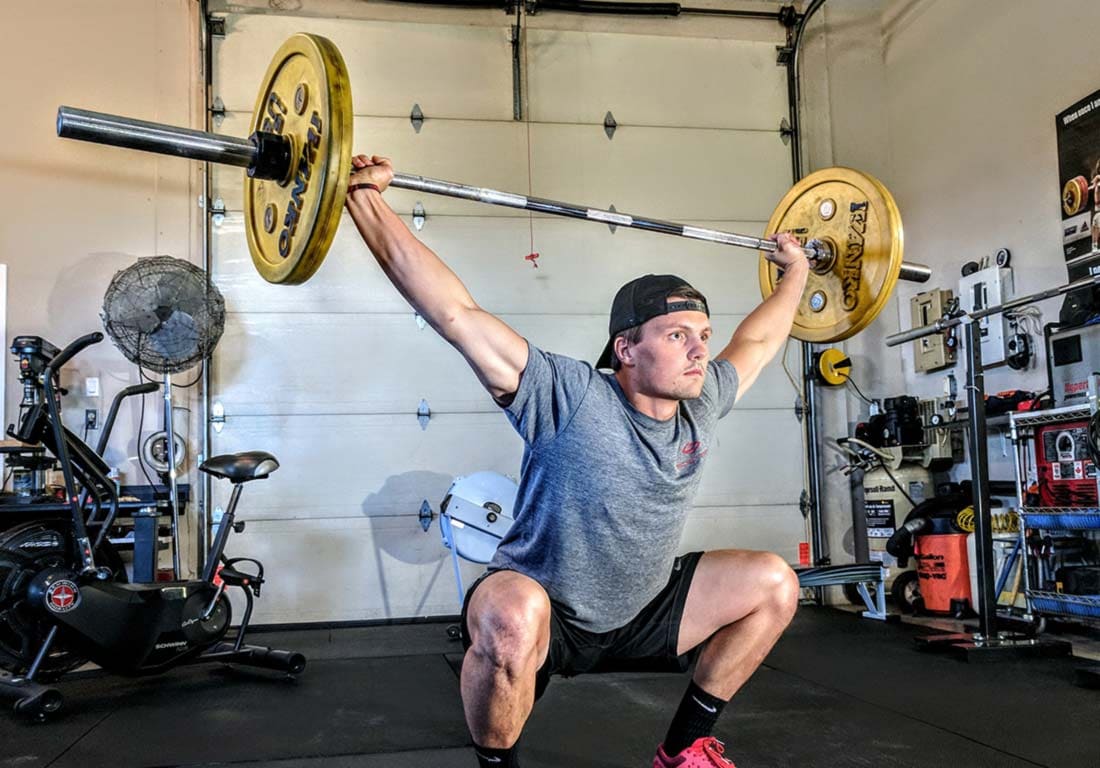
Walking is fine almost straight away. Light, cool and short cardio suits around week two. In weeks three and four, full cardio and light strength training are fine. Heavy compound lifts wait until around week four after FUE, and longer after FUT, on your clinic's advice.
- Walking: almost straight away
- Light cardio: around week two, cool and short
- Full cardio: weeks three and four
- Light strength training: weeks three and four
- Heavy compound lifts: around week four after FUE. After FUT the clinic decides, and it takes longer
Which details do people easily forget?
That the training top pulled over your head is often riskier than the session itself. That headbands and caps hold sweat exactly where it does most harm. That a trip to the pool also means chlorine. And that hot yoga brings all the risks at once.
- The top you pull over your head is often worse than the session
- Headbands and caps hold sweat exactly where it does most harm
- A pool also means chlorine
- Hot yoga gives you every risk at once
Both kinds of training fit into the step-by-step plan in our aftercare guide.
Sources
- Romera de Blas C, Vega Díez D, Ricart Vayá JM, Gómez Zubiaur A. Complications in follicular unit excision hair transplantation: current evidence and practical approaches. Frontiers in Medicine, 2026;13:1750989. pubmed.ncbi.nlm.nih.gov/41709896
- Kerure AS, Patwardhan N. Complications in Hair Transplantation. Journal of Cutaneous and Aesthetic Surgery, 2018;11(4):182-189. pubmed.ncbi.nlm.nih.gov/30886471
- Jacob JS, Tschen J. Hot Tub-Associated Pseudomonas Folliculitis: A Case Report and Review of Host Risk Factors. Cureus, 2020;12(9):e10623. pubmed.ncbi.nlm.nih.gov/33123436
- Bernstein RM, Rassman WR. Graft Anchoring in Hair Transplantation. Dermatologic Surgery, 2006;32(2):198-204. pubmed.ncbi.nlm.nih.gov/16442039
This text summarises published studies and common clinical practice. It is general information, not medical advice. Instructions from your own surgical team always come first, including where they differ from what is written here.
Wondering what's possible for your hair?
Send three sharp photos of your hair, from the front, the top and the back. You'll get an honest answer on what can be done, roughly how many grafts it would take and what it costs.
- Free and with no obligation
- Photos are assessed by the clinic's medical team
- Replies usually within an hour in the daytime


A study tells you something about groups. Only a doctor who has seen your photos can say what applies to your hair. The medical team at the clinic at the top of our ranking offers a free assessment.
Goes to the clinic at the top of our ranking.