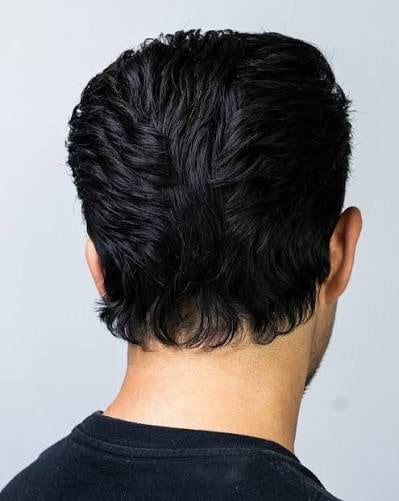
The donor assessment at your consultation: what should be measured
A proper donor assessment measures density in several places, records hair thickness and hairs per unit, checks the edges for miniaturisation under magnification and ends with an estimate of your lifetime reserve.
A proper donor assessment gives you measured density from several sites, hair thickness, the number of hairs per unit, a check of the edges under magnification for miniaturisation and, finally, a figure for how many grafts you have to work with for the rest of your life. If any of this is missing, what you got was a guess based on a photo.
Why is the donor assessment the most important part of the consultation?
Because every other decision rests on it. Consultations often spend most of their time on the hairline and how much can be covered, but without an examination of the donor area, any graft count is just a guess based on a photo.
Most of a consultation tends to be spent on the area that will receive the grafts. Where should the hairline go? How much can be covered? What will it look like? That's what you care about as a patient, and it's what clinics like to show off.
Whether any of it is possible at all is decided at the back of your head. The donor assessment is the figure everything else is calculated from. The examination takes only a few minutes. Even so, it's the part most often skipped when the consultation happens over video or the clinic relies on high volume.
If your donor area was never examined under magnification, the graft count you were given was a guess based on a photo.
Which measurements should a donor assessment include?
Four: the density of follicular units per cm² from several sites, where around 65 to 85 is normal, the average number of hairs per unit, hair thickness and whether there is any miniaturisation. That last one alone can stop an operation.
1. How densely the units are packed
Measured with a densitometer or trichoscope on a small patch where the hair has been clipped short, and given as follicular units per cm². The surgeon should measure several places in the donor area, not just one. A normal figure is around 65 to 85 per cm², and about 40 or lower points to a weak donor area. It should be written down, and you are entitled to know it.
2. Hairs per follicular unit
How many hairs each unit contains on average. This number converts grafts into hairs, and it varies a lot from person to person.
3. Hair thickness
The diameter of each hair, assessed with the same magnification. Fullness is about how much hair mass sits on the head, so thickness counts at least as much as density.
4. Miniaturisation
Are there hairs of different thicknesses, with thin hairs scattered among the strong ones? The whole area should be examined, including the edges. This finding shows whether the donor area will hold up or is starting to thin, and it can be reason enough to say no to surgery.
Beyond the numbers, what should the assessment conclude?
Three conclusions: an estimate of how many grafts you have over your lifetime, not just today, an assumption about the worst pattern you could end up with (that is, which Norwood stage the plan is based on), and a split of the reserve between this session and later ones.
Numbers on their own are not an assessment. They should lead to three conclusions.
- Your lifetime reserve. The total number of follicular units you realistically have available across every session you will ever have, not just what the surgeon can harvest on the day of surgery.
- The worst-case pattern. Which Norwood stage the plan allows for, and why: age, family history of hair loss and how fast it is progressing now.
- The allocation. How much of the reserve is used now and how much is saved, and which areas come first.
If these three are spelled out, you have a plan. If they aren't, you have a price quote.
What else should a thorough donor consultation cover?
How short you want to be able to cut your hair, whether you have had keloids or thickened scars, how elastic your scalp is if FUT is being considered, medication that protects the surrounding native hair, and standardised photos of the back of your head taken before the procedure.
- Your preferred hair length. If you still want to be able to wear your hair short, that limits how much can be taken out. Say so out loud.
- Previous scars. Keloids or thickened scars change the risk with both FUE and FUT.
- Scalp elasticity, if strip surgery is an option.
- Medication. What could preserve the surrounding native hair, agreed with a doctor you trust who knows your health.
- Photos. Photos of the back of your head taken to a fixed protocol before the procedure, so you have something to compare against later.
Which six questions show whether the clinic has assessed your donor area properly?
Ask about your density per cm² and how many places it was measured, hairs per unit and hair thickness, whether the edges were checked under magnification, how big your lifetime reserve is, which Norwood stage the plan assumes, how many grafts are being saved, and ask to see donor areas twelve months after surgery.
- How many units per cm² do I have in the donor area, and in how many places did you measure?
- How many hairs do my units have on average, and how thick are the hairs?
- Did you look at the edges of the donor area under magnification, and did you find miniaturisation?
- How big is my lifetime reserve, and which Norwood stage does the plan assume?
- How many grafts are being saved for later sessions?
- Can I see your patients' donor areas twelve months on, with short hair?
If you get clear answers to all six, the clinic has done its job. If all six are met with vague answers, you have bought a graft count, not an assessment.
Sources
- Jimenez F, Ruifernández JM. Distribution of human hair in follicular units. A mathematical model for estimating the donor size in follicular unit transplantation. Dermatologic Surgery, 1999;25(4):294-298. pubmed.ncbi.nlm.nih.gov/10417585
- Maas D, et al. Rethinking the occipital scalp as a control in advanced androgenetic alopecia. Journal of the American Academy of Dermatology, 2026 (ahead of print). pubmed.ncbi.nlm.nih.gov/42398778
- Xu Y, et al. Case Report: Paired vertex-occipital assessment reveals donor-area involvement in diffuse unpatterned alopecia. Frontiers in Medicine, 2026;13:1797275. pubmed.ncbi.nlm.nih.gov/41982548
- Romera de Blas C, Vega Díez D, Ricart Vayá JM, Gómez Zubiaur A. Complications in follicular unit excision hair transplantation: current evidence and practical approaches. Frontiers in Medicine, 2026;13:1750989. pubmed.ncbi.nlm.nih.gov/41709896
- Zhao Y, Zhang J, Jiang B, Fan Z, Miao Y. Development of an Evaluation System to Classify Beard Donor Area for Hair Transplantation. Dermatologic Surgery, 2025;51(9):882-886. pubmed.ncbi.nlm.nih.gov/40323042
This article is based on published research and standard clinical practice. It is general information, not medical advice, and it never takes priority over what your own surgical team tells you. If they say something different from what you read here, follow their advice.
Wondering what's possible for your hair?
Send three sharp photos of your hair, from the front, the top and the back. You'll get an honest answer on what can be done, roughly how many grafts it would take and what it costs.
- Free and with no obligation
- Photos are assessed by the clinic's medical team
- Replies usually within an hour in the daytime


A study tells you something about groups. Only a doctor who has seen your photos can say what applies to your hair. The medical team at the clinic at the top of our ranking offers a free assessment.
Goes to the clinic at the top of our ranking.