Twelve donor area questions to get answered before you book
A dozen precise questions reveal whether the clinic has examined the back of your head, or just given you a graft count.
A dozen precise questions show you the difference between a clinic that has examined your donor area and one that has just given you a number of grafts. The answers you get should be figures and findings. Reassuring words don't count.
Why do questions about the back of the head matter more than questions about the front?
Because mistakes in the donor area can't be corrected. Extracted follicles don't come back, dot scars remain, and a depleted donor area is regarded as an FUE complication that no treatment can repair. The hairline and density, by contrast, can usually be adjusted later. So spend most of the consultation on the donor questions.
At most consultations the conversation is about the recipient area: how the hairline will be drawn, how much will be covered, how dense it will be and how it will look. That's what you care about most, and most of it can be adjusted if something goes wrong. A hairline can be softened, and density can be added.
What happens at the back of the head can't be adjusted. Extracted follicles don't grow back, the small scars remain, and a depleted donor area is on the list of FUE complications with no treatment that can restore it.
So use your consultation time on the questions below. If the clinic has done its homework, it will answer each of them in a single sentence.
What should you ask to find out whether the donor area has really been examined?
Ask for your donor density, measured with a densitometer at several points and given per cm², the number of hairs per unit and how thick the hairs are. Ask whether the back of the head was examined under magnification, including the edges, for miniaturisation, and whether diffuse unpatterned alopecia has been ruled out. That can't be decided by a glance at your head.
- How many follicular units do I have per cm² at the back, and how many measuring points did you use? You should get a figure, measured with a densitometer, from several points.
- Is the figure in units or in hairs, and how many hairs do I have on average per unit? The two measures aren't the same, and you should get both.
- How thick are my hairs? It's the volume of hair that gives coverage. The number of follicles alone says little.
- Did you examine my donor area under magnification, including the outer edges, and did you find miniaturisation? A finding like that can mean you shouldn't have surgery.
- Have you ruled out diffuse unpatterned alopecia? It can't be determined with the naked eye.
Which questions show whether the plan will hold up for many years?
Ask for a figure for your lifetime reserve, and for the Norwood stage the plan is aiming at. The right answer is the worst stage you could realistically reach, not where you are today. Find out whether the plan still holds in the worst case, how many grafts are set aside for later sessions, and how much of the density at the back will be harvested.
- How large is my donor reserve for my whole life? The answer should be a figure.
- Which Norwood stage is the plan aiming at, and why? It should be the worst stage you're likely to end up at, not the one you're at now.
- If I lose everything that can go, will the plan still look right?
- How many grafts are you saving for later sessions? You should get a figure, and “we'll see” isn't an answer.
- What percentage of the measured density will be extracted, and from how large an area?
How can you tell how careful the clinic is with the extraction itself?
Ask about the punch diameter and the reasoning behind it, what share of grafts they transect and how they calculate it, whether extracted and implanted grafts are counted separately and which one you pay for, who does the extraction, and how long the grafts can be out of the body at worst.
- What is the punch diameter, and why does it suit my hair?
- What share of grafts do you transect, and how do you calculate it?
- Do you keep track of both extracted and implanted grafts, and which figure goes on the bill?
- Who does the extraction, and is it the same person from start to finish?
- Are grafts implanted while extraction is still going on, and how long could the first graft be left outside the body?
Which single question tells you most about the clinic?
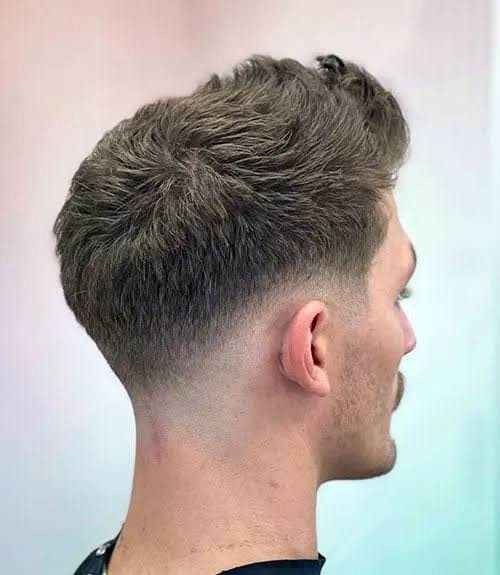
Ask for photos of the back of the head of the clinic's own patients twelve months after surgery, with short hair, taken from behind in good lighting. If several such photos appear without hesitation, that's a very good sign. If you're steered towards photos of the front, given one photo with long hair or told about patient consent, the clinic is dodging the question.
Can I see photos of the back of the head of your own patients, twelve months after surgery, with short hair, taken straight from behind in good lighting?
Every clinic has before and after photos of the hairline. Very few show the back of the head unprompted, because that's where you can see whether the clinic held back, and where over-harvesting can't be explained away.
Notice the reaction when you ask. If several such photos turn up straight away, that's the best sign you can get. If you're shown results from the front, a single photo with long hair, or an explanation that patients haven't given consent, the clinic has answered something you didn't ask.
What should you tell the clinic, rather than ask?
Tell the clinic how short you want to cut your hair, because that sets a limit on the extraction that can't be added later. Also mention keloids or thick scars in yourself or your family, because that changes the risk assessment for both FUE and the strip method.
- How short you want to wear your hair. It sets constraints on the extraction that can't be changed once the procedure is done. Say it clearly.
- Keloids or thick scars, either in you or in close relatives. It affects the risk with both methods.
What should you document yourself before and after the procedure?
Take your own photos of the back of your head before the procedure, straight from behind, at a hair length you know and in the same light, and take new photos after three, six and twelve months. It takes a minute, and the photos will be the only evidence of how the back of your head looks that doesn't come from the clinic. Everything else depends on the clinic.
Sources
- Jimenez F, Ruifernández JM. Distribution of human hair in follicular units. A mathematical model for estimating the donor size in follicular unit transplantation. Dermatologic Surgery, 1999;25(4):294-298. pubmed.ncbi.nlm.nih.gov/10417585
- Romera de Blas C, Vega Díez D, Ricart Vayá JM, Gómez Zubiaur A. Complications in follicular unit excision hair transplantation: current evidence and practical approaches. Frontiers in Medicine, 2026;13:1750989. pubmed.ncbi.nlm.nih.gov/41709896
- Maas D, et al. Rethinking the occipital scalp as a control in advanced androgenetic alopecia. Journal of the American Academy of Dermatology, 2026 (ahead of print). pubmed.ncbi.nlm.nih.gov/42398778
- Xu Y, et al. Case Report: Paired vertex-occipital assessment reveals donor-area involvement in diffuse unpatterned alopecia. Frontiers in Medicine, 2026;13:1797275. pubmed.ncbi.nlm.nih.gov/41982548
- Kim J, Ko YU, Yi KH. The condition of hair follicles produced by different punching methods during FUE surgery. Journal of Cosmetic Dermatology, 2024;23(12):4202-4207. pubmed.ncbi.nlm.nih.gov/39152658
- Parsley WM, Perez-Meza D. Review of factors affecting the growth and survival of follicular graft. Journal of Cutaneous and Aesthetic Surgery, 2010;3(2). jcasonline.com
Here we summarise published studies and standard clinical practice. The text is intended as general information and is not medical advice. Nor does it replace the instructions from the team operating on you. If they tell you something different from what is written here, their advice applies.
Wondering what's possible for your hair?
Send three sharp photos of your hair, from the front, the top and the back. You'll get an honest answer on what can be done, roughly how many grafts it would take and what it costs.
- Free and with no obligation
- Photos are assessed by the clinic's medical team
- Replies usually within an hour in the daytime


A study tells you something about groups. Only a doctor who has seen your photos can say what applies to your hair. The medical team at the clinic at the top of our ranking offers a free assessment.
Goes to the clinic at the top of our ranking.