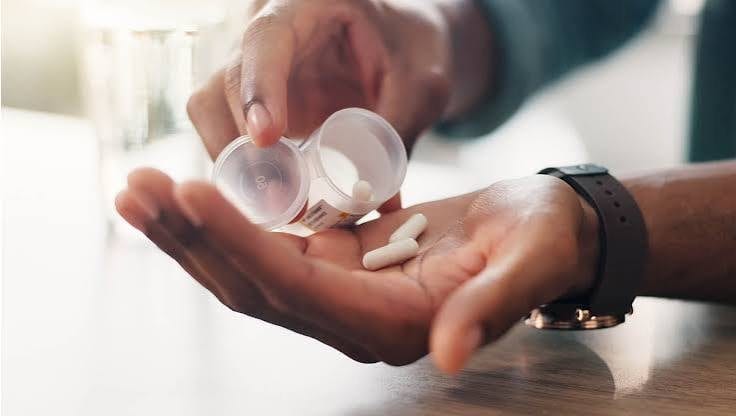
Can you take ibuprofen after a hair transplant?
Often not in the first few days. Anti-inflammatory painkillers such as ibuprofen ease both pain and swelling, but they also weaken the platelets. That's why many clinics choose paracetamol for the first few days.
NSAIDs, or non-steroidal anti-inflammatory drugs, ease pain and swelling. They also affect the platelets, which is why many clinics prefer paracetamol for the first few days. Use what the clinic has recommended, not whatever happens to be in the cupboard at home.
Why can NSAIDs cause more bleeding after the procedure?
Ibuprofen, naproxen, acetylsalicylic acid (aspirin) and similar NSAIDs make it harder for platelets to stick together. That's why many clinics have been cautious with them straight after the procedure. Even so, studies from skin surgery haven't shown more bleeding with short-term ibuprofen use. Starting with paracetamol is clinic practice more than it is evidence.
When can you take NSAIDs again?
Many clinics give the go-ahead again once the first few days are over and the bleeding risk has passed. At that point, they can help a lot with tenderness in the donor area. When it's safe for you should be decided by the clinic, not a general rule of thumb. Practice varies, and the answer also depends on what else you take.
What if you take an anti-inflammatory regularly?
Raise it at the consultation and don't decide anything on your own. That includes low-dose aspirin for heart and vascular disease. It's a treatment your doctor has put you on, and it shouldn't be stopped just because you think it's convenient. Whether you should take a break is decided by the doctor who prescribed the medicine, together with the surgeon.
What simple rules apply to painkillers after the procedure?
Use what the clinic has prescribed, at the intervals you've been given. Don't buy anti-inflammatories at the pharmacy and add them on your own, and don't take two products with the same active ingredient. The clinic should know about every regular medicine and supplement you take. If the pain gets worse after the first few days instead of better, let them know.
- Stick to the medicines and times the clinic has given you
- Ask before taking anti-inflammatories from the pharmacy
- Check the ingredients list so you don't double up on the same active ingredient
- Tell the clinic about regular medicines and supplements
- Speak up if the pain increases after the first few days
Painkillers are only one part of the plan for the first few days. You'll find the rest in the aftercare routine.
Sources
- Nelson SC, Nelson TG, Mortimer NJ, Salmon PJ. Can I take my normal painkillers doctor? Therapeutic management of pain following dermatological procedures. Australasian Journal of Dermatology, 2019;60(1):19-22. pubmed.ncbi.nlm.nih.gov/30187453
- Sniezek PJ, Brodland DG, Zitelli JA. A randomized controlled trial comparing acetaminophen, acetaminophen and ibuprofen, and acetaminophen and codeine for postoperative pain relief after Mohs surgery and cutaneous reconstruction. Dermatologic Surgery, 2011;37(7):1007-1013. pubmed.ncbi.nlm.nih.gov/21561527
- Saco M, Golda N. Postoperative Pain Management in Dermatologic Surgery: A Systematic Review. Dermatologic Clinics, 2019;37(3):341-348. pubmed.ncbi.nlm.nih.gov/31084728
- Romera de Blas C, Vega Díez D, Ricart Vayá JM, Gómez Zubiaur A. Complications in follicular unit excision hair transplantation: current evidence and practical approaches. Frontiers in Medicine, 2026;13:1750989. pubmed.ncbi.nlm.nih.gov/41709896
- Trager MH, Gordon ER, Humphreys TR, Samie FH. Part 1: Management of antithrombotic medications in dermatologic surgery. Journal of the American Academy of Dermatology, 2025;92(3):389-404. pubmed.ncbi.nlm.nih.gov/38735483
This page summarises published research as general information. It is not medical advice and not a recommendation to start, stop or change any medicine. Prescription medicines have contraindications and can interact with other medicines, so discuss them with your doctor, who knows your medical history.
Wondering what's possible for your hair?
Send three sharp photos of your hair, from the front, the top and the back. You'll get an honest answer on what can be done, roughly how many grafts it would take and what it costs.
- Free and with no obligation
- Photos are assessed by the clinic's medical team
- Replies usually within an hour in the daytime


A study tells you something about groups. Only a doctor who has seen your photos can say what applies to your hair. The medical team at the clinic at the top of our ranking offers a free assessment.
Goes to the clinic at the top of our ranking.