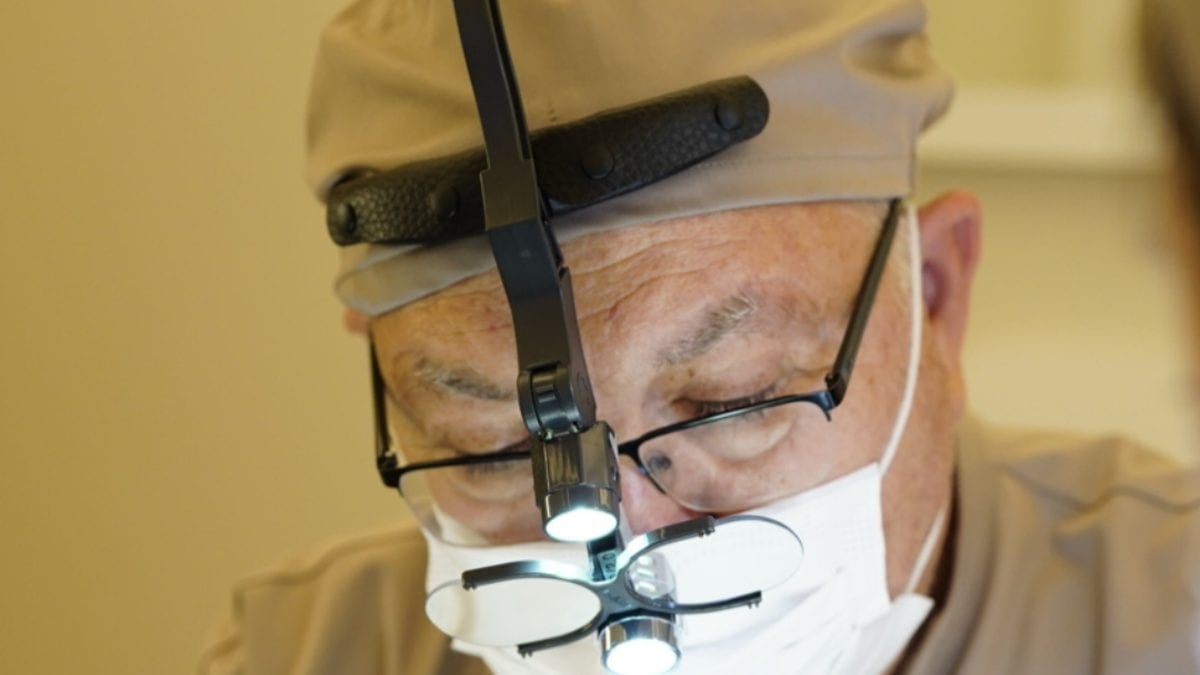
What is FUE? The procedure explained step by step
In FUE, hair is removed in the small groups it naturally grows in, one at a time, with a tiny round hollow punch. Each group is then placed in a pre-made opening in the thinning area.
In FUE, hair is removed in the small groups it naturally grows in, one at a time, with a tiny round hollow punch. Each group is then placed in a pre-made opening in the thinning area. At heart, the surgeon is moving living tissue from one place to another, and everything that happens along the way affects how many of the follicles survive.
What does FUE stand for?
FUE stands for follicular unit excision. Hair grows in small bundles, usually with one to four hairs in each, and in FUE the surgeon removes these bundles one by one with a hollow punch that is rarely wider than a millimetre, before moving them to the thinning area. In FUT (strip method), a strip of skin is removed instead and divided into units under a microscope. The grafts that go in are the same. Only the harvesting differs.
The name sounds technical, but the principle is simple. The back of the head has hair that is largely resistant to the hormone behind hereditary hair loss, and the surgeon moves some of these hairs to where they are needed. No new hairs are created. The number of hairs on your head is the same after the surgery, just distributed differently.
How does an FUE procedure work from start to finish?
The procedure has six phases: first planning and marking, then local anaesthetic in both the donor and recipient areas, then removal of the units one by one, sorting the grafts by how many hairs they carry while they sit in a storage solution, preparing small openings in the recipient area at the chosen angle and density, and finally placing the grafts in openings that match their size.
- Planning and marking. The hairline and the areas to prioritise are drawn on and agreed before shaving.
- Local anaesthetic. Both the area the hair is taken from and the area it goes into are numbed.
- Harvesting. The surgeon drills around each unit with the punch and lifts it out of the back of the head, one at a time.
- Sorting and counting. The grafts are checked, sorted by how many hairs they contain and placed in a storage solution.
- Openings in the recipient area. The team makes small incisions at the angle and density the plan sets out.
- Implantation. Each graft is placed in an opening of the right size for it.
What decides whether FUE is successful?
The result is governed by two things you can't see from the chair. The first is called transection: how often the punch cuts across the follicle instead of going neatly around it. The second is how the grafts are handled from removal to implantation, including how long they are outside the body. The follicle copes less well with a blow to the bulge region than to the bulb at the bottom, so careful hands count.
The patient can't follow either of these while it happens. Transection is about whether the punch hits the right angle and depth, so that it cuts around the follicle and not through it. Handling covers everything that happens in the hours between removal and implantation: whether the grafts are kept moist, whether they are squeezed by the forceps, and how long they have to wait.
According to review articles in the field, the follicle is more vulnerable at the top, in the bulge region, than at the bottom, in the bulb. That explains why gentle handling matters more than many people think. How much the waiting time matters is covered in more detail in the article on how long grafts can survive outside the body.
Does FUE cure hair loss?
No. FUE moves hair you already have, but it doesn't stop the process that made you lose it. The original hair around the grafts can keep thinning in the years that follow, which is why medical treatment is often discussed alongside the surgery.
Sources and caveats
- Rassman WR, Bernstein RM, McClellan R, Jones R, Worton E, Uyttendaele H. Follicular unit extraction: minimally invasive surgery for hair transplantation. Dermatologic Surgery, 2002;28(8):720-728. pubmed.ncbi.nlm.nih.gov/12174065
- Jimenez F, Vogel JE, Avram M. CME article Part II. Hair transplantation: Surgical technique. Journal of the American Academy of Dermatology, 2021;85(4):818-829. pubmed.ncbi.nlm.nih.gov/33915242
- Jiménez-Acosta F, Ponce-Rodríguez I. Follicular Unit Extraction for Hair Transplantation: An Update. Actas Dermo-Sifiliográficas, 2017;108(6):532-537. pubmed.ncbi.nlm.nih.gov/28483047
- Parsley WM, Perez-Meza D. Review of factors affecting the growth and survival of follicular graft. Journal of Cutaneous and Aesthetic Surgery, 2010;3(2). jcasonline.com
This article is based on published research and standard clinical practice. It is general information, not medical advice. Instructions from your own surgical team come first: if they tell you something different from what you read here, follow them.
Wondering what's possible for your hair?
Send three sharp photos of your hair, from the front, the top and the back. You'll get an honest answer on what can be done, roughly how many grafts it would take and what it costs.
- Free and with no obligation
- Photos are assessed by the clinic's medical team
- Replies usually within an hour in the daytime


A study tells you something about groups. Only a doctor who has seen your photos can say what applies to your hair. The medical team at the clinic at the top of our ranking offers a free assessment.
Goes to the clinic at the top of our ranking.