Travel pillow after a hair transplant: do you need one?
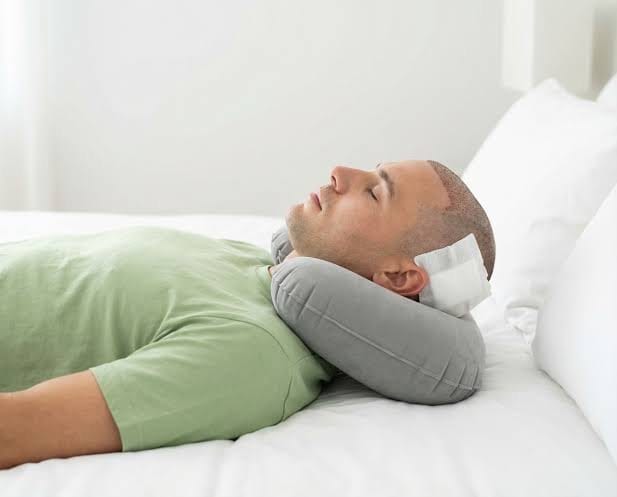
You can manage without one. But for the price, a neck pillow is one of the most useful things you can buy before you have to sleep with fresh grafts.
You can manage without one. But for the price, a neck pillow is one of the most useful things you can buy before you have to sleep with fresh grafts. It lifts the back of your head off the mattress and makes it harder to roll onto the transplanted area during the night.
What does a travel pillow do after a hair transplant?
It helps you stay in the position you've decided on. Lying down on your back with your head raised is easy. Staying that way until morning is another matter. A U-shaped pillow around your neck supports your neck, makes it harder to roll onto your side or front and lifts your head off the mattress. That last part matters most if you have grafts at the temples or above the ears.
How do you choose the right travel pillow?
Choose a pillow with firm filling that won't flatten under the weight of your head. Soft memory foam sinks after a few minutes. It has to be big enough for the pillow, not the bed, to carry the back of your head. A smooth, washable cover is a plus, and skip any model with a high back if your crown has been transplanted.
- Firm filling that holds its shape. Soft memory foam flattens out
- Big enough for the back of your head to rest on the pillow, not the mattress
- A smooth, washable cover
- No high back if you have grafts in the crown
How long is the pillow useful?
Most people use it for 7 to 10 days. That's roughly the window in which the graft anchoring study showed grafts could still come loose. After that the pillow is more about comfort than protection, but it's handy to have in your hand luggage if you expect to nod off in your plane seat on the way home.
What can you use instead of a travel pillow?
A rolled-up towel under your neck, a wedge pillow or a night in a recliner works about as well. The object itself matters little. What counts is that your head is raised and nothing touches the grafts.
Whether you buy a pillow or not, the same sleeping rules apply. You'll find them in the aftercare guide.
Sources
- Bernstein RM, Rassman WR. Graft Anchoring in Hair Transplantation. Dermatologic Surgery, 2006;32(2):198-204. pubmed.ncbi.nlm.nih.gov/16442039
The anchoring study shows how long grafts can come loose. The travel pillow advice is based on common clinic practice.
This text brings together findings from published research and standard clinical practice. It is general information and not medical advice. The instructions from the team that operated on you come first. If they tell you something different from what is written here, follow their advice.
Wondering what's possible for your hair?
Send three sharp photos of your hair, from the front, the top and the back. You'll get an honest answer on what can be done, roughly how many grafts it would take and what it costs.
- Free and with no obligation
- Photos are assessed by the clinic's medical team
- Replies usually within an hour in the daytime


A study tells you something about groups. Only a doctor who has seen your photos can say what applies to your hair. The medical team at the clinic at the top of our ranking offers a free assessment.
Goes to the clinic at the top of our ranking.