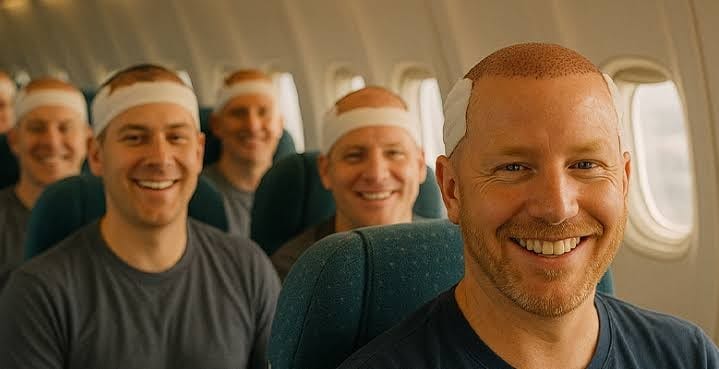
How soon can you fly home after a hair transplant?
You travel home while the grafts are still loosely anchored. Here's when you can fly, what to wear on your head, and how to get through the airport without anything rubbing or pressing.
When can you fly home after a hair transplant?
Usually once the clinic has checked you and washed your hair for the first time. That normally happens a couple of days after the procedure. It lets the clinic confirm that healing is under way, and you leave with your instructions in hand. The flight itself is mostly safe fairly early on. It's what happens around it that you need to watch.
So don't plan a whirlwind trip where you're on the plane a few hours after surgery. Give the grafts some peace, and give the clinic a chance to see you before you head home.
What is the biggest risk on the journey?
Something bumping into or pressing against the area where the grafts sit. In the first few days they are only loosely anchored, and an unlucky knock or rubbing can cost you grafts.
Take extra care when you lift your case down from the overhead locker or collect your luggage from the carousel. Bend down as little as possible and keep your distance in crowds.
What can you wear on your head?
Nothing tight, such as a snug beanie or anything else close-fitting. Many clinics give you a loose hat that protects without touching the grafts, and it's made precisely for the journey home. Wear it.
How should you sit in your plane seat?
Leaning back, but without the back of your head rubbing against the headrest. A neck pillow that keeps your head steady can help, as long as it doesn't rest against the treated area. Keep your head as upright and raised as you can.
Are cabin air and pressure dangerous for the grafts?
No. Dry air and pressure changes in the cabin don't damage the grafts. Swelling of the forehead and around the eyes is common in the first few days, but it appears whether you travel or stay at the hotel.
Drink plenty of water, say no thanks to alcohol on board, and keep your head raised. Painkillers and any other medicines you've been given belong in your hand luggage, not in your suitcase.
How do you keep the area clean while travelling?
By not touching it. At an airport and on board you're surrounded by people and surfaces that thousands have touched, and your hands visit most of them. Don't feel the grafts, and don't lean your head against the window or other surfaces lots of people use.
Leave the scabs alone, even when a long flight gets boring and your fingers are looking for something to do. At home, follow the clinic's washing instructions exactly. You'll find more about the first days in the first 72 hours and the first 10 days.
How do you arrange follow-up once you're home?
Sort it out while you're still there. How will you stay in touch? How do you send photos for them to assess? Who do you call if you're worried or see signs of complications? A good plan for remote follow-up is a hallmark of a reputable clinic abroad.
Read more in follow-up when your clinic is abroad, and about what's normal in the period after the procedure in aftercare.
What should you do before booking your flight?
Ask the clinic which day they want to check you and wash your hair, and book your journey home after that. Choose an aisle seat so you avoid the window and can get up without climbing over anyone. Pack the hat, your medicines and the washing instructions in your hand luggage, and save the clinic's contact details on your phone before you leave.
Always follow the specific advice from your own clinic. This article is general and doesn't replace their individual guidance.
Good aftercare starts with a good plan. The medical team at the clinic at the top of our ranking will go through the whole process with you before you decide.
Goes to the clinic at the top of our ranking.