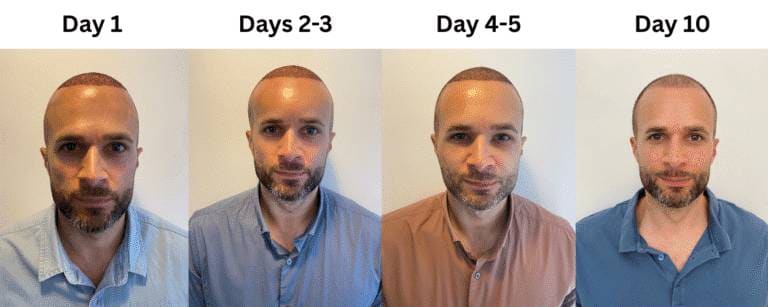
After a hair transplant: caring for your grafts from day 1 to 10
The first ten days decide how many grafts take root. Here's washing, scabs, sleep, medication and everything to avoid, day by day.
Why do the first ten days matter so much?
Because the grafts aren't anchored yet. Straight after surgery they have no blood supply of their own and sit loosely in the tiny channels they were placed in. What you do now, and what you avoid doing, directly decides how many follicles survive and start to grow.
After about 10 to 14 days the grafts have anchored, and the risk of nudging them out of place is largely over. It's a short stretch of discipline compared with the decades you'll have the hair.
What does the scalp look like on the worst days?
It looks worst around days 2 to 5. You'll often have scabs, red skin and swelling all at once. It looks dramatic, but it's completely normal and passes quickly. Know this in advance and you won't panic when you look in the mirror on day three.
Set aside two quiet days with no work or appointments, so you can do your washing routine at your own pace.
What happens day by day?
Days 0 to 1: Mild swelling of the forehead and around the eyes is common. Sleep with your head slightly raised, at around 20 to 30 degrees, ideally with a travel neck pillow. Leave the recipient area completely alone.
Days 2 to 4: The first gentle medical wash usually comes within one to three days of surgery, as the clinic has shown you. If you haven't washed yet, now is when you start. You usually apply a softening lotion and rinse it off without pressure.
Days 5 to 7: The scabs start to come loose. Keep up gentle washes every day.
Days 8 to 10: Most of the scabs are gone, and the scalp looks much calmer.
How do you wash without damaging the grafts?
With your hands and low water pressure. Use the lotion, foam and shampoo the clinic gave you. Never point a hard shower jet at the grafts. Instead, pour the water gently over your head with your hand or a small cup. Pat lightly rather than rubbing, and use your fingertips, never your nails.
The scabs should fall off on their own. Don't pick at them. If you pull a scab off before it's ready, the follicle underneath can come with it. From around day 7 to 10, small circular movements with your fingertips while washing can help the last scabs come away.
How should you sleep, and what about the swelling?
With your head raised for the first 3 to 5 nights. That keeps the swelling down. Many people use a travel neck pillow so the back of the head, where the grafts were taken from, doesn't rub against the pillow. Around days 2 to 4 the swelling can drift down towards the eyes. It looks odd, but it's harmless and goes away on its own.
Take the medication you were given exactly as prescribed. It's usually painkillers, and sometimes antibiotics and an anti-inflammatory. If your clinic follows a different plan from the one you read about online, your clinic's plan is the one that counts.
What should you stay away from?
- Sweat and hard exercise. Weight training, running and saunas wait for at least 2 to 3 weeks.
- Direct sun on the scalp. Wear a loose-fitting hat outdoors.
- Smoking and alcohol. Both weaken circulation and healing in the first few days.
- Chlorinated and salt water. Pools and sea swimming have to wait several weeks.
- Knocks and bending down deeply. Watch out for door frames and car doors, and avoid hanging your head down low.
If you want to see the rest of the timeline, including how the hair grows in month by month, you'll find it in the aftercare guide.
Do food and rest make a difference?
Yes. Your body is now building new blood vessels to every single graft, and that takes building material. Drink plenty, eat enough protein and get lots of sleep in the first few days. Avoid sudden movements that put strain on the scalp.
What do you do once the ten days are over?
Take a photo of the recipient area on day 10 and save it with the date. That's the baseline you'll compare against in the months ahead. Around weeks two to three, many of the new hairs will fall out. That's expected, and you can read why in the article on shock loss. Read it now, so you're prepared when it happens.
Good aftercare starts with a good plan. The medical team at the clinic at the top of our ranking will go through the whole process with you before you decide.
Goes to the clinic at the top of our ranking.