Why do new hairs fall out after a hair transplant? Shock loss explained
Around two weeks after surgery, the new hairs start to fall out. It feels like a setback, but it's a sign that everything is on track. See what's going on in the follicles, and when to expect new hair.
Why do you lose the new hairs after a couple of weeks?
Because the follicles take a break after being moved, and they let go of the hair shaft. This is called shock loss, and almost everyone who has a hair transplant goes through it. It usually starts somewhere between the second and third week. The hairs you proudly photographed when you got home fall out.
Many people then think the surgery has gone wrong. It's the other way round. Shock loss is an expected part of the process. It shows that the follicles are following their normal cycle. The problem is that few people are prepared for how alarming it can look. A good clinic explains this to you before surgery, precisely because it will happen to most patients.
What happens to the follicle when the hair falls out?
It stays in the skin. You only lose the hair shaft itself. The follicle stays put, rests for a while in what's called the telogen phase, and after a few months starts producing a new hair. The new hair is permanent.
The reason for the break is the strain that being moved puts on the follicle. It has been detached from where it grew, gone without a blood supply for a short time and been placed in a new area. That stress pushes it into the resting phase, and the old hair is pushed out. This is a completely natural reaction by the body. It doesn't mean the grafts are being rejected, and it doesn't mean anything was done wrong.
Can the hair you already had fall out too?
Yes, some people temporarily lose a little of their own hair around the treated area. This is also called shock loss, and the cause is the surgical stress on the scalp. In the vast majority of people, these hairs grow back too once the follicles have recovered.
That can make the area look thinner for a while than it did before surgery. It's unpleasant, but temporary. To read more about how the donor area and the rest of the scalp behave in the first weeks, see the article on the first ten days after the procedure.
When does the hair come back?
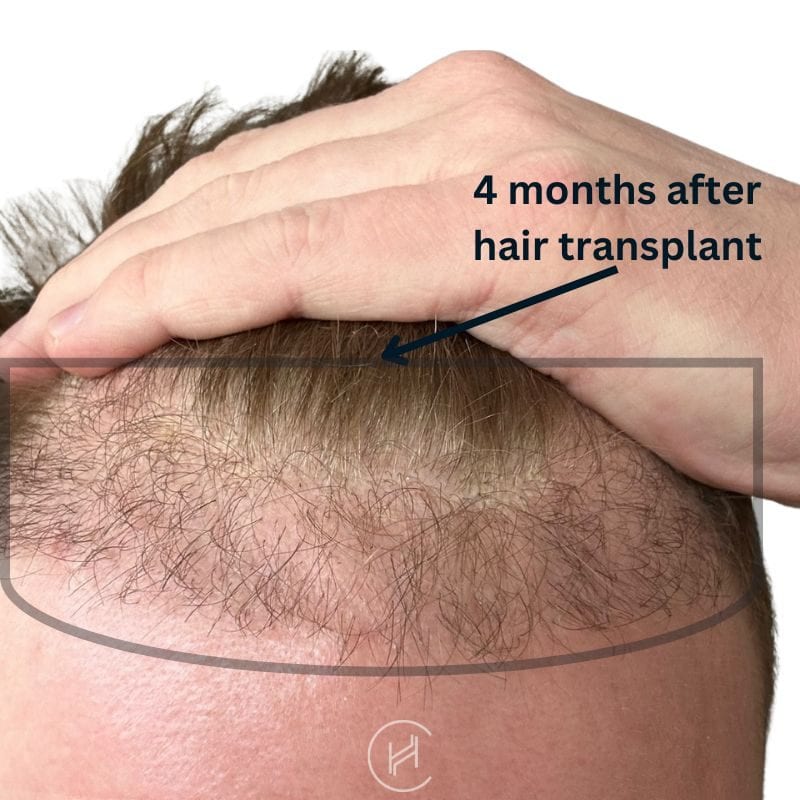
The first new hairs usually appear after three to four months, and you see the final result after about a year. This is what the timeline usually looks like:
- Weeks 1 to 2: The scabs come loose. The transplanted hairs are still in place.
- Weeks 2 to 3: Shock loss arrives, and the transplanted hairs fall out. Exactly as expected.
- Months 3 to 4: New, permanent hairs start to come through. At first they're often thin and soft.
- Month 6: About half of the final result is usually visible.
- Month 12: You see the result at full density. The crown is often the last area to finish.
Several months pass between the shedding and the new growth. During that time the area can look thinner than it did the day after surgery. Think of it as a valley you have to pass through, not a road that comes to an end.
How do you get through the wait?
With knowledge and patience, and by not judging the result before it exists. Once you know the shedding is expected and will pass, it loses much of its fear. Nobody can say anything about the result while the scalp is still waiting for new growth. That begins around month 3 to 4 at the earliest, and the process isn't finished until after about 12 months.
Take dated photos, always in the same light and from the same angle, for example once a month. That way you see the real progress instead of reacting to how the mirror looks on a random Tuesday. Many people say the waiting is the hardest part of the whole journey, because the changes happen so slowly.
Follow the clinic's care advice closely during these months. The aftercare guide covers the essentials. If you're unsure about anything, ask the clinic. If it explained shock loss to you beforehand and replies when you get in touch along the way, that's a good sign.
When is it something other than shock loss?
When the scalp shows signs of infection or inflammation. The shedding itself needs no action. But contact the clinic if you notice redness that gets worse, warmth, pus, severe pain or fever, in either the donor or the recipient area. This is rare, but it should be assessed quickly by a professional.
If it's just the amount of hair in the sink that worries you, a short chat with the clinic is often enough to put your mind at rest. Reputable clinics expect questions like these and are happy to answer. It's part of proper follow-up. Read more under aftercare.
What should you do today if your hair has started to fall out?
Take a photo of the recipient area now and write the date on it. Set a reminder to take the next one in four weeks, in the same light. Keep up the washing routine and the medication you were given, and don't pick at or pull hairs that are loose. If you see signs that don't belong to normal healing, call the clinic the same day.
This article is general information and doesn't replace the advice from your own clinic.
Good aftercare starts with a good plan. The medical team at the clinic at the top of our ranking will go through the whole process with you before you decide.
Goes to the clinic at the top of our ranking.