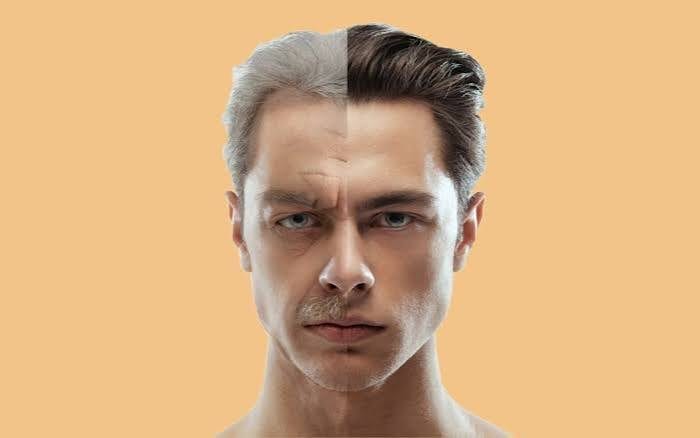
How does ageing scalp skin change the look of your grafts?
Over the years, the skin of the scalp gets thinner and less elastic. That gradually changes how the grafts sit and how the scars look.
The scalp gets thinner and less elastic with age, and that slowly changes how the grafts sit and how the scars look. The changes are gradual and small, and the lower contrast between hair and skin once the hair turns grey largely makes up for them.
How does the skin of the scalp change as you get older?
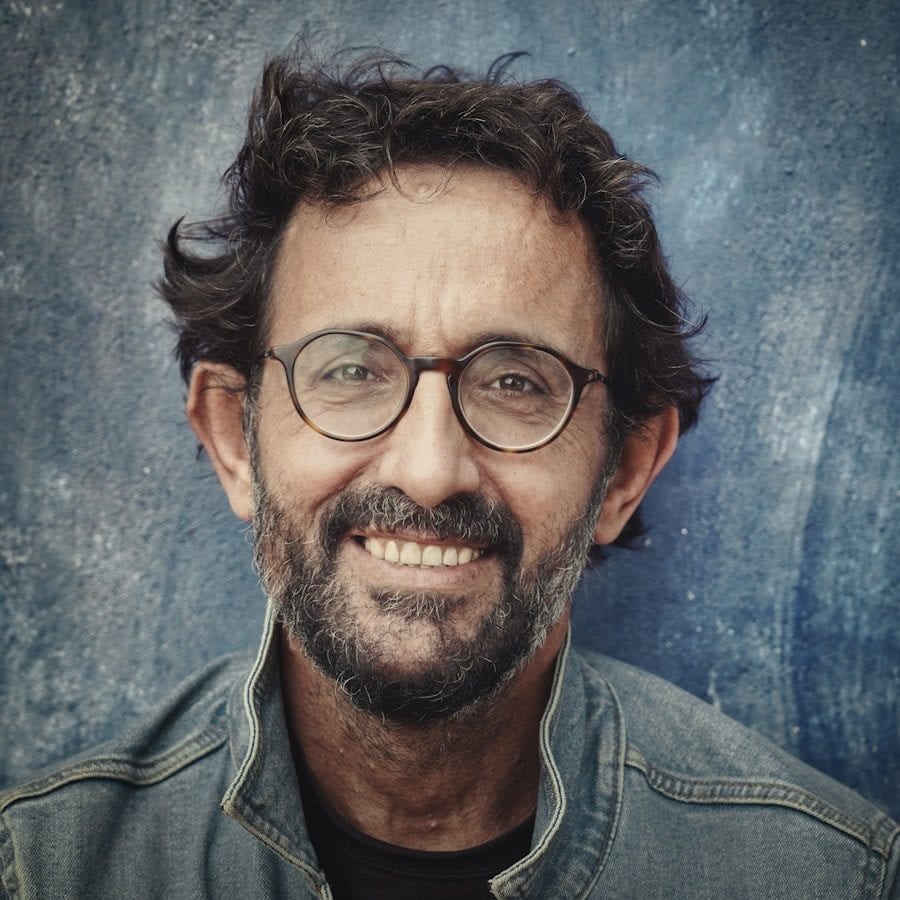
The scalp ages like the rest of your skin. The dermis gets thinner and contains less collagen, elasticity and mobility decline, and the blood supply in the small vessels gets poorer. Many years of sun leave sun-damaged skin, and spots and uneven colour change the colour behind the hair.
The scalp ages in the same way as the rest of your skin. It just gets talked about less, because hair usually hides it.
- The dermis gets thinner, and there is less collagen.
- Elasticity declines. The scalp becomes less mobile, and the skin sits differently over the skull.
- Blood supply weakens in the fine network of blood vessels in the dermis.
- Sun damage builds up where the skin has been exposed to sun for many years. This applies especially to men who have kept their hair short for decades.
- Pigment changes. Spots and uneven colour come with the years and give the hair a different backdrop.
What does ageing skin do to a transplanted result?
The effects are real but small. The angle the hairs grow out at can change slightly, existing scars, especially a strip scar, can become a little more visible, and old pitting or bumpiness from older techniques can show more. Uneven skin colour can also change the contrast. None of this makes the grafts fail.
The changes are real, but small. None of them cause grafts to die.
- The exit angle. With thinner, slacker skin, the angle at which the hairs grow out can shift slightly. Most people don't notice, even after several decades.
- The scars. Thinner, less resilient skin can make old scars a little more visible, especially a strip scar.
- The surface around the grafts. Pitting or bumpiness (a cobblestone effect) from older techniques can become slightly more noticeable as the surrounding skin changes.
- The contrast. Uneven pigmentation means the skin between the hairs looks different than before.
Nobody has published long-term studies of this in people who have had a transplant. What we know comes from general dermatology and clinical experience.
What matters more than the skin when a result is twenty years old?
When you look in the mirror twenty years on, three other things have mattered more than the skin. Losing your own hair around the grafts is by far the biggest cause of change. All hair, moved or not, gets thinner with age. And grey hair gives less contrast with the scalp and usually makes the hair look denser.
Making skin ageing a main factor for a twenty-year-old result would give the wrong picture. Other things clearly matter more.
- Your own hair around the grafts disappears. Nothing changes a result more than this.
- Age thins the hair, both the donor hair and the transplanted hair. The strands get finer and fewer, quite apart from hereditary hair loss.
- The hair turns grey. The contrast with the scalp gets smaller, and the hair usually looks denser.
That last point deserves attention, because it pulls in the opposite direction to the first two. A man with grey hair, moderate density and somewhat older skin often looks better covered than a man with dark hair and the same number of follicles.
What does older skin mean for the surgery itself?
In older patients, the thinner, less elastic skin behaves differently when grafts are punched out, and in strip surgery it yields less. Both the donor and the recipient area heal more slowly, and the lower elasticity affects how well the strip wound closes and how wide the scar becomes. Moderate density is a better goal than maximum density.
- Extraction. Thin, less elastic skin reacts differently when grafts are punched out, and a stiff scalp gives less to work with in strip surgery.
- Healing takes longer, in both the donor and the recipient area.
- The wound after strip surgery closes less well when elasticity is low, and that affects how wide the scar becomes.
- A sober density goal. A natural, moderate result suits an older face. Maximum density does not.
What can you do yourself for your scalp skin as you get older?
Protect it from the sun. That's the one thing you control. Sun damage builds up, weakens the skin, makes scars more visible and raises the risk of skin cancer when the hair is thin. This matters especially after FUE, because the skin where the grafts were taken often has less feeling, and you might not notice you're getting sunburnt. A cap or sunscreen on a closely cropped scalp pays off for decades.
Sources
- Romera de Blas C, Vega Díez D, Ricart Vayá JM, Gómez Zubiaur A. Complications in follicular unit excision hair transplantation: current evidence and practical approaches. Frontiers in Medicine, 2026;13:1750989. pubmed.ncbi.nlm.nih.gov/41709896
- Maas D, et al. Rethinking the occipital scalp as a control in advanced androgenetic alopecia. Journal of the American Academy of Dermatology, 2026 (ahead of print). pubmed.ncbi.nlm.nih.gov/42398778
- Rassman WR, Bernstein RM, McClellan R, Jones R, Worton E, Uyttendaele H. Follicular unit extraction: minimally invasive surgery for hair transplantation. Dermatologic Surgery, 2002;28(8):720-728. pubmed.ncbi.nlm.nih.gov/12174065
- Jimenez F, Ruifernández JM. Distribution of human hair in follicular units. A mathematical model for estimating the donor size in follicular unit transplantation. Dermatologic Surgery, 1999;25(4):294-298. pubmed.ncbi.nlm.nih.gov/10417585
- Parsley WM, Perez-Meza D. Review of factors affecting the growth and survival of follicular graft. Journal of Cutaneous and Aesthetic Surgery, 2010;3(2). jcasonline.com
We bring together published research and common clinical practice here for general information. This text is not medical advice and cannot replace what your surgical team tells you. If they say something different from what is written here, their advice is what counts.
Wondering what's possible for your hair?
Send three sharp photos of your hair, from the front, the top and the back. You'll get an honest answer on what can be done, roughly how many grafts it would take and what it costs.
- Free and with no obligation
- Photos are assessed by the clinic's medical team
- Replies usually within an hour in the daytime


A study tells you something about groups. Only a doctor who has seen your photos can say what applies to your hair. The medical team at the clinic at the top of our ranking offers a free assessment.
Goes to the clinic at the top of our ranking.