Does PRP improve hair transplant results? What the evidence shows
It is not well documented that PRP gives a better transplant result, even though platelet-rich plasma is sold as an add-on to the procedure. The idea is that a high concentration of growth factors helps both the grafts and the hair you already have.
Platelet-rich plasma (PRP) is often offered alongside a transplant. The rationale is that concentrated growth factors help the grafts survive and strengthen the hair you already have. The treatment is widespread and the idea is reasonable. Even so, the evidence for using PRP specifically with a procedure is thinner than the marketing suggests.
What is PRP, and how is it made?
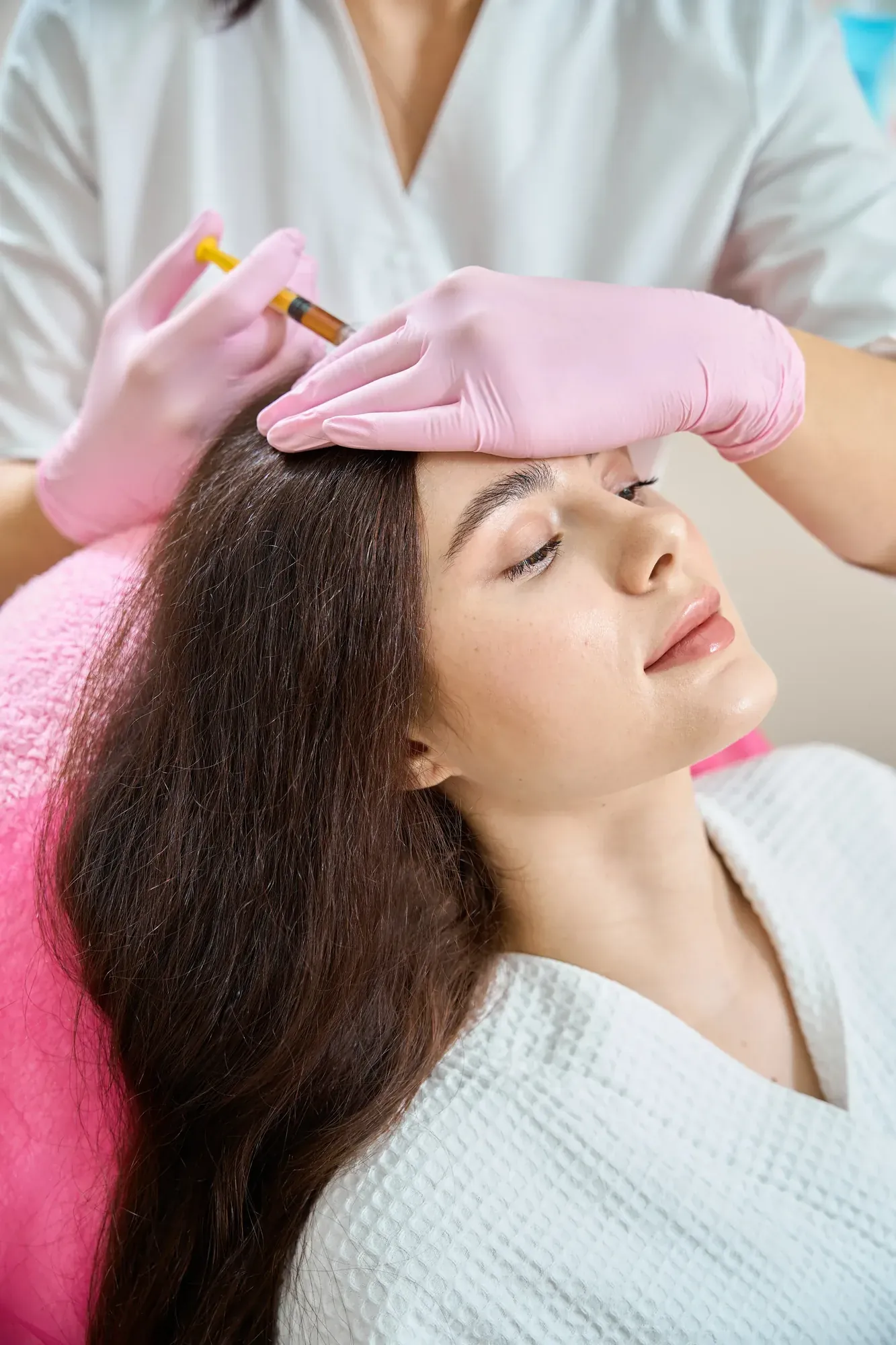
The clinic takes a blood sample from you, spins it in a centrifuge so the platelets collect, and injects the plasma into the scalp. Platelets contain growth factors involved in tissue repair, and that's the biological rationale. The way PRP is prepared differs a lot between clinics, which partly explains why studies point in different directions.
Why do PRP studies point in so many directions?
Because PRP isn't one treatment. Centrifugation, activation, platelet concentration, depth, volume and frequency vary between clinics, so two treatments with the same name can be completely different. That makes the studies hard to compare.
PRP isn't one treatment. How fast and how long the blood is spun, how the plasma is activated, how high the platelet concentration gets, how deep it's injected, how much is used and how often sessions are repeated all vary from clinic to clinic. Two treatments with the same name can therefore be completely different, and in practice the studies aren't comparing the same thing.
Because the plasma comes from your own blood, safety is good. The open questions are about how well and how consistently it works, not whether it does harm.
Does PRP give you a better transplant result?
It isn't well documented. As a stand-alone treatment for hereditary hair loss, PRP has reasonable support, but clinic protocols differ so much that results are hard to combine. With transplants, published data have shown density around 15.1 percent above what FUE without PRP achieved, but the figure comes from studies of variable quality, and no single study has settled the question.
Used for hereditary hair loss without surgery, PRP rests on reasonable evidence. The problem is that preparation varies so much from place to place that the studies are hard to pool into a single answer.
When PRP is used to improve a transplant, whether the aim is more surviving grafts, faster growth or higher final density, the evidence is weaker. According to our statistics page, hair density is around 15.1 percent higher when PRP is added to FUE, compared with FUE alone. The same page notes that the figure is based on industry data and studies of varying quality, not on a conclusive study.
How is PRP used around a procedure?
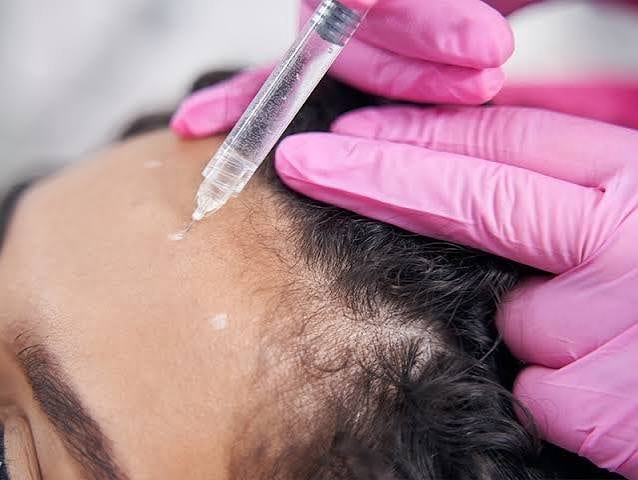
Most commonly, PRP is injected into the recipient area while the operation is under way, and some clinics also soak the grafts in PRP before implantation. Several treatments often follow at regular intervals over the next few months, and PRP is frequently built into the package price.
- Injection into the recipient area during the operation
- Grafts are sometimes soaked in PRP before they're implanted
- Repeat treatments at intervals in the months afterwards
- Often included in a package price
What should you know before paying extra for PRP?
Ask how the clinic prepares PRP and what platelet concentration that gives, how many treatments are included and what period they cover, and what specifically it's meant to improve in your result. PRP is harmless and can be useful, but see it as a sensible add-on with limited evidence, not as the reason to choose a clinic.
- How do you prepare PRP, and what platelet concentration do you get?
- How many treatments are included, what period do they cover, and what's needed to maintain the effect?
- What do you expect it to change in my result?
- Is it included in the price or an extra cost, and how much?
PRP does no harm and may help. Even so, the clinic should present it as a reasonable add-on where the research isn't settled, not as a major selling point.
Sources
- Parsley WM, Perez-Meza D. Review of factors affecting the growth and survival of follicular graft. Journal of Cutaneous and Aesthetic Surgery, 2010;3(2). jcasonline.com
- Sindhusen S, Tawanwongsri W, Eden C. Efficacy of Platelet-Rich Plasma as an Adjunct to Hair Transplantation: A Systematic Review. Cureus, 2025;17(10):e94116. pubmed.ncbi.nlm.nih.gov/41069573
- Kieling L, et al. Is autologous platelet-rich plasma capable of increasing hair density in patients with androgenic alopecia? A systematic review and meta-analysis. Anais Brasileiros de Dermatologia, 2024;99(6):847-862. pubmed.ncbi.nlm.nih.gov/39013743
- Uebel CO, da Silva JB, Cantarelli D, Martins P. The role of platelet plasma growth factors in male pattern baldness surgery. Plastic and Reconstructive Surgery, 2006;118(6):1458-1466. pubmed.ncbi.nlm.nih.gov/17051119
This article is based on published research and established clinical practice in the field. It gives you general knowledge and is not medical advice. The instructions from the team operating on you take precedence, including where they differ from what is written here.
Wondering what's possible for your hair?
Send three sharp photos of your hair, from the front, the top and the back. You'll get an honest answer on what can be done, roughly how many grafts it would take and what it costs.
- Free and with no obligation
- Photos are assessed by the clinic's medical team
- Replies usually within an hour in the daytime


A study tells you something about groups. Only a doctor who has seen your photos can say what applies to your hair. The medical team at the clinic at the top of our ranking offers a free assessment.
Goes to the clinic at the top of our ranking.