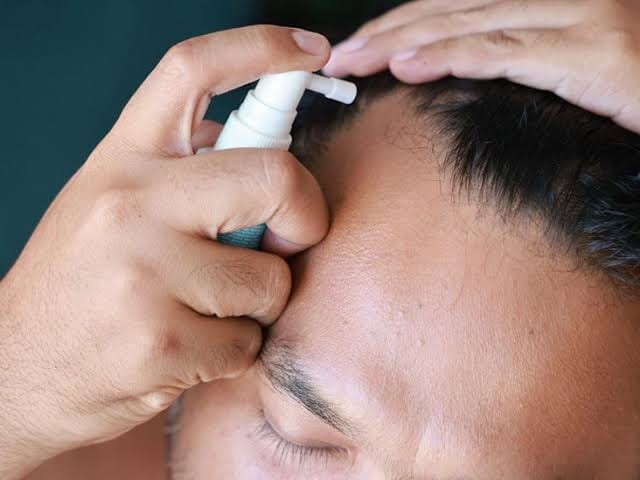
Topical finasteride: fewer side effects than the tablet?
Finasteride applied to the scalp is meant to deliver the DHT effect without loading the rest of the body as much. The studies partly bear that promise out. Here is where.
Is finasteride on the scalp free of side effects?
No. Keep that in mind as you read the rest. Topical finasteride probably puts less of the drug into the blood than the tablet does, and so may carry a lower risk of side effects elsewhere in the body. But some of it still reaches the blood, so the risk is smaller, not gone.
Plenty of people hope for something else. Finasteride is among the most researched treatments for hereditary hair loss, but a minority of men worry about sexual side effects from the tablet. Some are so worried that they don't treat at all. To them, a version you apply to your head sounds like the perfect solution. It's promising. Perfect it isn't.
What exactly is topical finasteride?
It's the same active ingredient as in the tablet, made as a liquid, foam or cream that you apply to your scalp. It's often mixed with minoxidil in a single product. The aim is to lower DHT, the hormone that drives hereditary hair loss, right where the hair follicles sit.
The logic is classic pharmacology. Put a drug where it needs to act and you can get a high local concentration with less absorption into the rest of the body. If that works with finasteride, you might get the tablet's documented effect with fewer of the downsides people fear most.
In Norway, finasteride as a scalp spray (Fynzur) is listed in Felleskatalogen (the Norwegian medicines directory) only as a medicine that requires a special exemption from marketing authorisation, when we checked on 16 October 2026. That means your doctor has to apply for it on your behalf. The 1 mg tablets are sold on prescription under the name Prosterid.
Why does some of the drug still reach the blood?
Because skin isn't watertight. Some of what you apply passes through the skin and on into the bloodstream. Studies have found measurably lower DHT in the blood even in people who only use the topical version. So the claim that the rest of the body notices nothing doesn't hold up.
The same body of research also shows the good news. Topical finasteride clearly lowers DHT in the scalp and improves hair growth. So the local approach does work on the hair.
The most precise thing you can say is this: topical finasteride probably puts less load on the body than the tablet, and the risk of side effects may therefore be lower. The difference is real, but it's a matter of degree. These aren't two separate categories, one safe and one risky. Once that's clear to you, your expectations become more realistic.
How good is the evidence so far?
It's growing, and it looks promising. Several studies, including randomised trials, show that topical finasteride can increase hair density almost as much as the tablet, with less effect on DHT in the blood. That makes it a serious option if you're worried about side effects.
Still, the evidence base is younger and thinner than for the tablet, which has been in use far longer. The studies use different mixtures, different concentrations and different protocols, and there's no follow-up over many years that can say for certain how side effects play out in the long run compared with the tablet. Topical finasteride is gaining ground, but it doesn't have the tablet's level of standardisation.
That has a practical consequence. The product is often a mixture made specifically for you, and a well-thought-out formulation from a reputable supplier is something quite different from something ordered at random online. Treatment should therefore go through a doctor who prescribes it and keeps an eye on things.
What are the advantages of the topical form?
- Probably less drug in the body: Lower systemic load than with the tablet, and perhaps therefore a lower risk of side effects outside the scalp.
- Works where the problem is: DHT is lowered in the scalp, around the affected hair follicles.
- A growing number of studies: The effect in trials is approaching that of the tablet.
- Combines well with minoxidil: Often in one shared mixture that tackles hair loss from two directions.
- Lowers the threshold: Men who would otherwise say no to DHT blocking may find the topical version acceptable.
What are the arguments against it, or at least for caution?
- Some absorption into the blood: The risk of systemic side effects goes down, but doesn't disappear.
- Shorter track record: Fewer and shorter studies than for the tablet, and products vary.
- Quality varies: Custom mixtures are only as good as whoever makes them.
- A new daily routine: You have to apply it correctly every day. That's the same challenge many people struggle with on topical minoxidil.
- Needs a doctor: Get it prescribed by a doctor and monitored along the way. Unknown online shops are not an option.
What does everyday life with topical finasteride look like?
More like minoxidil than a tablet. You apply a measured amount to a dry scalp, ideally at the same time every day, and let it soak in before you go to bed or style your hair. This is the part many people underestimate. A tablet takes two seconds. A liquid requires you to actually stand there every evening, even after a long day.
If the product is combined with minoxidil, you get one routine for two active ingredients. That's practical, but it also means you should expect minoxidil's usual nuisances, such as itching or a dry scalp, and that it takes several months before you can judge the effect. As with all treatment of hereditary hair loss, the benefit only lasts as long as you keep going. If you want to see how the treatments work together, you can read about combining hair loss medications.
Should you switch if the tablet is working?
Usually not. If you're using the tablet without problems and are happy with it, there's no good reason to switch. The tablet is cheaper, more standardised and more thoroughly documented. When something works without problems, there's nothing to fix.
The topical form is most interesting for two groups. The first has actually had side effects from the tablet. The second is so afraid of side effects that they would otherwise skip finasteride altogether. For both, topical finasteride can turn a well-documented mechanism into something they're actually willing to use.
The choice is personal. How well do you tolerate the treatment, what worries you most, what can you afford, and can you manage to apply it every day? Raise it with a doctor who can choose a sensible formulation and follow you up. You'll find more about the drug in general on the page about finasteride and dutasteride.
How should you handle worries about side effects?
Take them seriously, but don't let them take over. Sexual side effects of finasteride occur in a minority, and they deserve an open conversation. At the same time, the vast majority of users notice nothing, and for many the hair they keep is a big gain.
The topic is highly emotional online. Some forums paint the worst imaginable outcomes. Others dismiss any concern as imagination. Neither helps you make a good decision. What does help is a calm conversation with a doctor who knows your health and can weigh benefits and risks soberly.
If you're worried, the topical version makes sense, because it probably gives your body less to carry. If you choose to treat, or not to, after getting good information, you haven't chosen wrongly. If you want to read more about the contested part of the side-effect picture, there's a separate article on post-finasteride syndrome.
Does topical finasteride go well with a hair transplant?
Yes, in the same way as the tablet. A transplant moves hair that is resistant to DHT, but your original hair gets no protection from the procedure. If it keeps thinning around the new grafts, the overall look can become unnatural after a few years. That's why most men who have a transplant are advised to slow DHT one way or another.
If you'd rather avoid the tablet, the topical version is a good compromise. You protect the rest of your hair at the root cause, probably with less load on your body. For some, that's enough to make them actually stick with maintenance in the years after surgery, and it's maintenance that makes the result last.
Surgery and medication don't compete. They complement each other. Still, check with the clinic that will operate on you when you should use the treatment in relation to the procedure.
What do people ask most often?
Is topical finasteride completely free of side effects? No. A little of the drug reaches the blood, so the risk of side effects in the body is lower, but it's there.
Is the effect as good as with the tablet? In studies it comes close to the tablet, but the research is newer and less extensive. If side effects are what you fear, it's worth considering.
Can I mix it at home or order it from an online shop? You shouldn't. The formulation matters a lot for the result, and a doctor can make sure you get a proper product and follow-up.
Should I stop the tablet if it's working? Not without a reason. If you have no problems, there's nothing to fix. The topical form is for those who have a concrete reason to look for something else.
What should you do now if you're considering topical finasteride?
Book an appointment with your GP or a dermatologist, and say exactly what you're worried about. If you've tried the tablet, bring details of how long you used it and what you noticed. Ask which product the doctor can prescribe and how follow-up will work. That way you get an answer that applies to you, not the average in a comment thread.
This article provides general information and does not replace a medical assessment of you.
If your hair loss has only just started, a procedure may not be the right step yet. The medical team at the clinic at the top of our ranking can look at your photos and tell you honestly whether to wait, start with treatment or consider more.
Goes to the clinic at the top of our ranking.