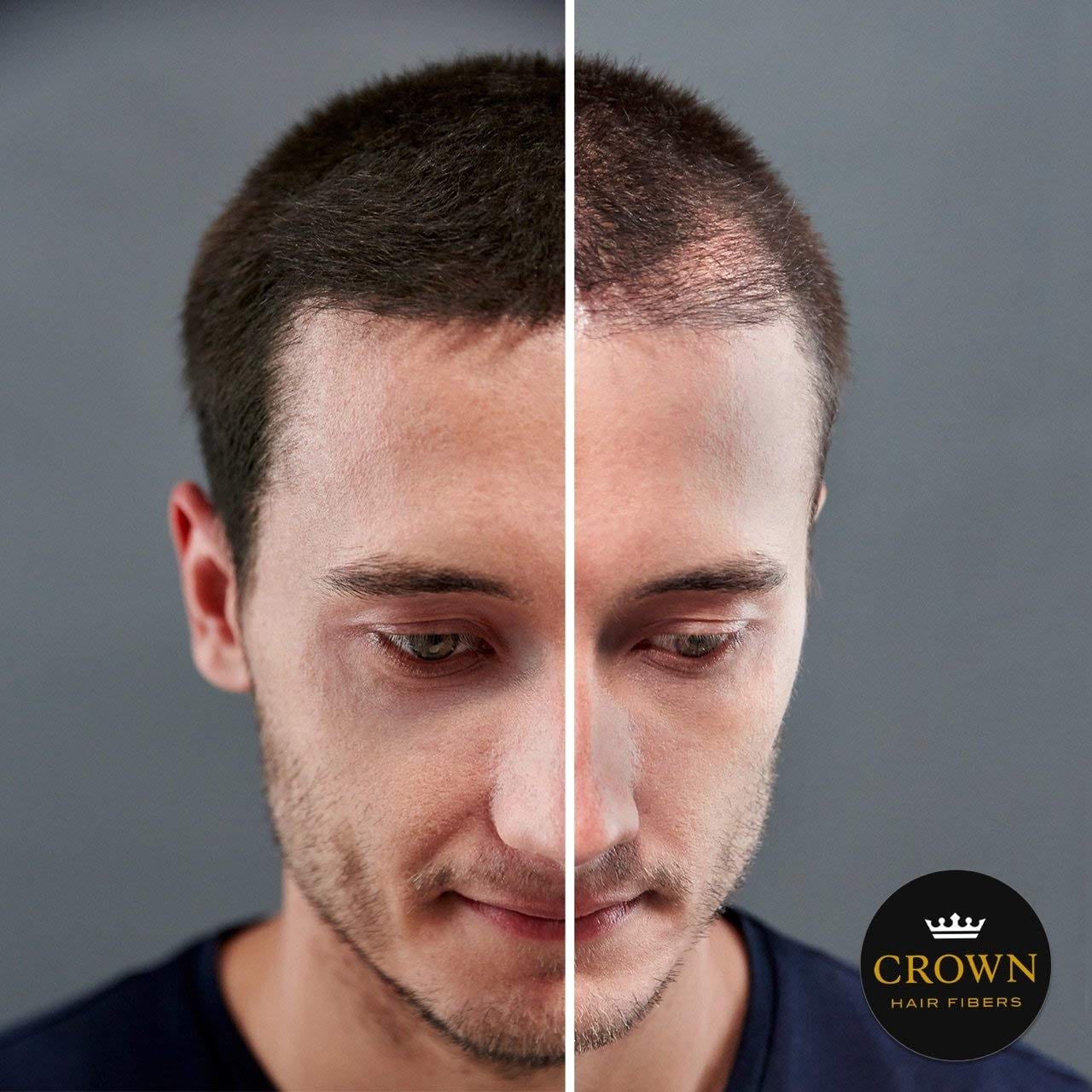
Do hair fibres work for thinning hair?
A sprinkle of fibres and the scalp disappears in an instant. Here's what hair fibres and concealers can do, where they fall short, and when they're a smart choice.
Do hair fibres help with hair loss?
They hide it. They don't treat it. With hair fibres, thin hair looks much fuller in a couple of seconds, but they won't give you a single new hair, and they do nothing about the process that's making your hair disappear. Think of them as make-up for the scalp.
What are hair fibres and concealers?
Hair fibres are tiny coloured fibres, often made of keratin, that you sprinkle over the thinning area. They cling to the hair you have and fill in so that less scalp shows through. Together with coloured sprays and powders, they come under the umbrella term concealers, cosmetics that cover hair loss without affecting it.
How can a few fibres look so real?
The fibres carry a slight static charge. The charge makes them cling to the hair shafts and settle in the gaps, so less of the skin underneath shines through. The result is visible straight away, and it can look surprisingly natural, in the mirror, in everyday life and in photos. A fixing spray afterwards helps keep the fibres in place until the evening.
When don't hair fibres work well?
The fibres need something to hold on to. If you still have a fair amount of hair in the thinning area, the effect can be very good. If the area is completely bare, they have nothing to attach to, and the result is poor.
Everyday life sets limits too. You have to apply them every day. The colour can rub off on your pillowcase, collar and hat, and heavy sweating or rain can make them run. Swimming is out. Some people also find the products make their scalp itch. And underneath all this, the hair loss carries on for as long as it isn't treated.
What are the benefits of hair fibres?
If you want coverage here and now, the benefits are real. They're cheap, they work in seconds, and you avoid both surgery and waiting. Many people find they get their confidence back at work, at social events or on an important day. Many also use them as a practical aid during the months when a proper treatment hasn't yet had time to show results.
How do you use them wisely?
Use the fibres alongside a treatment that works, not instead of one. Medication with documented effect needs months to preserve and thicken your hair. The fibres can give you coverage while you wait. Read about why results take time and about the treatments that slow hair loss without surgery.
If you've recently had a hair transplant, hold off on the fibres until the area has fully healed, and ask your clinic before you start. Also read about SMP, which is a longer-lasting cosmetic alternative for some people.
What should you do now?
Buy a small tub in a shade slightly lighter than your own hair, since a colour that's too dark easily looks artificial. Try it out at home on a weekend before you wear it to work. At the same time, book an appointment with your doctor and talk about what could help you keep the hair you have, so the fibres become a bridge and not a permanent solution.
This article is general information and cannot replace an assessment of you specifically.
If your hair loss has only just started, a procedure may not be the right step yet. The medical team at the clinic at the top of our ranking can look at your photos and tell you honestly whether to wait, start with treatment or consider more.
Goes to the clinic at the top of our ranking.