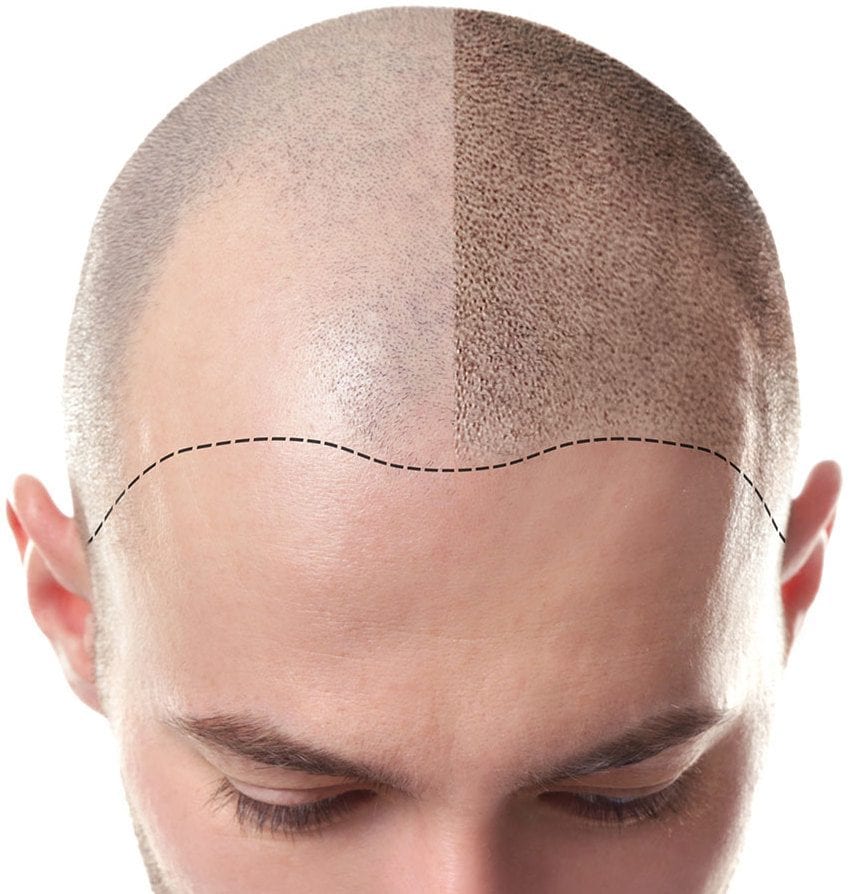
What is scalp micropigmentation (SMP), and when is it worth it?
Micropigmentation won't give you a single new hair, but it can make your head look denser. Here's how to tell whether SMP works on its own, alongside a transplant, or not at all.
What exactly does SMP do?
SMP places tiny dots of pigment in the outermost layer of skin on your scalp, so it looks as though you have freshly shaved hair there. The abbreviation stands for scalp micropigmentation. Technically, it's cosmetic tattooing, done with very fine needles.
The first thing you need to know: SMP does not give you hair. What you get is the visual impression of stubble or denser hair, and the hair loss underneath carries on as before. As an illusion, though, it can work surprisingly well. For the right person it's among the most overlooked tools there are, either on its own or, even more often, together with a hair transplant.
Think of SMP as a supplement. It doesn't compete with surgery and doesn't replace it. It solves some very specific problems that a transplant can't, and once you see that role, it's easier to decide whether you should go ahead with it.
When can SMP work on its own?
When you're comfortable with a shaved head and want it to look full. SMP can then give you the impression of a dense, close-cropped "buzz cut" all over, even though the follicles are gone. If your hair loss is advanced and you have too little donor hair for a transplant to make sense, this is often a very good and realistic solution.
Scars are another use. The strip scar at the back of the head after a FUT operation, or scars from other procedures, can be made less visible by pigmenting in and around the scar. With diffuse thinning, dots between the hairs you have left can soften the contrast between hair and skin. The hair looks denser without a single strand being added.
What these situations have in common is that you solve a cosmetic problem without surgery and without using donor hair, and you're quickly back to everyday life. With realistic expectations, many people are very happy.
Why does SMP often work best alongside a transplant?
Because the two solve different parts of the problem. The transplant gives you real hair that grows. SMP fills in between the hairs and makes the scalp less visible. Together they often give a better overall impression than either does alone.
The most common approach is to pigment the gaps between the new hairs, so the area looks denser. This is especially useful if your donor reserve is limited and the transplant alone can't achieve full density. Read more about what your donor area can handle if you're unsure how much you have to work with.
SMP can also hide signs of extraction in the donor area, whether an area that has become thinner or the strip scar after FUT. And if your hair loss continues over the years, you can add pigmentation later and keep the impression of density without another operation. That opens up a lot of possibilities, especially if you would otherwise have to settle for a thinner result. See also our page on SMP for more details about the treatment.
How is SMP different from an ordinary tattoo?
In almost everything except the principle. The pigment, needles and technique are made for exactly this job. The dots have to be microscopic and the same size. The colour should match the shadow of close-cropped hair, and the pigment has to sit at exactly the right depth. If the needle goes too deep, the dots can spread over time and turn into grey patches rather than clear points.
Another difference is that SMP fades gradually over several years. You should usually expect top-ups at regular intervals, whereas an ordinary tattoo stays put. That costs money over time. At the same time, it means the look can be adjusted as your hair or skin changes.
How much does the result depend on the practitioner?
Almost entirely. A skilled practitioner chooses dot size, density and shade to suit your skin and hair, and the result looks natural up close. An inexperienced practitioner may place dots that are too dark or too coarse, or that spread. That gives an unnatural result that is hard to get rid of.
So do the same groundwork as you would before a transplant. Ask to see lots of examples of their work, ideally on people with skin and hair like yours. Explain exactly what you want before any needle comes near your head. A reputable practitioner will tell you themselves when SMP isn't right for you, and when surgery or a combination would be better. That openness is a good sign of quality.
What do you gain with SMP?
- You don't use up donor hair. The impression of density doesn't take any of the limited follicles at the back of your head.
- No surgery. Low risk and a short time before you're back to normal.
- Good camouflage. Scars can be hidden, and the contrast in diffuse thinning is reduced.
- Flexible. Can be used alone or with surgery, and adjusted over time.
- An honest alternative when donor hair falls short. Where a transplant can't deliver enough, SMP can still give a realistic result.
What are the downsides of SMP?
- It isn't hair. You get an illusion. There's nothing to style or comb.
- Works best with short hair. The stubble effect doesn't suit a hairstyle with length.
- Needs maintenance. The pigment fades over the years and needs topping up.
- Stands or falls on the practitioner. A poor result is hard to correct.
- Doesn't stop hair loss. The underlying process continues, and the hair you have may get thinner.
What results can you expect from SMP?
The same as from a good illusion. SMP can look very convincing, but you'll never have hair you can lift, style or feel between your fingers. You get the impression of stubble or of more density. People who understand this beforehand are usually well satisfied. Anyone who secretly hoped for real hair will be disappointed however skilfully the work is done.
Remember too that you don't have to choose between SMP and surgery. Several of the best results use both. If the clinic has experience with both surgery and pigment, it can help you find the right balance based on your budget and how long you want to wear your hair in the years ahead.
Questions people often ask about SMP
Is SMP a form of hair transplant? No. A transplant moves real hair that keeps growing. SMP uses pigment to imitate stubble. They solve different problems, and many people use both.
Does SMP work with long hair? Not really. The pigment looks like short, shaved stubble. It suits a close-cropped look or works as filler between hair you already have.
Is it permanent? No. The pigment fades gradually over the years, and you should expect top-ups. On the plus side, the look can be adapted over time.
Can SMP cover a FUT scar? Yes, it's often done. When the scar is pigmented in and around, it blends in better, especially if you keep your hair short.
How do you find out whether SMP is right for you?
Start by deciding how long you want to wear your hair. If you want it short or shaved, SMP is an option. If you want length, you need real hair, and then the question is whether your donor area is up to it. Book a free hair analysis to get an answer, and ask to see photos of SMP work on people like you before you book anything.
This article is general information and does not replace an assessment of your own scalp.
It depends on your donor area, your hair type and where the loss is. Send three photos and the medical team at the clinic at the top of our ranking will suggest a method and number of grafts.
Goes to the clinic at the top of our ranking.