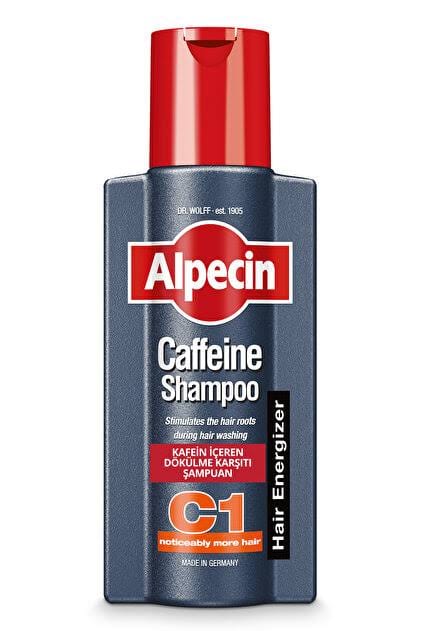
Does caffeine shampoo help hair loss? Why two minutes isn't enough
In the lab, caffeine seems to wake up hair follicles. In the shower, it's rinsed off before it can do much. Here's what to expect from the bottle, and what to spend your money on instead.
Can a caffeine shampoo stop hair loss?
There's little to suggest it can. The idea is based on lab experiments, but shampoo is rinsed off before the caffeine has time to do much. Studies in people are few and weak. As a mild shampoo you like, it's fine. As a treatment for hereditary hair loss, it isn't enough.
Where does the caffeine shampoo idea come from?
From experiments where researchers applied caffeine directly to hair follicles in a controlled lab setting. There, caffeine seemed to increase follicle activity and counter some of the inhibiting effect of DHT. On that basis, the shampoo is marketed as something that wakes up hair follicles and slows hair loss.
Why does it work less well in the shower than in the lab?
Because the contact time is too short. For caffeine to reach the hair follicles in amounts that matter, it has to stay on the scalp for a long time. A shampoo is lathered in and rinsed out after a couple of minutes. It's doubtful that enough caffeine reaches the follicles in such a short time.
In the lab, the follicles had long, direct contact with the substance. At home, they don't. That's why you can't count on the promising results meaning more hair for people who use the shampoo in the normal way. The weakness lies in the product format itself, not in the brand you choose.
What do studies in people show?
Too little. The evidence is thin and weak. The lab results are interesting, but nobody has shown in a solid way that regular use of caffeine shampoo leads to hair growth you can actually see. It falls a long way short of minoxidil and finasteride.
Is caffeine shampoo a waste of money?
Not if you know what you're getting. The shampoo does no harm. It's mild, affordable and washes your hair as it should. If you like it, there's no reason to stop.
It still won't stop hereditary hair loss, and it should never take the place of treatments that work. If you want to do something that makes a real difference, the foundation is still minoxidil and finasteride. As an add-on to those, microneedling has better evidence than any shampoo. If you're considering a medicated shampoo, ketoconazole has more to show for itself.
What should you do now?
Feel free to keep the caffeine shampoo in the shower, but move your expectations and your money to where they make a difference. If your hair is thinning, book an appointment with your doctor and ask whether minoxidil or finasteride suits you. Take a photo of your hairline and crown before you start, so you can see any difference in six months. Read our review of hair growth products that work before your next shopping trip.
This article is general information and doesn't replace a medical assessment of you.
If your hair loss has only just started, a procedure may not be the right step yet. The medical team at the clinic at the top of our ranking can look at your photos and tell you honestly whether to wait, start with treatment or consider more.
Goes to the clinic at the top of our ranking.