Eyebrow transplant: can you get natural-looking brows back?
Thin brows after years of tweezing, scarring or illness can be rebuilt with your own hair. Here's who it suits, why every hair angle matters, and why you'll need a small pair of scissors afterwards.
Can an eyebrow transplant give you permanent brows?
Yes, if whatever thinned your brows has settled and you find a surgeon who knows the craft. In an eyebrow transplant, single hairs are moved, usually from the back of your head, up to the brows. There they stay and keep growing, almost for life. That gives you real eyebrows, something neither make-up, brow tint nor microblading can do.
The technique is the same FUE method used for scalp hair transplants. Even so, eyebrows count among the hardest jobs in the whole field. They sit in the middle of your face, everyone sees them, and the hairs grow in a pattern that is very hard to copy. A botched eyebrow can't be hidden under a hat.
Who is an eyebrow transplant suitable for?
People with permanently thin or missing brows and a stable cause behind it. Many have plucked too hard for years and the brows never came back. Others have always had thin brows. Some lost them after scarring, burns or illness, and some have conditions such as alopecia.
What matters is that whatever took your brows is no longer active. If you have alopecia areata (patchy hair loss) in your eyebrows, the condition must have been in remission for a good while before surgery is even an option. Otherwise your immune system can attack the new hairs just as it did the old ones.
You also need a donor area. On that front eyebrows are undemanding, because they need far fewer grafts than a hairline. The strain on the back of your head is small. What more often stops people is unrealistic expectations about healing and about the upkeep later on. Read more about how an eyebrow transplant is done before you decide.
Why are eyebrows so much harder than scalp hair?
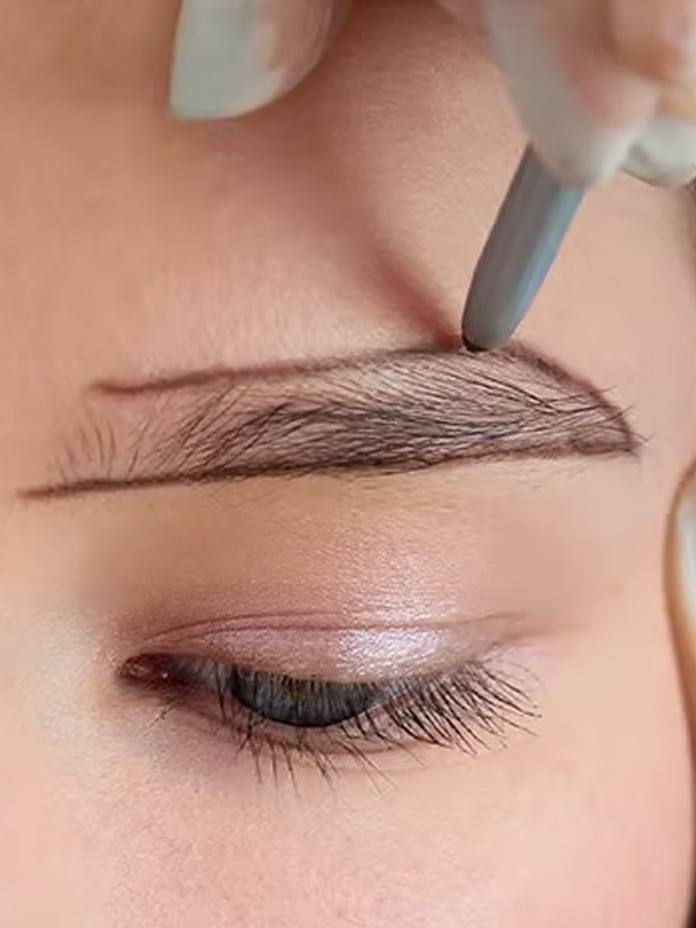
Because the hairs change direction all the way along the brow. At the inner end, by the bridge of the nose, they stand almost straight up. Over the middle they lie flat and slant to the side. At the outer end they point downwards and out towards the temple. It's exactly this shift that your eye reads as a real eyebrow.
Each hair also has to be placed at a very low angle to the skin, almost lying flat, so it doesn't stick straight out. If the surgeon is a few degrees out, or gets the direction wrong, it shows straight away. That's why the hairs are placed one by one, each given a direction that copies the pattern you were born with. The work calls for anatomical knowledge and a good eye for aesthetics in equal measure.
Finally, you're moving hair that was made for somewhere else. Scalp hair keeps its properties after it has been moved. It grows longer than a normal brow hair and doesn't stop by itself. More on that further down.
Who decides how the eyebrows should look?
You and the surgeon, together, before the first hair is moved. The shape of your brows changes your whole facial expression, so this part carries as much weight as the handiwork. Usually the shape you want is drawn directly on your skin, and then you assess it together against the proportions of your face.
Preferences vary. Many men want strong, defined brows. Many women want something lighter and softer, but there are just as many exceptions. The goal is brows that suit your face in particular and look natural, not a template from a catalogue. A good surgeon takes your wishes seriously and is also honest about what suits you and will age well.
The result stays for many years. So take your time with the planning, ask every question you have, and make sure you're both picturing the same thing before you go ahead. Well-shaped brows can change how you feel about yourself. Badly shaped ones are hard to fix.
What happens during the procedure and the first months?
You get a local anaesthetic, and because relatively few grafts are involved, you're done in less time than with a normal hair transplant. The first few days can be a little tender. Small scabs form around each hair and come loose after about a week.
Then comes a phase many people aren't prepared for. The transplanted hairs fall out, what's called shock loss, before new hairs start growing from the same follicles in the months that follow. You usually see the final result after 6 to 12 months. It's completely normal for the brows to look thinner for a while before they get better.
Why do you have to trim your new eyebrows?
Because the moved hairs still behave like scalp hair. A normal brow hair stops growing at a certain length. A transplanted hair doesn't. Without regular trimming the brows get too long and lose their shape.
For most people that means a small pair of scissors or a trimmer every few weeks. At first some people also need to “train” the hairs to lie the right way, for example with a little brow gel. It's manageable, but it's a permanent task for as long as you have the brows. Know that it comes with the package before you say yes.
What are the pros and cons of an eyebrow transplant?
Pros:
- Real brows that stay, without make-up every morning.
- Rebuilds brows lost to tweezing, scarring or illness.
- Takes little from the donor area.
- Looks natural when a specialist does it.
Cons:
- Mistakes show in the middle of your face, and the margin for error is almost zero.
- The hairs need regular trimming for as long as you have them.
- You need a surgeon with specific experience of eyebrows, not just of the scalp.
- Any condition in the area must have settled first.
Questions people often ask about eyebrow transplants
Do I really have to trim my eyebrows? Yes, at regular intervals. The hairs come from your scalp and grow longer than normal brow hairs, so they need trimming to keep their shape.
Is the result permanent? In practice, yes. The hairs are taken from the donor area at the back of the head, which resists DHT, and they usually stay in the brow.
Does it hurt? You're under local anaesthetic, and the procedure doesn't take long. Afterwards the skin may be a little tender, with small scabs for a few days.
Can over-plucked eyebrows be rebuilt? Yes, it's one of the most common reasons people have the procedure. The prerequisite is that the brows have been thin for a long time and the cause is no longer active.
How do you find the right surgeon for eyebrows?
Ask to see photos of eyebrows the surgeon has done personally, ideally taken both straight after the procedure and after a year. Ask how many eyebrow procedures the clinic performs, and who places the hairs. Bring a photo of brows you like to the consultation, and ask the surgeon to draw a suggested shape on you before you agree to anything. If the hairs in the photos stick straight out or point the same way along the whole brow, keep looking.
This article is general information and does not replace a medical assessment of you.
It depends on your donor area, your hair type and where the loss is. Send three photos and the medical team at the clinic at the top of our ranking will suggest a method and number of grafts.
Goes to the clinic at the top of our ranking.